



Enjoying this article? Add us as a preferred source on Google.
- What the PC Engine version of Shin Megami Tensei is and how it plays
- How it differs from the Super Famicom version, and what the PC Engine adds
- Demon negotiation, fusion, and alignment: the three systems that decide your run
- A full area-by-area walkthrough, from before the Great Destruction to the Cathedral
- Coordinate-tagged maps for all 38 dungeons and 113 floors
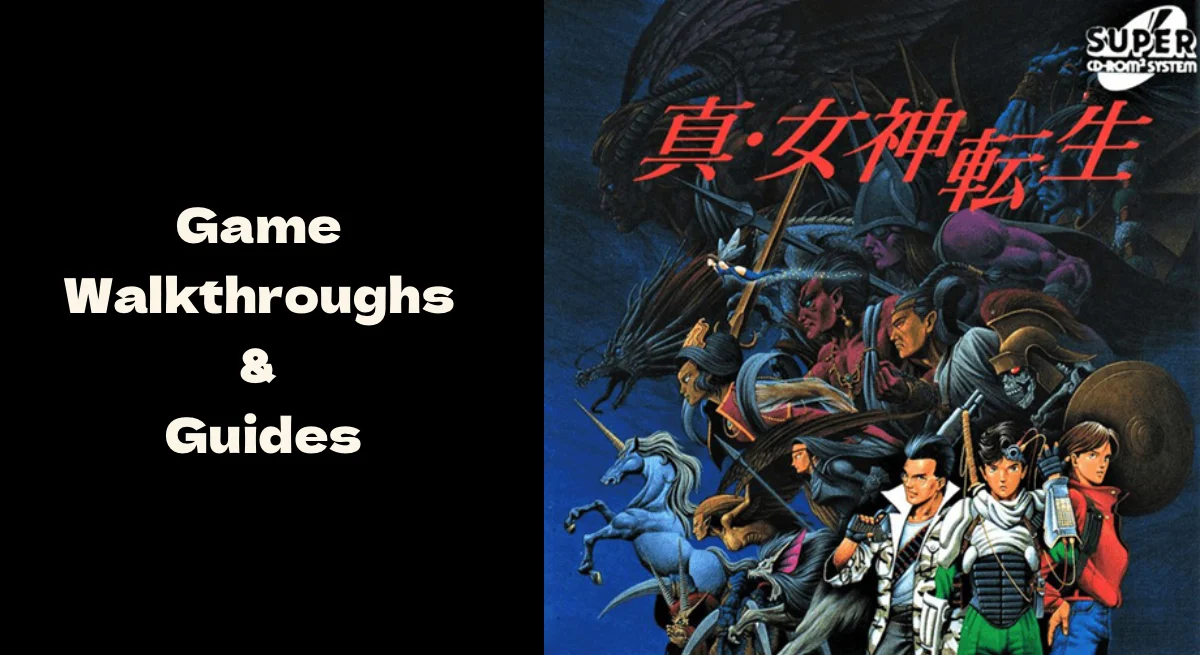
Shin Megami Tensei, born on the Super Famicom in 1992, tore the rulebook of the RPG to pieces. This is not a story about a hero slaying a demon lord. A nuclear missile erases Tokyo, and you are dragged into a proxy war between gods and demons in the wreckage that remains. On Christmas Day 1993, that game came back to life on the PC Engine SUPER CD-ROM².
You talk demons into joining you, fuse them at the Cathedral of Shadows, and watch the three alignments of LAW, NEUTRAL, and CHAOS split the story into decisively different endings. Think of it as moving through the world like Dragon Quest and crawling through dungeons like Wizardry. A 2D field map of a ruined Tokyo alternates with 3D dungeons, and 38 dungeons spread across 113 floors are waiting for you.
This guide follows the PC Engine version and includes coordinate-tagged floor maps for all 38 dungeons and 113 floors, from Kichijoji before the Great Destruction to the final showdown at the Cathedral. It covers the alignment branch conditions, the events that are easy to miss, and the spots where players get stuck.
Honestly? The first version I ever played was the Super Famicom one. I still remember the day my alignment swung all the way to CHAOS at Kongokai and I didn’t have the energy to start over, so I just kept plowing ahead. That it took the PC Engine version’s visual scenes for me to finally go “oh, so that’s what this story was about,” thirty years later, is our little secret.
*Prices in this article are converted from Japanese yen at ¥153 = US$1 (September 2026 rate).
What Kind of Game Is Shin Megami Tensei on PC Engine? The Origin Point of the Demon RPG Set in a Ruined Tokyo
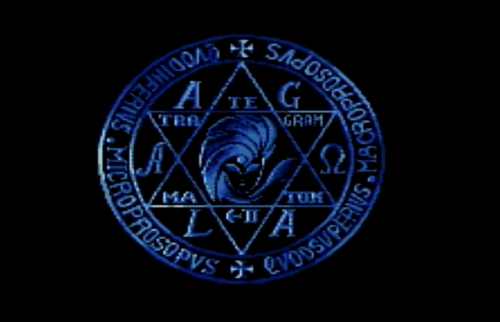
Shin Megami Tensei is a 3D dungeon RPG set in a Tokyo destroyed by nuclear war, where you negotiate with demons to recruit them as allies and throw yourself into the war between the LAW, NEUTRAL, and CHAOS factions.
| Item | Details |
| Title | Shin Megami Tensei (PC Engine SUPER CD-ROM² version) |
| Release date | December 25, 1993 |
| Publisher and price | Atlus (developed by Isco and Opera House) / $58 |
| Original release | Super Famicom version of Shin Megami Tensei (October 30, 1992, Atlus) |
| Dungeon scale | 38 dungeons across 113 floors (3D maps), plus the 2D Tokyo field map |
| Saving | One backup save slot (2,026 bytes) / Memory Base 128 support (up to 10 slots) |
| Final objective | Defeat God (LAW), the demon lord (CHAOS), or both (NEUTRAL), depending on your alignment |
The story opens in Kichijoji, Tokyo, in the year 199X. The protagonist meets the Chaos Hero and the Law Hero in a dream, and the moment he gets his hands on the Demon Summoning Program, ordinary life collapses. An ICBM slams into Tokyo, and decades later the fight for survival in the ruined city begins.
This is the origin point of the series, the game that established the grammar of Megaten: demon negotiation, demon fusion, and the alignment split. The name changed from Megami Tensei to Shin Megami Tensei because Atlus was breaking away from the Famicom adaptations of Namco’s Digital Devil Story novels and building a world entirely its own. It was also the first game in the series with automapping, which takes a huge amount of the friction out of 3D dungeon crawling.
PC Engine vs. the Other Versions: Which Should You Play? Added Features and the Version This Guide Follows
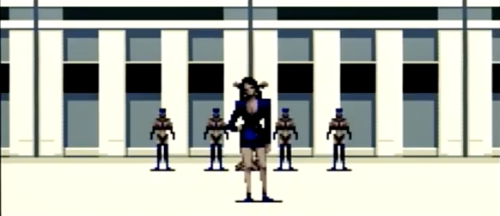
This guide follows the PC Engine SUPER CD-ROM² version. The dungeon layouts, meaning wall placement, coordinates, and floor counts, are identical to the Super Famicom version. Everything the PC Engine version adds is on the visual and audio side, and nothing in it changes the maps.
| Version | Release date | Notes |
| Super Famicom (original) | October 30, 1992 | The original. Automapping included. Music uses the internal sound chip only |
| PC Engine (this guide’s basis) | December 25, 1993 | Adds visual scenes, voice acting, extra demons, expanded Pascal events, and the ANALYZE feature |
| Mega CD | February 25, 1994 | Developed by Shift (SIMS). The field map was redrawn as wireframe, with many version-exclusive changes |
| PlayStation | July 19, 2001 | A port of the Super Famicom version with improved resolution |
| Game Boy Advance | March 28, 2003 | Adds link connectivity with Visara. Slightly smaller screen resolution |
| iOS / Android | 2012 | A smartphone port based on the Super Famicom version, with touch controls |
What the PC Engine Version Adds
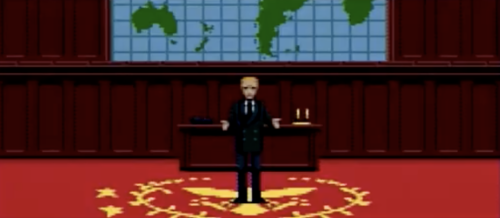
The extras all lean on the storage space of the CD-ROM. The visual scene after the Thor fight, the ICBM impact, the Chaos Hero’s fusion sequence, the Great Flood itself: events the Super Famicom version told you about in text play out here as animation. The Gate of God and Taijou Roukun get voice acting, and even the terminal transfer animation has been redone.
On the gameplay side, an ANALYZE mode was added. You can select it from the title screen, and it works as a compendium that lets you check the stats of demons you have recruited as allies. Scenes tied to Pascal, the event where the protagonist’s pet dog becomes Cerberus, have also been expanded. A handful of new demons were added as well, but nothing here changes dungeon layouts or how events progress.
The Three Systems at the Heart of the Game: Demon Negotiation, Fusion, and Alignment
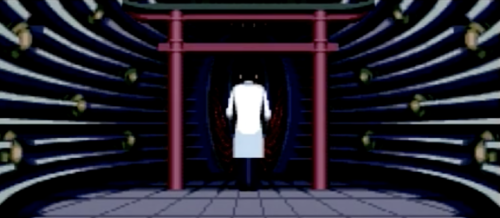
Playing Shin Megami Tensei well comes down to three things: recruit demon allies through negotiation, fuse them at the Cathedral of Shadows, and keep an eye on your alignment. Push forward without understanding all three and you will hit a wall somewhere in the back half.
① Demon Negotiation and Demon Allies
Use the TALK command in battle to speak to a demon, and if the negotiation succeeds it becomes a demon ally. Every demon has its own personality, so threatening it, flattering it, or handing over money can work beautifully or backfire completely. The further apart your alignment and the demon’s alignment are, the harder the negotiation gets, which means alignment management feeds directly into recruiting.
② The Cathedral of Shadows and Demon Fusion
| Fusion type | What it does |
| Two-demon fusion | Fuses two demon allies into a new demon. The result is determined by the combination of levels and races |
| Three-demon fusion | A higher tier of fusion using three demon allies. Capable of producing far stronger demons |
| Sword fusion | Fuses a demon ally into a sword (the protagonist’s weapon), granting elemental attacks |
The Cathedral of Shadows sits near the terminal in each area. Fusion results are calculated from the levels and races of the materials, so building the demon you actually want means managing your allies’ levels carefully. Fusion accidents will hand you something you never asked for, and yes, that is annoying. But every so often an accident produces a powerful demon you could never create normally, and that unpredictability is the heart of Megaten.
③ Alignment
Every character and demon carries one of three alignments: LAW (order), NEUTRAL (balance), or CHAOS (disorder). The protagonist’s alignment shifts based on the choices you make during the game, and whatever it lands on at the end determines your ending.
| Alignment | Route | Final boss |
| LAW | Bring about the Thousand-Year Kingdom. Fight alongside the Law Hero | Asura |
| NEUTRAL | Reject both God and demons. Rebuild the world with human hands | YHVH (four archangels, then God) plus Asura |
| CHAOS | A free world ruled by the strong. Fight alongside the Chaos Hero | Archangel Michael plus YHVH |
The alignment split locks in late in the story, after the Great Flood event. It is decided by everything you chose up to that point, so if you are aiming for a specific route you need to pick your answers deliberately from the opening hours. The NEUTRAL route has the most final bosses to fight and is widely considered the hardest of the three.
Walkthrough Chart: From Kichijoji Before the Great Destruction to the Final Battle at the Cathedral
From here we track the key points of each area by coordinate. The game displays coordinates as “East ○ / North ○”, and each dungeon is a grid 24 tiles east to west by 3 to 24 tiles north to south. The story runs in two acts: before the Great Destruction (Kichijoji through Kongokai) and after it (the ruined Tokyo).
Before the Great Destruction: Kichijoji to Kongokai
| Area | Dungeons | Objectives and key points |
| Kichijoji | Your House, Neighbor’s House, Shopping Arcade, Inokashira Park, Hospital, Echo Building | Obtain the Demon Summoning Program. The Ojisama event happens on Echo Building 5F. You can heal at the Hospital |
| Shinjuku (before the Destruction) | Secret Laboratory, Underground Mall, Resistance Hideout, Metropolitan Government Plaza, Ozawa’s Hideout | Join up with the heroine. Pick up automapping. First meeting with Ozawa |
| Ichigaya and the Embassy | Ichigaya Garrison (4 floors), American Embassy (3 floors) | Talk with General Gotou. Fight Thor at the Embassy, the prelude to the LAW/CHAOS split |
| Kongokai | Kongokai (1 floor, large 16×24 map) | You set out to stop the ICBM launch and fail, triggering the Great Destruction |
After the Great Destruction: The Ruined Tokyo
| Area | Dungeons | Objectives and key points |
| Shinjuku (after the Destruction) | Shinjuku Underground Mall, Ozawa’s Office | Gather information in the ruined Shinjuku. Ozawa fight |
| Shibuya | Shibuya Center Street, The Heroine’s Inner World | Rescue the heroine. The Inner World is a large 16×24 map |
| Roppongi | Roppongi Building (5 floors) | Buy equipment at the junk shop. A hub for information |
| Subway Ruins | Roppongi side (3 floors), Ginza and Ikebukuro side (2 floors) | Underground passages linking the areas. Encounter rate runs high |
| Former Metropolitan Police HQ | Former Metropolitan Police HQ (B1F to 5F) | Information gathering and story progression |
| Tokyo Tower | Tokyo Tower (1F, 30F) | Event on 30F. Revisited after the flooding, with 45F added |
| Ginza | Ginza Underground Mall (6 floors) | A large area split into several sections. Terminal on B3F |
| Shinagawa Cathedral | Shinagawa Cathedral (4 floors) | A LAW faction facility. 1F is a large map (16×24) |
| Sugamo Prison | Sugamo Prison (4 floors) | Prisoner rescue event. Revisited as 45F after the flooding |
| The Four Heavenly Kings | Bishamonten, Jikokuten, Zouchouten, Koumokuten (1 floor each) | Defeat all four kings. Required to enter the Cathedral |
| Ueno and Akihabara | Ueno Building (3 floors), Akihabara Underground Mall (2 floors) | Junk shops for information and equipment. Connects to the Subway Ruins |
| T.D.L | Tokyo Destinyland (4 floors) | Zombie Mouse and Demon Duck appear (the PC Engine version adds illustrations for them) |
| Ginza Underground Passage | Ginza to Cathedral Underground Passage (4 floors) | The connecting route from Ginza to the Cathedral |
Submerged Tokyo to the Final Battle
| Area | Dungeons | Objectives and key points |
| Tokyo Tower (Submerged) | 30F, 45F | Only the upper floors are reachable in the flooded Tokyo |
| Imperial Palace | Imperial Palace (B1F to B5F) | Five basement levels. B5F is a large 12×24 map |
| Sugamo (Submerged) | Sugamo Prison 45F | The layout changes once the city floods |
| Metropolitan Government Building (Submerged) | 32F, 45F to 48F | Five high-rise floors. The point where your alignment is locked in for good |
| The Cathedral | 1F to 8F plus B1F to B8F (16 floors) | The final dungeon. 1F and B1F are enormous 24×24 maps. The route splits by alignment |
The Cathedral is a monster of a dungeon: eight floors up, eight floors down, 16 in total. 1F and B1F are the maximum 24×24 size, built around a huge hollow core at the center. The upper half is held by the archangels of the LAW faction and the lower half by the demon lords of CHAOS, so which floors you pass through depends on your alignment. The NEUTRAL route has to clear both halves.
Five Places Where Players Get Stuck
① Your alignment drifts without you noticing
Every choice shifts your alignment value, but the size of the shift varies wildly from choice to choice. The early “do you help this person or not” decisions in particular swing hard toward LAW, so be careful if you are aiming for CHAOS or NEUTRAL. Where your alignment value sits when you reach Kongokai has an outsized effect on everything that follows.
② You forget to pick up automapping
Automapping turns on once you find the Mapping Program in the Shinjuku Underground Mall early in the game. Miss it and you will be walking every remaining dungeon by eye alone. It is the single highest-priority item to grab the moment you arrive in Shinjuku.
③ You get lost in the Subway Ruins
The Subway Ruins linking Roppongi, Ginza, and Ikebukuro use different map files for the Roppongi side and the Ginza/Ikebukuro side, which makes the connections hard to read. The encounter rate is high too, so your MAG drains fast. The rule here is simple: check where the terminals are before you go in.
④ You neglect MAG management
Walking around with demon allies burns MAG (Magnetite) with every step. Once MAG hits zero, your allies start losing HP. You can fuse a monstrously strong party and still find yourself unable to move at all, because high-level demons eat MAG at a brutal rate. The basic discipline is to send any ally you are not using back to the COMP.
⑤ You misjudge your alignment at the Cathedral
Check your alignment before you set foot in the Cathedral. LAW players take the upper floors and CHAOS players the lower ones, but NEUTRAL has to clear both. If your alignment has slipped by the time you reach the final stretch, the game sends you down a route you were not expecting, and you end up facing the toughest boss in the game underprepared.
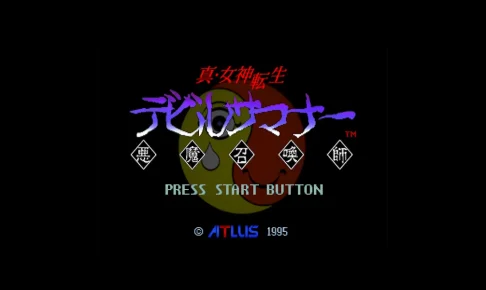
Map Guide: Floor Maps for All 38 Dungeons and 113 Floors
From here on you get floor maps for all 38 dungeons and 113 floors. Coordinates are written as “East ○ / North ○”, and the gray bands are walls. Map size varies by dungeon (largest 24×24, smallest 24×3 tiles).
The maps were rebuilt as SVGs from the Super Famicom walkthrough maps at dds.opatil.com. The PC Engine and Super Famicom versions share exactly the same dungeon structure (wall placement, floor counts, coordinates), so these maps apply to both without any changes. Small buildings such as your house and the neighbor’s house are mapped too, but the ones that really matter are the large dungeons from the Kongokai onward.
Can You Play Shin Megami Tensei on Modern Hardware? A Platform-by-Platform Guide
✅ The verdict
The Super Famicom version of Shin Megami Tensei is available right now on Nintendo Switch Online, so as of September 2026 you can play it on current hardware with no hassle. Playing the PC Engine version still requires original hardware, but the dungeon layouts are identical, so you can clear the game using the Super Famicom version.
① Titles playable through a subscription or for free
| Title | Platform | Price / notes |
|---|---|---|
| Shin Megami Tensei (Super Famicom version) | Nintendo Switch / Switch 2 | No extra cost with a Switch Online membership (added July 15, 2020) |
The Nintendo Switch Online release is by far the easiest way in today. It’s the Super Famicom version presented as-is, and you can suspend and resume whenever you like. Because the dungeon layouts are exactly the same as the PC Engine version, every map in this guide works for the Switch Online release too.
② Titles available as standalone purchases
| Title | Platform | Price / notes |
|---|---|---|
| Shin Megami Tensei (Super Famicom port) | iOS / Android | Released in 2012. Check each storefront for current availability (as of September 2026) |
③ Titles playable via remaster or remake
As of September 2026, no remaster or remake of Shin Megami Tensei exists. Later entries in the series are readily available on current hardware, though: Shin Megami Tensei V: Vengeance (2024, Switch/PS4/PS5/Xbox/Steam) and Shin Megami Tensei III NOCTURNE HD REMASTER (2020, Switch/PS4/Steam).
④ Titles hard to get on modern hardware
| Title | Platform | Notes |
|---|---|---|
| Shin Megami Tensei (PC Engine version) | PC Engine SUPER CD-ROM² | Requires original hardware plus a used copy. The visual scenes are exclusive to this version |
| Shin Megami Tensei (PlayStation version) | PlayStation | Released in 2001. Not available on the PS Store |
| Shin Megami Tensei (Game Boy Advance version) | Game Boy Advance | Released in 2003. Shin Megami Tensei II and if… also came to Game Boy Advance |
There’s no way around it: playing the PC Engine version means owning the hardware. For the purposes of actually beating the game, though, the Switch Online release (the Super Famicom version) gives you the identical experience. Original hardware is only worth chasing if you specifically want to see the extra visual scenes unique to the PC Engine release. Start with Switch Online, and if the series hooks you, move on to Shin Megami Tensei V: Vengeance or Shin Megami Tensei III NOCTURNE HD REMASTER. That’s the route I’d recommend.
Enjoying this article? Add us as a preferred source on Google.
Final Thoughts: Shin Megami Tensei Is an RPG About Watching Everyday Life Collapse
The Super Famicom version arrived in 1992, and the PC Engine version followed on Christmas 1993 with visual scenes and voice acting added. On top of a sheer scale of 38 dungeons and 113 floors, the three-way LAW / NEUTRAL / CHAOS route split gives the game serious replay value.
The heart of the game is simple to state: recruit demon allies through demon negotiation, fuse them at the Cathedral of Shadows, and manage your alignment as you push forward. You witness the Great Destruction in Kongokai, take down the Four Heavenly Kings in the ruins of Tokyo, and face the final battle in the Cathedral. The NEUTRAL route throws the most final bosses at you and is the toughest of the three, but as a rare RPG that lets you see through a choice to side with neither god nor demon, it’s still being talked about more than 30 years later.
Today you can play it at no extra cost through Nintendo Switch Online (the Super Famicom version). The PC Engine visual scenes can only be seen on original hardware, but since the dungeon layouts are identical, every map in this guide works for every version.
Shin Megami Tensei is the historic release that carved out a third path for RPGs, one that wasn’t Dragon Quest and wasn’t Final Fantasy. The addictive loop of demon negotiation and fusion, the weight of the alignment split, and a Tokyo leveled by nuclear war as your setting: 30 years on, you can count the RPGs about the collapse of daily life that match it on one hand. The PC Engine visual scenes are the best kind of fan service, rounding out the original, but the essence of the game was already complete in the Super Famicom version. Keep an eye on your alignment and the balance is fair enough to clear on a first playthrough. The NEUTRAL route is the one exception. Make peace with what you’re in for before you set foot in the Cathedral.
The origin point of the Megaten series, and the game that changed the questions an RPG could ask. You can start it on Switch Online right now.
Read Next
Snicker Kitamura
Leave a Reply