

Enjoying this article? Add us as a preferred source on Google.
“Died on B2. Turned to ash. Didn’t even leave a tombstone behind.” Wizardry is the holy ground you only reach if you can take a sentence like that as a reward. More than forty years have passed since the original was born on the Apple II in 1981, and the veterans who’ve been baptized by unfair traps, out-of-nowhere party wipes, and characters deleted forever are still crawling underground today.
This ranking was built for those veterans. “Pretty graphics” and “easy to get into” are strictly secondary here. We scored all 20 entries in the series out of 100 points, Japanese-made and Western-made alike, across four axes: dungeon density, brutality, replay depth, and availability.
I can already hear it: “Of course The Five Ordeals takes the top spot, look at the play value.” Argue all you want. There is no single correct answer in Wizardry. If this scoring made you angry, congratulations, that’s proof you’re the real thing.
Between the scoring table below and the breakdown of each rank, you should find your next descent.
All 20 Wizardry Games Scored and Compared
The highest brutality score goes to Wizardry IV (92 points), while The Five Ordeals tops both dungeon density and replay depth (95 points each). Availability was scored on how easy each game is to actually play as of 2026. Don’t just read the totals; pick using the axis you personally care about.
| Rank | Title | Dungeon Density | Brutality | Replay Depth | Availability | Total Score |
|---|---|---|---|---|---|---|
| #1 | Wizardry: The Five Ordeals | 95 | 92 | 95 | 58 | 340 |
| #2 | Proving Grounds of the Mad Overlord remake (2024) | 85 | 88 | 75 | 80 | 328 |
| #3 | Wizardry: Llylgamyn Saga (Sega Saturn) | 90 | 85 | 85 | 62 | 322 |
| #4 | Wizardry: Dimguil (PS1) | 85 | 82 | 78 | 68 | 313 |
| #5 | Wizardry Gaiden II: Curse of the Ancient Emperor (GB) | 80 | 82 | 75 | 70 | 307 |
| #6 | Wizardry Empire II: Legacy of the Princess | 78 | 72 | 82 | 68 | 300 |
| #7 | Wizardry Gaiden I: Suffering of the Queen (GB) | 78 | 80 | 70 | 68 | 296 |
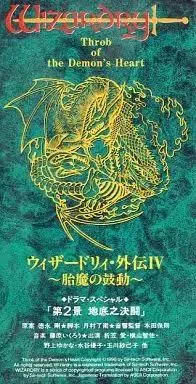
| #8 | Wizardry Gaiden IV: Throb of the Demon’s Heart | 75 | 78 | 70 | 65 | 288 |
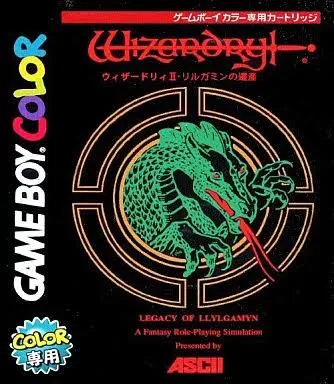
| #9 | Wizardry II: Legacy of Llylgamyn (GBC) | 72 | 72 | 68 | 68 | 280 |
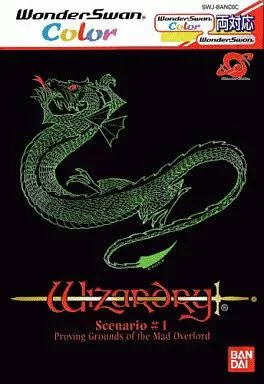
| #10 | Wizardry I (Game Boy Color version) | 70 | 68 | 68 | 72 | 278 |
| #11 | Busin 0: Wizardry Alternative Neo | 68 | 65 | 70 | 65 | 268 |
| #12 | Wizardry: New Age of Llylgamyn (PS) | 68 | 65 | 65 | 60 | 258 |
| #13 | Busin: Wizardry Alternative (PS2) | 65 | 62 | 65 | 62 | 254 |
| #14 | Wizardry I-II-III: Story of Llylgamyn (SF Memory) | 68 | 68 | 62 | 48 | 246 |
| #15 | Wizardry: Labyrinth of Lost Souls | 55 | 50 | 62 | 75 | 242 |
| #16 | Wizardry Empire: Princess of the Ancient / Staff of Resurrection (GBC/PS) | 60 | 58 | 60 | 55 | 233 |
| #17 | Wizardry 8 | 72 | 58 | 68 | 32 | 230 |
| #18 | Wizardry Variants Daphne | 52 | 45 | 55 | 72 | 224 |
| #19 | Wizardry VI: Bane of the Cosmic Forge | 68 | 62 | 62 | 22 | 214 |
| #20 | Wizardry IV: The Return of Werdna | 72 | 92 | 28 | 15 | 207 |
#1: Wizardry: The Five Ordeals
| Dungeon Density | Brutality | Replay Depth | Availability | Total Score |
|---|---|---|---|---|
| 95 | 92 | 95 | 58 | 340 |
Recommended if you played the early Wizardry games on the Famicom or PlayStation and want that feeling again.
If that isn’t you, I can’t recommend it at all.
Source: Steam user review
And that right there is exactly why Wizardry rules.
This is stoic, hardcore, real classic Wizardry, resurrected for the modern era with zero compromises.
The spells aren’t the original ones, but the “you could play this for the rest of your life” factor blows straight past that quibble.
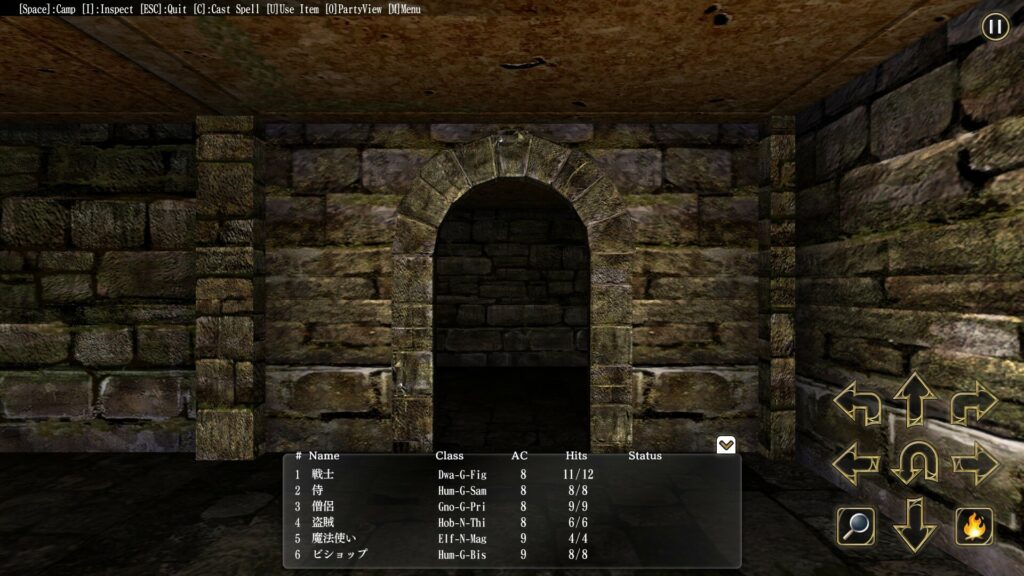
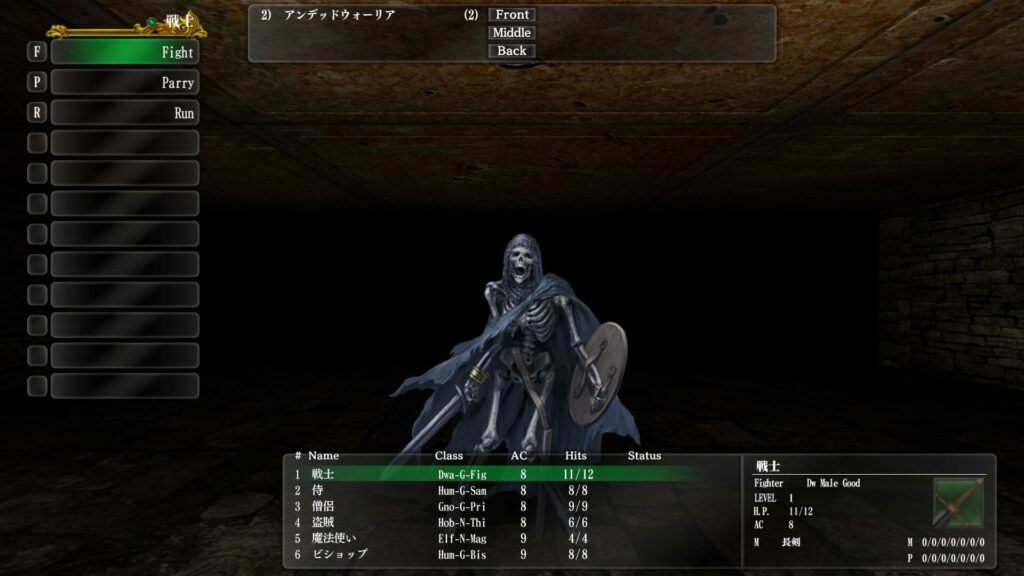
The single biggest draw is the library of 100-plus high-quality user-made scenarios built by players over more than fifteen years.
And the fact that they’re free to download is genuinely remarkable.
They run the gamut from short beginner-friendly runs to brutally difficult masterpieces said to outdo the originals (Eien no Shugosha, “The Eternal Guardian,” being the classic example), which is what makes “play it forever” a literal description.
Old-school Wizardry is great, but do yourself a favor and dig into all the different flavors of “my Wizardry” that players have built.
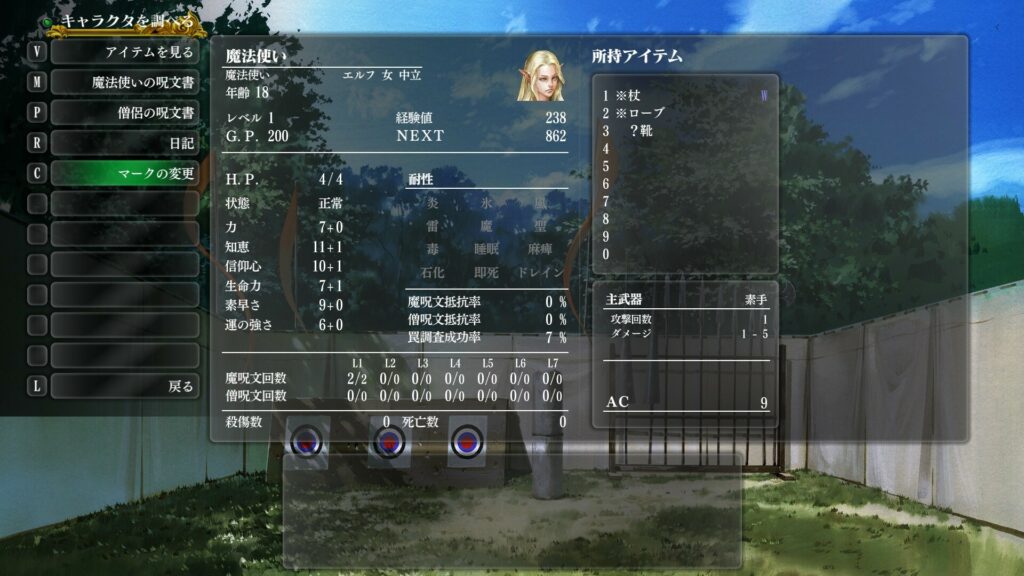
- Downloadable scenarios on top of the main campaign, for a staggering amount of content
- Every scenario has its own rules, so each run feels fresh
- Playable on current hardware and PC, which keeps the barrier low
- A slight letdown if you wanted the original spell list
#2: Proving Grounds of the Mad Overlord Remake (2024) | Steam / Switch / PS4-5 / Xbox / 2024
| Dungeon Density | Brutality | Replay Depth | Availability | Total Score |
|---|---|---|---|---|
| 85 | 88 | 75 | 80 | 328 |
A full remake handled by Digital Eclipse. It reproduces the 1981 original’s map data faithfully while letting you flip between wireframe and modern graphics at any moment. As “that experience, officially, on current hardware,” it’s the correct answer as of 2024.
Being purchasable on Steam, Nintendo Switch, PS4/5, and Xbox gives it overwhelming reach, and that earns the highest availability score in this ranking (80 points). The dungeon’s unfairness is inherited from the original, and permanent character loss is still in there. It’s the only official release that lets you feel out “what Wizardry actually is” on modern infrastructure.
It also has a reputation as a milder strain of Wizardry, which makes it a solid pick if adult life has worn down your tolerance for punishment.
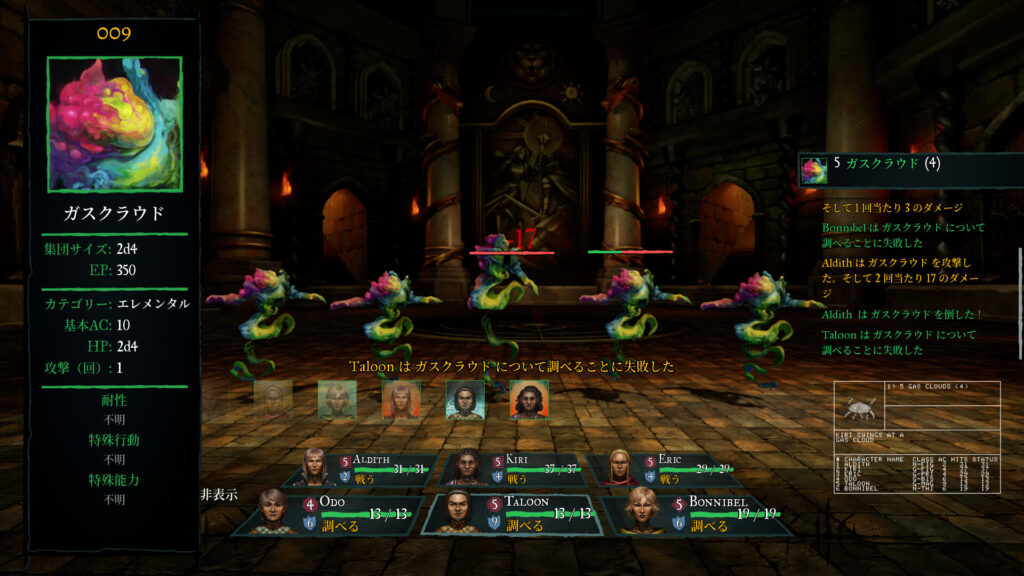
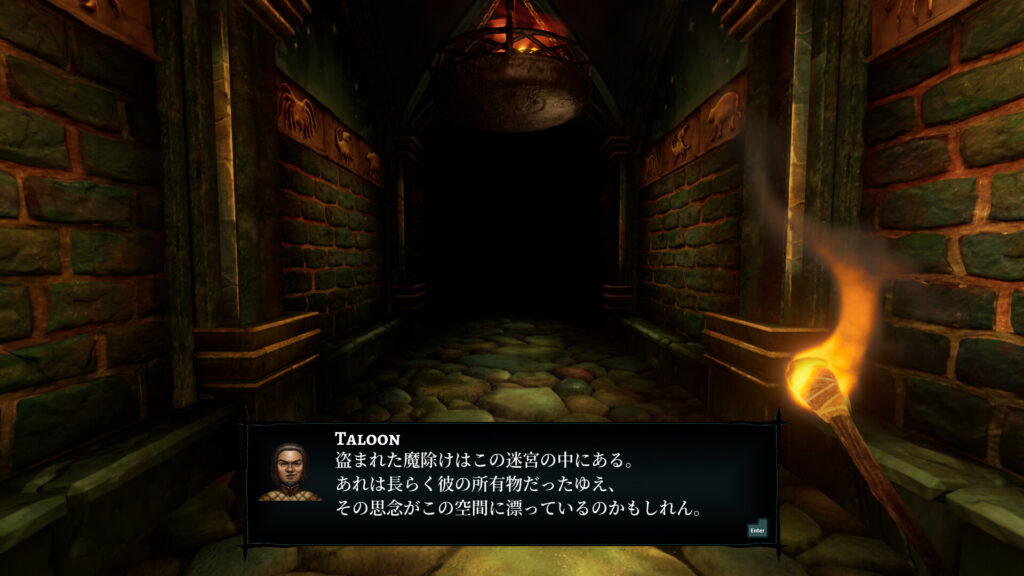
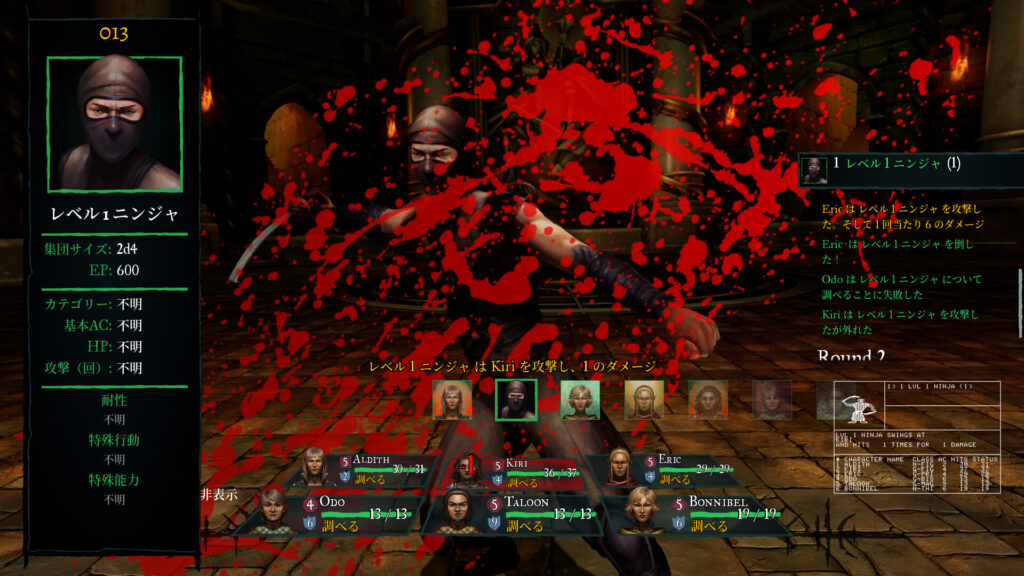
- The only purist entry you can actually buy right now on Steam, Switch, PS4/5, and Xbox
- Swap freely between wireframe ↔ modern graphics
- Fully inherits the original’s punishing difficulty and permanent character loss
- Because it recreates the original faithfully, there’s less content than The Five Ordeals
- The Steam version runs around 2,000 yen (as of June 2026)
#3: Wizardry: Llylgamyn Saga | Sega Saturn / 1996
| Dungeon Density | Brutality | Replay Depth | Availability | Total Score |
|---|---|---|---|---|
| 90 | 85 | 85 | 62 | 322 |
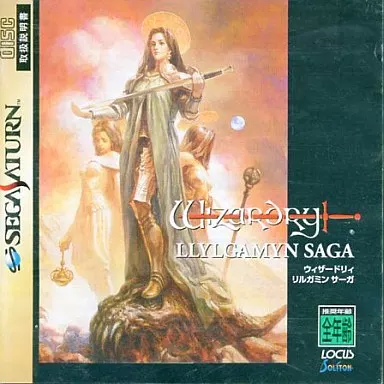
A compilation that ported and upgraded Wizardry I through III for the Saturn. With added visuals and sound, it was the best possible way at the time to experience the Western Wizardry mainline. The sheer bulk of having every scenario in the classic I-III trilogy in one package is the basis for that 90-point dungeon density score.
The post-game bonus dungeon is something the PS, Famicom, and Super Famicom versions don’t have, and it pushes the satisfaction level well past the competition.
If you’ve got a Saturn and a used copy sitting around, this is still a top-tier experience, but availability lands at 62 points and the modern reality is rough. It carries real collector value too, and clean, well-preserved copies have shot up in price.
- Enormous value: all of Wizardry I through III on a single disc
- Saturn-grade visual and audio upgrades make exploring far more comfortable
- Lets you blast through the Western Wizardry mainline in Japanese
- You need to track down both a Saturn console and the disc.
- Used prices are trending upward, and clean copies get expensive fast
#4: Wizardry: Dimguil (PS1) | PlayStation / 2001
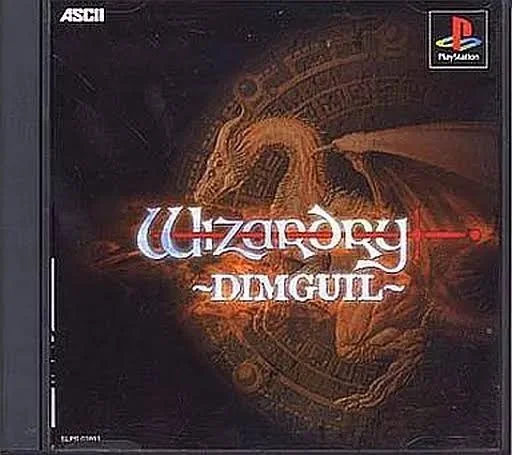
| Dungeon Density | Brutality | Replay Depth | Availability | Total Score |
|---|---|---|---|---|
| 85 | 82 | 78 | 68 | 313 |
This one occupies a spot all its own even among the Japanese-developed Wizardry games. The class change system runs deep, and the design where a character’s growth determines which advanced classes open up hooked the min-max crowd hard. The dungeons mix multiple terrain elements, with a wide variety of traps, darkness, and moving floors, so the pure joy of dungeon crawling really shines.
Very much an ASCII-published game, with story beats tuned for a Japanese audience, and that lands well.
As PS1 software goes, it’s still on the easier side to find used. It nails the core of Wizardry (dungeon crawling plus character building) with high polish, which is what earns it fourth place as “the Japanese-made entry that makes veterans nod.”
There’s a bug that makes powering up characters trivially easy, but honestly, that quirk included, this is the Wizardry you can hand to a newcomer.
- A deep class change system that gives you huge freedom in building characters
- Excellent dungeon design built around multiple terrain elements
- The unpatched version is relatively easy to find used
- The patched version has gone super-premium and is very hard to obtain
- The difficulty is comparatively low
[No. 5] Wizardry Gaiden II: Curse of the Ancient Emperor (GB) | Game Boy / 1992
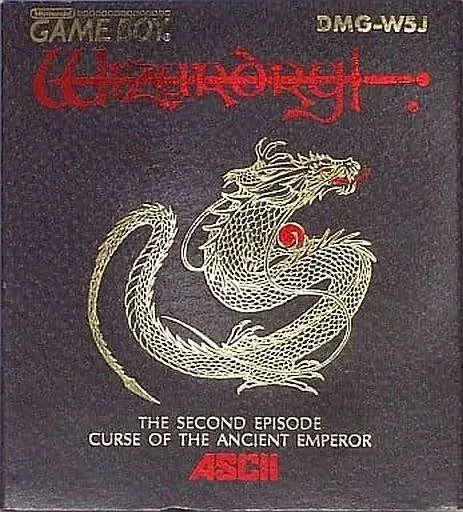
| Dungeon Density | Brutality | Depth | Availability | Total Score |
|---|---|---|---|---|
| 80 | 82 | 75 | 70 | 307 |
This is the second entry in the Game Boy Wizardry Gaiden line, and it blows the doors off its predecessor. Compared to Suffering of the Queen, the class roster, the spell system and the scope of the world were all expanded dramatically. The weighty subtitle, Curse of the Ancient Emperor, is matched by a much denser scenario, and the sheer number of players whose Wizardry story starts right here is proof enough of its standing within the series.
It also deserves fresh credit for implementing every one of the mechanics that make Wizardry Wizardry — permanent character loss, THAC0, the chance of a spell fizzling outright — inside the tight constraints of a Game Boy cartridge. Availability lands at 70, which by Gaiden standards is a genuinely reachable target for collectors.
- The richest scenario and the deepest class list in the Game Boy Gaiden series
- Permanent character loss, spell failure and every other core Wizardry system fully intact
- The best-balanced entry point into the Gaiden line
- You need a physical Game Boy cartridge (it runs on Game Boy Advance too)
- The early game hits hard, and party wipes come thick and fast until you find your footing
[No. 6] Wizardry Empire II: Legacy of the Princess | Game Boy Color / around 2000
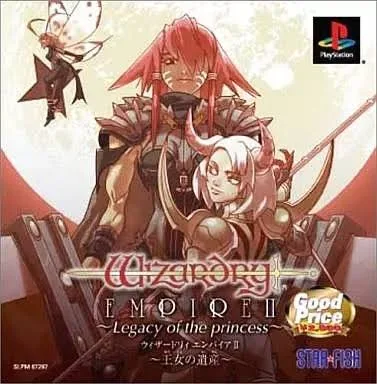
| Dungeon Density | Brutality | Depth | Availability | Total Score |
|---|---|---|---|---|
| 78 | 72 | 82 | 68 | 300 |
The second Empire game, built around systems expanded specifically for Game Boy Color hardware. Its Depth score of 82 is one of the highest anywhere on this list, pushed up there by a genuinely stacked lineup of postgame secrets and bonus dungeons. Brutality sits at a comparatively gentle 72, which is the Empire series in a nutshell: it will absolutely test you, but it never leans on pure unfairness to do it.
As a Game Boy Color release, tracking down a copy is a moderate challenge rather than a nightmare. Starting with Empire I will deepen your connection to the setting, but purely in terms of how polished the systems are, jumping straight into II costs you nothing.
- A deep well of postgame content that rewards long-haul players
- The most refined system design in the entire Empire series
- A difficulty curve that stops short of cruelty, so veterans can settle in for the long haul
- Being a Game Boy Color cart, it won’t run on modern hardware without a compatible handheld
- Skipping Empire I leaves some of the world’s backstory hard to piece together
[No. 7] Wizardry Gaiden I: Suffering of the Queen (GB) | Game Boy / 1991
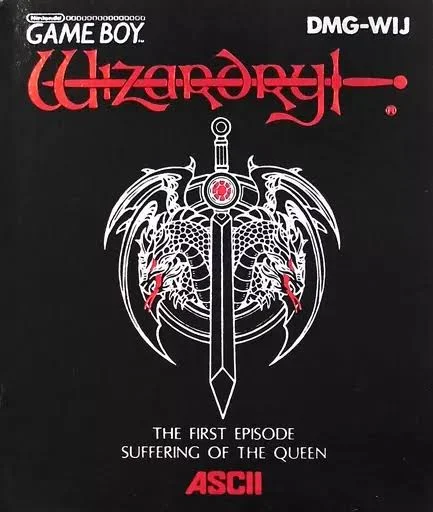
| Dungeon Density | Brutality | Depth | Availability | Total Score |
|---|---|---|---|---|
| 78 | 80 | 70 | 68 | 296 |
Ground zero for the Game Boy Gaiden series. There’s real stubbornness in what this first Game Boy entry pulled off: it crammed the beating heart of Wizardry — front and back ranks, THAC0, characters gone for good — into that tiny monochrome screen without cutting anything that mattered. This is the game that made people stop and say, wait, you can actually play Wizardry on a Game Boy?
A Brutality rating of 80 is steep for a series opener, and the first-time wipe rate is no joke. It gives ground to Gaiden II on class variety and the scale of its world, but its historical weight as the very first Gaiden — and how complete it feels — hasn’t faded a bit.
- The origin of the Gaiden line and the cornerstone of Japanese-made Wizardry
- A compact cartridge holding a full-strength Wizardry experience
- Playing it before Gaiden II makes the series’ evolution click into place
- Fewer classes and smaller dungeons than Gaiden II
- A Game Boy cart, so it won’t run on current hardware
[No. 8] Wizardry Gaiden IV: Throb of the Demon’s Heart | Super Famicom (SNES) / 1996
| Dungeon Density | Brutality | Depth | Availability | Total Score |
|---|---|---|---|---|
| 75 | 78 | 70 | 65 | 288 |
The final chapter of the Gaiden series. There’s a Super Famicom version alongside the Game Boy release, and the subtle spec differences between the two are catnip for collectors. As the subtitle Throb of the Demon’s Heart suggests, its calling card is a darker, distinctly off-kilter tone you won’t find elsewhere in the series. The back half of the dungeon ramps up viciously, and a Brutality score of 78 is no exaggeration.
It works as a bridge toward Dimguil, but most of the story radiates that specific “Japan as imagined from abroad, and gotten wonderfully wrong” energy — the same goofy charm that makes Tengai Makyou (Far East of Eden) such a good time.
(The second half wanders back to Llylgamyn, alas.)
Play it after Gaiden I through III and you can feel exactly how far the series traveled. Needing to account for both Game Boy and Super Famicom versions drags availability down a little, but if you’re chasing a complete Gaiden set, this one is non-negotiable.
- A surprisingly strong take on Japanese-flavored Wiz
- The gloriously questionable story beats are half the fun
- The late-game difficulty spike lands as the Gaiden series’ final exam
- One of the harder titles in the series to actually find
[No. 9] Wizardry: Legacy of Llylgamyn (GBC) | Game Boy Color
| Dungeon Density | Brutality | Depth | Availability | Total Score |
|---|---|---|---|---|
| 72 | 72 | 68 | 68 | 280 |
The Game Boy Color take on Wizardry II: Legacy of Llylgamyn — the game numbered III in the West — released in 1999, and it carries a serious reputation. Among the many Wizardry ports and remakes out there, this is the one people call a masterpiece and the definitive version, and the craftsmanship backs that up.
It holds onto everything that made the original Apple II release and the Famicom (NES) version sing, then layers on tuning that’s about as good as handheld Wizardry gets.
That perfect Famicom-era pacing and that heavy, brooding atmosphere both survive the trip, compressed down onto a handheld screen without losing a thing.
- A genuine step forward that never disrespects the original
- A rock-solid Wizardry experience running in a straight line from the source material
- The bonus scenario is a real value-add
- Used prices are, frankly, brutal
- Like the other Gaiden titles, you’ll need the physical Game Boy cartridge
[No. 10] Wizardry Game Boy Color Vol. 1 | Game Boy Color / 1999-2000
| Dungeon Density | Brutality | Depth | Availability | Total Score |
|---|---|---|---|---|
| 70 | 68 | 68 | 72 | 278 |
The first of the Game Boy Color conversions of the Famicom trilogy (all three shipped at the same time back then). Color support and reworked menus make it noticeably friendlier than the monochrome Game Boy releases. Its Availability score of 72 reflects the fact that a decent number of copies still circulate on the used market as a Game Boy Color title — though “decent number” doesn’t mean cheap.
Veterans may not feel much pull toward replaying the trilogy on Game Boy Color at this late date, but if what you want is ASCII-era Wiz in compact, in-your-hands form, this delivers. Play all three in sequence and you get the deep satisfaction of carrying your party forward across games.
There are also extras exclusive to this version, which is exactly why it commands so much attention on the secondhand market.
- Completes the ASCII Wizardry trilogy on Game Boy Color, character transfers included
- Color visuals and interface tweaks make it smoother than the original Game Boy releases
- As a Game Boy Color cart, it’s still reasonably findable used
- The dungeons follow the originals, so trilogy veterans won’t find much that’s new
- Being a Game Boy Color cart, modern play requires a compatible handheld
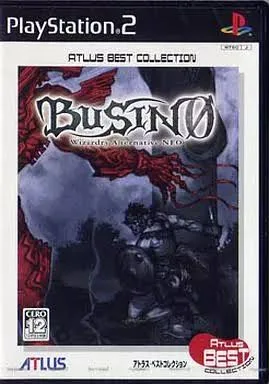
[No. 11] Busin 0: Wizardry Alternative Neo | PlayStation 2 / 2003
| Dungeon Density | Brutality | Depth | Availability | Total Score |
|---|---|---|---|---|
| 68 | 65 | 70 | 65 | 268 |
Acquire’s follow-up in the PlayStation 2 Busin line (the “0” is pronounced “zero”). It rebuilt the protagonist, the setting and the systems from scratch while holding onto the soul of Wizardry — managing your front and back ranks, the spell hierarchy, mapping the dungeon by hand. That Depth score of 70 comes straight from how much hidden content and replay material is packed in here.
Playing the original Busin: Wizardry Alternative first will give you a firmer grip on the world, but Busin 0 stands on its own as a complete experience. As a PlayStation 2 disc, secondhand availability is middle of the road.
Character designs come from Katsuya Terada. The world he built is genuinely unlike anything else in the series, and I’ll admit I had real hopes this would be the standard-bearer for a new era of Wiz. (Sigh.)
- The most content-rich entry in the Busin family
- A Wizardry filtered through Katsuya Terada’s art, which is an experience unto itself
- A PlayStation 2 release, so finding a used copy is realistic
- Skip the first Busin and the world and its cast feel thinner than they should
- Brutality is dialed down, so anyone hunting for a proper Wizardry beating will want more
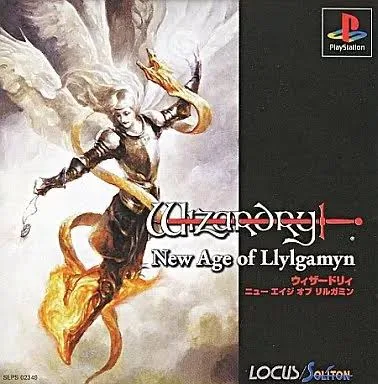
[No. 12] Wizardry: New Age of Llylgamyn (PS) | PlayStation / 1999
| Dungeon Density | Brutality | Depth | Availability | Total Score |
|---|---|---|---|---|
| 68 | 65 | 65 | 60 | 258 |
A PlayStation conversion of a title descended from the Western Wizardry bloodline. True to a name that literally promises a new age of Llylgamyn, it lets you walk that world again through a PlayStation-era interface. The dungeon design carries obvious reverence for the originals, and the result is a game where longtime players feel nostalgia and novelty at the same moment.
An Availability score of 60 reflects a strange middle ground: copies do circulate as a PlayStation-era release, but the game’s low profile outside the Wizardry faithful can make it a pain to hunt down. This one is aimed squarely at players who love the world of Llylgamyn deeply.
- A fresh interpretation of the Llylgamyn setting
- Tuned for a PlayStation controller and menus, so it plays comfortably
- Carries the DNA of the Western Wizardry mainline, which counts for a lot
- A PlayStation 1 disc, so you’ll need original hardware or a compatible console
- One of the least known and least widely distributed games in the whole Wizardry catalog
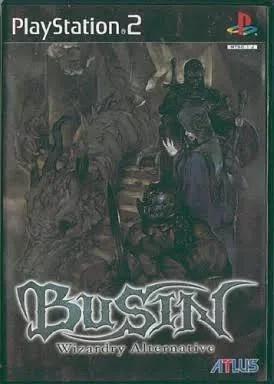
[No. 13] BUSIN: Wizardry Alternative (PS2) | PlayStation 2 / 2001
| Dungeon Density | Brutality | Depth | Availability | Total Score |
|---|---|---|---|---|
| 65 | 62 | 65 | 62 | 254 |
Acquire’s first crack at Wizardry on PS2. As the opening entry in the BUSIN line, it built its own world and its own cast from scratch. There’s a slightly more action-flavored edge here than in orthodox Wizardry, but the skeleton — front-and-back-row management, methodical dungeon crawling — is kept intact.
Play this one before BUSIN 0, because the series’ setting and story start here. Finding a used PS2 copy is realistic enough, though next to BUSIN 0 it gives up ground on sheer long-haul depth.
The character designs are once again by Katsuya Terada.
- The origin point for the world and systems of the Terada-designed WIZ line
- Acquire’s genuine attempt to reinterpret what Wizardry could be
- Tracking down a used PS2 copy is realistically doable
- Less endgame content than BUSIN 0
- The cruelty is dialed back compared to mainline Wizardry
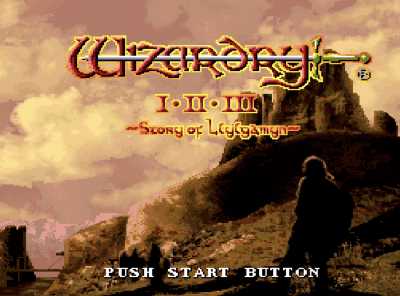
[No. 14] Wizardry I-II-III: Story of Llylgamyn (SF Memory Cassette) | Super Famicom SF Memory Cassette / 1996
| Dungeon Density | Brutality | Depth | Availability | Total Score |
|---|---|---|---|---|
| 68 | 68 | 62 | 48 | 246 |
The Wizardry trilogy as distributed on an SF Memory Cassette through the Satellaview service. The port makes real use of the Super Famicom hardware, and the 68-point dungeon density and 68-point brutality scores reflect how faithful it stays to the originals. Being able to say “I’ve actually played the SF Memory Cassette version” is a veteran badge in its own right.
The 48-point availability score sits near the bottom of this entire ranking, and playing it on original hardware today is close to impossible. It holds real value as a collector’s item and a historical artifact, but if you actually want to play these games, pick another platform.
It doesn’t even run on the Retro Freak, so your options for playing it today are grim.
(It took me something like 1,000 attempts before the cart finally read!)
- A high-quality, carefully made trilogy port built to Super Famicom standards
- Enormous historical value as a rare Satellaview-era experience
- A complete package with character transfer across all three games
- Playing it on genuine SF Memory Cassette hardware is all but impossible now
- Availability is bottom-tier — this is closer to a historical document than a game you’ll play
- Retro Freak officially states that it is not supported
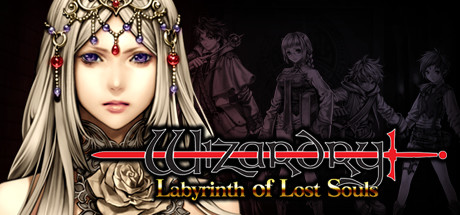
[No. 15] Wizardry: Labyrinth of Lost Souls | PS3 / PC (Steam and others) / 2012
| Dungeon Density | Brutality | Depth | Availability | Total Score |
|---|---|---|---|---|
| 55 | 50 | 62 | 75 | 242 |
A PS3 and PC Wizardry developed by Experience Inc. The 75-point availability score is driven almost entirely by how easy it is to grab on Steam. Dungeon density at 55 and brutality at 50 are both restrained next to the mainline games, and some veterans come away feeling it lands halfway between “modern convenience” and “classic bite” without fully committing to either.
That said, it’s the ideal re-entry point for anyone who’s been away from Wizardry for years. As one of the very few Wizardry-branded games you can play easily on current hardware, it earns its mid-table spot.
- Still purchasable on Steam and other storefronts, and it runs on current hardware
- Perfect as a warm-up or re-entry point for lapsed players
- Comparatively considerate UI and tutorials by series standards
- Dungeon density and brutality are far softer than mainline Wizardry
- Veterans will very likely find the difficulty underwhelming
[No. 16] Wizardry Empire: Princess of the Ancient / Staff of Resurrection (PS) | PlayStation
| Dungeon Density | Brutality | Depth | Availability | Total Score |
|---|---|---|---|---|
| 60 | 58 | 60 | 55 | 233 |
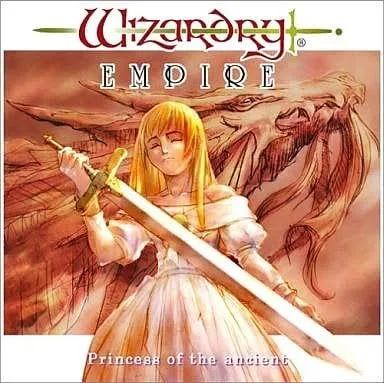
The two games that started the Empire line. The Game Boy Color release, Princess of the Ancient, and the PlayStation release, Staff of Resurrection, share the same setting and systems, but the PS version cleans up the interface dramatically. It’s less refined than Empire II mechanically, yet it’s where the whole world of the series gets established.
Needing two different consoles to see both halves is the barrier that keeps availability at 55. If you’re an Empire fan, tracing the line from the GBC version to the PS version makes for a genuinely fun collector’s journey.
- The origin of the Empire series’ world and characters
- Worth revisiting after Empire II to see where it all began
- Noticeably rougher systems than Empire II
- Hard to find, and prices have crept into premium territory
[No. 17] Wizardry 8 | PC (Windows, Steam) / 2001
| Dungeon Density | Brutality | Depth | Availability | Total Score |
|---|---|---|---|---|
| 72 | 58 | 68 | 32 | 230 |
Sir-Tech’s final Wizardry, and the last of the Western-developed line. It closes out the Cosmic trilogy that began with Wizardry 6 and 7, and the sense of narrative completion is superb. Dungeon density at 72 and depth at 68 are numbers any series fan will nod at, while the 58-point brutality score reflects the common read that the series changed direction with 8.
Availability at 32 is near the floor of this list, and getting hold of a copy today is genuinely difficult. A Steam-style re-release is high on everyone’s wish list, but as of June 2026 the official options remain thin. This is the capstone you want waiting after you’ve played the rest of the Cosmic trilogy.
- A hugely satisfying story payoff as the finale of the Cosmic trilogy
- Importing characters from Wizardry 6 and 7 delivers a real sense of achievement
- Relatively approachable difficulty by series standards
- No Japanese support, so translation is mandatory. Then again, it’s WIZ — you’ll manage, right?
- The softened cruelty will disappoint anyone chasing classic Wizardry
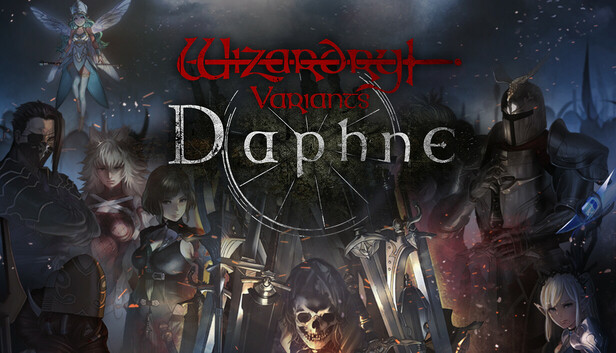
[No. 18] Wizardry Variants Daphne | iOS / Android / 2023-2024
| Dungeon Density | Brutality | Depth | Availability | Total Score |
|---|---|---|---|---|
| 52 | 45 | 55 | 72 | 224 |
Wizardry built for smartphones. The 72-point availability score comes down to the simple fact that you can still download and play it on the App Store and Google Play right now. Dungeon density at 52 and brutality at 45 reflect its mobile-game priorities, and the classic Wizardry baptism — the party wipe, the character lost forever — basically isn’t part of the deal.
The honest framing is this: it’s a game carrying the Wizardry name that you can actually play today. It has value as an on-ramp to the series, but there’s little reason for a veteran to sink hours into it.
- Live and playable right now on iOS and Android
- A friendly entry point for anyone who has never touched the series
- Free-to-start, so the barrier to trying it is basically zero
- Brutality and dungeon density are in a different universe from mainline Wizardry
- Gacha and monetization hooks make it a different animal from pure Wizardry
[No. 19] Wizardry 6: Bane of the Cosmic Forge | PC (DOS, Steam) / 1990
| Dungeon Density | Brutality | Depth | Availability | Total Score |
|---|---|---|---|---|
| 68 | 62 | 62 | 22 | 214 |
Part 1 of Sir-Tech’s Cosmic trilogy. Released in 1990 as Bane of the Cosmic Forge, it’s the landmark sixth entry that steered Wizardry toward science fiction. The quality of its dungeon design and the depth of its story rank among the best of late-period Sir-Tech, but the 22-point availability score puts it alongside the bottom two games on this list.
As of 2026 there is effectively no legitimate way to buy it. Playing 6, 7, and 8 straight through with a single imported party is often called the single greatest long-form journey in Wizardry history — but simply reaching the starting line takes real commitment.
- Dense storytelling that launches the entire Cosmic trilogy
- Character transfer into 7 and 8 makes the full trilogy run a treat
- Dungeon layouts and puzzle design at the peak of late-era Sir-Tech
- The Steam release has no Japanese support
- Playing the full trilogy demands serious time and setup work
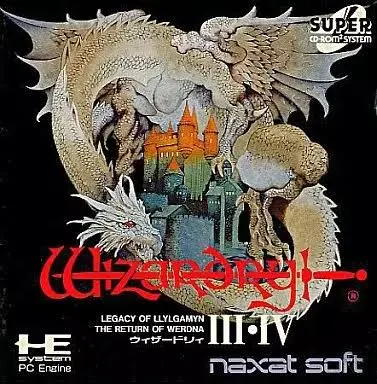
[No. 20] Wizardry IV: The Return of Werdna | PC (Apple II / DOS / PC Engine) / 1987
| Dungeon Density | Brutality | Depth | Availability | Total Score |
|---|---|---|---|---|
| 72 | 92 | 28 | 15 | 207 |
Brutality: 92 — the highest score anywhere in this ranking, and that’s the whole story. You play as Werdna, the final boss of Wizardry I and II. As the villain, you claw your way up from the bottom of the tower toward escape, in the only inverted Wizardry the series ever produced. Nothing else in the series is designed this strangely, and when someone asks “what’s the hardest Wizardry game,” the answer is still this one.
Availability at 15 is the lowest figure on the list. Buying it legitimately is nearly impossible, and the 28-point depth score simply reflects the reality that almost nobody finishes it. It sits dead last in the ranking, yet it stands alone as the purest expression of Wizardry’s experimental streak.
There was also a PC Engine release bundling it with Wizardry III, but good luck finding one. Good luck finding a PC Engine, for that matter.
- A one-of-a-kind villain-protagonist concept, plus the series’ highest brutality score of 92
- The most inventive piece of game design in Wizardry history
- No clear in the series feels bigger than this one
- Availability of 15 — there’s essentially no legal way to obtain it
- The completion rate is brutally low, and the 28-point depth score says it plainly
[Bonus] NIZ — An Homage Built Entirely Out of Love for Wizardry
NIZ is a free game best summed up in one line: it exists because Wizardry existed. Published by wizardarts.net and playable in a browser or as a download, this homage carries the creator’s deep understanding of and respect for Wizardry in every corner of its design.
I’m not going to score it alongside commercial releases, but “free, playable right now, and dripping with the author’s love for Wizardry” makes it worth an evening of any veteran’s time. That a doujin freeware project can hit this level of quality says everything about how deep the Wizardry community runs.

Enjoying this article? Add us as a preferred source on Google.
Final Thoughts — Wizardry Isn’t Finished With Us Yet
Having scored all 20 of these from top to bottom, I’m more convinced than ever: Wizardry isn’t a genre, it’s a faith. A character gets erased, the whole party goes down, and you still turn back toward the stairs muttering “one more run and I’ve got it.” Forty years on, that mindset hasn’t changed an inch.
If you want something you can play tonight, the Proving Grounds of the Mad Overlord remake (2024) is the answer. It’s on Steam, Switch, and PS5, and it delivers the original’s merciless difficulty through a modern interface. If it’s raw playtime you’re after, go for Wizardry Gaiden: Five Ordeals — hunting down a GBA cartridge or setting up an emulator is absolutely worth the effort.
And even Wizardry IV, dead last on this list, deserves a descent if you ever manage to get your hands on it. You’ll understand exactly what a brutality score of 92 means — in your bones.
If you want to play on current hardware right now, it’s the Proving Grounds of the Mad Overlord remake (2024); if you want something to disappear into, it’s Wizardry Gaiden: Five Ordeals. Those two are our final answer for veterans. Very few entries deliver brutality, dungeon density, and availability all at once — but with Wizardry, I’ve come to feel that the hassle of tracking a game down is part of the experience too.
A character gets erased? Roll another one. That’s Wizardry.
Read Next

Snicker Kitamura



Leave a Reply