
Enjoying this article? Add us as a preferred source on Google.
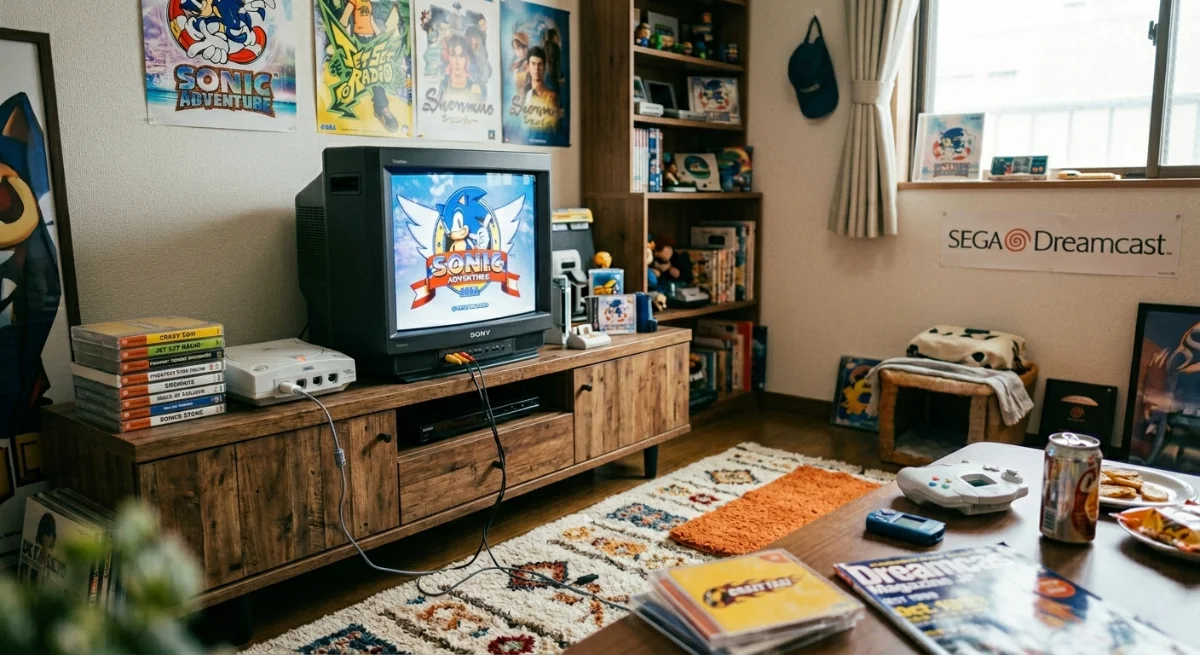
The Dreamcast: Sega’s legendary console, unleashed in 1998. Whether you played it back in the day or only know it by name and never got your hands on one, 2026 is not too late to jump in. If anything, some of its charms are easier to appreciate now than they were back then.
This was a revolutionary piece of hardware: the first console in the world to ship with internet connectivity built in, and one that brought arcade-board tech into the living room almost unchanged. More than 20 years after it was discontinued, titles like Jet Set Radio and Shenmue are still the stuff of legend. And that “energy of an era” is still available on the used market at prices you can actually afford.
This article is your complete guide, covering how to get the console, how to hook it up to a modern TV, and which games to play. It’s a 2026 Dreamcast starter guide put together by the SpotGeeks editorial team after actually digging through the used market.
If you’re thinking, “I’m curious about retro games, but it all sounds like a hassle,” this one’s for you. The Dreamcast is easier to get into than you’d think, and it’s still more fun than you’d expect.
📋 Table of Contents
*Prices in this article are converted from Japanese yen at ¥153 = US$1 (September 2026 rate).
What Kind of Console Is the Dreamcast? The Truth About a Legend Way Ahead of Its Time

The Dreamcast is a home console Sega released on November 27, 1998. It launched at $195. Arriving on the eve of the PlayStation 2, it was the last home hardware Sega ever made, and the company bet its future on it.
What makes it legendary? How far ahead of the curve it was. It was the world’s first home console with internet connectivity as standard, packing a built-in modem that made online gaming a reality. When Phantasy Star Online dropped in 2000, gamers all over Japan were blown away by the idea of playing online from their own living rooms.
Under the hood, it shared its architecture with Sega’s NAOMI arcade board. In other words, you could play arcade games at home almost exactly as they were. That’s why Soulcalibur and Crazy Taxi made headlines not as “ports” but as “perfect recreations.”
| Spec | Details |
|---|---|
| Release Date | November 27, 1998 (Japan) |
| CPU | Hitachi SH-4 (200MHz) |
| GPU | PowerVR2 (CLX2) |
| Memory | 16MB RAM + 8MB VRAM |
| Media | GD-ROM (proprietary format) |
| Connectivity | Built-in modem (33.6kbps) |
| Discontinued | 2001 (production ended in Japan) |
Production ended in 2001, but not because the hardware flopped; it was because Sega pulled out of the console business altogether. The quality of the library is beyond question. To this day, there are plenty of titles people describe as “experiences you can only get on Dreamcast,” and that’s the real value of this machine.
How to Buy a Dreamcast and 2026 Used Prices: Where Should You Get One?
Dreamcast consoles are still circulating on the used market today. That said, prices vary a lot depending on condition and what’s included. Here’s a rundown of prices as of 2026.
Dreamcast Console Prices in 2026
| Where to Buy | Typical Price | Notes |
|---|---|---|
| Yahoo! Auctions | $59–$98 | Lots of listings. Always check for a “tested and working” note |
| Mercari | $52–$85 | Mostly individual sellers, so easy to negotiate. Check condition in the photos |
| Hard Off | $20–$65 | Physical stores let you check condition in person. You might stumble on a hidden gem |
| Retro game specialty shops | $65–$118 | Serviced units for peace of mind. BEEP, Surugaya, and others |
| Amazon (used) | $78–$131 | Pricier, but you get buyer protection |
3 Things to Check Before You Buy
1. Condition of the optical drive: The Dreamcast’s chronic weak spot is its aging optical drive. GD-ROM reading tends to get flaky over time, so prioritize listings that say things like “tested and working” or “recently powered on.”
2. Included accessories: Check whether the controller, VMU, power cable, and AV cable are all part of the set. Piecing them together separately gets surprisingly expensive.
3. Console color and model number: The standard model is white. Limited colors (translucent, color-shifting “Majora” paint, and so on) command premium prices, so if you just want to play, the standard model is all you need.
How to Play Dreamcast on a Modern TV: HDMI and VGA Output Guide
A lot of people assume that because the Dreamcast outputs analog video, it won’t display on a modern 4K TV if you just plug it in. But there are real solutions. In fact, the Dreamcast supports VGA output, which gives it some of the best picture quality of any retro hardware from its generation.
Your Connection Options
| Method | Estimated Cost | Difficulty | Picture Quality |
|---|---|---|---|
| Included composite cable | $0 (included) | ★☆☆ Easy | Fair: blurry |
| VGA cable + VGA-to-HDMI converter | $13–$26 | ★★☆ Moderate | Excellent: sharp |
| HDMI Converter V2 (dedicated device) | $39–$52 | ★☆☆ Easy | Excellent: best quality |
Our top recommendation is a VGA cable paired with a VGA-to-HDMI converter. A Dreamcast VGA cable runs around $13 on Amazon or Surugaya, and with a VGA-to-HDMI converter the whole setup comes to $20–$26. VGA output runs at 480p, and it looks remarkably sharp compared to other hardware from the same generation.
There’s a catch, though: some games don’t support VGA. A handful of titles, including Space Channel 5 and Sakura Wars 3, won’t boot over VGA. The fix is the “HDMI Converter V2,” which has a switch to toggle between VGA and RGB output, so it works with every game. If you’re serious about enjoying the Dreamcast, it’s worth the investment.
Still a Blast Today: 10 Best Dreamcast Games to Play
The Dreamcast library is packed with Sega’s signature arcade soul and a personality you simply won’t find anywhere else. Focusing mostly on titles you can still grab at reasonable prices on the used market, SpotGeeks handpicked the 10 games we genuinely want you to play.
Soulcalibur
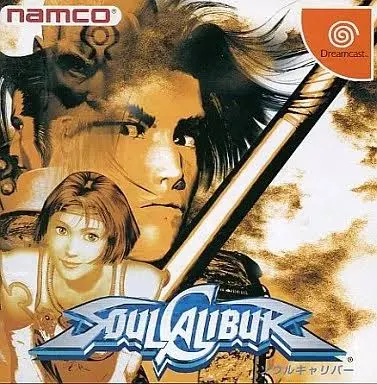
| Genre | 3D fighting |
| Publisher | Namco |
| Used Price Range | $3–$13 |
| Reception | Perfect scores across game magazines of the day, plus a pile of GOTY awards |
This is the one game you absolutely can’t leave out of any Dreamcast conversation. A 3D weapons-based fighter that came home as a perfect match for the arcade version—no, actually better than the arcade version. Back in 1998, it sent shockwaves through the entire industry with a simple question: “A home console can do this?” It’s a legendary title. More than 20 years later, the core gameplay hasn’t aged a day. If you love fighting games, this is a must-own.
Jet Set Radio
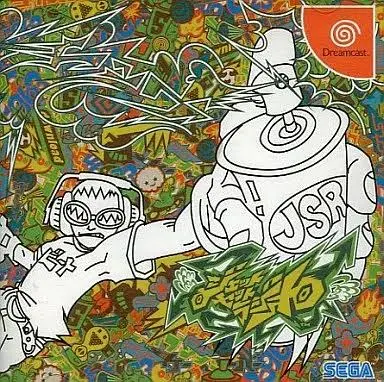
| Genre | Action |
| Publisher | Sega |
| Used Price Range | $7–$26 |
| Reception | A cel-shading pioneer. The remaster is also available on Steam |
Here it is: Jet Set Radio, the game that brought cel-shading to the masses. Tearing through the city on inline skates and tagging walls with spray paint is a concept that still feels one of a kind, and the music, visuals and game design all fuse together perfectly. You can play the remaster on Steam, but playing the original on Dreamcast is a whole different experience.
Shenmue (Chapter 1: Yokosuka)
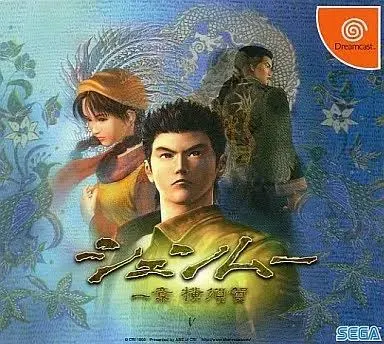
| Genre | Adventure |
| Publisher | Sega |
| Used Price Range | $7–$20 |
| Reception | A development budget of about $46 million at the time. The ancestor of open-world games |
It’s fair to call this the ancestor of the modern open-world game. You wander the streets of Yokosuka freely, talk to NPCs, watch time pass and the weather change—and it was doing all that in 1999. The budget was reportedly around $46 million at the time, making it a project on a scale that earned it a place in gaming history. People still talk about it as an “experience” more than a game. If you enjoy a slow-burn pace, this one should hit hard.
Crazy Taxi
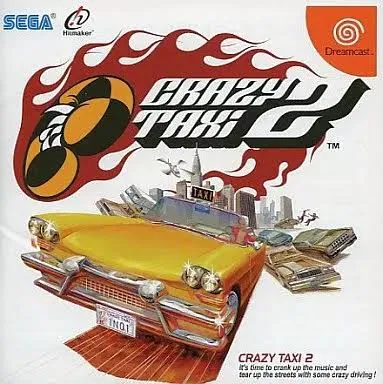
| Genre | Racing action |
| Publisher | Sega |
| Used Price Range | $2–$10 |
| Reception | A faithful arcade port. The Offspring soundtrack is the best |
Pick up a fare, floor it, and get them to their destination as fast as possible—that’s it, and yet it never gets old. This is Sega arcade design at its absolute finest. Blasting through traffic while The Offspring plays is a rush, and the Dreamcast version is the complete package you can only get here. It’s cheap on the used market, too, making it the perfect starter game.
Phantasy Star Online (PSO)
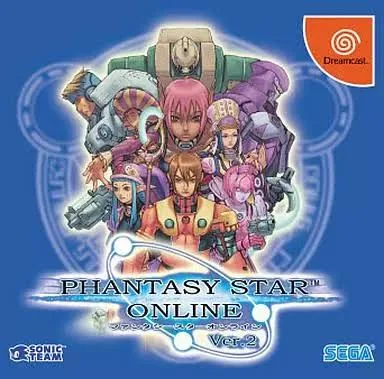
| Genre | Online RPG |
| Publisher | Sega |
| Used Price Range | $3–$13 |
| Reception | The first full-fledged online RPG on a home console. Where PSO2 began |
A full-blown online RPG on a home console—the shock of that in 2000 is hard to overstate. The official servers are long gone, but fan-run private servers mean you can still play online today. There’s plenty to enjoy solo, too, and it’s still remembered as a classic and the starting point for PSO2.
Rez
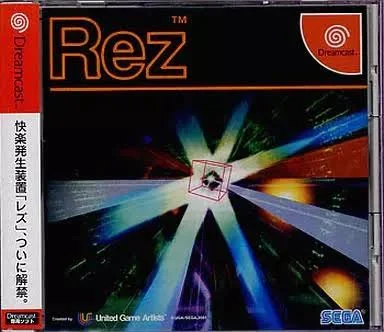
| Genre | Shooter / Music |
| Publisher | Sega |
| Used Price Range | $13–$39 |
| Reception | A work of art where sound, visuals and controls become one. A VR version came later |
A shooter where music, visuals and controls fuse completely, Rez has earned a lasting reputation as “less a game than an art experience.” Every shot triggers a sound, every enemy you take down builds a rhythm—and no description really does that feeling justice. It’s something you only get by playing it. It was later remastered for PS4, Steam and VR, but experiencing the original has a value all its own.
Space Channel 5
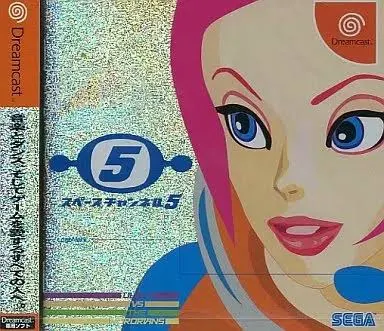
| Genre | Rhythm action |
| Publisher | Sega |
| Used Price Range | $3–$13 |
| Reception | The legendary game Michael Jackson took part in |
This rhythm game made headlines around the world when Michael Jackson showed up as a guest character. The completely bonkers premise—fighting off aliens with dance moves—and the colorful, poppy visuals still look fresh today. Its snappy, bite-sized pacing is a big part of the appeal, and it works great as a party game.
Sakura Wars 3: Is Paris Burning?
| Genre | Strategy / Adventure |
| Publisher | Sega |
| Used Price Range | $7–$33 |
| Reception | Widely hailed as the best in the series |
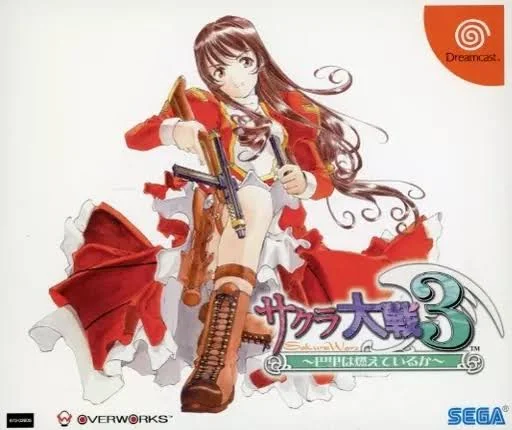
The third entry, often called the most polished game in the Sakura Wars series. Set in Paris, the drama you weave with the new members of the Imperial Floral Assault Troop was a masterpiece of storytelling that Japanese games could be proud of, then and now. The mix of adventure and strategy that defines the series is here in full force, and it’s made for players who want to take their sweet time with a game.
Grandia II
| Genre | RPG |
| Publisher | Game Arts |
| Used Price Range | $3–$13 |
| Reception | A classic RPG with a unique ATB system and a timeless story |
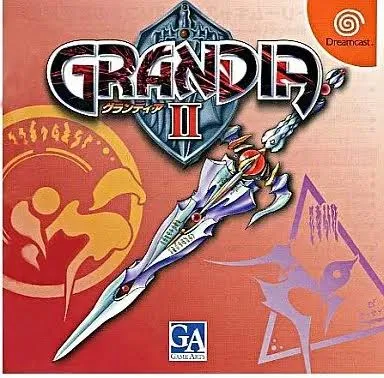
One of the defining RPGs on Dreamcast. Its unique active-turn battle system strikes a balance between strategy and pure fun, and it was an ambitious game that went toe-to-toe with the giants in an era when “RPG” basically meant Final Fantasy or Dragon Quest. It still holds up as a genuinely fun RPG today. There’s a remaster on Steam, but the Dreamcast version’s quality speaks for itself.
Power Stone 2
| Genre | 3D action brawler |
| Publisher | Capcom |
| Used Price Range | $13–$52 |
| Reception | Four-player battles are an absolute blast. A true rival to Nintendo’s Smash Bros. |
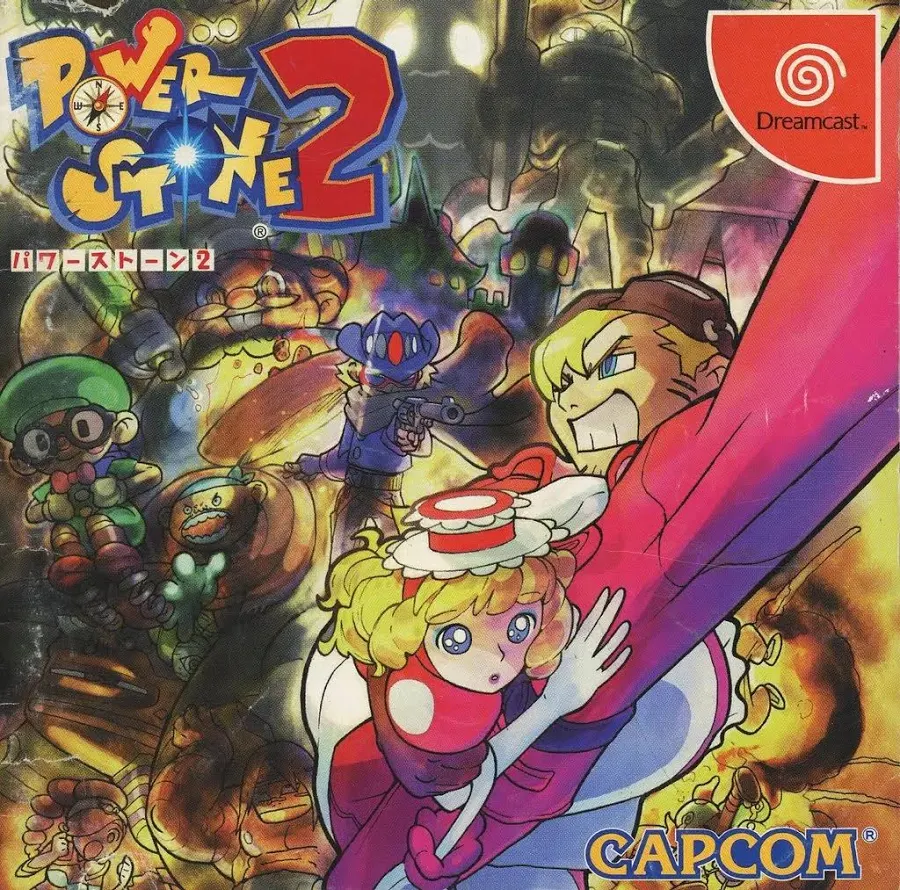
Capcom’s four-player action brawler for Dreamcast. Grabbing weapons and items scattered around the stage and using them to fight delivers a chaotic, explosive kind of fun that’s different from Smash Bros. If you’re getting friends together to play, this is hands down the top pick. Used prices run a bit high, but it’s absolutely worth owning.
Record of Lodoss War: Advent of Cardice
| Genre | 3D action RPG |
| Publisher | Kadokawa Shoten |
| Used Price Range | $13–$52 |
| Release Date | June 29, 2000 |
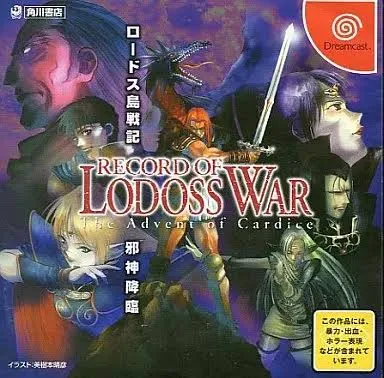
A 3D action RPG based on Ryo Mizuno’s novel series Record of Lodoss War. You play as a red-haired swordsman who’s lost his memory, unraveling the mysteries of the war against an evil goddess in a classic fantasy adventure. The 3D graphics that only Dreamcast could pull off and a story that carefully recreates the world of the source material really shine. Retro game fans still pass around the line that it’s “worth playing even if you have to sacrifice everything,” and it’ll hit especially hard if you love fantasy RPGs. Used prices vary widely depending on condition, and complete copies tend to go for more.
Segagaga
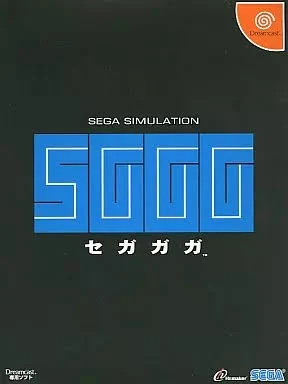
| Genre | RPG / Simulation |
| Publisher | Sega |
| Used Price Range | $65–$105 (collector’s premium) |
| Availability | Dreamcast Direct exclusive. Rare |
Segagaga (SGGG) is a meta RPG in which Sega pokes fun at itself, released through the unusual route of being sold exclusively via Dreamcast Direct. Set at “Segagaga,” a game company on the brink of collapse, it has you working as an employee trying to turn the company around, blending simulation elements with a nonstop stream of jokes overflowing with love for Sega’s games. Its collector value keeps climbing, and paying over $65 for a used copy is the norm—yet it’s still the one-of-a-kind game people say “every Dreamcast owner absolutely has to play.” Only a team with a deep love for Sega could have made it. It’s the Dreamcast’s final hidden ace.
Visual Memory Unit, Controllers and Accessories Guide
Dreamcast accessories were known as “bundles of ideas” even back in the day. And the one that still packs the most fun tricks is the Visual Memory Unit (VMU).
What Is the Visual Memory Unit (VMU)?
The Visual Memory Unit is a memory card that plugs into a slot on the controller. But it’s not just a memory card—it has a tiny LCD screen and buttons, so it can display in-game info while plugged into the controller, or run minigames all on its own.
In Soulcalibur, for example, the screen on the VMU in your controller displayed character stats. In Shenmue, grinding the VMU minigame could even affect the main game. That’s an idea Sega pulled off nearly a decade before Nintendo linked up the Game Boy and GameCube.
Types of Controllers and Accessories
| Accessory | Use / Features | Used Price Range |
|---|---|---|
| Standard controller | Two analog sticks. Distinctive shape | $3–$13 |
| Visual Memory Unit (VMU) | Memory card with an LCD screen. A must-have | $3–$10 |
| Arcade stick | Essential for fighting games. Perfect for Soulcalibur | $13–$52 |
| Light gun | Works with Time Crisis-style shooters | $7–$20 |
| Maracas controller | Made for Samba de Amigo. Shaking them is a blast | $13–$33 |
The controller has two slots, designed so you can expand its features by plugging in a VMU or a rumble pack. Most games won’t let you save without at least one VMU, so your best bet is to pick one up at the same time as the console.
Enjoying this article? Add us as a preferred source on Google.
Wrap-Up: You Won’t Regret Starting Your Dreamcast Life Today
The Dreamcast was born in 1998 and discontinued in 2001. But here in 2026, this console’s value hasn’t faded one bit. The blade clashes of Soulcalibur, the cel-shading of Jet Set Radio, the streets of Yokosuka in Shenmue—those were experiences that could only have come from that era.
You can pick up the console for around $65, and with a VGA connection it looks gorgeous even on a modern TV. Most of the recommended games can be had for anywhere from a few bucks to a few tens of dollars. The cost of entry for Dreamcast life is surprisingly low.
SPOTGEEKS VERDICT
The Dreamcast wasn’t a failure. It was a genius that got too far ahead of its time. Online connectivity, cel-shading, the first seeds of open-world design—things later generations would hail as “inventions,” Sega was already doing in 1998. Its library is still plenty of fun today, and Soulcalibur, Jet Set Radio and Rez in particular stand in a league of their own as “experiences you can only get on Dreamcast.” A $65 console, a $20 HDMI adapter and a handful of your favorite games—for under $130, you get a top-tier retro gaming experience. That’s almost too good a deal.
If you’re going to start, start now. Used prices keep creeping up.
Read Next
Snicker Kitamura


Leave a Reply