




Enjoying this article? Add us as a preferred source on Google.
- What kind of game is Terranigma? The finale of the Quintet trilogy
- Super Famicom original vs. the 2027 port: what’s different, what’s new
- The five attack actions and Magirock that carry the whole game
- Full walkthrough for all four chapters (28 dungeons)
- Every boss, plus an elemental resistance cheat sheet
Terranigma is an action RPG that Enix released for the Super Famicom on October 20, 1995. It tells a sweeping story modeled on the Book of Genesis, in which the hero Ark brings a dead world’s continents, life and civilization back from oblivion. Quintet handled development, and manga artist Kamui Fujiwara did the character designs.
The heart of the game is knowing when to use each of the five attack actions, and how to spend your Magirock on magic. The Middle Slicer in particular lets you move and attack at the same time, and it grants invincibility frames during the lunge. Whether you can slip through a boss’s bullet patterns with that move is what decides how brutal the endgame feels. On top of that, picking gear by attack power alone strips away your elemental resistances, so swapping equipment to suit each boss’s weakness is mandatory.
This guide uses the Super Famicom version as its baseline and covers the full walkthrough for all four chapters (28 dungeons in total), every boss strategy, and an elemental resistance cheat sheet. The port launching on January 14, 2027 contains the same game, so everything here works as prep for newcomers too. I’ve also flagged the points of no return, like the order-of-operations trap buried in the town development system.
I’ll come clean: on my first playthrough I bought weapons based purely on the attack stat and spent an eternity getting melted in a poison swamp. There were no strategy guides back then, and I remember hitting a wall around level 28 and shelving the cartridge for three days. Every time I spot a used copy in Akihabara, that bitter summer comes right back.
*Prices in this article are converted from Japanese yen at ¥153 = US$1 (September 2026 rate).
What kind of game is Terranigma? The finale of the Quintet trilogy
Terranigma is an action RPG about Ark, a boy who lives in the Underworld on the far side of the planet, and who revives the surface world’s continents, plants, animals, humans and civilization one step at a time. Together with Soul Blazer and Illusion of Gaia, it forms what fans call the “Quintet trilogy,” and it stands as the studio’s culminating work.
| Item | Details |
| Title | Tenchi Souzou (European release title: Terranigma) |
| Release date | Super Famicom: October 20, 1995 / Europe: December 19, 1996 |
| Publisher and price | Enix, $77 (before tax, at launch) |
| Developer | Quintet (director: Tomoyoshi Miyazaki / scenario: Reiko Takebayashi) |
| Character design | Kamui Fujiwara |
| Music | Miyoko Kobayashi and Masanori Hikichi |
| Genre and scale | Action RPG / four chapters, roughly 28 dungeons |
| Final goal | Defeat Dark Gaia at the Gaia Stone and restore the world’s balance |
The game runs on two layers: an RPG half where you travel the world map, and an action half where you explore dungeons. There are no random encounters on the field; all combat happens in real time inside dungeons. It controls a lot like Zelda or Secret of Mana, and as a mid-’90s Super Famicom action RPG the execution is exceptionally polished.
Terranigma earned a Silver Hall of Fame rating in Famitsu’s Cross Review. That said, 1995 was a stacked year that also gave us Chrono Trigger and Dragon Quest VI, and the game has long been talked about as an overlooked masterpiece that got buried among heavyweights. It never got an official North American release either — only the European version, Terranigma, made it overseas — which is surely part of why its name recognition never took off.
Super Famicom original vs. the 2027 port: which one should you play?

Let’s cut to it: if this is your first time, the port arriving January 14, 2027 is the only sensible choice. It’s the first official release in 31 years, and it packs modern safety nets like Arrange Mode, rewind, and a minimap. The game itself — dungeon layouts, bosses, story — is identical to the Super Famicom version, so every strategy in this guide applies to both.
| Item | Super Famicom (1995) | Port (January 14, 2027) |
|---|---|---|
| Saving | Save points only | Save and load anywhere (Arrange Mode) |
| Map display | None | Minimap that tracks how much you’ve explored |
| Difficulty options | None | Arrange Mode boosts magic damage and adds rewind |
| Controls | Fixed | Remappable buttons, item and magic shortcuts |
| Display | Locked 4:3 | CRT filter and multiple aspect ratios |
| Extra content | None | Museum (high-res illustration wallpapers, music player, archival materials) |
| Dungeon design | Identical in both versions (floor layouts, bosses and item placement all match) | |
Clear River Games is developing the port, with PLAION publishing. Character designer Kamui Fujiwara is fully involved, and the Museum is set to include period materials alongside newly produced high-resolution illustrations. Pricing runs $33 for the standard edition, $46 for the SteelBook edition, and $116 for the Gaia Edition (all before tax).
Meanwhile, Super Famicom cartridges keep climbing on the secondhand market. Because the game went 31 years without a single port, playing it on original hardware meant bracing for a real bill. That alone makes the port’s announcement good news. Unless you’re specifically chasing the feel of the original, waiting for the new release is simply the smarter play.
What systems actually matter? Learn to switch between the five attack actions
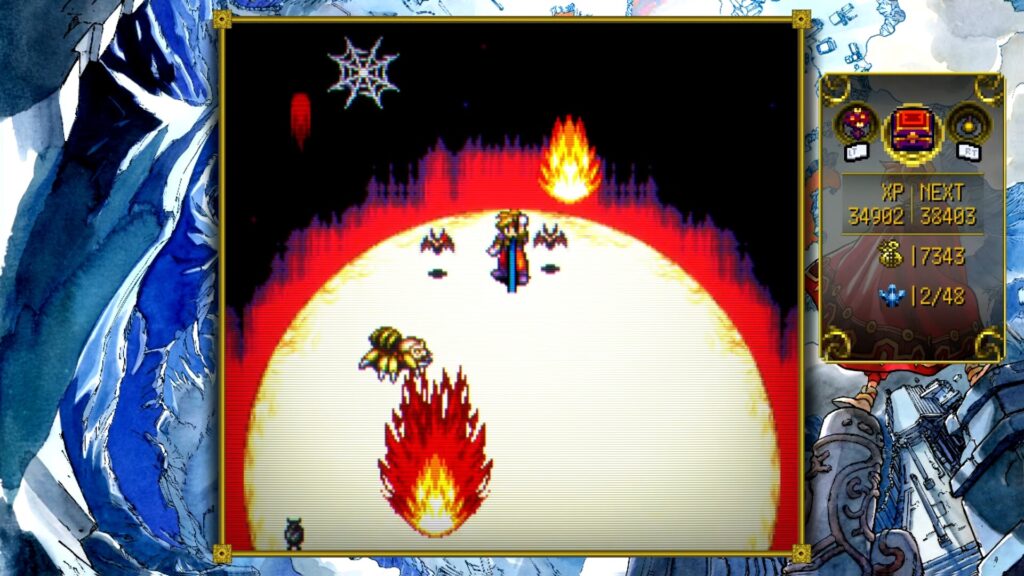
Combat in Terranigma comes down to picking the right one of five attack actions for the moment. Mashing a single move will not get you past the bosses from the midgame on. Learn exactly what each one is for.
The five attack actions
| Move | Use | Priority |
|---|---|---|
| Normal Attack | Your basic single hit. The workhorse for clearing trash mobs | ★★ |
| Rush Attack | Multi-hit flurry from rapid input. Good against high-defense enemies | ★★ |
| Middle Slicer | Attack while moving. Invincibility frames during the lunge let you pass through projectiles | ★★★ |
| Spin Attack | A spinning slash. Easy to land on flying enemies | ★★ |
| Leg Slider | A low sliding lunge. Big damage against short enemies | ★ |
The Middle Slicer is far and away the most important. Use the invincibility on the lunge and you can punch straight through a boss’s barrage and settle into a safe pocket. Put another way: until you have this move down, the late-game bosses are going to be rough. Start drilling it back in the Towers.
Magirock, rings and medals
Magirock is the game’s magic resource. Load it into a ring and you get elemental magic; forge it into a medal and you get summon magic. The total you can obtain across a playthrough is 103: 74 physical pickups plus 29 that already come pre-forged into medals. You can also buy it in shops and scoop it up from enemy drops.
Elemental magic is devastating when it hits a boss’s weakness, but the late-game bosses resist nearly every element. Knowing when to hoard the resource instead is part of the job.
How to think about levels and gear
The level cap is 50, and HP maxes out at 999 at Lv41, after which it stops growing. In practice the stretch from the late 20s to around 30 is the hardest, and once you clear Lv31 things get dramatically easier. If you feel stuck, backing off to grind a little is usually faster than forcing your way forward.
There are 25 weapons in the game, but upgrading based on the attack number alone is dangerous. Weapons and armor often carry resistance to poison, curses, cold and specific elements, and losing that resistance can wreck you in certain dungeons. Before you buy anything new, always check the effects listed on what you’re currently wearing.
The town development system
In Chapter 3, five cities — Loire, Litz, Freedom, Nirlake and Suncoast — each get a development rating. Completing residents’ requests raises that rating, and settlements grow step by step from village to town to city. As development progresses, shop inventories improve and the items you can obtain change.
Watch out for one thing: the development events on the central continent have to be done in a specific order. Get the sequence wrong and some events become permanently unviewable. If you’re going for completion, work through the development quests one at a time, carefully.
Full walkthrough for all four chapters: a progression guide to 28 dungeons
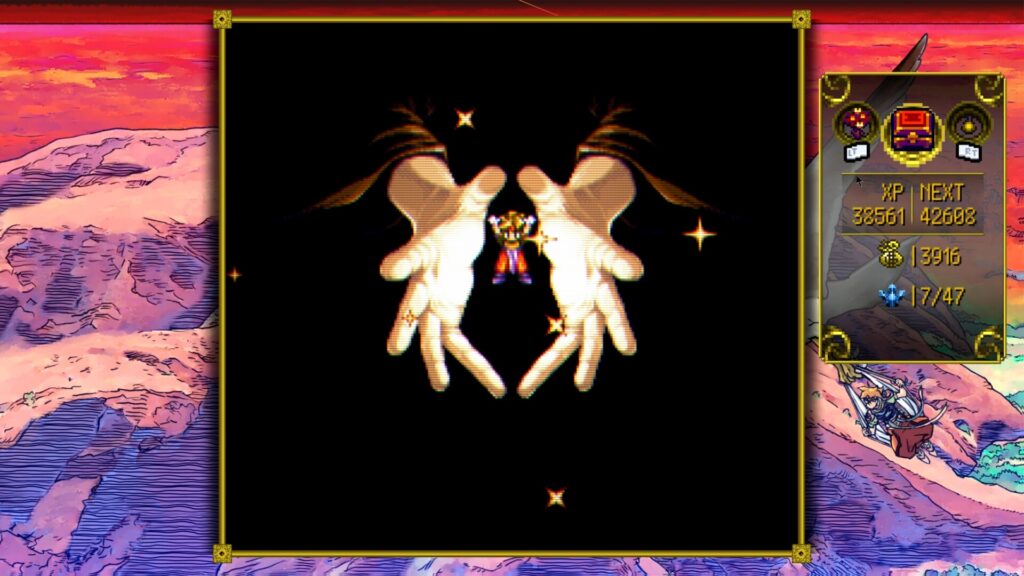
Terranigma is split into four chapters, and the world comes back to life stage by stage as they progress. Here’s a breakdown of each chapter’s goal and the dungeons you’ll need to clear.
Chapter 1, Departure: trials in the Underworld
The story opens in Crysta, a village in the Underworld. Talk to the Elder, equip your weapon and clothes, and remember that choosing “I’m tired” restores your health. That’s your standard way to heal in the village from here on.
- Tower 1 …… Five floors. You fight four Red Hueballs on the top floor
- Tower 2 …… Defeat the monsters inside and talk to the souls to advance
- Tower 3 …… The High Cadet fight. Fakes are mixed in, so you have to spot the real one
- Tower 4 …… Three Cadets plus a Dancing Hueball
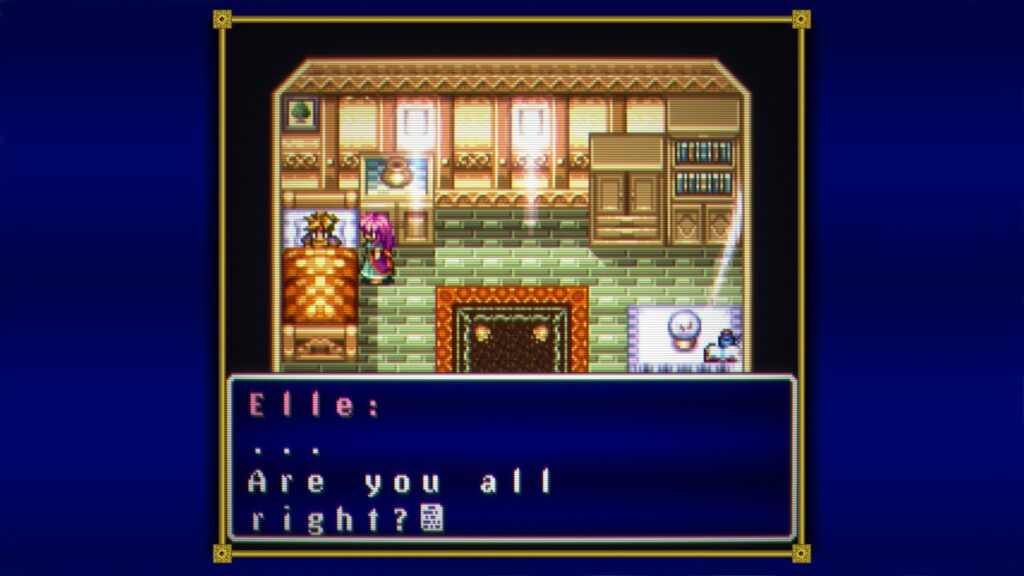
- Tower 5 …… Elle’s cape is required. The boss is the Shadow Keeper (two forms)
- Hidden spots …… Puzzles in the north and south dungeons. Solving them gets you to the Magirock shop in the south
You get Elle’s cape by heading to the weaving hut at the Elder’s house after you’ve cleared the Towers, then talking to Elle over and over. You can’t enter Tower 5 without it, so don’t get stingy with how many times you speak to her.
Chapter 2, Resurrection: raising continents and life
After opening Pandora’s Box and raising the surface continents, Ark descends to the surface and restores the lost forms of life in sequence: plants, then birds, then animals, then humankind.
- Tree Cave …… The boss is Parasite. Dodge the tentacles and projectiles while hitting the core
- Grecliff …… The boss is the Dark Twins. Watch for falling debris and strike the instant they land
- Zue …… Four rainmaking altars. Kill the enemies to free four shaman souls, and the ritual begins, returning water to the dried-up river. The boss is the Storm Master
- Valley of Chasms …… The area tied to reviving the animals
- Eklemata …… The dungeon that closes out Chapter 2
Zue is structured oddly: you can’t clear it by simply pushing deeper. You have to defeat four specific enemies and collect their souls. Once the water returns, the area you can travel opens up, so keep an eye on the state of the river as you move.
Chapter 3, Rebirth of the genius: civilization and conspiracy
This is the meatiest of the four chapters. As humanity starts building civilization, Ark travels the world lending a hand with each town’s growth — and comes face to face with a conspiracy unfolding behind the scenes.
- Louran / the Taklamakan Desert …… The early areas of Chapter 3
- Mush Forest / Gumin Forest …… The woodland dungeons
- Norfest …… The midgame gatekeeper
- Sylvain Castle …… The boss is Bloody Mary (light element works)
- Mermaid Tower …… The boss is Carrie (lightning works)
- Great Lakes Cavern …… The boss is Hitoderon (resists all elements)
- Dragoon Castle / the sewers / the Astarica altar / Dry Valley …… The late-chapter exploration areas
- The laboratory …… The boss is Lucifer VIII (resists all elements)
- Collecting Starstones …… The quest to gather the Starstones needed to revive the hero
This chapter also runs publicity errands with the camera (Pierre’s invention) and town development events in parallel. There’s a generous helping of minigames, too: the speed-eating contest at Loire Castle nets you Magirock. You’ve also got the wanko soba contest in Neotokio, the cat-toppling game in Liotto, and the Quintet quiz back in Neotokio. It’s a chapter where the detours are the fun part.
Chapter 4, Return of the hero: the final battle
The story finally enters its endgame. Only three dungeons remain, but every one of them is tough.
- Beruga’s research tower …… Four floors. The control room is on 4F
- The airship …… Your late-game transport and an exploration area in its own right
- The Gaia Stone …… The final showdown with the last boss, Dark Gaia
Get your gear and levels in order before you start Chapter 4. Elemental magic barely registers on the late bosses, so prioritize high-attack non-elemental weapons over elemental ones.
Every boss: elemental resistance cheat sheet and how to fight them
In Terranigma, whether a boss has elemental resistance completely changes your approach. Early and midgame bosses go down easily when you hit their weakness, but resistances pile up from the Storm Master onward, and the final three shrug off essentially every element. Use the table below to get the whole picture.
| Boss | Location (chapter) | Key to the fight |
|---|---|---|
| Red Hueball ×4 | Tower 1 (Chapter 1) | Your first fight. Take the four of them down one at a time |
| High Cadet | Tower 3 (Chapter 1) | Fakes are mixed in. Identify the real one and attack it |
| Cadet ×3 / Dancing Hueball | Tower 4 (Chapter 1) | Practice at handling several enemies at once |
| Shadow Keeper | Tower 5 (Chapter 1) | Land the fire ring first, then attack from beside the head. Two forms |
| Parasite | Tree Cave (Chapter 2) | Dodge the tentacles and projectiles to get damage onto the core |
| Dark Twins | Grecliff (Chapter 2) | Watch for falling debris and attack the moment they land |
| Storm Master | Zue (Chapter 2) | Resists earth. Counter only after the scythe throw in form one, and after the charge in form two |
| Bloody Mary | Sylvain Castle (Chapter 3) | Light element works |
| Carrie | Mermaid Tower (Chapter 3) | Lightning works |
| Hitoderon | Great Lakes Cavern (Chapter 3) | Resists all elements. Push through with physical damage |
| Lucifer VIII | The laboratory (Chapter 3) | Resists all elements. Bring a weapon built for raw attack power |
| Dark Gaia | The Gaia Stone (Chapter 4) | Resists all elements. Form two barely takes damage unless you power up with the blood armor |
Shadow Keeper (Tower 5)
This is effectively Chapter 1’s final boss, and it has two forms. The basic pattern is to land the fire ring first, then circle around to the side of its head and attack. Standing in front of it invites a counterattack, so learn to slip sideways with the Middle Slicer. If you’re stuck here, gaining a few levels before your next attempt makes the fight much steadier.
Storm Master (Zue)
The climax of Chapter 2. It resists the earth element, so earth weapons like the Rock Spear barely do anything. In form one, close in and attack right after it throws its scythe, then pull back before the scythe returns. Its fire attacks are easier to dodge from the right side of the screen.
In form two, the only opening is immediately after it charges. Escape the fireballs by moving toward the top of the screen, and the falling rocks by heading to the bottom of the arena. This “you only get to counter in a narrow window” design runs through every boss in the game, so the important thing is to never rush in to squeeze out extra damage.
The final three bosses (Hitoderon / Lucifer VIII / Dark Gaia)
None of these three take meaningful damage from any element. Rather than cycling through elemental weapons hunting for a soft spot, you’ll finish faster by simply hammering away with your highest-attack weapon. Dark Gaia in particular is extremely tanky in its second form, and without the blood armor boosting your attacks you won’t put up real numbers.
Go in at Lv31 at the absolute minimum, ideally around Lv35. Stock up on healing items, too.
Five places where players most often get stuck
1. Upgrading gear based only on attack power
This is the single most common mistake in the game. Weapons and armor frequently carry resistance to poison, curses, cold and specific elements, and swapping to a shiny new high-attack piece regularly leaves players drowning in status ailments. Always check what your current gear does before you buy, and hold onto the old set for dungeons where you need the resistance.
2. Doing the town development events out of order
Town development on the central continent follows a set sequence, and getting it wrong locks you out of certain events for good. Don’t stack up multiple development-linked requests at once — knock them out one by one. If you’re chasing 100 percent, be especially careful here.
3. Not having the Middle Slicer down
Whether you can exploit the invincibility frames on the lunge changes boss difficulty by an order of magnitude. Punching straight through a barrage to reach a safe pocket is the fundamental tactic of this game. Practice it deliberately back in the Towers and it’ll pay off from Chapter 3 onward.
4. Hitting a wall in the late 20s
The difficulty valley sits between the late 20s and level 30 or so. Without real execution this stretch is genuinely punishing, but once you pass Lv31 everything suddenly gets easier. When you’re stuck, don’t force it — double back and grind, and you’ll come out ahead.
5. Forgetting to pick up Elle’s cape
You need Elle’s cape to enter Tower 5 in Chapter 1. Once you’ve worked through the Towers, head to the weaving hut at the Elder’s house and talk to Elle repeatedly to get it. Don’t stop after one conversation — keep talking until her dialogue stops changing.
Can you play Terranigma on current platforms? A complete platform-by-platform guide
✅ The verdict
As of September 2026, there is no way to play Terranigma on current hardware. However, a port is launching on January 14, 2027 across all six platforms, so a few more months of waiting gets you a legitimate option. It’s the first official release in 31 years.
1. Titles playable free or via subscription
None. Terranigma is not part of the Super Famicom lineup on Nintendo Switch Online (as of September 2026). The other Quintet trilogy games aren’t on any subscription service either, so there’s currently no way to play the series together in one place.
2. Titles playable via standalone purchase
| Edition | Price (before tax) | Notes |
|---|---|---|
| Standard edition | $33 | Launches January 14, 2027 |
| SteelBook edition | $46 | Includes a steel case |
| Gaia Edition | $116 | Limited edition with bonus items |
Supported platforms are Nintendo Switch 2, Nintendo Switch, PlayStation 5, PlayStation 4, Xbox Series X|S, Xbox One and PC (Steam and GOG). Clear River Games is developing, PLAION is publishing. Digital pricing has not been announced (as of September 2026).
3. Titles playable via remaster or remake
| Feature | Details |
|---|---|
| Arrange Mode | Boosted magic damage, a minimap that tracks exploration, and save/load anywhere |
| Rewind | Roll back a botched moment and try again |
| Improved controls | Item and magic shortcuts, remappable buttons |
| Display settings | CRT filter, multiple screen aspect ratios |
| Museum | High-resolution illustration wallpapers, a music player, and a gallery of materials and artwork |
Arrange Mode’s minimap should make exploration vastly more comfortable than the Super Famicom version, which had no map function whatsoever. The dungeons here are top-down and full of tangled rooms, and back in the day you simply had to memorize the layouts yourself. Paired with rewind, the port is built so that even players who struggle with action games can reach the ending.
4. Titles that are hard to get on current platforms
| Version | Status | Alternative |
|---|---|---|
| Super Famicom cartridge | Secondhand market only. Prices keep climbing | Waiting for the January 14, 2027 port is the realistic move |
| European Terranigma | PAL format. Won’t run on Japanese hardware | Use the port instead |
| Soul Blazer / Illusion of Gaia | Likewise no current-platform port | Secondhand cartridges only |
Because the Super Famicom version went 31 years without a port, used prices have shot up. A complete copy with box and manual means bracing for a serious number. If you’re coming to it fresh, waiting for the January 14, 2027 port is simply the smartest choice. If $33 for the standard edition buys you Arrange Mode and rewind, there’s nothing to complain about on the value front either.
Enjoying this article? Add us as a preferred source on Google.
The bottom line: Terranigma is a landmark action RPG about rebuilding a world
Terranigma is a Super Famicom action RPG that Enix released on October 20, 1995 for $77 (before tax). Quintet developed it, and it stands as the conclusion of the Quintet trilogy alongside Soul Blazer and Illusion of Gaia. Kamui Fujiwara handled character design, and the game earned a Silver Hall of Fame rating in Famitsu’s Cross Review.
Success hinges on the five attack actions — especially mastering the Middle Slicer and its invincibility frames — and on choosing gear around each boss’s elemental resistances. The trap of buying weapons by attack number and losing your resistances is the single biggest pitfall on a blind playthrough. The final three bosses (Hitoderon, Lucifer VIII and Dark Gaia) resist every element, so go in with raw attack power rather than elemental weapons. The level cap is 50, and combat gets dramatically easier once you pass Lv31.
And now the good news. After 31 years without a port, the game returns on January 14, 2027 across all six platforms. The standard edition runs $33 (before tax) and includes Arrange Mode (minimap, save anywhere, boosted magic), rewind, and the Museum. Clear River Games is developing, PLAION is publishing, and character designer Kamui Fujiwara is fully on board. With Super Famicom cartridges going for collector money, the port is the only way to go for newcomers.
You raise continents, coax plants into bloom, set birds loose in the sky, and hand civilization to humanity. Thirty years on, the experience of personally rebuilding a world still has no real substitute. The action feel was top-tier for its era too, and the rush of threading a barrage with the Middle Slicer hasn’t faded a bit. On the other hand, the criticism that a game with a title as grandiose as “creation of heaven and earth” mostly has you running errands for townsfolk lands squarely. Plenty of players surely bailed out in that late-20s difficulty valley, too. And yet, once you see the ending this game puts in front of you, all of it is forgiven.
On January 14, 2027, let’s witness that final day — the one waiting for the boy who brought a world back to life — all over again.
Read Next
Snicker Kitamura




Leave a Reply