





Enjoying this article? Add us as a preferred source on Google.
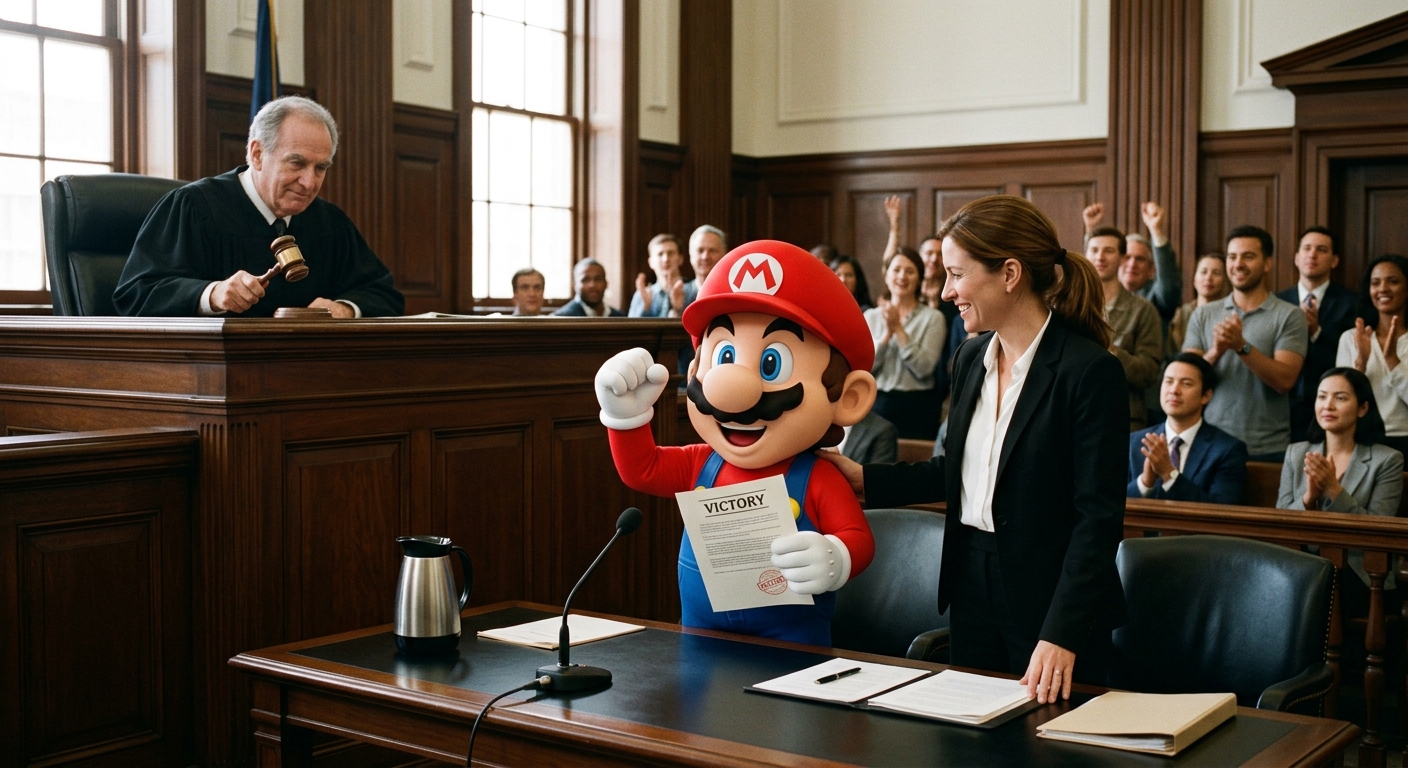
Nintendo has sunk another piracy shop operator in court. In the case Nintendo of America brought against James Williams, who operated under the name “Archbox,” the U.S. District Court for the Western District of Washington awarded $4.5 million (about 710 million yen) in damages on September 23, 2026.
The number is not the most interesting part. The way it ended is. The defendant never responded to the suit. He never showed up in court, which means Nintendo’s claims went through exactly as filed. On top of the money, the court also ordered access to the distribution shop shut down and the defendant’s social media accounts suspended.
Nintendo’s legal team taking a hard line on piracy and emulation is old news. But this 2026 ruling marks a milestone on two fronts: the size of the award, and the account-suspension order. Here is what was at stake and how far the court went.
Nintendo suing ROM sites and emulator distributors is nothing new. What makes this one worth a closer look is that the company’s claims were granted whole, without a single deduction.

How Much Did Nintendo Actually Win? Breaking Down the $4.5 Million
On September 23, 2026, the U.S. District Court for the Western District of Washington awarded $4.5 million (about 710 million yen) in damages against the defendant.
For a copyright infringement suit against a single individual, that is a heavy figure. A $4.5 million award looks less like a realistic collection target and more like a number chosen for deterrence. Nintendo knows that, and asked for it anyway. The point is not recovering the cash, it is showing the market that this is the number that gets attached.
Defendant James Williams is alleged to have run a piracy distribution shop under the “Archbox” banner, providing the infrastructure to move Nintendo titles without authorization.
Why Was There No Fight? What the Defendant’s Non-Response Means
The defendant never responded to the suit. As a result, judgment came down without any rebuttal to Nintendo’s claims ever being submitted to the court.
This is a common outcome in cases like this one. The cost of going toe to toe with a major publisher’s legal department can exceed the damages an individual is facing. But failing to respond makes it far easier for the requested amount to sail through untouched. Part of why $4.5 million looks so steep is that it was a deterrence-sized ask with nothing on the other side of the table to trim it down.
This is the part worth reading coolly. The $4.5 million figure is less “the court scrutinized the record and decided this was appropriate” and more “nobody contested it, so it was entered.” As legal precedent, it carries less weight than a case where the issues were actually litigated. Discount it accordingly.
What Else Was Ordered? Site Access Cut Off and Social Accounts Frozen
Beyond damages, the court ordered access to the distribution shop shut down and the defendant’s social media accounts suspended.
In practical terms, that part bites harder. Damages sometimes go uncollected, but kill the distribution channel and the accounts and the operation stops. Most piracy shops live and die on social media announcements and referral traffic, so an account suspension amounts to something close to a shutdown order for the business.
The approach Nintendo has stuck with across its recent lawsuits is to strip away infrastructure in parallel with the monetary claim. Domains, payments, social media, distribution servers. Squeeze any one of them and the operation comes back; take several down at once and it does not. This ruling follows the same playbook.

Where Is Nintendo’s Legal Strategy Headed in 2026?
Nintendo in 2026 has not slowed its IP defense pace even while shifting hardware generations. If anything, it looks like the company is stacking up precedent before next-gen titles start circulating as pirated files.
Opinion on that posture has always been split. The criticism that Nintendo is “killing off the unofficial routes while leaving almost no legitimate way to play its own historical catalog” remains stubbornly persistent. At the same time, the point that it would be stranger for a rights holder not to enforce its rights is also correct. Both things are true at once.
In fairness, Nintendo does keep adding retro titles to Nintendo Switch Online, so the effort to provide a legitimate front door continues. But it is equally true that the pace of catalog expansion has not kept up with demand. That gap is why this same argument flares back up every time a lawsuit makes the news.
…Back when I worked at a game shop, I got questions about pirated copies and never had a good answer. Sellers and buyers alike leaned on the excuse that the legal path was too narrow. That knot in my stomach is probably still sitting in exactly the same place.

Enjoying this article? Add us as a preferred source on Google.
Summary: What the “Archbox” Case Settled

| Item | Details |
|---|---|
| Plaintiff | Nintendo of America |
| Defendant | James Williams (operating as “Archbox”) |
| Judgment date / court | September 23, 2026 / U.S. District Court for the Western District of Washington |
| Damages awarded | $4.5 million (about 710 million yen) |
| Defendant’s response | Did not respond to the suit |
| Other orders | Access to the distribution shop shut down; social media accounts suspended |
The yen-converted figure moves with exchange rates (approximate, as of September 2026). It is easy to get pulled along by the size of the award, but the real practical damage sits on the access-shutdown and account-suspension side.
The $4.5 million figure makes a strong headline, but it is a default judgment in which none of the issues were actually contested, and it should be read with that discount applied. It still matters plenty. Nintendo’s template of going after monetary damages and infrastructure takedowns as a package just added another entry to the ledger. The pressure that makes it impossible for piracy distribution to get by on “if I get caught, I’ll just disappear” is unmistakably building. At the same time, nobody should forget that the demand for wider legitimate access is not going away either. Enforcement and supply cannot work with only one of the two.
The $4.5 million is the card played face-up. The real weapon is the move that kills the distribution channel and the accounts at the same time.
Read Next

Nokko Oda












Leave a Reply