
Enjoying this article? Add us as a preferred source on Google.
CLAMP is an all-women manga creator collective made up of four members: Satsuki Igarashi, Nanase Ohkawa, Tsubaki Nekoi, and Mokona. Since their commercial debut in 1989, they’ve kept turning out masterpieces across a huge range of genres, from shojo to seinen. Their catalog of anime adaptations now runs to more than ten titles.
“I want to try a CLAMP anime, but where do I even start?” — you’re far from alone. The thing about CLAMP is that their style shifts wildly from work to work: cozy magical girls, dark fantasy, robot action, you name it. Pick the wrong entry point on your first try and it ends with “eh, not for me” — and honestly, that would be such a waste.
In this article I score seven works across four axes — Story, Animation, Characters, and Emotional Impact — to help you find the one that fits you. We’re going beyond “which one first” and digging into “which flavor of CLAMP is going to hit you hardest.”
- No. 1: Cardcaptor Sakura — The definitive CLAMP starting point
- No. 2: Code Geass: Lelouch of the Rebellion — A political epic with CLAMP characters in motion
- No. 3: xxxHOLiC — CLAMP-style dark fantasy at its purest
- No. 4: Magic Knight Rayearth — CLAMP’s origins and a monument of girls’ action anime
- No. 5: Tsubasa Chronicle — The multiverse epic that gathers all of CLAMP
- No. 6: Tokyo Babylon — For those who want CLAMP’s dark, social side
- No. 7: Chobits — Sci-fi rom-com and the easiest door into CLAMP
The scoring is based purely on quality as anime. Even where CLAMP’s source material is stellar, works that underdeliver as adaptations get rated honestly.
All 7 CLAMP Anime Scored and Compared
Each work is scored out of 100 on four criteria. “Emotional Impact” measures the overall afterglow — how the story lands and how deeply you connect with the characters. Don’t just go by the total; pick based on the axis that matters most to you.
| Title | Story | Animation | Characters | Emotional Impact | Total Score |
|---|---|---|---|---|---|
| Cardcaptor Sakura | 90 | 90 | 98 | 92 | 370 |
| Code Geass: Lelouch of the Rebellion | 95 | 85 | 90 | 88 | 358 |
| xxxHOLiC | 88 | 82 | 85 | 80 | 335 |
| Magic Knight Rayearth | 80 | 78 | 85 | 82 | 325 |
| Tsubasa Chronicle | 85 | 80 | 82 | 75 | 322 |
| Tokyo Babylon | 82 | 72 | 85 | 80 | 319 |
| Chobits | 75 | 75 | 80 | 78 | 308 |
The runaway leader in Characters is Cardcaptor Sakura (98). The highest Story score goes to Code Geass (95) — no other work here packs plot twists and political themes this densely. On the Emotional Impact axis, Sakura and Code Geass stand clearly above the rest as the big two, so if you want to cry, pick either of them and don’t look back.
No. 1: Cardcaptor Sakura — The Definitive CLAMP Starting Point
| Story | Animation | Characters | Emotional Impact | Total Score |
|---|---|---|---|---|
| 90 | 90 | 98 | 92 | 370 |
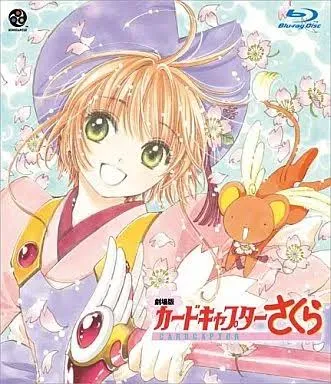
If it’s your first CLAMP anime, this is the one — I can say that flat out. Sakura Kinomoto is a fourth-grader who one day opens a mysterious sealed book in her family’s basement library and accidentally scatters the Clow Cards it contained across the world. Nudged along by Cerberus (Kero-chan), Sakura becomes a Cardcaptor and, with help from her friends, sets out to recapture the cards.
That Characters score of 98 is the highest of any work here, and the reason is obvious: everyone around Sakura is fully realized. Her rival Syaoran Li, her best friend Tomoyo Daidouji, the enigmatic Yukito, Toru Yanagisawa carrying a past of her own — not one of them is a stock archetype; each moves with their own feelings and their own circumstances. This is a show where your attachment to the cast grows almost alarmingly deep.
The massive volume — 70 episodes, two films, plus the 22-episode Clear Card arc — also means, flipped around, that you get to live in Sakura’s world for that much longer. The original 1998 series has a 4K remaster, and the visuals genuinely hold up today.
- Character attachment at the highest level of any CLAMP work
- Episodic card-capture stories make it easy to watch
- The 4K remaster keeps the animation beautiful even by today’s standards
- 70 episodes plus two films is a serious time commitment
- It looks kid-friendly, but the themes get heavy from the midpoint on
No. 2: Code Geass: Lelouch of the Rebellion — A Political Epic with CLAMP Characters in Motion
| Story | Animation | Characters | Emotional Impact | Total Score |
|---|---|---|---|---|
| 95 | 85 | 90 | 88 | 358 |
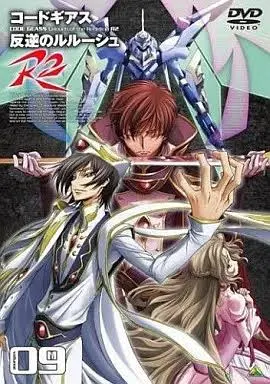
Code Geass is the work where CLAMP handled the original character designs, with animation production by Sunrise. Keep in mind that CLAMP is the character concept creator here, not the original author — but the experience of watching those slender, willowy CLAMP characters move through a world of robot action is something only this show can give you.
Story: 95 points, the top of all seven. In a Japan occupied by the Britannian Empire (renamed Area 11), the disowned prince Lelouch sets out to spark a revolution armed with Geass — a power that bends any person’s will to absolute obedience. The way each episode upends your predictions, the satisfaction of every payoff, and the sheer shock of the finale are still talked about to this day.
It runs two seasons: 25 episodes (season one) plus 25 episodes (R2). Season one’s finale is far too explosive to stop at, so block out enough time to watch straight through R2.
- The best-constructed story of all seven — the finale’s emotional impact is the stuff of legend
- CLAMP character designs meets robot action, a combination that exists nowhere else
- Its themes of society, justice, and sacrifice cut deep
- CLAMP only did the character concepts (story and direction are Sunrise)
- Do not stop at the season one finale — watch through R2, no exceptions
No. 3: xxxHOLiC — CLAMP-Style Dark Fantasy at Its Purest
| Story | Animation | Characters | Emotional Impact | Total Score |
|---|---|---|---|---|
| 88 | 82 | 85 | 80 | 335 |
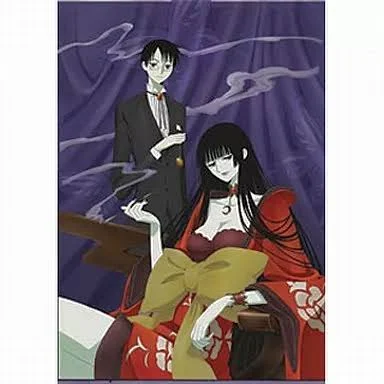
xxxHOLiC is CLAMP with their dark side dialed all the way up. A high schooler who can see spirits ends up working at the shop of Yuko Ichihara, the “Dimensional Witch” who can grant anyone’s wish. Each episode brings a strange new request through the door — and traces the karmic consequences it sets in motion — in an omnibus-style tale of the uncanny.
Even within CLAMP’s range of art styles, xxxHOLiC stands apart: the characters are strikingly long-limbed and stylish. The imbalance between the weight of its themes — the moment a person becomes cursed, the desires that make us destroy ourselves — and the visual beauty on screen is straight-up addictive. An awful lot of CLAMP fans will tell you “my favorite manga is xxxHOLiC.”
The first season (24 episodes) aired in 2006, followed by the 15-episode sequel “xxxHOLiC Kei.” Its world connects to Tsubasa Chronicle, so watching both enriches the experience — but HOLiC stands perfectly well on its own.
- Karma, consequence, and desire — the very core of what makes CLAMP, CLAMP
- Mostly self-contained episodes, so it’s enjoyable even jumping in mid-series
- Yuko Ichihara is one of the most fully realized characters in CLAMP history
- The anime never catches up to the manga’s ending
- Includes horror and stories with bitter aftertastes (be warned if that’s not your thing)
No. 4: Magic Knight Rayearth — CLAMP’s Origins and a Monument of Girls’ Action Anime
| Story | Animation | Characters | Emotional Impact | Total Score |
|---|---|---|---|---|
| 80 | 78 | 85 | 82 | 325 |
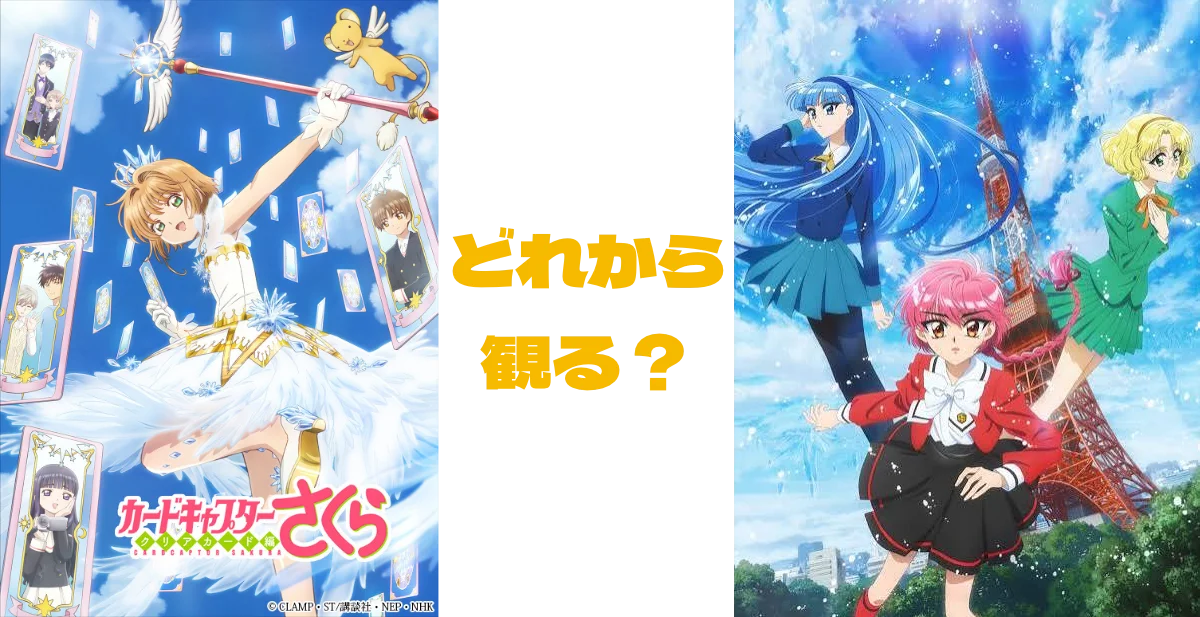
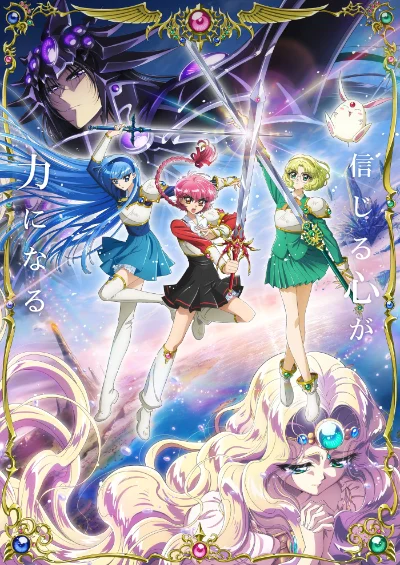
Airing in 1994, this is one of the earliest CLAMP anime adaptations — a genuine monument. Three middle schoolers visiting Tokyo Tower — Hikaru Shidou, Umi Ryuuzaki, and Fuu Hououji — are summoned to the otherworld of Cephiro. It’s the adventure of three girls who fight as the “Legendary Magic Knights” to rescue Princess Emeraude.
This is one of the first works where CLAMP’s thematic firepower fully detonated. It takes the “magical girls fighting as heroes” genre and slams a very CLAMP “question with no answer” onto the table in the finale of Part 1. Plenty of viewers felt “betrayed” by it — but that feeling, right there, is the experience of getting to know CLAMP.
49 episodes total (Part 1: 20 episodes, Part 2: 29 episodes). The 1994 animation naturally looks dated next to modern anime, but in a way that perfectly preserves the atmosphere of 90s CLAMP in amber.
- The earliest place to experience CLAMP’s signature “cruel question”
- One of the high-water marks of 90s magical-girl action
- The dramatic tonal shift in Part 2 is masterfully done
- The 1994 animation shows its age
- Some viewers take real psychological damage from Part 1’s shocking turn
No. 5: Tsubasa Chronicle — The Multiverse Epic That Gathers All of CLAMP
| Story | Animation | Characters | Emotional Impact | Total Score |
|---|---|---|---|---|
| 85 | 80 | 82 | 75 | 322 |
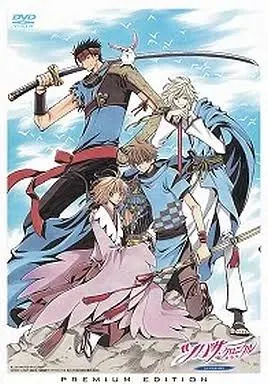
This is the multiverse epic in which characters from Cardcaptor Sakura, xxxHOLiC, and several other CLAMP works appear as residents of other worlds. Syaoran, a young archaeological excavator, and Sakura, a princess who has lost her memories, borrow the power of the “Dimensional Witch” and set off on a journey to gather the scattered feathers of Sakura’s memory.
The setup is exquisite: the protagonists are CCS’s Sakura and Syaoran, yet the story takes place in “another world” — giving fans that uncanny feeling of “this isn’t that Sakura, but somehow it is.” Watch it after working through the CLAMP catalog and you’ll be grinning at the easter eggs scattered everywhere.
The anime spans two TV seasons plus two films, but the manga’s climax was never adapted. I’d recommend pairing it with the source manga to complete the story.
- Loads of existing CLAMP characters (CCS and beyond) give it a real “CLAMP festival” energy
- The world-hopping adventure structure keeps things fresh
- Even richer when watched in parallel with xxxHOLiC
- The story doesn’t conclude in the anime alone (reading the manga is recommended)
- Without CLAMP homework done, many moments are strictly “if you know, you know”
No. 6: Tokyo Babylon — For Those Who Want CLAMP’s Dark, Social Side
| Story | Animation | Characters | Emotional Impact | Total Score |
|---|---|---|---|---|
| 82 | 72 | 85 | 80 | 319 |
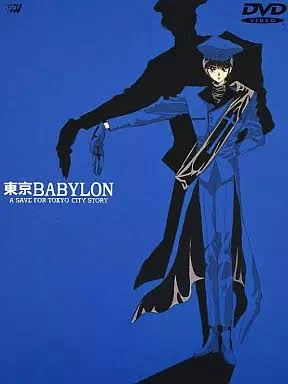
This is one of the works where CLAMP’s darkness shows most vividly. Subaru Sumeragi, born into a family of onmyoji, confronts the grudges, curses, and social shadows swirling through post-bubble Tokyo. The runtime is short — just two OVAs (1992–1993) — but the density is high.
It tackles the social issues of its era head-on — suicide, discrimination, loneliness — and lets you feel the full strength of the message 20th-century CLAMP carried. It also functions as a kind of prelude to X (X/1999), and if you want to understand the ache at the heart of Subaru as a character, it’s unmissable.
With only two OVAs, the barrier to entry is low. It’s an effective first move for anyone thinking “I want to test-drive one of CLAMP’s heavy stories.”
- Complete in two OVAs — a short time investment
- Its social themes, set against post-bubble Tokyo, hit hard
- Works as a bridge into “X/1999”
- Two OVAs can’t capture the full scope of the manga
- Heavy themes — some scenes will stick with you in uncomfortable ways
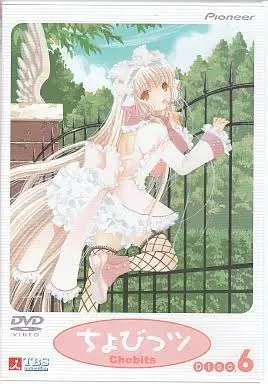
No. 7: Chobits — Sci-Fi Rom-Com and the Easiest Door into CLAMP
| Story | Animation | Characters | Emotional Impact | Total Score |
|---|---|---|---|---|
| 75 | 75 | 80 | 78 | 308 |
Chobits is a rom-com set in a near-future Japan where humanoid personal computers — “persocoms” — are everywhere. The story centers on Hideki Motosuwa, freshly arrived in Tokyo, and his strange relationship with “Chi,” an unusual persocom he finds abandoned at a garbage dump.
It’s the “lightest” of the seven and serves as CLAMP’s most welcoming front door for fans of slice-of-life rom-coms. Watched in the context of 2026, its central theme — the relationship between AI and humans — actually cuts deeper now than it did back then. Its take on emotional bonds between humanoids and people still feels fresh.
Aired in 2002, 26 episodes. It keeps that classic late-night-anime atmosphere of its era, while CLAMP’s signature emotional weight makes a proper appearance from the midpoint onward. For anyone thinking “CLAMP’s serious stuff scares me off,” this is the single best on-ramp.
- The most watchable rom-com flavor of CLAMP among the seven
- Its AI-and-human-emotion theme feels remarkably 2026
- Lowest total score of the seven, but the best fit for anyone put off by CLAMP’s darkness
- CLAMP’s signature serious turns arrive from the midpoint on

Enjoying this article? Add us as a preferred source on Google.
Which CLAMP Anime Should You Watch First? Recommendations by Type
Based on the scores and characteristics of all seven works, here are my recommendations by viewer type.
| If You Are… | Recommended Work | Why |
|---|---|---|
| New to CLAMP / want something all-ages | Cardcaptor Sakura | No. 1 in total score — the widest doorway and the most reliably moving |
| Story-first / love plot twists | Code Geass | Story score of 95 — the highest here |
| Want CLAMP’s worldview and karmic depth | xxxHOLiC | The “Dimensional Witch” and the theme of karma are CLAMP’s very core |
| A CLAMP otaku who’s seen it all | Tsubasa Chronicle | Packed with returning characters — a grand CLAMP culmination |
| Averse to heavy drama / prefer rom-com | Chobits | The lightest entry of the seven — sci-fi meets rom-com |
If in doubt, it’s Cardcaptor Sakura and nothing else. Nearly everything that makes CLAMP wonderful is packed inside, and once you enter here, whichever work you pick next will connect with that unmistakable feeling of “ah, this is CLAMP.”
The terrifying thing about the collective known as CLAMP is just how wide their range runs. One moment it’s cozy magical girls, then lives are being lost; one moment it’s hard-edged political robot action, the next it’s back to dreamlike everyday life. Yet flowing through every work is the same CLAMP undercurrent: fate, karma, and the weight of human emotion. Start with the top-scoring Cardcaptor Sakura, and set out on the journey of discovering which face of CLAMP is the one for you. By the time you’ve watched them all, one certainty will have taken root: you love CLAMP.
Start with Sakura. That’s the proper passport into the world of CLAMP.
Read Next
Nokko Oda


Leave a Reply