
Enjoying this article? Add us as a preferred source on Google.
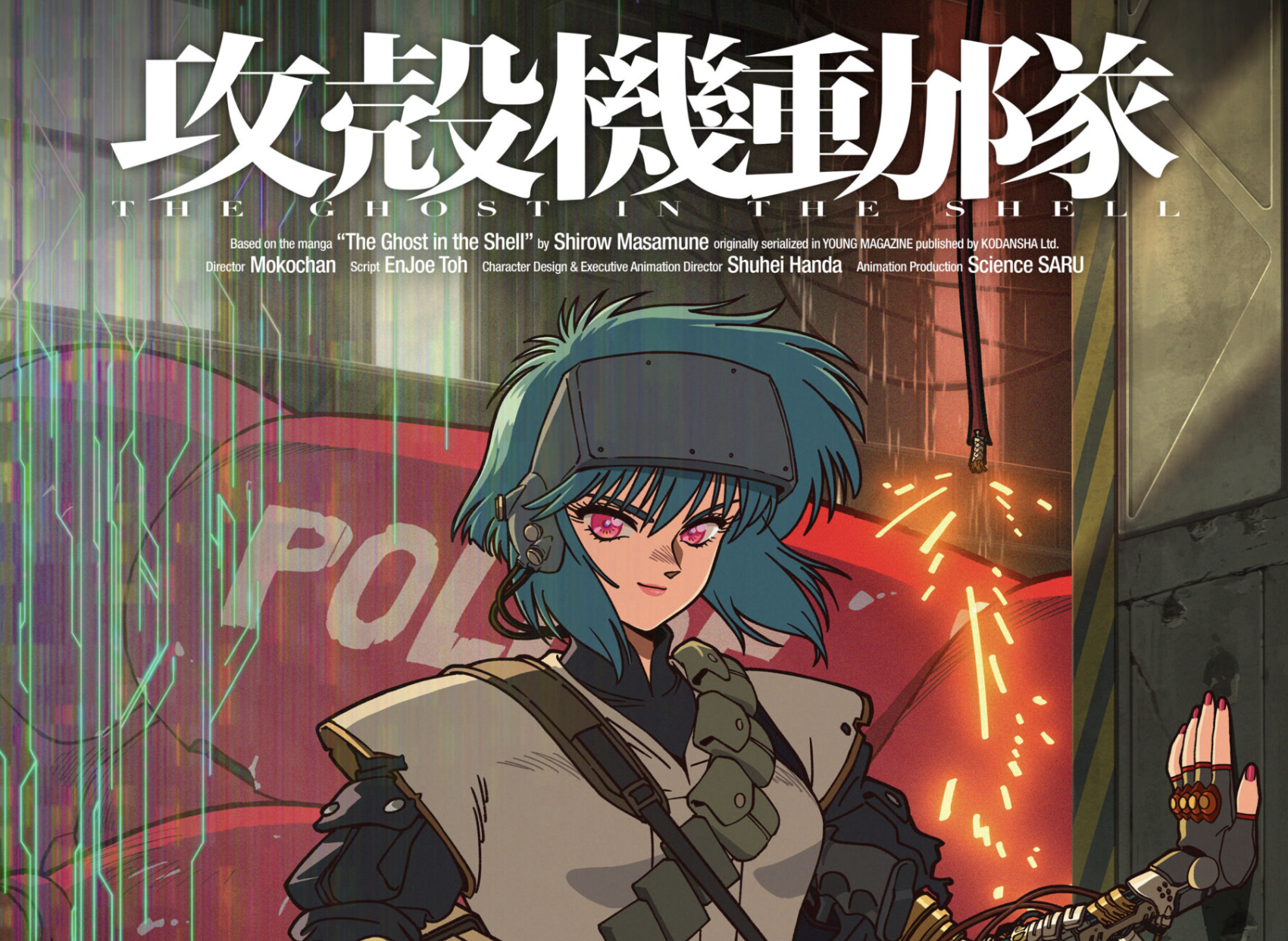
The TV anime Ghost in the Shell (THE GHOST IN THE SHELL) wrapped its 10-episode run in September 2026. Animation was handled by Science SARU, with Mokochan directing and Akutagawa Prize-winning novelist Toh EnJoe on series composition and scripts. The source material is Shiro Masamune’s manga Ghost in the Shell (published by Kodansha under its KC Deluxe imprint).
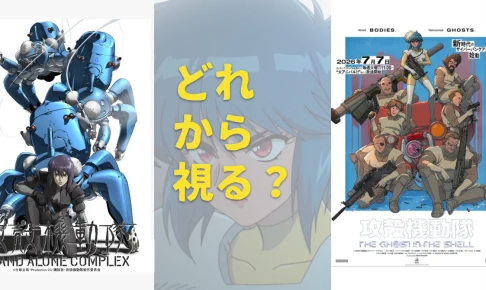
If you had to sum up this series in a single phrase, it would be “a return to the original manga.” The proof isn’t in the title logo or the theme songs. It’s in the name of that multi-legged tank. It’s not Tachikoma. It’s “Fuchikoma.”
Major Motoko Kusanagi is voiced by Maaya Sakamoto. She takes over a role that the late Atsuko Tanaka, who passed away in 2024, played for many years, which means this whole lineup was built on top of a very heavy decision.
In this piece, I’m going to dig into what the 2026 version was trying to do. Why Fuchikoma? What does it mean to put Toh EnJoe in charge of the scripts? And the Puppet Master who showed up in the finale: what exactly was that a restaging of? All information is current as of September 2026.
⚠️ Spoiler Warning
This article discusses events from Episode 10 (the finale). If you haven’t watched it yet, I’d recommend coming back after you do. Also, fair warning up front: the analysis here is my own interpretation, not anything the production team has stated.
As someone from the generation that saw the 1995 theatrical film when it first came out, I’ll be honest: I went into the finale with some pretty complicated feelings. I’ll get into why along the way.
Ghost in the Shell (THE GHOST IN THE SHELL) 2026: The Basics
First, let’s lay out the show’s key details.
| Item | Details |
|---|---|
| Title | Ghost in the Shell (THE GHOST IN THE SHELL) |
| Broadcast | Tuesday, July 7, 2026 through September / KTV and Fuji TV network, Tuesdays at 11 p.m. in the “Hi-Anival!!” block |
| Episodes | 10 episodes |
| Original work | Shiro Masamune’s Ghost in the Shell (Kodansha, KC Deluxe) |
| Director | Mokochan |
| Series composition / scripts | Toh EnJoe |
| Character design / chief animation director | Shuhei Handa |
| Music director / music | Tasei Iwasaki (music: Ryo Konishi, YUKI KANESAKA) |
| Animation production | Science SARU |
| Opening theme | King Gnu, “GO GHOST” |
| Ending theme | MILLENNIUM PARADE, “Blue” |
| Streaming | Earliest streaming on Prime Video starting July 7 / ABEMA, d Anime Store, and others every Wednesday at 11:30 p.m. starting July 8 |
Main Cast
| Character | Voice actor |
|---|---|
| Motoko Kusanagi | Maaya Sakamoto |
| Daisuke Aramaki | Kazuhiro Yamaji |
| Batou | Hiroki Yasumoto |
| Togusa | Yuichi Nakamura |
| Ishikawa | Kosuke Goto |
| Saito | Toru Nara |
| Borma | Atsushi Miyauchi |
| Paz | Yuya Uchida |
| Fuchikoma | Tomoko Kaneda |
| Colonel Mares | Akio Otsuka |
| Colonel Tonoda | Kenichi Ogata |
| The Puppet Master | Kikuko Inoue |
The sharper readers will have caught it just from this table. The cast list includes “Fuchikoma,” and it includes “the Puppet Master.” Those two entries tell you everything about the design philosophy behind this series.
Analysis: Why “Fuchikoma” Instead of “Tachikoma”?
I’ll give you the answer first. It’s because this series goes back to its source: Shiro Masamune’s manga.
Let’s get the facts straight. What the multi-legged tanks are called depends on which series you’re watching.
| Name | Where it appears |
|---|---|
| Fuchikoma | Shiro Masamune’s original Ghost in the Shell manga / this series (2026 version) |
| Tachikoma | TV series in the Ghost in the Shell: STAND ALONE COMPLEX lineage |
In other words, the moment it adopted the name “Fuchikoma,” this series declared that it isn’t an extension of the SAC series, but an attempt to adapt the original manga directly. It’s just one name, but its significance is huge.
A Policy of “No Unnecessary Picking and Choosing”
On the production side, too, where previous entries layered their own interpretations on top of the source, this series reportedly aimed to adapt the material faithfully without cutting elements for no good reason.
That policy is actually pretty bold. Shiro Masamune’s manga is absurdly dense, with notes in the margins outside the panels carrying about as much information as the main text itself. Adapting that “without cutting anything” is, by any normal standard, a reckless idea.
Back when I worked at a manga cafe in Kabukicho, I reread the whole manga front to back. If you follow the margin notes too, volume one alone can easily eat two hours. Just the idea of putting all that information on screen is flat-out insane. And I mean that as a compliment.
Analysis: Why Toh EnJoe on Scripts?
Series composition and scripts were handled by Akutagawa Prize winner Toh EnJoe. I don’t think that choice was a coincidence.
EnJoe’s novels are known for a style where logic and concepts themselves become the engine of the story. He pushes themes like information, the self, and language forward through reasoning, not sentiment.
A Natural Fit With the Original Manga
This is the key point. Shiro Masamune’s manga is also a work that runs on logic more than emotion. Where the 1995 theatrical film leaned toward “stillness and poetry,” the original manga is more talkative, more cerebral, and sometimes downright goofy.
If you’re going back to that source, what you need isn’t a writer who piles on the poetry, but a writer who can make a torrent of information actually work. Seen that way, hiring Toh EnJoe makes a surprising amount of sense.
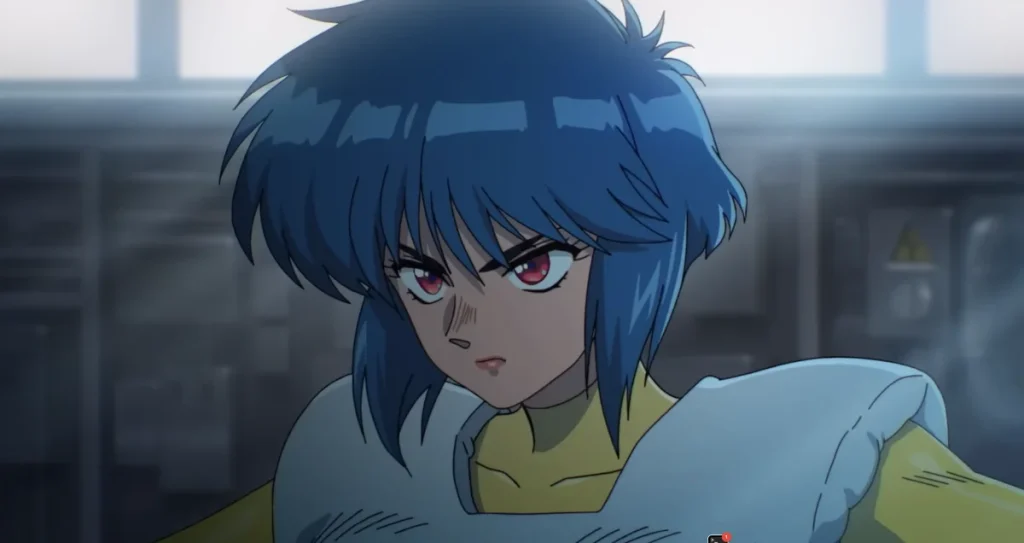
In fact, Maaya Sakamoto has said the new Motoko is “expressive and energetic” and has “comedic scenes,” and admitted that playing her was “very difficult.” That’s clearly a different character from the serene Motoko of the 1995 film, and much closer to the Motoko of the original manga.
The Caveats, Too
To be fair, this direction isn’t for everyone. If you go in expecting the atmosphere of the 1995 film, you’re definitely going to be thrown off. It’s easy to imagine some viewers were baffled by a comedic Motoko.
This isn’t about which one is right. They’re drawing from different source texts to begin with. Whether you understand that makes a huge difference in how you’ll judge this series.
Analysis: What Did the Complete Cast Overhaul Mean?
The series kept its cast completely under wraps from the production announcement all the way to the premiere. And the lineup revealed with Episode 1 on July 7, 2026 was an entirely new cast.
What Maaya Sakamoto Inherited
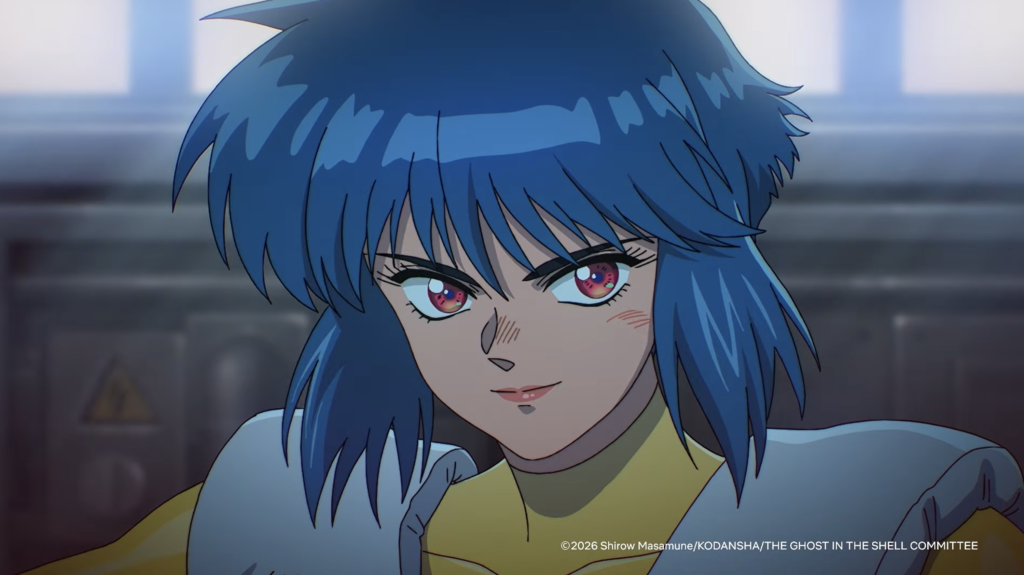
The role that drew the most attention was Motoko Kusanagi. Atsuko Tanaka, who played her for many years, passed away in 2024. The one who took over the role was Maaya Sakamoto.
Sakamoto described Tanaka as someone she “always loved and respected, both as a person and as an actor,” and spoke about the weight of inheriting “the Motoko that she had nurtured and loved with such care over so many years.” She also revealed that at first she “couldn’t accept” the offer right away, and that only after meeting with the director and producers to confirm their approach to the project did she decide, “if there’s even a little something I can do.”
Facing this work became a precious time for me to truly take in both my gratitude to Atsuko-san and how much I miss her.
Source: MANTANWEB
Those are heavy words. And they’re an essential starting point for thinking about this series. The cast overhaul wasn’t just a generational handoff or a reset. It’s what happened when the production’s commitment to returning to the original manga and the resolve of the person inheriting the role happened to line up at the same moment.
The Casting of Akio Otsuka Is Interesting
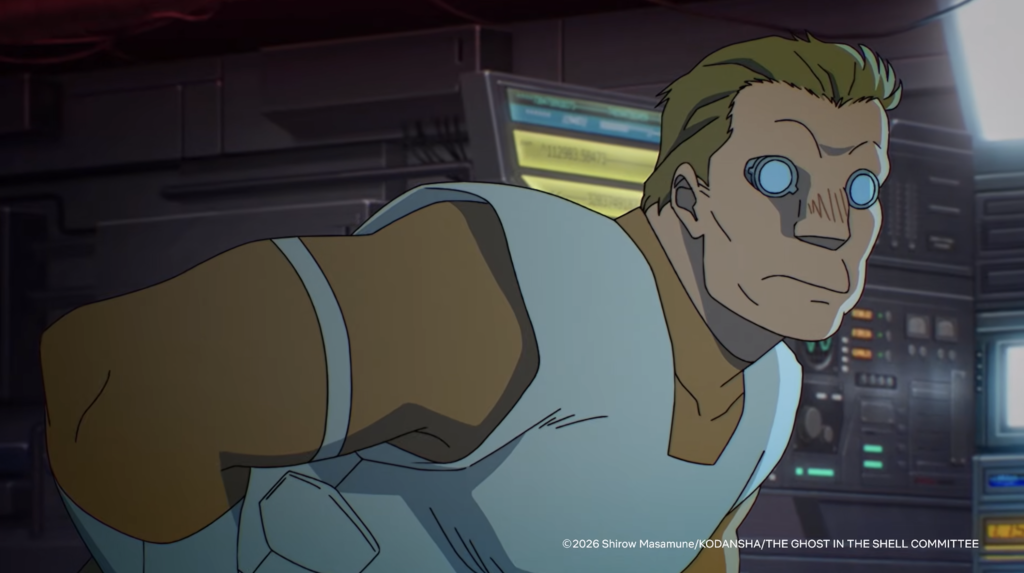
Another thing worth pointing out: Akio Otsuka was cast as Colonel Mares.
Akio Otsuka is, of course, the man who played Batou for years. In this series, he’s here in a different role, not as Batou. The 2026 Batou is Hiroki Yasumoto.
So how do you read that? My take is that it’s a knowing nod: commit fully to the overhaul, but still keep a voice that knows the franchise’s history inside the work. It’s a move that signals continuity, not a clean break. At least, that’s how I took it.
Also, casting Kikuko Inoue as the Puppet Master is a seriously classy choice. You’ll want to hear that one for yourself.
Analysis: What Was the Puppet Master in the Finale Restaging?
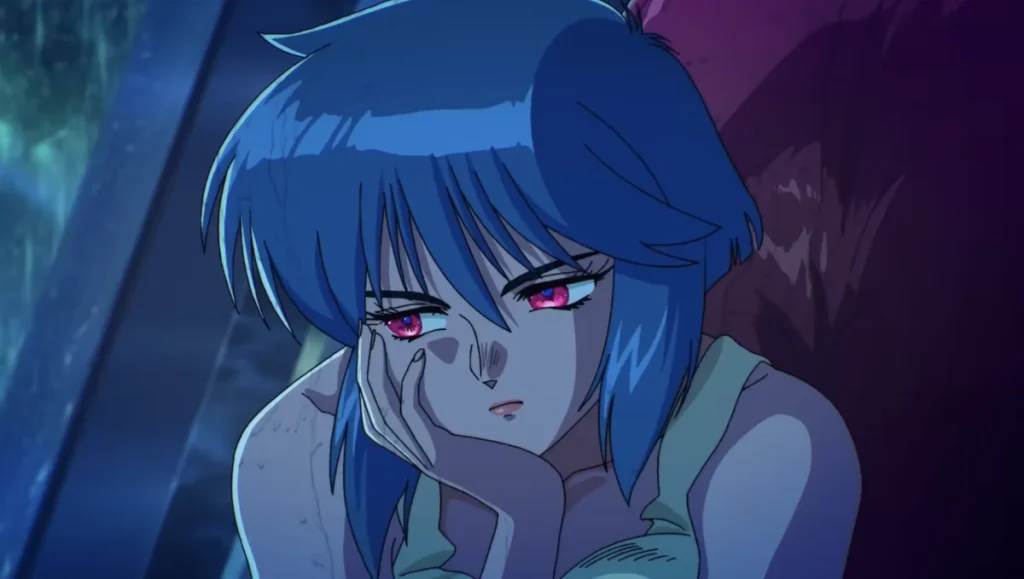
The finale, Episode 10, is titled “BRAIN DRAIN ⅲ + GHOST COAST + EPILOGUE.” The fact that it strings together three episode titles immediately jumps out.
Here’s how it plays out. Having lost her cyborg body to a sniper, Motoko Kusanagi flees with Batou as nothing but a brain. They go to Batou’s place to get her a new body, and while Kusanagi is in lockdown mode, the Puppet Master, who supposedly vanished, starts opening a channel to her.
This Is the Source of “That Ending” From the 1995 Film
If you’ve followed Ghost in the Shell over the years, this development probably hit you with intense déjà vu. Motoko reduced to a brain, Batou’s room, and a connection with the Puppet Master. Its skeleton overlaps with the setup of the 1995 film’s climax.
But don’t get the order wrong. It’s not that the 1995 film came first and this series traced over it. Both are drawing on the same original manga. By going back to the source, this series ended up arriving at the same place as the film.
I think that’s the single biggest highlight of the series. More than 30 years later, a different adaptation has risen out of the same source. The question isn’t which one is better. What’s more interesting is the fact that a single manga had that much room for interpretation.
What the Three-Title Mashup Means
The combined title “BRAIN DRAIN ⅲ + GHOST COAST + EPILOGUE” is also a sign that the series wrapped up multiple episodes from the manga all at once within a tight 10-episode runtime.
Honestly, this is probably where opinions split. There are bound to be people who wish each story had been given its own episode. On the other hand, if you’re bringing over the manga’s density as-is, you can argue that folding it up like this is exactly what the manga would do.
I lean toward the latter. Shiro Masamune’s manga was always a work that compressed information and crammed it onto the page. If you think of the cramming itself as a recreation of the manga’s style, this structure makes sense.
Was 10 Episodes the Right Length? What Worked and What Didn’t
Finally, let’s sum up how the series holds up as a whole.
What Worked
- The commitment to returning to the original manga never wavered: from the Fuchikoma name to the structure of the finale, it’s consistent all the way through
- Hiring Toh EnJoe meshed with that commitment: an information-heavy source and a writer who runs on logic are a great match
- The cast overhaul wasn’t done halfway: and on top of that, there’s the nod of putting Akio Otsuka in a different role
- The theme song pairing of King Gnu’s “GO GHOST” and MILLENNIUM PARADE’s “Blue” also fits the tone of the series
What Didn’t
- 10 episodes is short: the moment the finale had to chain three episode titles together, it was obvious there was a battle with runtime
- It’s a tough entry point for newcomers: by sticking so closely to the manga, the barrier is high for anyone diving in without background knowledge
- If you’re expecting the atmosphere of the 1995 film, you’ll be confused: a comedic, talkative Motoko is a different beast from that serene image
Overall, I think this was a series that went all-in on “people who already get it.” Whether that’s good or bad depends on where you’re standing, but at the very least, it wasn’t half-hearted.
Enjoying this article? Add us as a preferred source on Google.
Wrap-Up: What Was the 2026 Ghost in the Shell Trying to Do?
Let’s run through the key points one more time.
- Broadcast: Tuesday, July 7, 2026 through September / KTV and Fuji TV network, Tuesdays at 11 p.m. in the “Hi-Anival!!” block / 10 episodes
- Original work: Shiro Masamune’s Ghost in the Shell (Kodansha, KC Deluxe)
- Staff: Director Mokochan / Series composition and scripts Toh EnJoe / Character design and chief animation director Shuhei Handa / Production Science SARU
- Theme songs: OP King Gnu, “GO GHOST” / ED MILLENNIUM PARADE, “Blue”
- Motoko Kusanagi: Maaya Sakamoto (taking over from Atsuko Tanaka)
- Streaming: Earliest streaming on Prime Video starting July 7; ABEMA, d Anime Store, and others starting July 8
And here’s the core of the analysis.
- The name “Fuchikoma” shows that this series belongs to the lineage of the original manga, not the SAC line
- Hiring Toh EnJoe meshes with the nature of the original manga, which pushes forward on sheer information rather than sentiment
- The cast overhaul is a generational handoff, but by putting Akio Otsuka in a different role, it also preserves continuity with the franchise’s history
- The Puppet Master in the finale should be read not as an imitation of the 1995 film, but as the result of arriving at the same source
Once again, the interpretations here are not anything the production team has stated. That said, I also think hunting for the reason behind every single name and casting choice is exactly the right way to enjoy this show.
The value of the 2026 version comes down to one thing: it didn’t add a new interpretation. The Fuchikoma name, the talkative, comedic Motoko, and a finale that folds several of the manga’s episodes together all point back to the source text, Shiro Masamune’s manga. Work backward from that policy and hiring Toh EnJoe was inevitable. On the other hand, 10 episodes is clearly a tight fit, and there’s no denying it’s a tough entry point for newcomers. The more you were hoping for a replay of the 1995 film, the more thrown off you’ll be, but that’s not a failure. They’re simply drawing from a different source.
A single manga from more than 30 years ago still has this much room for interpretation. That, more than anything, is the answer.
Read Next
Snicker Kitamura
Leave a Reply