




Enjoying this article? Add us as a preferred source on Google.
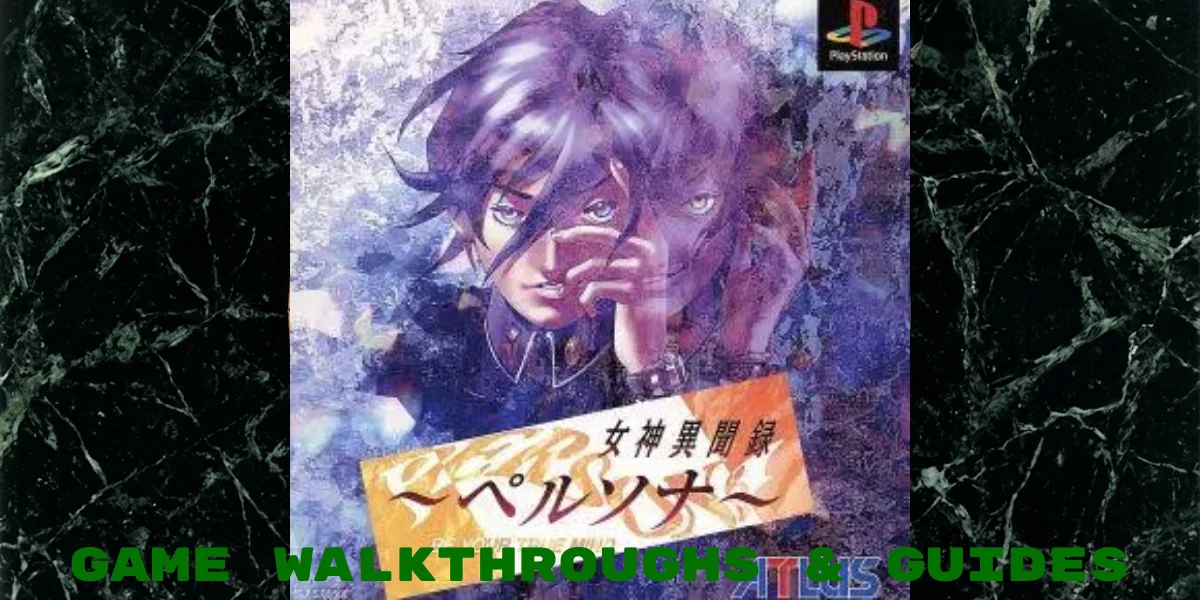
The Persona series did not start out looking anything like the flashy games from Persona 3 onward. Megami Ibunroku Persona, released for the PS1 in 1996, was a dark high-school RPG with Shin Megami Tensei blood running straight through it. The town gets swallowed by another world, your party options are limited, and the maps are mercilessly tangled. Come to it after Persona 5 and its hard edge will genuinely surprise you.
The game contains two separate routes, the Sebec route and the Snow Queen quest, and clearing both means working through 23 dungeons and 108 floors in total. The Sebec route is the main story, chasing down the conspiracy inside SEBEC Corporation. The Snow Queen quest branches off early and turns into a rescue drama set in a school sealed in ice. Neither one hands you an easy labyrinth.
This guide covers both routes completely, with SVG maps for all 23 dungeons and all 108 floors of the PS1 version alongside a walkthrough order. Floors added in the 2009 PSP remake are excluded; everything here follows the original PS1 release exactly.
Let me be honest with you. I did not finish this game until years after it came out. Back then I got hopelessly lost on B5F of Kama Palace and I still remember running out to buy a strategy guide. How many times did I wish I had a map that night? That is exactly why I wanted to build a walkthrough with every single floor mapped.
*Prices in this article are converted from Japanese yen at ¥153 = US$1 (September 2026 rate).
What kind of game is Megami Ibunroku Persona?
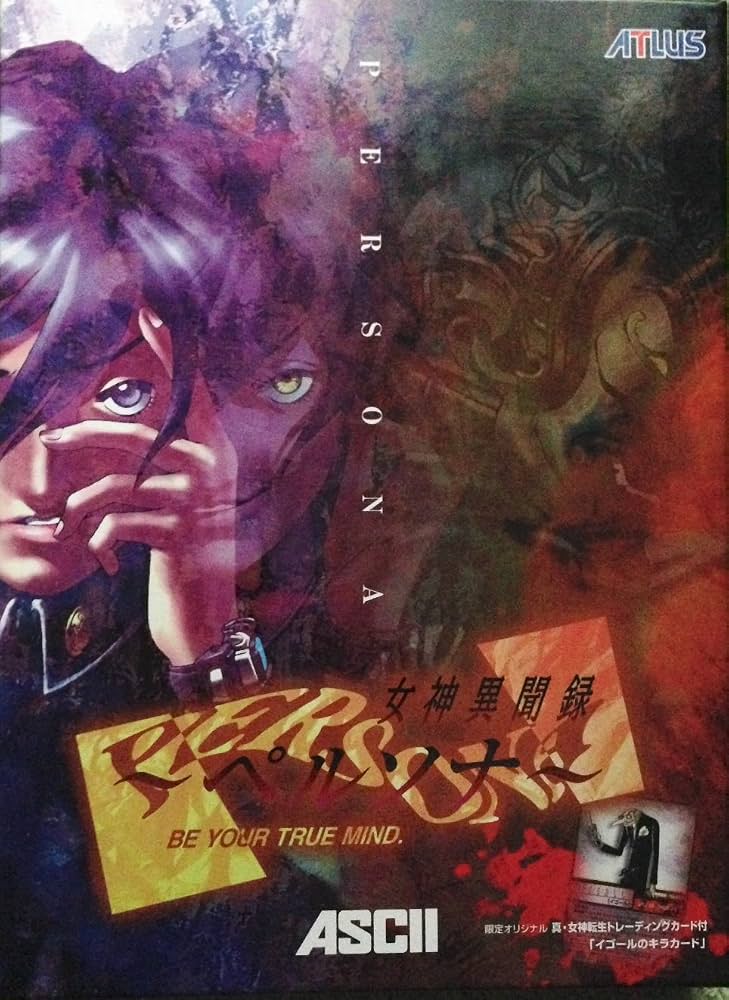
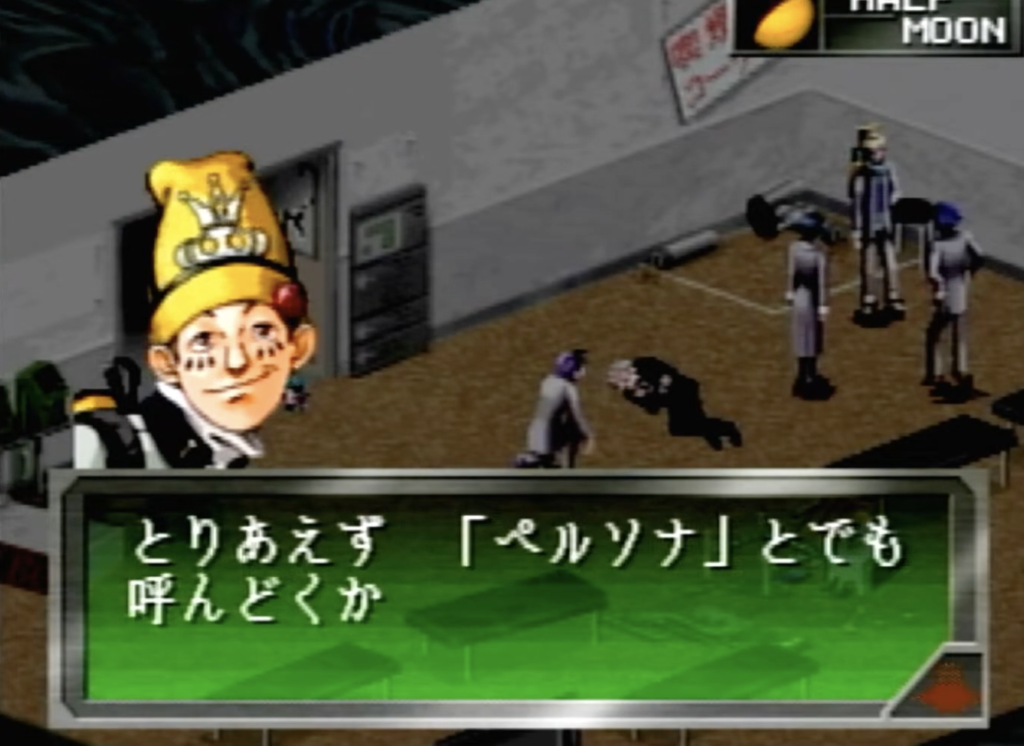
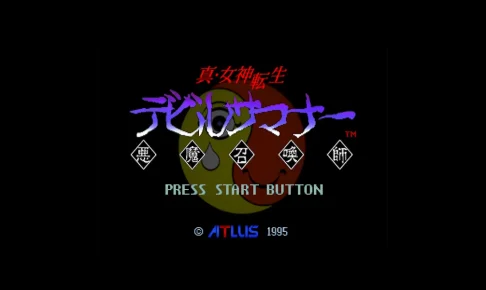
Megami Ibunroku Persona is a juvenile occult RPG that Atlus released for the PlayStation on September 20, 1996. It was developed as a spin-off of the Shin Megami Tensei series, and its defining hook is that instead of fusing demons into allies, you summon a “Persona,” another self, to fight for you. This is the origin point of the entire Persona series, and the “school life plus the supernatural” template that P3, P4 and P5 all run on was established right here.
| Item | Details |
|---|---|
| Title | Megami Ibunroku Persona |
| Release date | September 20, 1996 |
| Publisher | Atlus |
| Price | US$44 (before tax) |
| Genre | Juvenile occult RPG |
| Key staff | Kouji Okada (director) / Kazuma Kaneko (character design) / Tadashi Satomi (scenario) |
| Dungeon scale | 23 dungeons, 108 floors (PS1 version) |
| Routes | Sebec route (main) + Snow Queen quest (branch) |
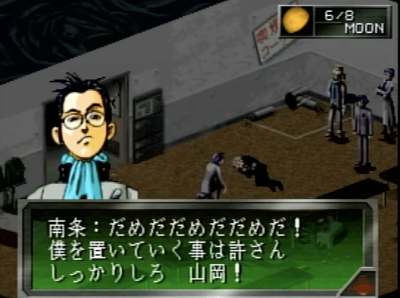
The setting is the fictional town of Mikage-cho. The protagonist and his classmates at St. Hermelin High School play a game called “Persona” and end up stumbling into another world, where they awaken to the power of the Persona. Tracking down the source of the chaos spreading over Mikage-cho is the Sebec route; breaking the curse that falls on the school is the Snow Queen quest.
Kazuma Kaneko’s character and demon designs, Tadashi Satomi’s meaty scenario, and the distinctive sound work of Tsukasa Masuko, Kenichi Tsuchiya and company come together into a game that Megami Tensei fans still rate highly. There is no comparing it to the polished interface of Persona 5, but the core of the thing, the tension of dungeon crawling and the bonds between your party members, has stayed consistent across the whole series.
Where do the PS1 and PSP versions actually differ?
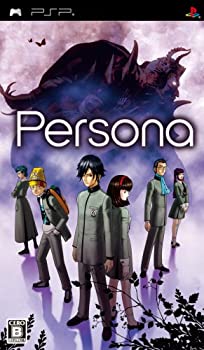
On April 29, 2009, a remake arrived on PSP simply titled Persona. The “Megami Ibunroku” part was dropped from the name, and both the game systems and the visuals were heavily overhauled. Since this guide follows the 1996 PS1 version, here is a clear breakdown of the main differences.
| Item | PS1 version (1996) | PSP version (2009) |
|---|---|---|
| Town map | Rendered in 3D polygons | Rebuilt as a top-down 2D map |
| Dungeons | Original layout | New floors added (Mikage Ruins B8F-B12F, Devil’s Mountain 8F and up, etc.) |
| Difficulty | Fixed (on the high side) | Choice of EASY / NORMAL / EXPERT |
| Battle speed | Standard | Cut to roughly two-thirds |
| Escape options | None | Emergency Exit (item) and Traesto (spell) added |
| Saving | Save points only | Quick save added |
| Display | 4:3 | 16:9 widescreen support |
| Soundtrack | Tsukasa Masuko, Kenichi Tsuchiya and others | Replaced with Shoji Meguro’s arranged versions |
The most important difference is the added dungeon content. The PSP version tacks B8F through B12F onto Mikage Ruins and adds upper floors to Devil’s Mountain. Because the maps in this guide follow the PS1 version, none of those PSP additions appear here. On PS1, Mikage Ruins runs B1F to B7F and Devil’s Mountain runs 1F to 7F, full stop.
The PSP version is also known for swapping out the entire soundtrack for Shoji Meguro arrangements. Plenty of fans prefer the retro, oddly wired sound of the PS1 original, and which one is better comes down to taste. As a game to actually sit down and play, the PSP version is far more comfortable, but if you want the atmosphere of the original, the PS1 release wins.
Which systems matter most to your strategy?
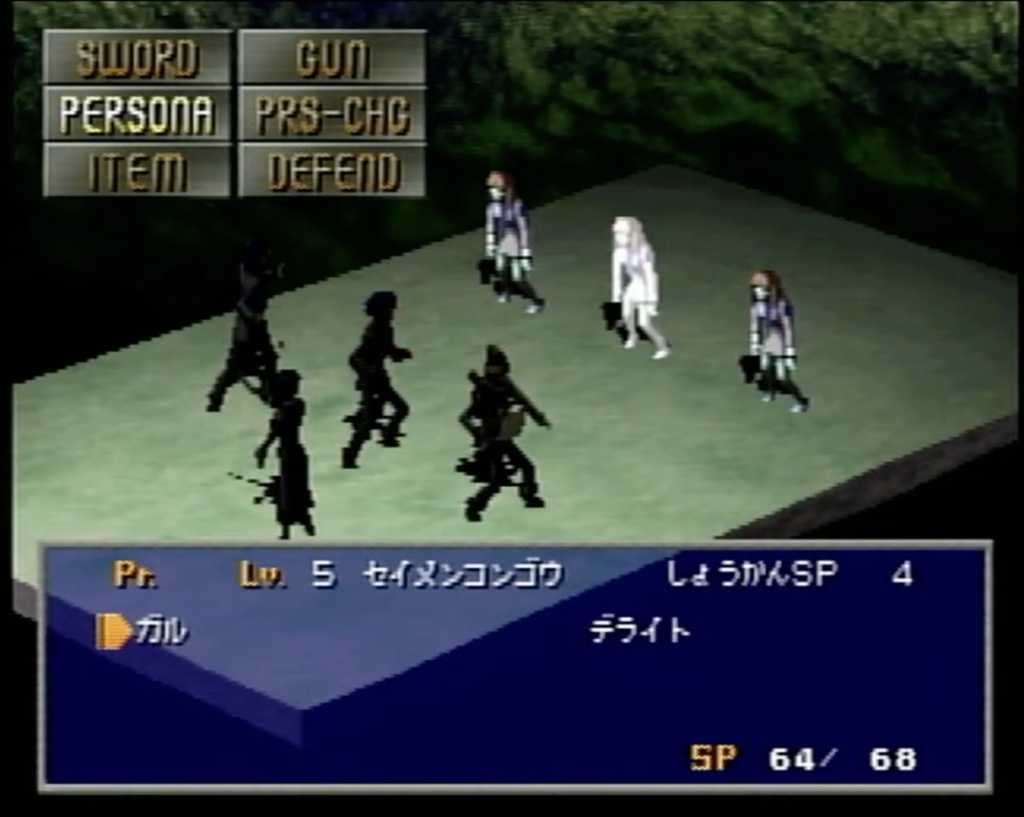
Persona summoning and demon negotiation
In battle, each party member fights while equipped with a Persona. Personas are created by taking the Spell Cards you earn through demon negotiation and fusing them in the Velvet Room. The mechanic is close to demon fusion in the Shin Megami Tensei series, except what comes out of the fusion is a Persona, not an ally demon.
Demon negotiation is alive and well here, and it works by pushing four emotion parameters, Happy, Angry, Sad and Fun, until the demon hands over a Spell Card. The result changes depending on which conversation option you pick, so you have to read the demon’s personality. Once you have the right cards in hand, you can create powerful Personas and the game suddenly gets a lot easier.
Party makeup and the two routes
Your party holds up to five members, with the protagonist locked in. The rest join as the story moves along. Some members are exclusive to one route or the other, so choosing between the Sebec route and the Snow Queen quest also changes how you play.
The route split happens early, at St. Hermelin High School. Entering the Snow Queen quest requires meeting specific conditions, and if you play through without knowing about them you go straight down the Sebec route. The standard approach is the Sebec route on your first playthrough and the Snow Queen quest on your second.
Things to watch for while crawling dungeons
The PS1 version gives you no way to escape a dungeon. Traesto and the Emergency Exit item were both added in the PSP version. In other words, once you walk in, you walk back out under your own power. You need to keep track of where the save points are and watch your HP and SP constantly as you push forward.
Combat uses a grid with auto-pilot movement, which makes party placement and weapon range genuinely important. The front row is strong in physical combat but often sits outside the range of your spells, while the back row is safe but cannot make melee attacks. Building a party around Persona affinities and attack ranges is the key to getting through.
Walkthrough order
The game’s dungeons number 23 locations and 108 floors. The Sebec route and the Snow Queen quest send you through different dungeons, so the tables below are organized by route. Detailed maps for each dungeon are in the “MAP walkthrough” section further down.
Sebec route order
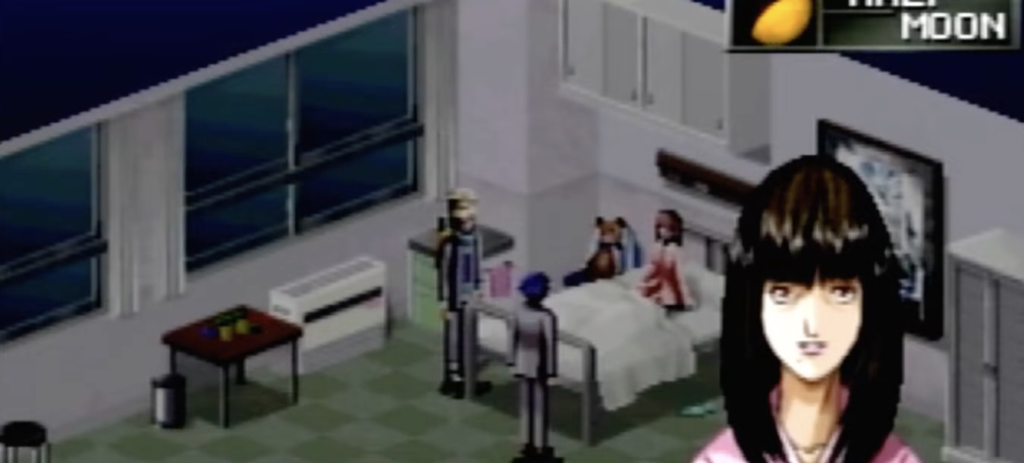
| Order | Dungeon | Floors | Key notes |
|---|---|---|---|
| 1 | St. Hermelin High School | 4 | Tutorial. The route split happens here too |
| 2 | Hospital (normal, then otherworld) | 3+3 | First real dungeon. The map changes once it shifts to the other world |
| 3 | Mikage Police Station | 1 | Small. Mostly information-gathering events |
| 4 | Abandoned Factory | 1 + warehouse | Has a switch puzzle that opens passages |
| 5 | SEBEC Building | 5 | SEBEC Corporation headquarters. Five stories |
| 6 | Underground Laboratory | 1 | Beneath the SEBEC Building. A major story location |
| 7 | Otherworld School | 5 | St. Hermelin transformed by the other world. The layout changes |
| 8 | Subway | 1 | One enormous floor (34×28 tiles) |
| 9 | Mikage Ruins | 7 | B1F-B7F (PS1 version). The PSP version runs to B12F |
| 10 | Kama Palace | 8 | B1F-B10F. An early roadblock |
| 11 | Lost Forest | 1 | A sprawling 24×24 maze |
| 12 | Mana Castle | 5 | Boss on 5F. Lots of trapped chests |
| 13 | Haunted Mansion | 2 | Wide, horizontal map (30×19 tiles) |
| 14 | Lost Forest, deep area | 1 | The innermost part of the Lost Forest |
| 15 | Deva Yuga | 6 | A huge late-game dungeon. 1F-3F are massive 23×23 mazes |
| 16 | Alaya Cavern | 8 | B1F-B8F. Includes the event for the strongest sealing weapon |
| 17 | Avidya World | 8 | Final dungeon. Every floor from B1F to B8F is a giant maze around 23×23 |
Snow Queen quest order
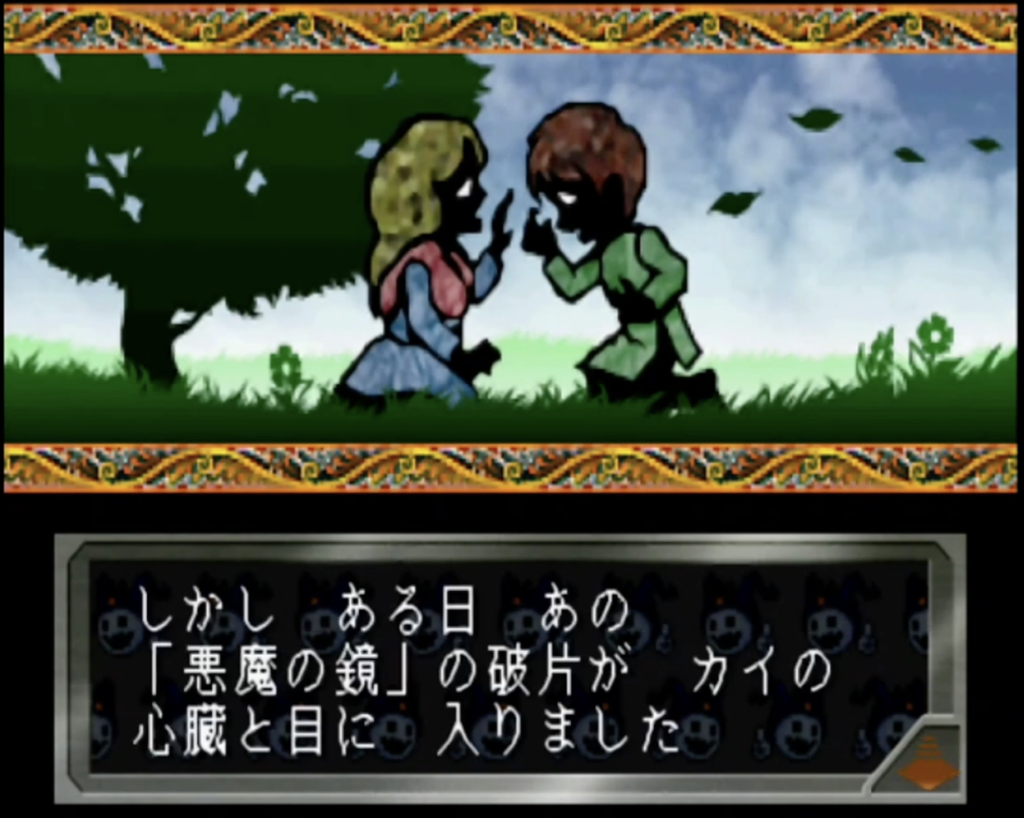
The Snow Queen quest branches off at St. Hermelin High School and runs through three towers, then the Ice Castle, then Devil’s Mountain. You can tackle the three towers, Hypnos, Nemesis and Thanatos, in any order, but on difficulty grounds the recommended sequence is Hypnos, then Nemesis, then Thanatos.
| Order | Dungeon | Floors | Key notes |
|---|---|---|---|
| 1 | Tower of Hypnos | 8 | The easiest of the three towers |
| 2 | Tower of Nemesis | 8 | Moderate difficulty. One 20×20-ish maze after another |
| 3 | Tower of Thanatos | 4 | Few floors, but each one is enormous (40×19 or larger) |
| 4 | Ice Castle | 10 | 2F-11F. The largest dungeon in the Snow Queen quest |
| 5 | Devil’s Mountain | 7 | 1F-7F (PS1 version). Floors get smaller the higher you climb |
Where players get stuck
1. Missing the conditions for the Snow Queen quest
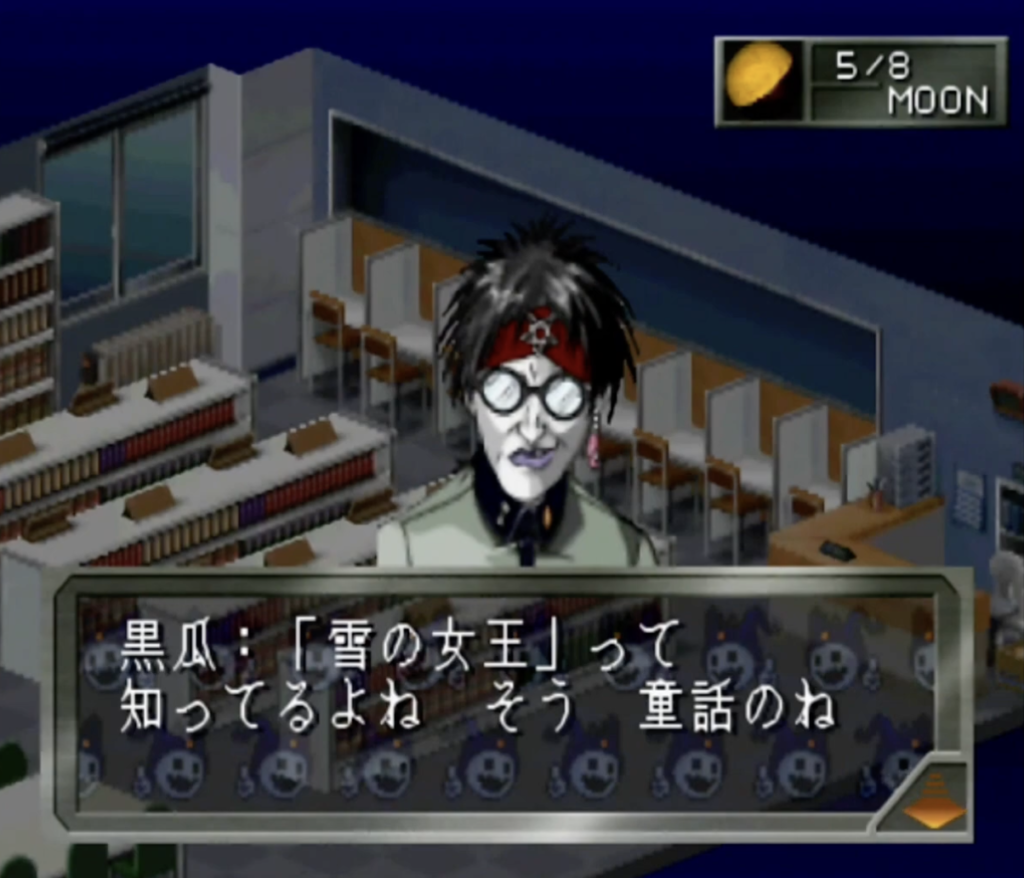
Getting into the Snow Queen quest requires triggering a specific event at St. Hermelin High School. Push the story forward without knowing about it and you head straight down the Sebec route, finishing the game without ever learning the Snow Queen quest exists. Go in on your second playthrough with the branch conditions in mind.
2. Getting lost in Kama Palace
Kama Palace is ten floors, B1F through B10F, and it is the wall that stops people in the middle of the game. From B5F onward especially, the mazes get intricate, and lose track of where the stairs are and you will wander for ages. The rule here is simple: keep a map in front of you and head for the stairs with purpose.
3. Forgetting that you cannot escape
The PS1 version has no Traesto and no Emergency Exit. If your HP or SP runs dry deep inside a dungeon, your only option is to walk all the way back to the entrance while dodging fights. Save every time you find a save point, and always carry more healing items than you think you need.
4. The sheer bulk of Avidya World
Avidya World, the final dungeon, is eight floors from B1F to B8F, and every one of them is a giant maze around 23×23. Exploring a single floor eats a serious amount of time. Get your levels and your Personas fully prepared before you set foot in it.
5. The stretched-out floors of the Tower of Thanatos
The Tower of Thanatos in the Snow Queen quest has only four floors, but each one runs more than 40 tiles wide. Let the low floor count fool you into walking in casually and you will pay for it.
Complete Map Index: All 23 Dungeons, All 108 Floors
Every floor of all 23 dungeons is mapped below, grouped by dungeon in collapsible panels. These maps follow the PS1 release of Persona exactly, which means the floors added in the later PSP version — Mikage Ruins B8F-B12F, Devil’s Mountain 8F and up, and so on — are not included here.
The game never displays coordinates on screen, so the numbers running along each map are reference values added for this guide: east on the horizontal axis, north on the vertical axis. Gray lines are the grid, heavy lines are walls. White squares are walkable floor, and any blank area is either solid wall or space you can never reach.
Can You Still Play Megami Ibunroku Persona Today? A Platform-by-Platform Guide
✅ The short answer
As of September 2026, there is no official way to play the main game of Megami Ibunroku Persona directly on a current platform such as Nintendo Switch, PS5, or Steam. Buying the PSP download version through a PS Vita remains the easiest legitimate route. The one exception is the spin-off Megami Ibunroku Persona: Ikuu no Tou Hen, which is available on Switch and Steam.
1. Titles available free or through a subscription
Persona 1 is not included in any subscription service right now. It is absent from Nintendo Switch Online, PlayStation Plus, and Xbox Game Pass alike.
2. Titles you can buy outright
| Title | Platform | Price and notes |
|---|---|---|
| Persona (PSP digital version) | PS Vita | About US$6. Purchased from the PlayStation Store directly on a Vita |
| Megami Ibunroku Persona: Ikuu no Tou Hen | Switch / Steam | About US$12. Part of G-MODE Archives+. A port of the mobile phone game, not the main title |
3. Titles available as a remaster or remake
No remaster or remake of Persona 1 has been announced as of September 2026. Persona 3, 4, and 5 all have remastered releases across Switch, PS5, Steam, and Xbox, but 1 and 2 have been left out.
4. Titles that are hard to get on current hardware
| Title | Original hardware | Alternative |
|---|---|---|
| Megami Ibunroku Persona (PS1 version) | PlayStation | Buy the PSP download version through a PS Vita (about US$6) |
| Persona (PSP physical release) | PSP | Secondhand market only. The download version is still available via Vita |
Now that the wave of remasters from Persona 3 onward has run its course, plenty of fans are loudly hoping that 1 and 2 are next in line. Atlus has not announced anything official yet, but it would be something to finally see the origin point of the series playable on more platforms.
Enjoying this article? Add us as a preferred source on Google.
Wrapping Up
Megami Ibunroku Persona launched on PS1 on September 20, 1996, and it is where the entire Persona series begins. Two branching routes — the Sebec route and the Snow Queen quest — plus 23 dungeons and 108 floors add up to a scale that few RPGs of the PS1 era ever matched.
The 2009 PSP version smoothed over a lot of rough edges with selectable difficulty, a way to escape dungeons, and extra floors. Even so, the sheer bite of the PS1 original and its unmistakable soundtrack have not faded one bit. Every map in this guide follows that PS1 version, all 108 floors of it. If you get turned around in Kama Palace, or feel your will breaking somewhere deep in the endless maze of the Avidya World, I hope these maps get you through.
This is the polar opposite of Persona 5’s slick styling: a hard-nosed, thick-skinned dungeon RPG. No escape items, sprawling mazes, dungeons that run more than ten floors deep, and none of it cuts you any slack. But that inconvenience is exactly where the pleasure lives, in filling in one more square of the map. If you want to understand where the series came from, the PS1 version is absolutely worth taking on.
Maps for all 108 floors in hand, step into the depths of Mikage-cho.
Read Next
Snicker Kitamura



Leave a Reply