



Enjoying this article? Add us as a preferred source on Google.
- What is Tengai Makyou II: Manjimaru? The basics on the RPG that defines the PC Engine
- How the PC Engine original differs from the remakes, and which version to play
- Scrolls and techniques: understanding the two halves of the magic system
- Every technique and scroll aptitude for Manjimaru, Kabuki, Gokuraku and Kinu
- What order to tour the 17 provinces in, plus where all seven sacred swords are
- Five things that most often stop players cold
- World maps (two overviews and 25 province maps) and 66 dungeon maps
- Can you play it on current hardware? PC Engine mini, Game Archives and the remakes compared
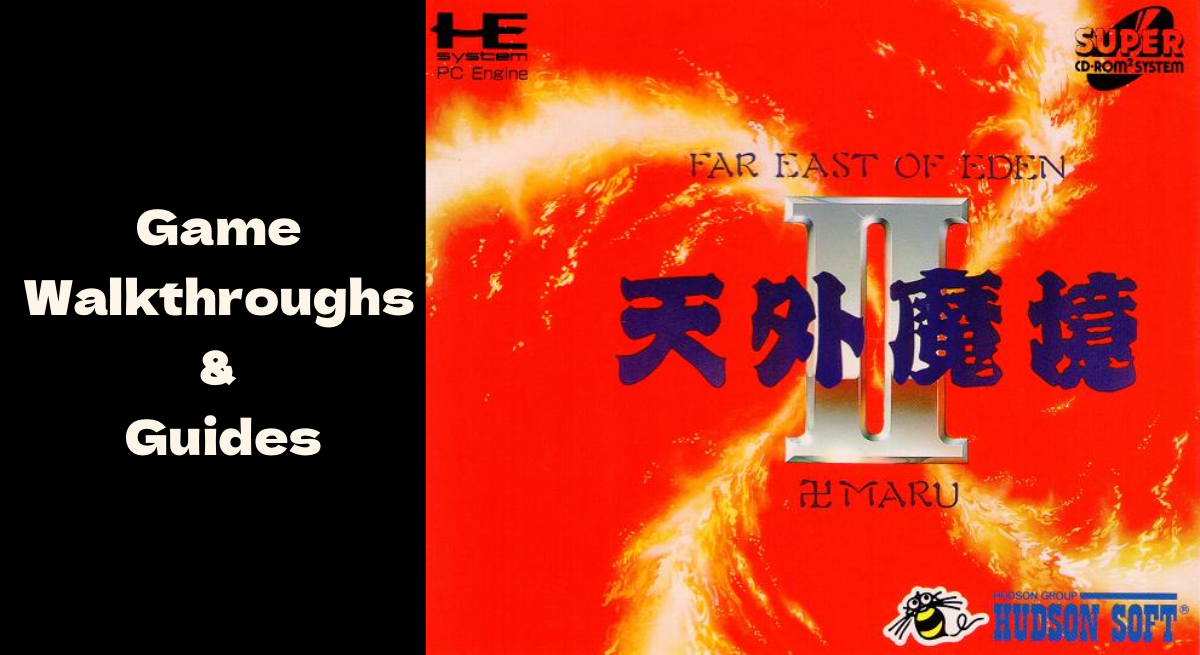
Tengai Makyou II: Manjimaru is a Japanese-flavored RPG released in 1992 for the PC Engine SUPER CD-ROM². It pulled an outrageous 32 points from Famitsu and a reader score of 27.92 in PC Engine FAN, the highest of any game on the system, and it is still talked about as the high-water mark of the hardware. Music by Joe Hisaishi, fully voiced presentation, a scenario built by Oji Hiroi and Shoji Masuda. But the single most important thing when you actually sit down to beat this game is understanding what each of the four party members can do.
Combat magic in Tengai Makyou II comes in two forms: techniques and scrolls. Techniques are character-specific moves learned by rank or triggered by story events, while scrolls are items picked up at tengu huts that you can freely shuffle between characters. That split is what creates the division of labor in your party.
This article follows the PC Engine version and lays out, in tables, the full technique list and scroll aptitude for all four combat characters. On top of that, I have drawn fresh SVG maps of all 17 provinces of the Yamato region of Jipang, plus 66 dungeon maps covering every cave, Root Clan castle and facility from Ryomen Cave to the Flower Palace. This is a game where the difficulty of a fight depends on who is holding what, so use it as a guide to party setup and as an atlas whenever you get turned around.
The PC Engine was the machine I pined for. I watched Makoto Otake’s Tadaima! PC Land on TV Tokyo every single week and still never got the hardware. For someone from the Saturn and Dreamcast generation, Tengai Makyou II sits at the top of the “masterpieces that were out of reach back then” list, and the PC Engine mini is where I finally got my hands on it.
What kind of game is Tengai Makyou II: Manjimaru? The PC Engine’s finest Japanese-flavored RPG
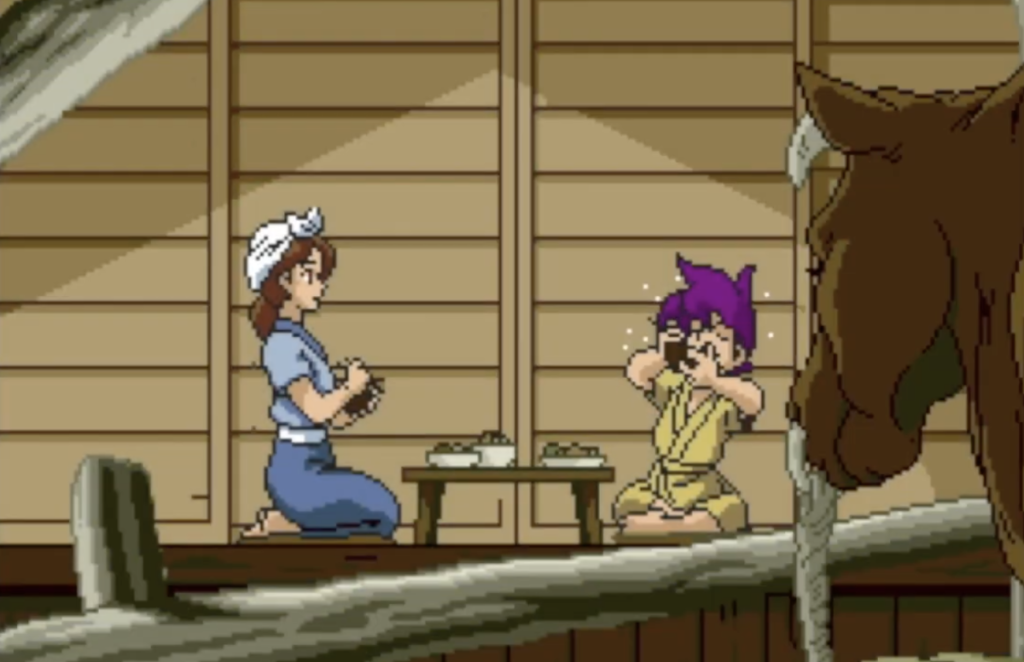
Tengai Makyou II: Manjimaru is a Japanese-flavored RPG set in a fictional Japan called Jipang, in which Sengoku Manjimaru, a boy of the Fire Clan, stands against the Dark Orchids and the Root Clan. It is built on a top-down overworld and command-select battles, but the fully voiced events and animation squeezed out of the SUPER CD-ROM²’s capacity flattened players at the time.
| Item | Details |
| Title | Tengai Makyou II: Manjimaru |
| Release date | March 26, 1992 |
| Publisher and price | Hudson / 7,800 yen before tax (about US$51, converted at 153 yen to the dollar) |
| Platform | PC Engine SUPER CD-ROM² |
| Staff | Planning and supervision: Oji Hiroi / Director and script: Shoji Masuda / Music: Joe Hisaishi, Hirohiko Fukuda / Character design: Torajiro Tsujino (Hideyuki Amagi) |
| Party size | Up to four, with a fixed lineup |
| Final goal | Cut down the seven Dark Orchids and defeat the Root Clan |
Party members join at fixed points as the story advances. Manjimaru, Kabuki Danjuro, Gokuraku Taro and Kinu each fight in a completely different way, and there is no swapping or class changing. That makes learning each character’s strengths and covering their weaknesses as a group the real key to the game.
How does the PC Engine version differ from the remakes? Which one should you play?
Tengai Makyou II exists in several versions, and this article follows the original PC Engine SUPER CD-ROM² release. The remakes differ in balance and presentation, so let me sort out what each version is first.
| Version | Year | Notes |
|---|---|---|
| PC Engine SUPER CD-ROM² | 1992 | The original. 2D pixel art plus full voice |
| GameCube and PS2 (ORIENTAL BLUE lineage) | 2003 | 3D remake. Battle balance and presentation heavily reworked |
| DS version | 2006 | Dual-screen support. Some cutscenes trimmed |
| PSP and PS3 (Game Archives) | 2011 | A straight port of the PC Engine version |
| PC Engine mini | 2020 | Includes the PC Engine version, with suspend saves |
If you want the original PC Engine release, realistically the PC Engine mini or the Game Archives version are the ones you can still get. The GameCube and PS2 remake shifted its balance along with the move to 3D, so be aware that some of the technique and scroll data explained here does not match it.
Scrolls and techniques: understanding the two halves of Tengai Makyou II’s magic system
The magic you can use in battle splits into two systems: techniques and scrolls. Push forward without understanding the difference and you will hit a wall late in the game trying to divide your scrolls up.
Techniques, the moves unique to each character
Techniques are learned individually by each character. They cost no resource to use, but they come with risks or drawbacks attached. Manjimaru learns a new sword art every time he obtains a sacred sword, while Kabuki, Gokuraku and Kinu learn theirs by climbing in rank (dan) or through story events. Techniques do not depend on equipment or items; they are tied to a character’s own growth.
Scrolls, the item-based magic you collect at tengu huts
Scrolls are items you pick up at tengu huts scattered around the world, and they are never consumed. Using one costs MP. Their biggest feature is that you can move a scroll from character to character like any other item, so you are free to pile the offensive magic onto Manjimaru or hand all the healing to Kinu. Each character has a different number of scroll slots, though, and some scrolls can only be used by certain people.
| Character | Item slots | Scroll slots | Leaning |
|---|---|---|---|
| Kabuki Danjuro | 6 | 14 | All-rounder. Can handle offense and buffs at once |
| Gokuraku Taro | 9 | 7 | Item carrier. Scrolls are bare minimum |
| Kinu | 3 | 21 | Caster. Carries most of the scrolls |
Kinu’s 21 scroll slots are in a league of their own. Her item slots, on the other hand, number only three, which is not even enough to carry healing supplies properly. Gokuraku is the reverse: nine items, but seven scrolls. That asymmetric design is what creates the strategy of dividing scrolls across the whole party, and it is unique to this game.
The MP Reduction tengu, a hidden way to lower what your scrolls cost
Visit the MP Reduction tengu scattered around the world and you can lower the MP cost of your scrolls by a combined total of eight points. All eight of their huts open up in stages as the story moves along. If you plan on leaning on the expensive late-game spells (Divine Flame at 30, Heaven’s Thunder at 38), tracking down every MP Reduction tengu improves your fuel economy enormously.
Every technique for Manjimaru, Kabuki, Gokuraku and Kinu, and how to use them
The fixed four of Tengai Makyou II each fight in a completely different style. Here I go through them one at a time: their role, how each technique is learned, what it does, and which scrolls suit them. There are eight techniques per character, 32 in all.
Sengoku Manjimaru (Swordsmanship): eight sword arts learned from sacred swords, and the party’s main cannon
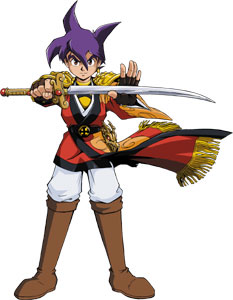
Manjimaru is the hero of the Fire Clan, the protagonist and the party’s main attacker. He is top tier in both attack and HP, and he can equip the widest range of weapons. His techniques are not tied to level but map one-to-one onto the seven sacred swords he obtains through the story: the moment a sword is in hand, the matching sword art becomes available. The eighth is his own blade, for a total of eight.
Every technique is free to use, costing no MP, but the stronger ones carry proportionally bigger risks: Kuroha Slash leaves him unable to act, Mehiko Slash wounds him, Manji Manji Slash halves his HP. The basic rhythm is Benimaru Slash (a group attack) against regular enemies and a mix of Matsumushi Slash (converts defense into damage) and Manji Manji Slash (quadruple damage) against bosses.
| How to learn | Technique | Effect |
|---|---|---|
| Obtain Hosuiin Benimaru | Benimaru Slash | Attacks one enemy group. Damage is divided by the number of heads |
| Obtain Myoin Karasu | Kuroha Slash | 2 to 2.5x damage to one enemy. You cannot act for one or two turns |
| Obtain Senkaigu Yoshitsune | Yoshitsune Slash | A normal attack on one enemy group. Accuracy is divided by the number of heads |
| Obtain Daireiin Mehiko | Mehiko Slash | Double damage to one enemy. Half the damage dealt comes back to you |
| Obtain Irohagu Shizuka | Seiran Slash | Two to four hits on one enemy (rarely five). The enemy strikes back between hits |
| Obtain Toriido Saburo | Saburo Slash | Kills one enemy in a single blow. Accuracy is extremely low |
| Obtain Jakoin Matsumushi | Matsumushi Slash | Damage of (attack + defense / 2) + attack to one enemy. Your defense is halved until the next turn |
| Obtain Daireiin Manjimaru (forged in the City of Fire) | Manji Manji Slash | Quadruple damage to one enemy. Your own HP is halved |
As for scrolls, Manjimaru can use the fire line (Will-o’-Wisp, Heavenfire, Embers, Legion Flame, Divine Flame) and the lightning line (Lightning Flash, Thunderbolt, Heaven’s Thunder), and he can also equip the healing scrolls Fresh Grass, Breath of Life, Showa and Fuji. His physical damage is high enough that the practical loadout is a few healing scrolls plus a group attack or two (Embers, Legion Flame).
Kabuki Danjuro (Secret Arts): the trickster who taunts and disrupts, and the jack-of-all-trades with 14 scroll slots
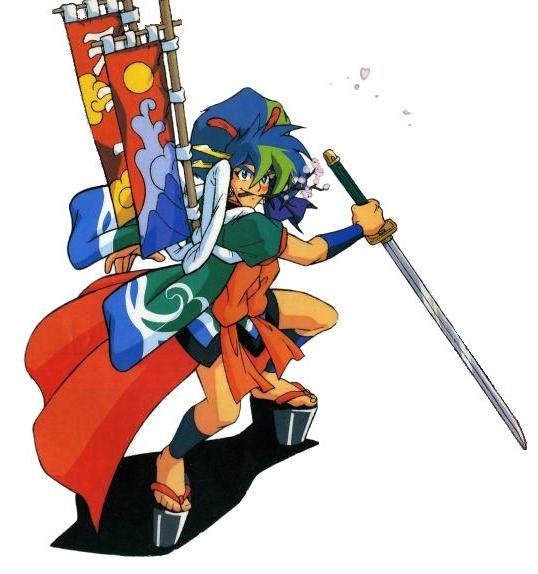
Kabuki Danjuro is a 19-year-old kabuki actor and the party’s number two, joining early in the story. His attack power is second only to Manjimaru’s, and with 14 scroll slots his magical range is wide as well. His techniques, called Secret Arts, start with Taunt for tanking and Grand Pose for debuffing, then turn peaky at high ranks with Kuroko (hides him) and Aragoto (big damage plus a stun).
One thing specific to Kabuki is that he leaves the party partway through the story and comes back the second time carrying extra scrolls. Those scrolls (Ice Dragon, Fire Serpent, Stone Serpent, Wind Serpent, Ariake, Hisamatsu, Barrier, Frozen Dragon) cannot be obtained until he rejoins, so your magical options are limited for the stretch where he is gone.
| How to learn | Technique | Effect |
|---|---|---|
| From the start | Taunt | Pulls every enemy attack onto Kabuki |
| From the start | Grand Pose | Lowers the defense of one enemy group of lower rank than his own |
| Rank 13 | Flying Kick | Double damage to one enemy. Low accuracy |
| Rank 16 | Love Suicide | Heavy damage to one enemy. Minor damage to himself |
| When Kabuki rejoins | Glare | Makes every enemy flee. High failure rate |
| When Kabuki rejoins | Full House | Raises the encounter rate (for grinding) |
| Rank 60 | Kuroko | Hides him, so enemies stop targeting him |
| Rank 66 | Aragoto | Heavy damage to one enemy. He cannot act for several turns afterward |
His scroll range covers offense (Ice Blade, Blossom Storm, Ice Dragon, Rain Dragon, Heaven’s Thunder, Divine Wind) and buffs (Power King, Fire Serpent, Stone Serpent, Wind Serpent, Tailwind, Bloom) alike. Rain Dragon (ice, 33 MP) and Heaven’s Thunder (lightning, 38 MP) are the strongest attack spells in the late game, and only Kabuki can cast them. Those 14 slots let him carry offense and support at the same time, which is his real strength and makes him the party’s utility man.
Gokuraku Taro (Body Arts): a 1,024-year-old giant, and a pure physical wall
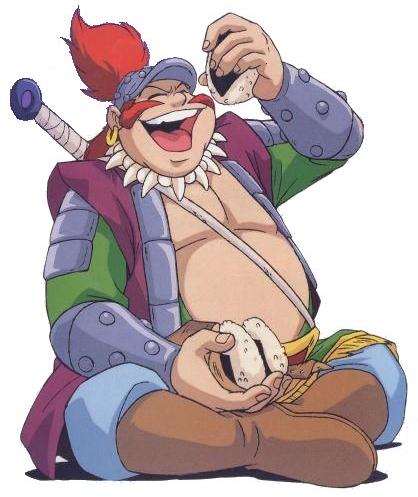
Gokuraku Taro is a 1,024-year-old brute with the party’s highest HP and attack. His techniques, the Body Arts, are all bare-knuckle moves, so expect almost nothing from him magically. With only seven scroll slots on top of that, his job is clearly physical damage and soaking hits.
Body Lock, Headbutt and Body Slam, all available the moment he joins, carry your early-game damage. Body Lock in particular is a monster: it pins an enemy and chips it every turn, which also serves as a way to shut a boss down. It freezes him in place too, though, so pick your moment. Stomach Acid, learned at rank 36, puts continuous damage on every enemy each turn, making it ideal for drawn-out boss fights.
| How to learn | Technique | Effect |
|---|---|---|
| From the start | Body Lock | Pins an enemy and deals half damage every turn. Both sides are unable to act |
| From the start | Headbutt | Damage plus a knockout. If the enemy’s defense is high he knocks himself out too |
| From the start | Body Slam | Attacks one enemy group. If their defense is high he takes damage as well |
| Rank 36 | Stomach Acid | 4 to 16 continuous damage to every enemy each turn |
| Rank 44 | Charge | A one-on-one slugging match with a single enemy |
| Rank 54 | Wild Swing | Attacks one enemy group |
| Rank 62 | Last Stand | Drops his defense to greatly raise his attack |
| Rank 68 | Self-Sacrifice | Heavy damage to an enemy. He takes damage too |
The scrolls Gokuraku can use amount to roughly Fresh Grass (healing, 3 MP), Lightning Flash (lightning, 4 MP), Will-o’-Wisp (fire, 3 MP), Snow Flurry (wind, 4 MP), Breath of Life (healing, 7 MP), Mudworm (debuff, 4 MP), Winter Blight (debuff, 7 MP), Pure Water (movement defense, 8 MP) and Thunderbolt (lightning, 12 MP), and almost none of the expensive spells. The stable approach is to put Fresh Grass, Breath of Life and something like Thunderbolt in those seven slots and cram his nine item slots with healing supplies.
Kinu (Demon Arts): made of paper, but the queen of magic and the linchpin of those 21 scroll slots
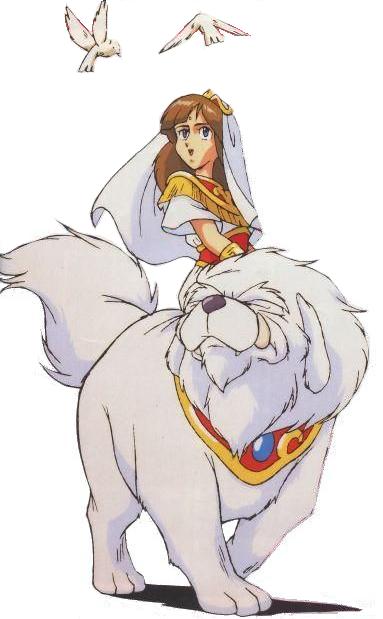
Kinu is a 14-year-old shrine maiden and the party’s caster. Her HP and base defense are extremely low and she has only three item slots, which makes her the weakest member physically, but her MP pool and her 21 scroll slots are in another class. Her exclusive armor is set unusually high in defense, so once she is properly equipped she is not as fragile as she looks.
Her techniques, the Demon Arts, center on battle support and exploration. Psychokinesis wipes out an entire enemy group in battle, which is enormously strong, but it halves her HP when cast. On the field it does the same job as Celestial (travel between provinces) and Ebb Tide (escape a dungeon). Bird Call summons birds that join the attack while shielding Kinu, and it is your lifeline early on. Blood Blossom (rank 48) hands 25 percent of her own HP and MP to one ally, a selfless move that is indispensable for resource management in long fights.
| How to learn | Technique | Effect |
|---|---|---|
| From the start | Psychokinesis | Erases one enemy group. On the field it acts as Celestial and Ebb Tide. Halves her HP when used |
| From the start | Bird Call | Summons birds. They join the attack and protect Kinu |
| From the start | Prophecy | Checks whether the local enemies are above or below Manjimaru’s rank |
| After clearing Shirogane Castle | Demon Rage | Raises attack, defense and speed. Costs 20 percent of max HP every turn |
| Rank 38 | Astral Body | Sees through one screen’s worth of your surroundings. Costs 1 HP every eight steps |
| Rank 42 | Persuade | Forces one enemy to withdraw from the fight |
| Rank 48 | Blood Blossom | Gives one ally 25 percent of her own HP and MP |
| Rank 57 | Specter | Takes control of one enemy as an ally. Kinu cannot act |
Kinu’s true value is in those 21 scroll slots. Healing (Fresh Grass, Breath of Life, Showa, Fuji), offense (Embers, Legion Flame, Divine Flame, Violet Lightning), buffs (Rampart, Barrier, Power King, Fire Serpent, Stone Serpent, Wind Serpent), debuffs (Tsukuyomi, Moonlight, Star Sleep, Hell, Child’s Oblivion) and summons (Shikigami, Triangle, Tiger King): she can cover nearly every category by herself. The default split is “healing goes to Kinu, attack spells spread across Manjimaru and Kabuki,” but you can also stack the high-damage spells on her and turn her into an artillery piece. Her low HP makes her easy to drop, though, so any such plan assumes you are shielding her with Bird Call or soaking hits with Kabuki’s Taunt.
The Tengai Makyou II walkthrough chart: what order to tour the 17 provinces in, and where to find the seven sacred swords
Tengai Makyou II is an RPG that repeats one loop seven times: work clockwise from Hida through the 17 provinces of the Yamato region, topple a Root Clan stronghold, claim the sacred sword inside, and use that sword to seal a Dark Orchid. The route runs Hida, Owari, Ise, Kii, Kyo, Omi, Echizen, Etchu, Echigo, Inaba, Izumo, Iwami, Tanba, Naniwa, Kibi, Nagato, Aki, and then back to the Flower Palace in Kyo at the very end.
Your range opens up in stages through mountain passes, checkpoints and vehicles. The Badly Drawn Boat, the Ihika Giant, Kami-Tata’s Ship, Dai-Tata’s Ship, the tub boat, the spider carriage, the Dogu Robo, Hayatori, the Steel Castle, Benkei: every new vehicle unlocks somewhere new, so the iron rule when you have no idea where to go next is to look for places the vehicle you just acquired can reach. The table below is the skeleton, pulling out only the required steps; side events and tengu huts are not included.
| Step | Province | Main events and items obtained | Root Clan strongholds and bosses |
|---|---|---|---|
| 1 | Hida | Slip out of Shirakawa Village, meet Tycoon in Takayama Village and ride the Manji Cushion. A Dark Orchid blooms at the Takayama festival and your mother Haru is carried off | Horn King on Ryomen Cave 3F, Claw King on Jomon Cave B1 |
| 2 | Owari | Buy Misu Dumplings in Inuyama Town, take the Love Earpick from the Snake Hermit Cave, stop the falls at Mount Akiha and get the Badly Drawn Picture from the Kasaiwa Hermit. The boat becomes real at the Jizo statue in Fukushima Village | Fang King and the Biwa of the Pure Land at Benten Tower. Reaper General on Kikotsu Castle 5F |
| 3 | Ise (first half) | Kabuki joins at Suzuka Pass. Ishikawa Key in Iga Village, Tensho Flute in Shima Village. Ride the Heavenly Rock Boat from the Ishibutai to the Negoro Tomb. The password is KIKUGOROUERAI | Hanafubuki Tenzen on Negoro Tomb B2. You get the Ring of Lament and the Seal of Transformation |
| 4 | Kii | Take the Yaen rope ferry to the Valley of Lament. With the Mirror of Four Waters in hand, claim Kami-Tata’s Ship at the shrine in Kumano Village, then gather four bronze bells in Kushimoto, Shirahama, Kiyohime and on Mount Koya | Charge! Kakutaro on Mount Koya 3F. Princess Kuchinawa in Kiyohime Village |
| 5 | Ise (second half) | Offer the four bronze bells at Myoin to revive the Ihika Giant, then head for Mitsurin Castle | Kikugoro’s true form on Mitsurin Castle 5F |
| 6 | Kyo and eastern Omi | Meet Katsura in Kyoto’s Palace District and work from the Treasury Key to the Mountain Entry Permit. Dai-Tata’s Ship on Mount Haku 3F. Kabuki temporarily leaves at Kanazawa Castle | Soldiers clear the way on Mount Haku |
| 7 | Echizen, Etchu and Echigo | Yadaki in Ningyo Village; rescue Santa in Wajima Village and Gokuraku joins. Collect the ingredients for the Soul Return Pill (Dark Peony, Snow Cherry, Bloodwheel Herb) and take the tub boat to Aikawa Village. Shomyo Gold on Mount Donden becomes the Denji Magnet | The Anemone Monk in Midagahara Cave, the Whelk Monk in Unazuki Cave, the Sea Cucumber Monk on Toyama Castle B1, the Sea Slug Monk and the Poison Needle Monk on Mount Donden. Princess Hamaguri’s true form on Genmu Castle 4F |
| 8 | Western Omi | Cut through Mount Oe Cave and meet up with Kinu. Chain of Purity on Mount Hiei. The stone pillars at Amanohashidate take you to Inaba | Ohako the Nameless on Mount Oe |
| 9 | Inaba | Four Gods Key in the cave at Wagasa Village. Gather four bone urns from Genbu, Seiryu, Suzaku and Byakko Caves, then the spider carriage in Toyooka Village | Sand Key from the pitfall on Sajin Castle 3F, Madame Barbara on B6 |
| 10 | Inaba to Izumo | The village head in Shikano Village points you to Bakano Castle. Climb to the top floor with the Nukehi Key | Two fights with Manto 2 in Bakano Castle |
| 11 | Izumo and Iwami | Shiro’s Collar in Enkiri Cave, the Dogu Robo on Inugami Temple B1. The Kunibiki Bow Rope on Mount Hihiko, the Kunibiki Long Rope on Mount Sahime. Push through Tasogare Cave to southwestern Iwami | Nikusuke of the Hell Cauldron on Kurayami Castle 2F. Kabuki rejoins |
| 12 | Izumo | The Spirit-Sending Bell and the land-pulling in Matsue Village. Cross the pier at Yomihira to Izumo Taisha | Rematch with the Four Generals of the Root Clan at Izumo Taisha, then King Gozuno and King Mezuno on 8F. Two Dark Orchids sealed |
| 13 | Tanba | Chase Duke Pepe off three times along the way, then on to Hakoniwa Castle in Kanoko Village. Hoteimaru joins | Hakoniwa Castle (no boss fight) |
| 14 | Naniwa | The password DEROREN lifts the barrier on Saburo’s tombs. Hayatori Blueprints in the Belly Tomb, Wave Spirit Engine in the Chest Tomb, Tide Spirit Engine in the Hand Tomb. After Makai Castle, the Wind Spirit Engine at Himeji Castle, then on to the Steel Castle | Three assassins in the Belly Tomb. Ganin’s true form on Makai Castle 5F. Three straight fights with Modified Pepe in the Steel Castle, plus the Electronic Signal Flag |
| 15 | Kibi, Nagato and Aki | Kinu leaves at Yagui Castle. Through Shirahashi Cave to the Azo Key in Ayaki Castle, and the Aoba Flute in the Azo Warehouse in Kurashiki Village. Call Benkei at Mount Kameyama and head for Shirogane Castle | Hyakkanmaru on Shirogane Castle 3F. Kinu rejoins |
| 16 | Nagato | Seal the Dark Orchid on Akiyoshi Cave B2 and get out | Demon General Pajara and War General Asura on Akiyoshi Cave B2 |
| 17 | Kibi to Omi | Fire Hammer at Irohagu. From Kokujo Cave through the Pit of Hades to Hell Castle. Use the Dragon Magatama at the center of Lake Biwa to bring back the City of Fire, and forge the last sacred sword at Daireiin | Goten Myo-o on Hell Castle B1. The Manta of the Sanzu |
| 18 | Kyo (the Bloody Capital) | Leave the City of Fire and the entrance to the Flower Palace appears. The final battle | Destroyer King Raga Raja on Flower Palace B6, then the Abi and Kyokan Lions, the Mechanical Beast Dedebe and Yomi on B7 |
Each sacred sword corresponds to one of the seven Dark Orchids, and the moment you obtain one, Manjimaru gains a technique. Only the eighth, Daireiin Manjimaru, is forged rather than found: bring the Keepsake Sword, the Fire Hammer from Irohagu and the Dragon Magatama from Hell Castle to Daireiin in the City of Fire. Here is how the swords, the orchids and the techniques line up.
| Sacred sword | Where you get it (boss) | Dark Orchid it seals | Technique learned |
|---|---|---|---|
| Hosuiin Benimaru | Owari, Kikotsu Castle (Reaper General) | Takayama Village | Benimaru Slash |
| Myoin Karasu | Ise, Mitsurin Castle (Kikugoro) | Ise Grand Shrine | Kuroha Slash |
| Senkaigu Yoshitsune | Etchu, Genmu Castle (Princess Hamaguri) | Fukui Village | Yoshitsune Slash |
| Daireiin Mehiko | Inaba, Sajin Castle (Madame Barbara) | Izumo Taisha (first orchid) | Mehiko Slash |
| Irohagu Shizuka | Iwami, Kurayami Castle (Nikusuke of the Hell Cauldron) | Izumo Taisha (second orchid) | Seiran Slash |
| Toriido Saburo | Naniwa, Makai Castle (Ganin) | Sumiyoshi Taisha | Saburo Slash |
| Jakoin Matsumushi | Aki, Shirogane Castle (Hyakkanmaru) | Akiyoshi Cave | Matsumushi Slash |
| Daireiin Manjimaru | Forged at Daireiin in the City of Fire, Omi (Keepsake Sword + Fire Hammer + Dragon Magatama) | Flower Palace | Manji Manji Slash |
The MP Reduction tengu who lower what your scrolls cost are spread across eight spots in total: one in Echizen, one in Echigo, two in Iwami, two in Tanba, one in Aki and one in Nagato. The Nagato one sits on an island off the northwest coast, and the Steel Castle is the only thing that can set you down there. The province maps in the next chapter mark tengu huts with gold dots, so use them to check what you have missed.
Five things that most often stop players cold
1. Running short on scrolls while Kabuki is away
When Kabuki temporarily leaves partway through the story, the scrolls he was holding vanish with him. Move the important ones, healing especially, onto another character before he goes, or your magical options shrink dramatically for the whole stretch he is absent.
2. Missing the MP Reduction tengu
There are eight MP Reduction tengu in all, and every one of them is tucked somewhere obscure, at the edge of the map or deep in a cave. A couple can only be reached by ship or by the Steel Castle. Unless you go looking with intent from early on, you will reach the endgame still unable to lean on the expensive spells.
3. Managing Kinu’s HP
Kinu takes hits worse than anyone in the party, and her own techniques bake HP costs right in: Psychokinesis halves her HP, Demon Rage shaves 20 percent of her maximum every turn. Even if you give her the healing scrolls herself, spending too many turns topping herself up means she contributes nothing offensively or in support. Play her on the assumption that Kabuki’s Taunt is pulling attacks away or Bird Call is holding up a shield.
4. Not bothering with Gokuraku’s scroll loadout
It is tempting to fill Gokuraku’s seven slots at random because there are only seven, and then you find yourself with no way to heal at the worst possible moment. Keep Fresh Grass and Breath of Life as permanent fixtures and use the other five on something like Thunderbolt or Pure Water for a stable setup. Do not forget to load his nine item slots with healing pills and Cure-All Pills either.
5. Letting a sacred sword event slip by
Because Manjimaru’s techniques are tied to obtaining the sacred swords, skipping a sword event locks the matching sword art away permanently. The early swords come to you naturally as the story advances, but from the midgame on some require dungeon exploration or a detour. Pay attention to the hints people give you in each province.
Tengai Makyou II World Maps and Dungeon Maps: 17 Yamato Provinces and 66 Locations
What follows is two full-region views of Yamato in Jipang, 25 province maps, and dungeon maps for 66 caves, Root Clan castles and facilities. Every one of them is an original diagram: I analyzed ripped game screens pixel by pixel, sorted everything by terrain and by light and shade, and redrew it in SVG. Nothing here is a reposted image. It all follows the PC Engine version, so it differs from the remake maps in the GameCube and PS2 releases.
Using them is simple. Start with a full-region view to place the province you are in, switch to that province’s map to see how the towns, caves and tengu huts sit relative to one another, then pull up the matching floor plan once you are inside a dungeon and trace how the rooms connect. The province and dungeon names match the ones in the walkthrough chart, so you can jump back and forth.
The full Yamato region of Jipang: the terrain changes between the early and late game
The Yamato region is made up of 17 provinces covering what would be central to western Honshu. Hida sits north of center, with Owari and Ise below it, Kyo and Omi in the middle, Echizen, Etchu and Echigo to the northeast, Inaba, Izumo and Iwami to the northwest, and Naniwa, Kibi, Aki and Nagato to the southwest. The land-pulling in Izumo reshapes the coastline late in the story, so I have put the early-game and late-game versions side by side.
How to read the world maps
Sea, river, lake Plains, grassland Forest Mountains Sand, beach Road Ice, snow Red earth
Town, village, cave, pass Tengu hut (scroll name, MP Reduction)
* These were redrawn terrain by terrain from a pixel analysis of the original game screens. One tile is approximated in 24-dot units, so narrow paths and tiny islands are sometimes dropped. Place-name positions are based on the coordinates marked on the full-size maps published by walkthrough sites
The full Yamato region of Jipang (early story)
The full Yamato region of Jipang (late story)
Province maps: towns, caves and tengu huts across all 17 provinces
Each province map covers one province, matching the area of a single in-game travel map (the L map). Ise, Kyo, Omi, Inaba, Izumo, Naniwa and Aki change their terrain or their buildings as the story moves along, so those get two versions, early and later (Naniwa gets three, counting the sea floor). Red dots are towns, villages, caves and passes, gold dots are tengu huts, and every tengu hut is labeled with the scroll you can collect there. You can hunt down the MP Reduction tengu here too.
Dungeon maps: 66 locations from Ryomen Cave to the Flower Palace, listed by province
Above each dungeon diagram I have written out, in text, every single item you can pick up inside it. Key items are in bold, and a floor number is given in parentheses only where the story’s sequence pins it down. Be aware that none of my sources break the chests down floor by floor, so the counts are totals for the dungeon as a whole.
The dungeons are folded up by province. Every Root Clan castle is here (Kikotsu, Mitsurin, Genmu, Sajin, Bakano, Kurayami, Hakoniwa, Makai, Steel, Shirogane and Hell Castles plus the Flower Palace), and so is every cave, shrine and under-castle passage that appears in my sources. Places whose layout changes over the course of the story, such as Shirogane Castle, Akiyoshi Cave, the Pit of Hades and Hell Castle, are split into early and late versions. Floor names follow the in-game labels: 1F is ground level, B1 is the first basement floor and R is the roof.
How to read the dungeon maps
Bright areas Mid-tone areas Dark areas 5F / B1= floor name (shown where it appears in the source image)
* These floor plans simplify the original game screens into three brightness levels in 24-dot units. No attempt was made to tell floor from wall, so read the shape of the rooms and corridors out of the mix of bright and mid-tone areas. Chest and staircase positions are not drawn in; see the text above each diagram for the contents. Floors run in the order they are laid out in the source images, with higher floors drawn higher up
Because the floor plans are reduced to three brightness levels, they will not tell you exactly where a chest or a staircase sits. In exchange, every item is written out, so the list above each diagram is all you need to check what you missed. What they do show at a glance is how differently each dungeon is built: Kikotsu Castle with its rooms packed like a honeycomb, Shirogane Castle climbing seven floors straight up, Tasogare Cave and Akiyoshi Cave sprawling as single huge caverns. The wide-open caves are where people get lost, and Tasogare and Akiyoshi both go far easier if you keep one eye on the diagram and a bearing on the exit.
Can you play Tengai Makyou II: Manjimaru on current hardware? A platform-by-platform guide
The verdict: as of October 2026, the only way to play the PC Engine version itself new is the PC Engine mini, while stock lasts. Used or download copies of the remakes (GameCube, PS2, DS) are also on the table.
1. Can you play it on a subscription or for free?
As of October 2026, Tengai Makyou II is not included in the Nintendo Switch Online or PS Plus subscription libraries. There is no way to play it free right now.
2. Can you buy it on its own?
The PC Engine version was sold through Game Archives for PSP and PS3, but new purchases are effectively impossible following the 2021 shutdown of PlayStation Store sales for legacy hardware. If you already own it, you can still play it on a PSP or PS Vita.
3. Can you play it as a remaster or remake?
| Version | How to get it | Notes |
|---|---|---|
| PC Engine mini | Amazon and others, while stock lasts | The PC Engine version as-is. Suspend saves supported |
| GameCube version | Used only | 3D remake. Balance changes |
| PS2 version | Used only | Same content as the GameCube version |
| DS version | Used only | Some cutscenes trimmed |
4. When it is hard to get on current hardware
Once PC Engine mini stock dries up, getting the PC Engine version legitimately becomes nearly impossible. The GameCube, PS2 and DS versions all depend on the used market. The Tengai Makyou series gets ported and remastered rarely, and as of October 2026 there has been no official announcement of a new port. If the series interests you at all, locking down a PC Engine mini while they are still in stock is the smart move.
Enjoying this article? Add us as a preferred source on Google.
In summary: Tengai Makyou II: Manjimaru is an RPG you win by understanding your characters’ roles
Tengai Makyou II: Manjimaru is a Japanese-flavored RPG released by Hudson for the PC Engine SUPER CD-ROM² on March 26, 1992. It earned 32/40 from Famitsu and a reader score of 27.92/30 in PC Engine FAN, and it is known as the high point of the PC Engine.
The core of beating it is the two-pillar system of techniques and scrolls. Manjimaru carries the physical damage with eight sword arts tied to the sacred swords; Kabuki plays skirmisher, taunting with Taunt and covering everything else out of 14 scroll slots. Gokuraku is a wall and an attacker built on HP and raw power, with scrolls kept to a minimum. Kinu has terrible HP but 21 scroll slots and a big MP pool, which lets her cover every category of magic. Understand how those four interlock and the hard parts get dramatically easier. When the route confuses you, come back to the walkthrough chart and the 17 province maps; when a dungeon confuses you, come back to the 66 floor plans.
Tengai Makyou II’s strength is how completely it differentiates the four fighting styles. Manjimaru’s sword techniques unlock through story progress rather than levels, which is a distinctive growth system even measured against RPGs generally, and the freedom to build a party by shuffling scrolls around was forward-thinking for 1992. On the other hand, Kinu’s fragility and scroll management around Kabuki’s departure demand real attention, and skimping on preparation leaves you stuck from the midgame on.
Travel Jipang to Joe Hisaishi’s score while you can still play the original on a PC Engine mini (as of October 2026).
Read Next
Snicker Kitamura






Leave a Reply