







Enjoying this article? Add us as a preferred source on Google.
Tales of Eternia Remaster launched on Thursday, October 15, 2026. It is available on PS5, PS4, Xbox Series X|S, Nintendo Switch 2, and Nintendo Switch, with the Steam version following the next day, Friday the 16th. The price is 3,960 yen (about US$26) on every platform, tax included, while the digital Deluxe Edition, which bundles a digital art book and a 109-track soundtrack, runs 6,930 yen (about US$45), tax included. Dollar figures are converted at 153 yen to US$1 and are for reference only.
The original was the third game in the series, released for PlayStation in 2000, and this is the first port in roughly 21 years, since the PSP version arrived in 2005. Destination markers, a speed-up mode for auto-battle, battle retries, and other conveniences the original never had have been added.
This article covers the price and the differences between editions, the full list of added conveniences, the scores from overseas reviews, and what it means to play a game from 2000 today.
Let us start by sorting out the price and the editions.
How much does Tales of Eternia Remaster cost? Standard edition versus Deluxe
The price is 3,960 yen (tax included) across every platform. According to the launch announcement on PlayStation Blog, the PS5 physical edition and the standard digital editions on PS5 and PS4 all cost the same 3,960 yen, while the digital Deluxe Edition is 6,930 yen (tax included).
| Edition | Price (tax included) | Details |
|---|---|---|
| Standard edition (physical / digital) | 3,960 yen (about US$26) | The base game |
| Digital Deluxe Edition | 6,930 yen (about US$45) | Base game + digital art book + 109-track soundtrack + battle BGM pack + growth boost item set |
The step up to Deluxe costs 2,970 yen (about US$19) more. It packs in a 109-track soundtrack, so for anyone who wants Motoi Sakuraba and Shinji Tamura’s music on hand, even that gap pays for itself. If you just want to play the game, the standard edition is plenty.
The early purchase bonus on the physical edition and the preorder bonus on the digital version are the same adventure support item set: 10 Apple Gels, 10 Orange Gels, 10 Life Bottles, and 10 Panacea Bottles. Call it a freebie that lets you push through the early hours without sweating your healing items.
| Platform | Release Date |
|---|---|
| PS5 / PS4 / Xbox Series X|S / Switch 2 / Switch | Thursday, October 15, 2026 |
| Steam | Friday, October 16, 2026 |
What conveniences does the remaster add? From destination markers to a new difficulty
The additions PlayStation Blog lists are destination markers for the main story, a speed-up mode during auto-battle, battle retry, quick recovery for HP and status ailments, toggles between the remastered and original graphics and sound, a toggle between remastered and classic Japanese fonts, carryover elements for repeat playthroughs, and a new Unknown difficulty you can pick from your second playthrough onward.
| Feature | Details |
|---|---|
| Destination markers | Shows your next main story destination on the map |
| Speed-up mode | Speeds battles up during auto-battle |
| Battle retry | Restart from before the fight when your party wipes |
| Quick recovery | Quickly restores HP and clears status ailments |
| Graphics / sound toggle | Switch freely between the remastered and original versions |
| Font toggle | Remastered / classic (enabled by an update at launch) |
| Playthrough carryover | Title carryover arrives in update v.2.0.0 |
| New Unknown difficulty | Selectable from the second playthrough onward |
Destination markers went over well in Tales of Phantasia Remaster and Destiny Remaster too, and they stamp out that very-2000 experience of grinding to a halt on “wait, where was I supposed to go next?” In a development team interview with gamebiz, the team said that even with the conveniences added, it held onto an experience close to the original, so the quality-of-life work stays inside the lines of the original’s pacing.
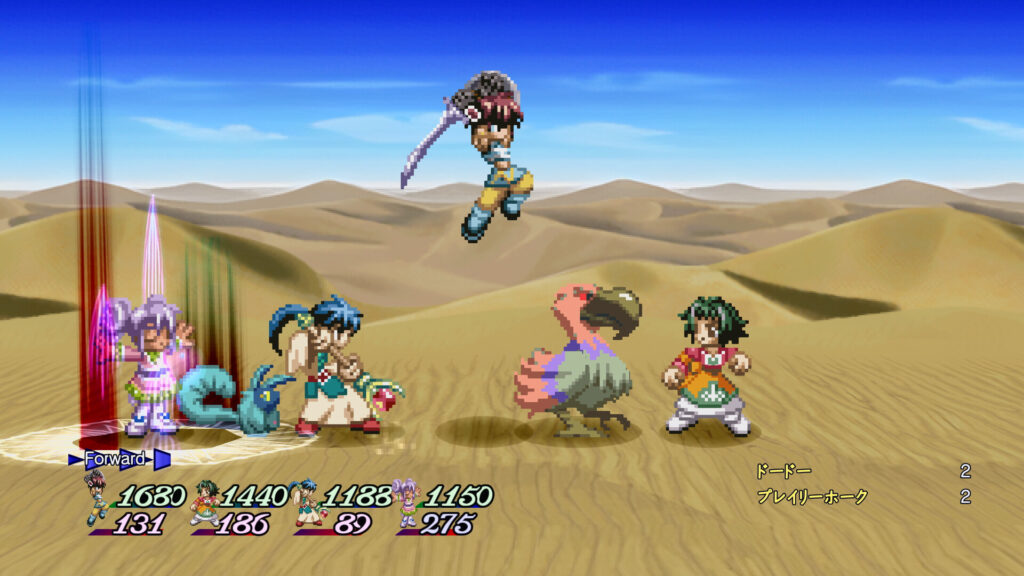
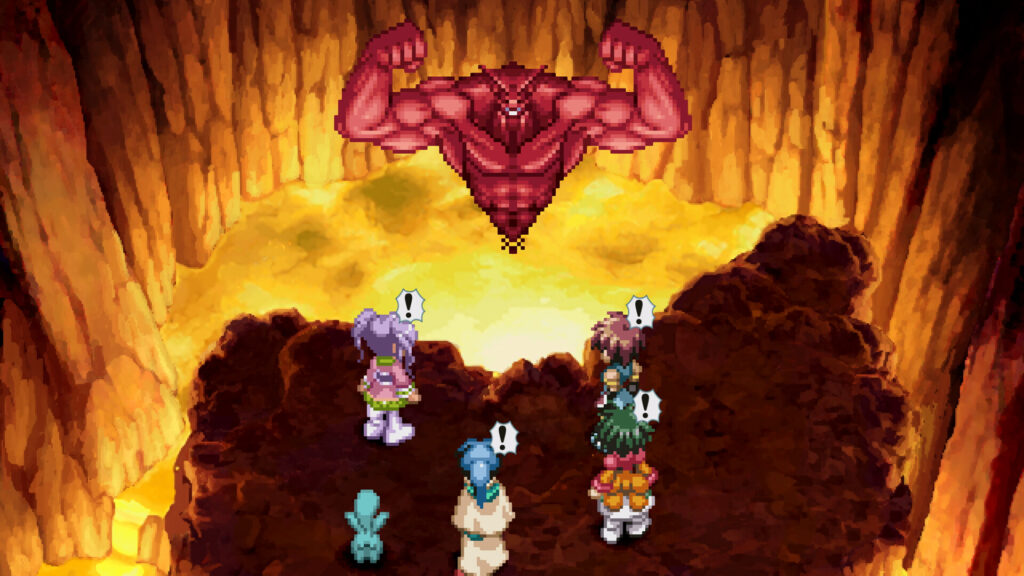
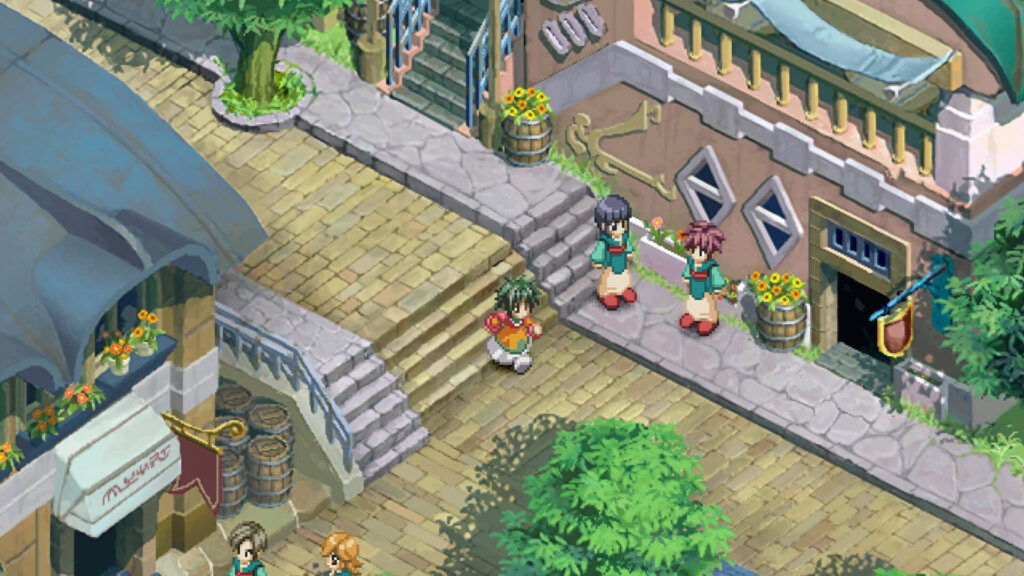
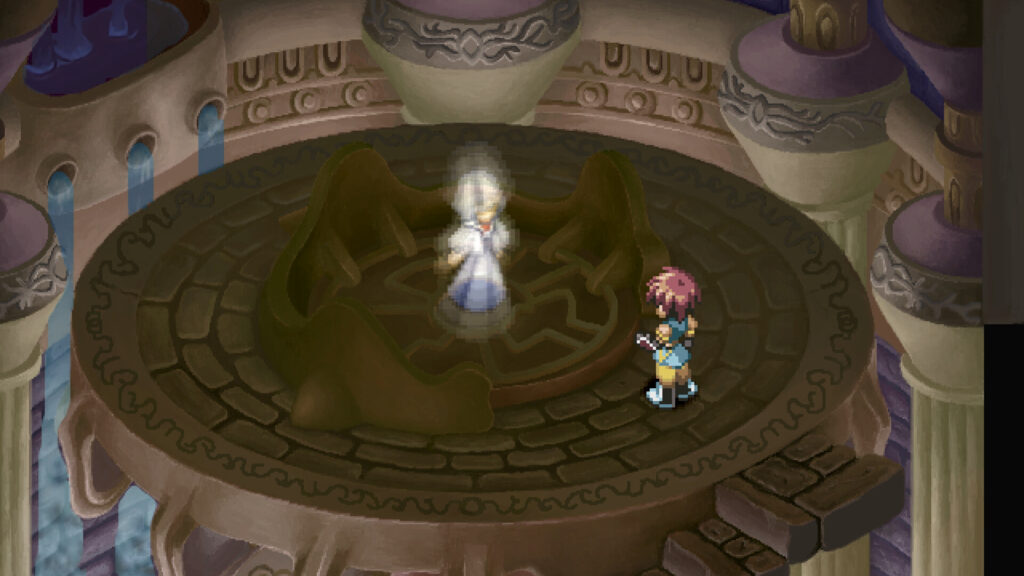
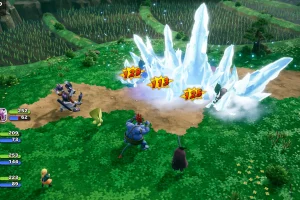
The thing to flag is that the graphics are a remaster, not a remake. The 2D sprite work and pre-rendered backgrounds are bumped to high resolution exactly as they were, so showing up expecting 3D field maps like a modern Tales game is the wrong read. The design accounts for that by letting you toggle back to the original art, which makes this a build aimed squarely at people who want that era’s visuals on a big screen.
How did overseas reviews score it? A Metascore of 76

According to GameSpark, the PS5 version sits at a Metascore of 76 across nine reviews. Noisy Pixel gave it 85, DualShockers 80, Video Chums 75, Push Square and GAMES.CH 70, and Multiplayer.it 65, a 20-point spread between outlets.
| Outlet | Score |
|---|---|
| Noisy Pixel | 85 |
| DualShockers | 80 |
| Video Chums | 75 |
| Push Square | 70 |
| GAMES.CH | 70 |
| Multiplayer.it | 65 |
A 76 is the standard verdict for a remaster: a classic ported with care, but no new surprises. The overseas outlets least familiar with the original scored it hardest, and the ones with real attachment to the series scored it highest. With only nine reviews counted, the number should move once Japanese players weigh in after launch.
What kind of game is Tales of Eternia? Why the 2000 original is worth playing now
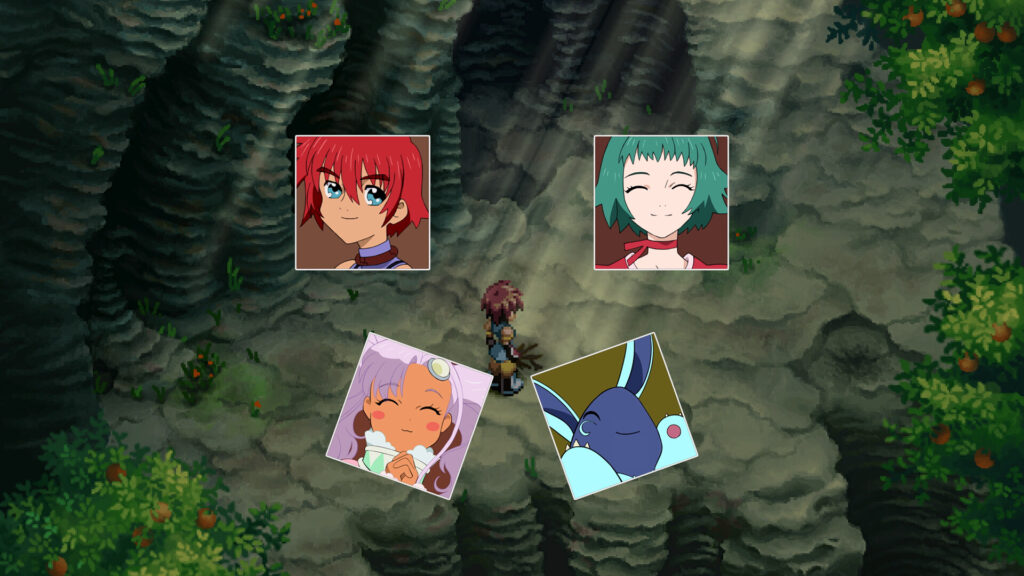
Tales of Eternia is the third game in the series, released for PlayStation in November 2000 under the tagline “An RPG of Eternity and Bonds.” You travel back and forth between two worlds, Inferia and Celestia, following the journey of Reid, Farah, and Meredy, who arrives from another world. 4Gamer described it as revived after roughly 25 years, and even counting from the PSP version, 21 years have passed.
Its combat gets called the perfected form of the Linear Motion Battle system more often than not. You chain combos on a side-scrolling battle screen and back your allies up with Craymel Arts. The fact that this pacing existed back in 2000 is a big part of why the game does not feel dated today.
The remaster adds speed-up mode and quick recovery, which slashes the waiting around on level grinding and travel. Convenience features stack on top of the original’s already brisk pacing, and what is left behind is pure story density. Being able to play a roughly 25-year-old classic start to finish on current hardware for 3,960 yen is, honestly, pretty cheap.

Enjoying this article? Add us as a preferred source on Google.
Final Thoughts: Tales of Eternia Remaster’s price and added features
Tales of Eternia Remaster launched Thursday, October 15, 2026, on PS5, PS4, Xbox Series X|S, Switch 2, and Switch, with the Steam version arriving Friday, October 16. The price is 3,960 yen (tax included) on every platform, and the digital Deluxe Edition runs 6,930 yen (tax included) with an art book and a 109-track soundtrack attached. The added features are destination markers, speed-up mode, battle retry, quick recovery, graphics and font toggles, and the new Unknown difficulty, and the PS5 version holds a Metascore of 76.
A classic from 2000 for 3,960 yen, with destination markers and speed-up mode bolted on. This is a remaster and not a remake, so the art stays where it was, but the toggle means you can play it as that era’s visuals on a big screen. A Metascore of 76 is just the flip side of having no surprises, and the original’s quality was never in question.
As a way into the series or a walk back through old memories, 3,960 yen is easy money.
Read Next

Nokko Oda







Leave a Reply