



Enjoying this article? Add us as a preferred source on Google.
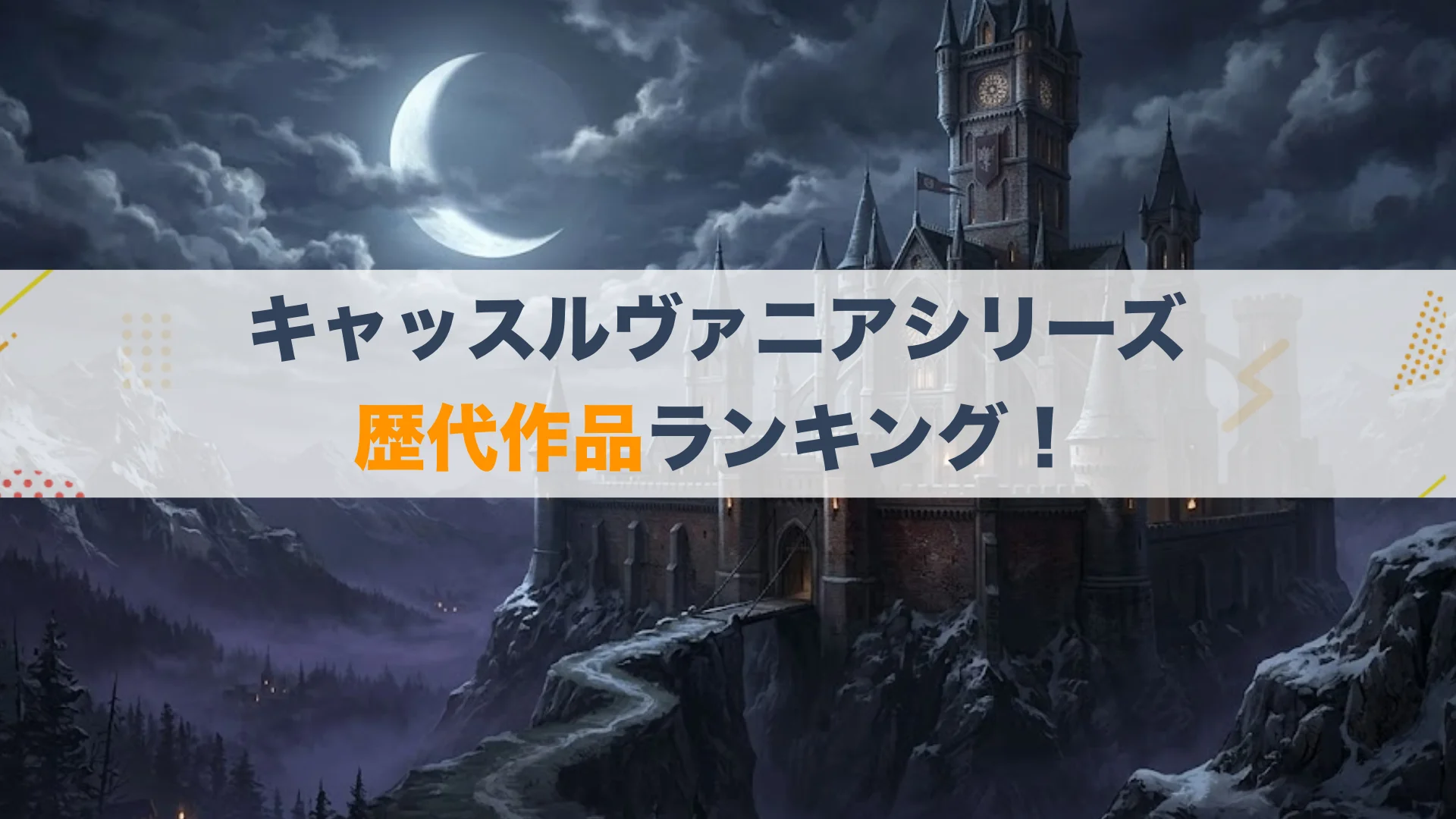
Say the word “Castlevania” out loud and there isn’t a gamer alive whose blood doesn’t stir a little. Konami’s legendary series started on the Famicom back in 1986, and across nearly 40 years it has produced classic after classic.
Stage-based action with real muscle, sprawling castles you pick apart Metroidvania-style, and eventually a full 3D reboot — the series has never stopped evolving, so “which one should I actually play?” is a completely fair question. In this article, the Spotgeeks editorial team scores the games on four axes — accessibility, graphics, difficulty, and replay value — and ranks our recommendations.
One note on the difficulty score: the higher the number, the more bite the game has. If you’re new to the series, start low. If you’re a hardcore player, aim high.
*Prices in this article are converted from Japanese yen at ¥153 = US$1 (September 2026 rate).
The full reasoning behind every score, plus how to play each game today, is laid out below. Start with the complete scorecard and find the entry that matches your taste.
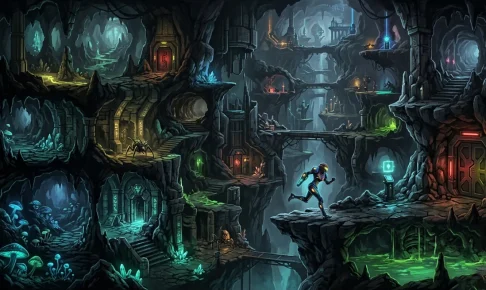
All 10 Castlevania Games: The Complete Scorecard
We scored every game out of 100 on four criteria. On difficulty, a higher number means a harder, meatier game. Don’t just read the totals — pick based on the axis that matters most to you.
| Title | Accessibility | Graphics | Difficulty | Replay Value | Total Score |
|---|---|---|---|---|---|
| 🥇 Symphony of the Night | 92 | 97 | 50 | 97 | 336 |
| 🥈 Aria of Sorrow | 88 | 78 | 68 | 92 | 326 |
| 🥉 Order of Ecclesia | 68 | 86 | 92 | 75 | 321 |
| #4 Rondo of Blood | 80 | 90 | 82 | 62 | 314 |
| #5 Super Castlevania IV | 85 | 82 | 72 | 68 | 307 |
| #6 Dawn of Sorrow | 82 | 83 | 65 | 74 | 304 |
| #7 Castlevania (NES) | 72 | 68 | 95 | 58 | 293 |
| #8 Portrait of Ruin | 82 | 80 | 60 | 70 | 292 |
| #9 Circle of the Moon | 75 | 72 | 78 | 62 | 287 |
| #10 Lords of Shadow | 78 | 88 | 58 | 58 | 282 |
Symphony of the Night runs away with it on graphics and replay value. But look at difficulty alone and the original Castlevania on NES takes the crown at 95 — if all you want is a game that fights back, starting with the NES original is a perfectly good move.
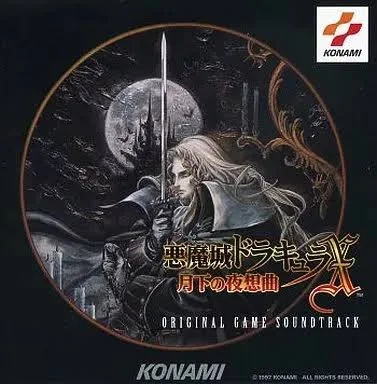
#1: Castlevania: Symphony of the Night | The Metroidvania’s Starting Point and Its Summit
| Accessibility | Graphics | Difficulty | Replay Value | Total Score |
|---|---|---|---|---|
| 92 | 97 | 50 | 97 | 336 |
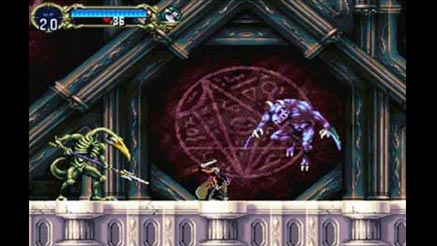
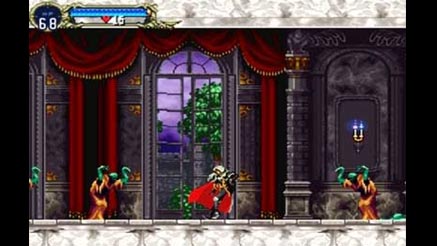
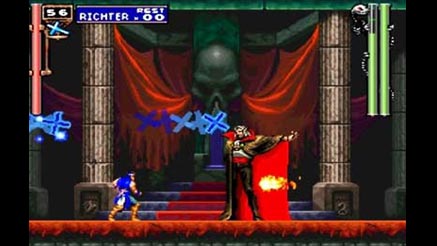
Released for the PS1 in 1997, this is the legendary game that donated the “vania” half of the word “Metroidvania.” You play as Alucard, Dracula’s son, exploring his father’s castle and unraveling its secrets — a hard turn away from the stage-based structure the series had lived on and toward an exploration-driven action RPG.
The real magic is how densely the castle is built. Clearing the normal castle doesn’t end the story: meet a hidden condition and the Inverted Castle appears. Filling out 200.6% of the total map is the kind of hidden goal that grabs a player by the collar, and people all over the world are still chasing it today. Michiru Yamane handled the soundtrack, and the fusion of classical, rock, and jazz stands as one of the all-time great game scores.
These days Symphony of the Night is bundled with Rondo of Blood in “Castlevania Requiem” for PS4, so it’s easy to play. The difficulty is on the gentler side by series standards, which makes it a perfect entry point too.
- The 200.6% completion hunt is an absurd amount of replay value
- 2D pixel art and an orchestral-rock soundtrack that still sound top-tier
- Comes packaged with Rondo of Blood in “Castlevania Requiem” on PS4
- PS4 only (no standalone purchase on Switch or Steam)
- The true ending requirements are almost impossible to stumble onto without a hint
#2: Castlevania: Aria of Sorrow | A Soul-Collecting System With No Equal
| Accessibility | Graphics | Difficulty | Replay Value | Total Score |
|---|---|---|---|---|
| 88 | 78 | 68 | 92 | 326 |
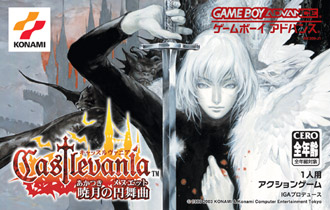
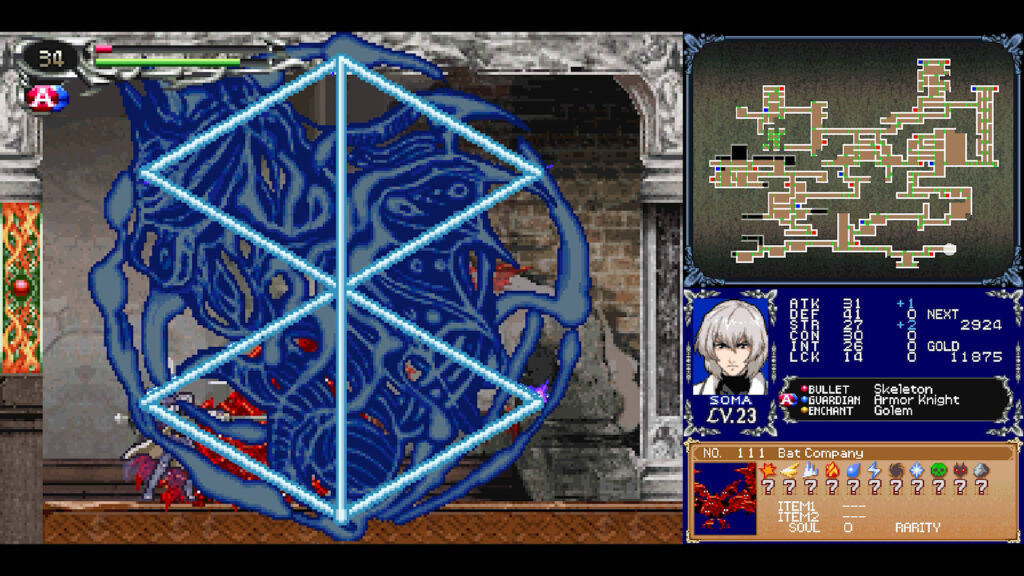
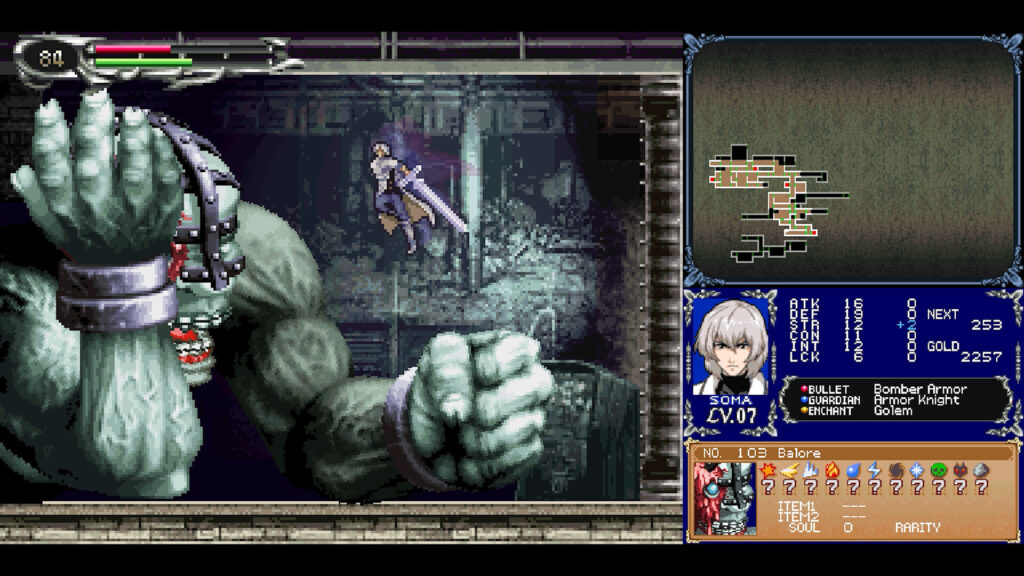
Released on Game Boy Advance in 2003, this is one of the most highly regarded “successors to Symphony of the Night” out there. The hero is Soma Cruz (Ikkaku Kurosaki in the Japanese version), and the setting is — of all years — 2035. A Japanese high schooler gets pulled into Dracula’s castle and fights his way through it by absorbing the souls of monsters and taking their powers via the Tactical Soul system.
That soul-collecting system is the game’s greatest strength. Every single enemy in the game can drop its own unique soul, which means the completionist grind is effectively bottomless. On top of that, the true ending requires specific souls, so a single playthrough won’t show you the whole picture. The GBA screen imposes obvious limits, but as pure game design this is unquestionably top-tier Castlevania.
Today it’s part of the “Castlevania Advance Collection” (Switch/PS4/Xbox/Steam) alongside Circle of the Moon and Harmony of Dissonance, so getting hold of it has never been easier.
- Collecting souls is flat-out addictive
- Multiple endings give you a real reason to run it back
- Easy to pick up via the Advance Collection (Switch/PS4/Steam)
- As a GBA original, the visuals fall short of the DS and PS1 games
- The true ending requirements are unfriendly (going in blind is a rough road)
#3: Castlevania: Order of Ecclesia | The Series’ Hardest Test, Built for Hardcore Players
| Accessibility | Graphics | Difficulty | Replay Value | Total Score |
|---|---|---|---|---|
| 68 | 86 | 92 | 75 | 321 |
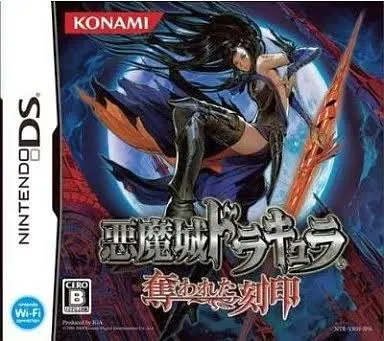
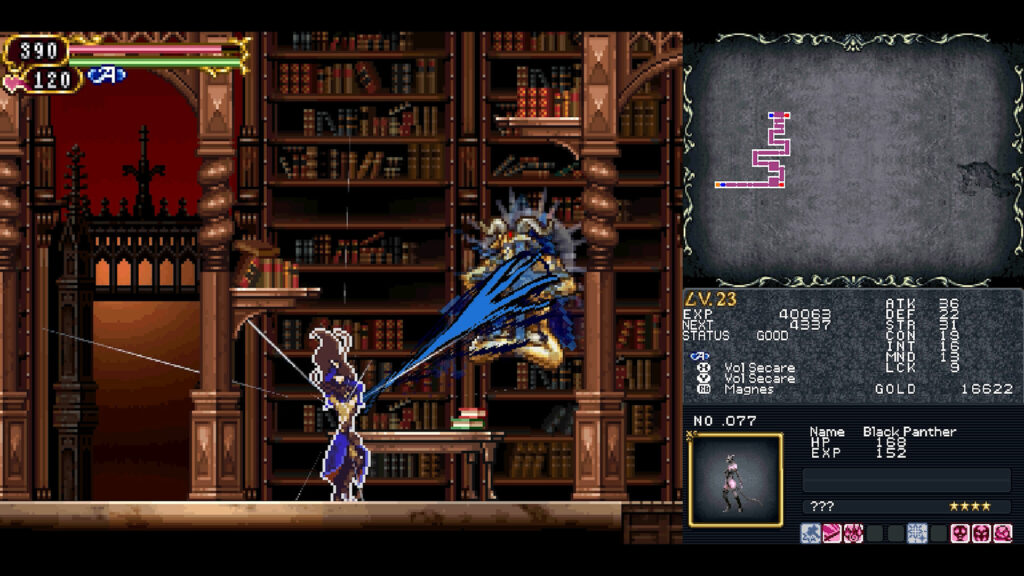
Released on DS in 2008, this is one of the toughest, most uncompromising games in the entire series. You play as Shanoa, a female warrior who attacks using a unique system of “Glyphs” — magical sigils carved into her body. Equipping three glyph slots at a time makes theorycrafting builds genuinely fun while keeping the moment-to-moment combat varied.
The difficulty is no joke; every boss fight is a trial in its own right. But it’s never unfair, and that’s the honest part: learn the patterns and you will get through. Exploration also pushes beyond the castle walls into the surrounding world, and taking on requests from villagers while you piece the map together keeps the whole thing from ever feeling repetitive.
It’s included in the “Castlevania Dominus Collection” (Switch/PS5/Xbox/Steam) alongside Dawn of Sorrow and Portrait of Ruin — the easiest way to grab it on modern hardware.
- A difficulty score of 92 — perfect for veterans who want a fight
- The Glyph system opens up a huge range of viable builds
- The Dominus Collection gets you three games in one bundle
- Not a good entry point — play Symphony or Aria first
- A few bosses hit hard enough to feel unfair
#4: Castlevania: Rondo of Blood | The Triumph the PC Engine CD-ROM Made Possible
| Accessibility | Graphics | Difficulty | Replay Value | Total Score |
|---|---|---|---|---|
| 80 | 90 | 82 | 62 | 314 |
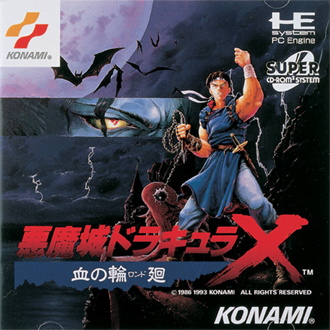
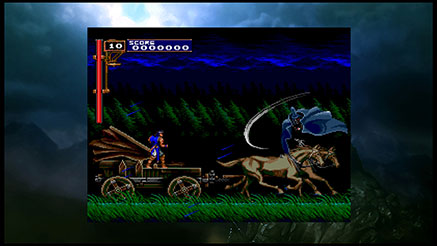
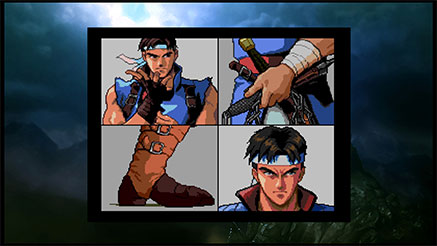
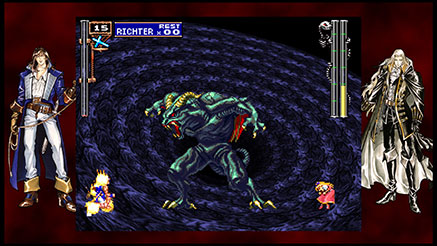
Released on PC Engine in 1993, this is the direct predecessor to Symphony of the Night — its prequel, in other words. You play as Belmont clan warrior Richter, with Annette as the heroine. It takes the stage-based structure and layers branching routes on top, letting you rescue different heroines depending on how you play. It’s an ambitious game with multiple endings.
The visuals squeeze everything out of the PC Engine CD-ROM hardware, right down to voiced cutscenes that felt genuinely advanced at the time. Combat has great tempo, too, and the whole thing plays like the culmination of stage-based Castlevania. Being able to unlock Maria Renard as a hidden character is an underrated bonus.
Today it’s bundled with Symphony of the Night in “Castlevania Requiem” for PS4. It’s also included on the TurboGrafx-16 mini.
- Branching routes plus multiple endings make replays worth it
- As the prequel to Symphony of the Night, the story ties run deep
- The CD-quality soundtrack on the PC Engine version is something special
- Castlevania Requiem is PS4-exclusive (not available on Switch or Steam)
- Raw length is shorter than Symphony of the Night

#5: Super Castlevania IV | Castlevania on the Super Nintendo
| Accessibility | Graphics | Difficulty | Replay Value | Total Score |
|---|---|---|---|---|
| 85 | 82 | 72 | 68 | 307 |
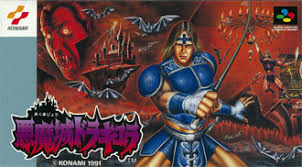
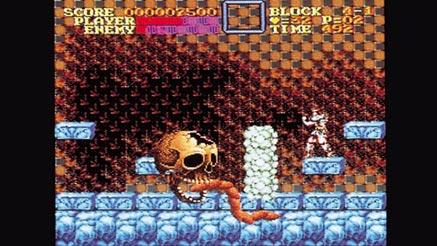
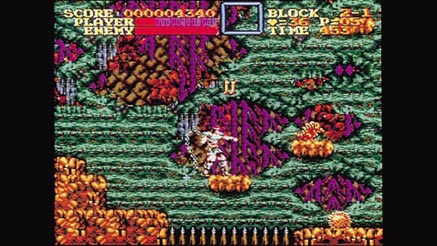
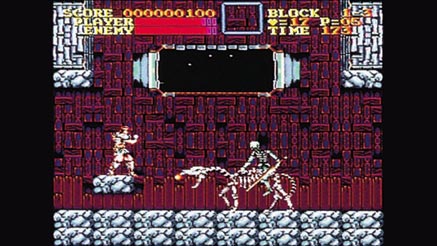
Released on the Super Famicom in 1991, this is old-school Castlevania at its purest, putting you back in control of whip-wielding Belmont scion Simon. The big innovation is whipping in eight directions. You can lash upward, diagonally, and even hook the whip onto walls and ceilings to dangle from them, which enormously expands what you can do moment to moment.
The visual effects lean hard on the SNES’s scaling and rotation tricks, and the soundtrack’s orchestral heft still hasn’t faded 35 years after release. It’s noticeably kinder than the NES original, which makes it the ideal way into classic Castlevania. It’s part of the Super Nintendo library on Nintendo Switch Online, so subscribers can play it at no extra cost.
- Playable at no extra cost through Nintendo Switch Online
- Eight-directional whipping gives it the most freedom of movement in the series
- The definitive stage-based entry, and a great first Castlevania
- Being stage-based, it has less to chase than the exploration games
- Requires a Switch Online subscription (individual plans start at $2 a month)
#6: Castlevania: Dawn of Sorrow | The Sequel to Aria and the Most Polished Game on DS
| Accessibility | Graphics | Difficulty | Replay Value | Total Score |
|---|---|---|---|---|
| 82 | 83 | 65 | 74 | 304 |
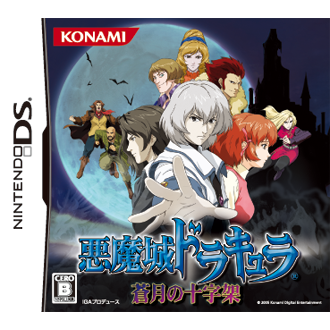
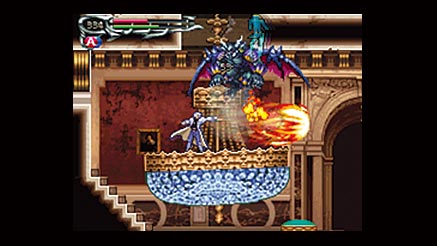
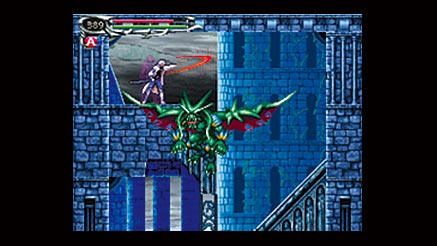
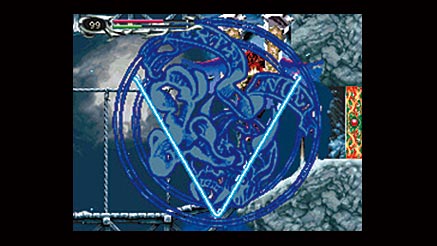
Released on DS in 2005, Dawn of Sorrow is the direct sequel to Aria of Sorrow, with Soma Cruz back in the lead role. It puts the DS’s two screens to work in clever ways — finishing bosses off by drawing magic seals on the touchscreen is the headline idea — and the whole game leans into what the hardware can do instead of fighting it.
The soul system carries over as well, so anyone who played Aria will feel immediately at home. The visuals take a clear step up from Aria thanks to the DS’s extra muscle, and there’s no shortage of content either. You can play it on current hardware through the Dominus Collection, separate from the three Advance games.
- A true sequel to Aria, with deep story connections
- The Dominus Collection gets you three games for one good price
- Well-balanced difficulty by series standards, and easy to settle into
- Skip Aria of Sorrow and the story loses much of its flavor
- Touchscreen controls are handled separately in the ports (controller play supported)
#7: Castlevania (NES) | Difficulty 95 — The Origin of the Series and Its Cruelest Entry
| Accessibility | Graphics | Difficulty | Replay Value | Total Score |
|---|---|---|---|---|
| 72 | 68 | 95 | 58 | 293 |
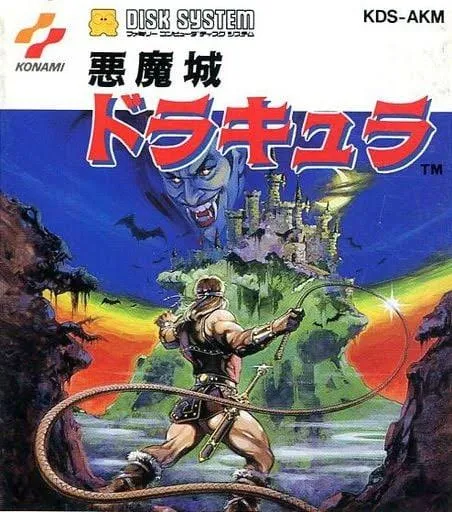
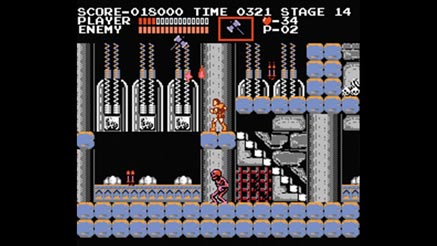
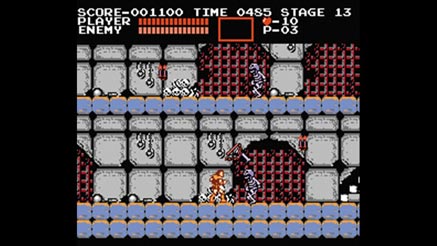
Released on the Famicom in 1986, the first game in the series is also its most punishing, with a difficulty score of 95. Simon Belmont marching into Dracula’s castle armed with nothing but a whip is an image permanently carved into gaming history. For those of us who took that baptism by fire when it was new, it’s less a fond memory than a scar from our youth.
The flatly unreasonable difficulty from Stage 5 onward — the Grim Reaper stage and those dropping blocks in particular — is still talked about today. It’s part of the NES library on Nintendo Switch Online, so subscribers can play it at no extra cost. Clear it and you’ve earned the right to call yourself a real gamer.
- The origin of the series — historic weight and game design that still holds up
- Free to play with Nintendo Switch Online
- Difficulty 95 — no other entry feels this good to finish
- Strongly not recommended for newcomers — Stage 5 onward is practically a different game
- Password-based continues after a game over make progress a chore
#8: Castlevania: Portrait of Ruin | A Two-Hero System That Still Feels Fresh
| Accessibility | Graphics | Difficulty | Replay Value | Total Score |
|---|---|---|---|---|
| 82 | 80 | 60 | 70 | 292 |
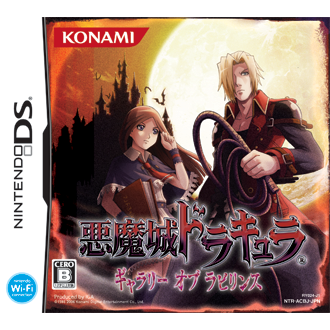
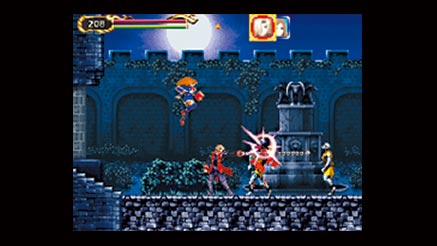
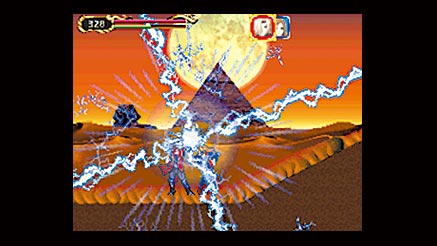
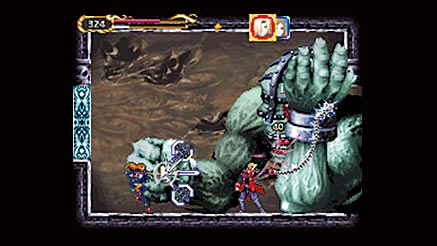
Released on DS in 2006, Portrait of Ruin is built around a distinctive system: you swap on the fly between Jonathan Morris, a warrior of the Belmont line, and Charlotte Aulin, a spellcaster. Diving into paintings to explore the worlds inside them is a sharp visual hook too, and it gives the game an atmosphere unlike anything else in the series.
Difficulty sits toward the gentler end of the series, and the fun of testing out different pairings between the two characters is what keeps you playing. It’s in the Dominus Collection, so tracking it down is easy.
- Swapping between two heroes widens how you can approach everything
- Toned-down difficulty makes it welcoming to a wide range of players
- Included in the Dominus Collection and easy to get hold of
- Its systems don’t run as deep as Dawn of Sorrow’s or Order of Ecclesia’s
- The story is on the simple side even by series standards
#9: Castlevania: Circle of the Moon | The GBA Launch Title That Took Symphony Portable
| Accessibility | Graphics | Difficulty | Replay Value | Total Score |
|---|---|---|---|---|
| 75 | 72 | 78 | 62 | 287 |
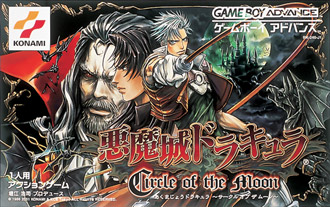
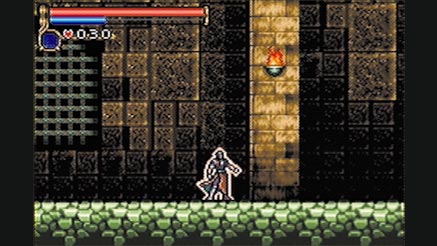
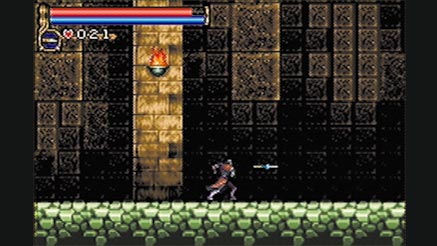
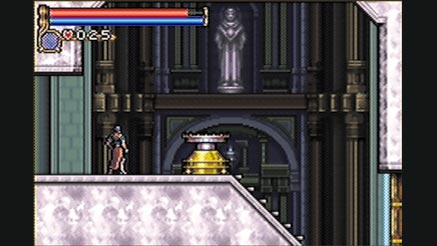
Timed to the Game Boy Advance launch in 2001, Circle of the Moon was the pioneering attempt to carry the Symphony of the Night template onto a handheld. Hero Nathan Graves works through the castle using the DSS (Dual Set-Up System) card system, combining two cards at a time, and the build-crafting that falls out of it is genuinely fun.
The big knock against it: early GBA units had no backlight, and the game’s murky visuals were rough to read on that screen. The Advance Collection applies a brightness fix, so that problem is gone. Among the three GBA games it occupies the position of first attempt, and set next to Aria of Sorrow, some rough edges show.
- Experimenting with DSS card builds never stops being fun
- The Advance Collection release clears up the backlight problem
- Historically significant as the starting point of the GBA run
- Its systems aren’t as fully realized as Aria of Sorrow’s
- It quietly demands some leveling, which can drag the pace down
#10: Castlevania: Lords of Shadow | An Ambitious 3D Reboot With Stunning Visuals
| Accessibility | Graphics | Difficulty | Replay Value | Total Score |
|---|---|---|---|---|
| 78 | 88 | 58 | 58 | 282 |
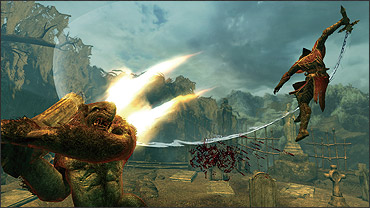
Released in 2010 on PS3 and Xbox 360, Lords of Shadow is the series reboot, developed by MercurySteam and published by Konami. Castlevania is reborn here as a God of War-style 3D action game, with a new hero — Gabriel Belmont — at the center of a sweeping journey. In graphics and engine technology it stood at the top of its class at the time, and the visuals are flat-out stunning.
Its approach diverges so far from traditional Castlevania that opinion split hard, but for newcomers it can be an easy door into the series. It’s still available to buy on Steam today.
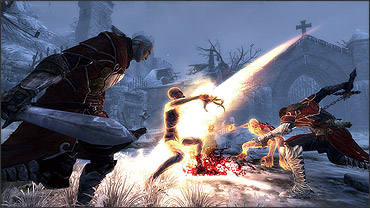
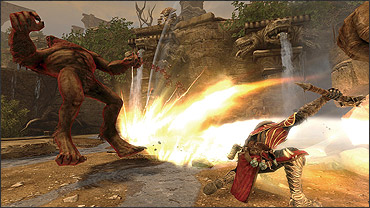
- Graphics 88 — seriously high visual quality for a 3D entry
- A way in for gamers who bounce off 2D action
- Easy to buy and play on Steam
- Come in expecting traditional Metroidvania and you’ll find a different animal
- Longtime series fans remain split on it
Can You Still Play All 10 Castlevania Games on Modern Platforms? A Platform-by-Platform Guide
✅ The Short Answer
Of the 10 games covered here, all 10 are still playable on current hardware as of 2026. They’re spread widely across Nintendo Switch, PS4, Steam, and Nintendo Switch Online, and several can be picked up together at a discount through collection releases.
1. Free With a Subscription
| Title | Platform | Price / Notes |
|---|---|---|
| Castlevania (NES) | Nintendo Switch Online | Free with the NES library for subscribers |
| Super Castlevania IV | Nintendo Switch Online | Free with the SNES library for subscribers |
2. Buy Individually or in a Collection
| Title | Collection | Supported Platforms |
|---|---|---|
| Symphony of the Night | Castlevania Requiem | PS4 |
| Rondo of Blood | Castlevania Requiem | PS4 |
| Circle of the Moon / Aria of Sorrow | Castlevania Advance Collection | Switch / PS4 / Xbox / Steam |
| Dawn of Sorrow / Portrait of Ruin / Order of Ecclesia | Castlevania Dominus Collection | Switch / PS5 / Xbox / Steam |
| Lords of Shadow | Sold separately | Steam / Xbox |
Lean on the collections and you can assemble this top 10 efficiently. Start with the Advance Collection for Aria of Sorrow, then move to the Dominus Collection for Order of Ecclesia — that’s the order SpotGeeks recommends.
Enjoying this article? Add us as a preferred source on Google.
Final Word: The Top 10 Castlevania Games — Newcomers Start With Symphony, Veterans Start With Ecclesia
Let’s line the scores up one more time.
- 🥇 Symphony of the Night (336 points) — the best entry point and the series’ masterpiece. Graphics and replay value in a class of their own
- 🥈 Aria of Sorrow (326 points) — a classic that transcends the GBA’s limits. Soul collecting will swallow you whole
- 🥉 Order of Ecclesia (321 points) — difficulty 92. The series’ toughest climb, built for veterans
- Rondo of Blood (314 points) — the game before Symphony, and proof of what the PC Engine could do
- Super Castlevania IV (307 points) — if you have Switch Online, go play it right now
Going back through all of this, it’s striking that the series lending half its name to “Metroidvania” has a bench of classics this deep. The shock of the inverted castle appearing in Symphony of the Night is one of the absolute high-water marks of surprise this medium has ever delivered. Newcomers should start with Symphony of the Night, graduate to Aria of Sorrow once it clicks, and then, if you’re hungry for real punishment, take your proper Castlevania baptism in Order of Ecclesia.
Wherever you start, the castle gates are open and waiting for you.
Read Next
Snicker Kitamura



Leave a Reply