
Enjoying this article? Add us as a preferred source on Google.
You know the name Mamoru Oshii. You’ve just never actually watched one of his films — this article was written for exactly that person.
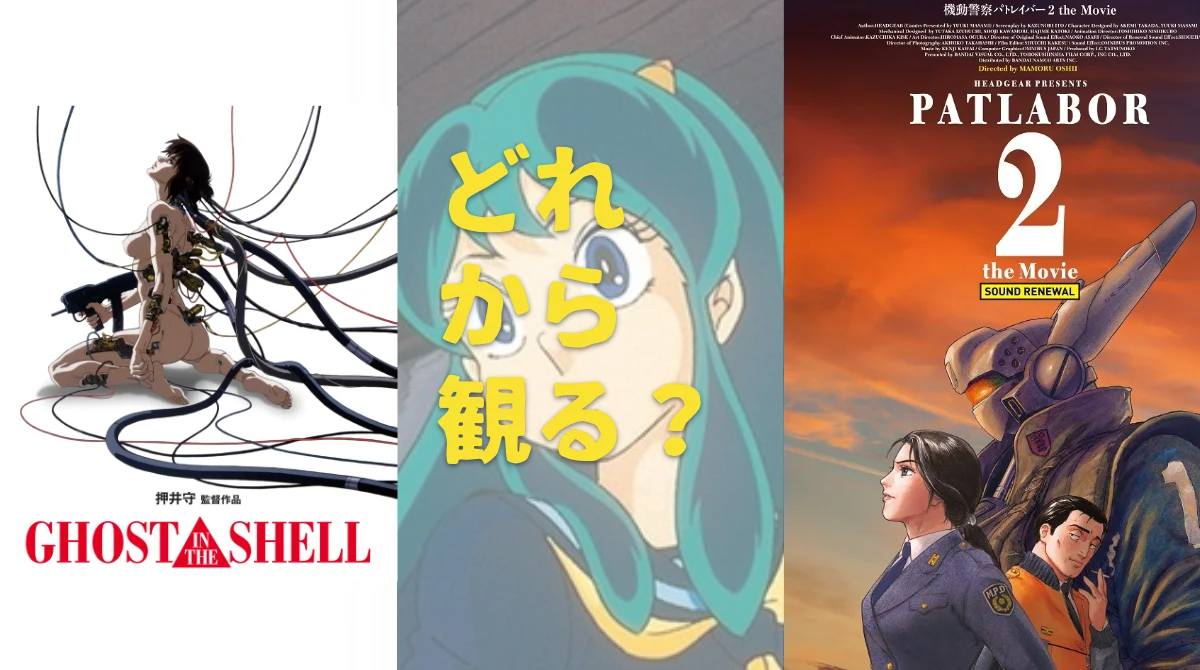
From 1984’s Urusei Yatsura 2: Beautiful Dreamer to 2008’s The Sky Crawlers, Mamoru Oshii has spent his entire career carving the same questions into film: What does it mean to exist? What is consciousness? His work can be difficult and lonely, but the afterglow it leaves behind is unlike anything else in cinema. The Wachowskis’ The Matrix owes him a debt. So does Hayao Miyazaki.
In this article, we score Oshii’s six major animated feature films across four axes — accessibility for newcomers, visuals and direction, philosophical depth, and immersion and emotional impact — and give you a clear answer on where a beginner should start. Get the order wrong with this director, and you genuinely lose something.
We scored “accessibility” honestly — the difficulty is baked right into the numbers. Use it to find your own entry point into Oshii’s world, or to figure out why you’d ever tackle something as forbidding as Votoms’ “The Gray-Haired Witch.”
All 6 Mamoru Oshii Anime Films: Full Score Comparison
We scored each film out of 100 on four criteria. Higher “Accessibility” means you can enjoy it with zero prior knowledge. Higher “Philosophy & Worldbuilding” means it will stay lodged in your head long after the credits. Don’t just look at the totals — pick based on the axis that matters most to you.
| Title | Accessibility | Visuals & Direction | Philosophy & Worldbuilding | Immersion & Impact | Total Score |
|---|---|---|---|---|---|
| Ghost in the Shell (1995) | 75 | 95 | 98 | 92 | 360 |
| Urusei Yatsura 2: Beautiful Dreamer (1984) | 88 | 78 | 85 | 88 | 339 |
| Patlabor: The Movie (1989) | 82 | 85 | 78 | 83 | 328 |
| Patlabor 2: The Movie (1993) | 58 | 90 | 93 | 85 | 326 |
| Ghost in the Shell 2: Innocence (2004) | 52 | 95 | 96 | 80 | 323 |
| The Sky Crawlers (2008) | 70 | 88 | 88 | 72 | 318 |
Ghost in the Shell takes the top total score, dominating both the visual and philosophical axes — but its accessibility score of 75 is a real warning. Going in cold takes commitment. For newcomers, we recommend starting with Beautiful Dreamer or the first Patlabor film instead.
No. 1: Ghost in the Shell — The Philosophical Masterpiece That Changed the World
| Accessibility | Visuals & Direction | Philosophy & Worldbuilding | Immersion & Impact | Total Score |
|---|---|---|---|---|
| 75 | 95 | 98 | 92 | 360 |
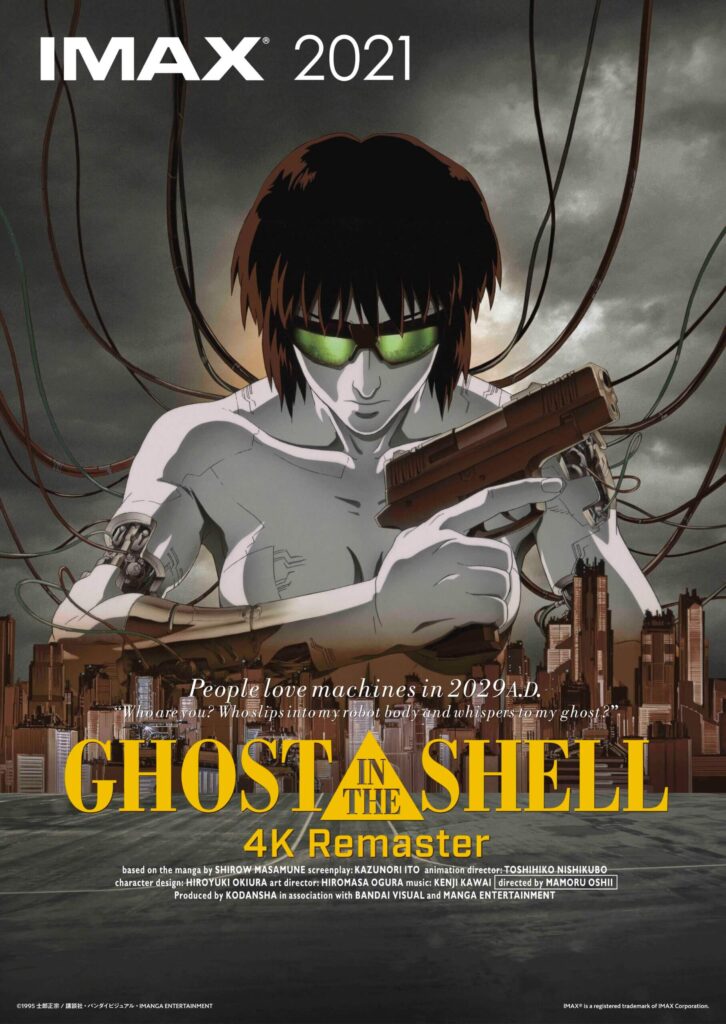
Released in 1995, this was the first Japanese animated film ever to hit No. 1 on Billboard’s weekly video sales chart in America — a historic milestone for Japanese animation. Over 83 minutes, Motoko Kusanagi, a cybernetic investigator with Public Security Section 9, hunts a mysterious enemy while questioning whether she has a “soul” or a “self” at all. It transcends the very category of anime.
Why does it take the top spot? Because every theme Oshii has ever pursued appears here in its sharpest, most distilled form. The question “Does a human with a fully cyberized body still have a soul?” hits even harder in 2026, as the line between AI and humanity keeps blurring. The Wachowskis have officially acknowledged that The Matrix drew on this film, and its influence on global visual culture is impossible to overstate.
That said, the accessibility score of 75 is an honest one. Dialogue is sparse; the images and music do the talking instead. From the opening scenes — Kenji Kawai’s eerie lullaby-like score drifting over a cyberpunk vision of an East Asian city — the film is already demanding that you think. Come to it with the stamina for active viewing.
No other Oshii film leaves an afterglow this heavy. The 83 minutes end, but Motoko’s question stays with you for days. Every rewatch reveals something new, and speaking from the SpotGeeks editorial team’s experience of watching over 30 Oshii-related works, this is one of those rare films that can genuinely shake your view of life all by itself.
- At just 83 minutes, it’s short enough to hold your full attention
- Streaming on major services including U-NEXT, Amazon Prime Video, and Netflix (as of May 2026)
- Fans of The Matrix and Avatar will recognize it as the direct source material
- Watch it expecting an action movie and you’ll be disappointed — philosophy drives this film
- It exists in a separate continuity from the Ghost in the Shell: Stand Alone Complex TV series, so don’t mix them up
No. 2: Urusei Yatsura 2: Beautiful Dreamer — The Origin of Oshii’s Philosophy, a Dream Trap Hidden Inside a Comedy
| Accessibility | Visuals & Direction | Philosophy & Worldbuilding | Immersion & Impact | Total Score |
|---|---|---|---|---|
| 88 | 78 | 85 | 88 | 339 |
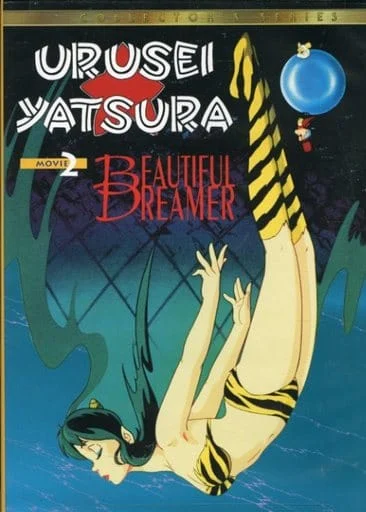
Released in 1984, this is the second theatrical film of the Urusei Yatsura TV anime Oshii was directing at the time. The cast wanders into a bizarre world where the day before the school festival keeps repeating, forever. The first half plays as a genuinely funny comedy — then an uneasy fog rolls in around the midpoint, and before you realize it, you’re somewhere very deep. That’s the kind of film this is.
Borrowing Rumiko Takahashi’s characters, Oshii explores the pleasure — and terror — of choosing to stay inside a dream. It’s built so you can enjoy it with zero knowledge of the Urusei Yatsura series proper, which is why SpotGeeks judges it the lowest-barrier entry point into Oshii’s filmography. If you’ve seen the 2022 Urusei Yatsura remake, the familiar faces make it even easier to slip into.
It’s a 1984 production, so the visuals show their age — but the direction is timeless in its sharpness. The question “What if the dream is happier than reality?” is the origin point of the theme Oshii would chase for the rest of his life. Watch his later films after this one, and you’ll realize everything traces back here.
- Highest accessibility score of all six films at 88 — fully enjoyable with zero prior knowledge
- Streaming on U-NEXT and Apple TV (as of May 2026)
- Watching it after the 2022 Urusei Yatsura remake makes it even more immersive
- Brace yourself for dated 1984 visuals (the direction largely compensates)
- Some Rumiko Takahashi fans have mixed feelings about how thoroughly Oshii’s fingerprints cover it
No. 3: Patlabor: The Movie — A Serious Sci-Fi Thriller That’s Kind to Newcomers
| Accessibility | Visuals & Direction | Philosophy & Worldbuilding | Immersion & Impact | Total Score |
|---|---|---|---|---|
| 82 | 85 | 78 | 83 | 328 |
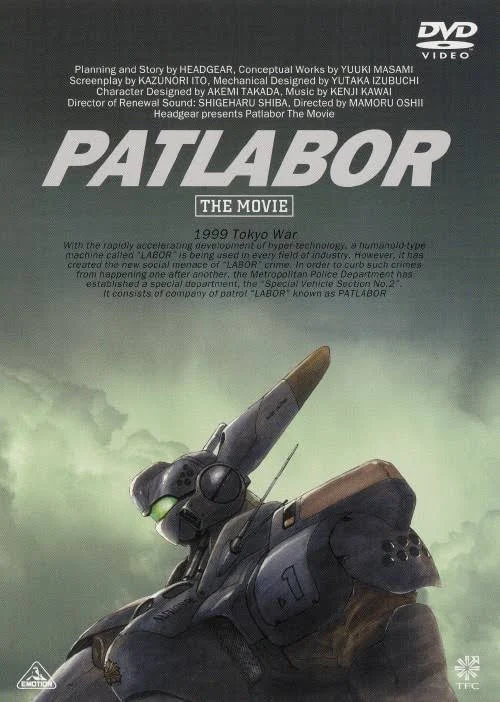
Released in 1989, this sci-fi thriller follows a near-future Tokyo police unit that pilots robots called Labors, as they chase a massive Labor rampage incident triggered by a computer virus. You don’t need the TV series or the original OVAs — it works purely as a police procedural, and its accessibility score of 82 is the second highest of the six films.
What stuns you is the foresight. In 1989 — before personal computers had even reached ordinary households — Oshii wrote a script about attacking urban infrastructure with a computer virus. Watched today, it overlaps uncannily with real-world cyberattacks, and the sharpness of its speculative imagination is humbling. The meticulous cityscapes from the studio that would become Production I.G are almost impossible to believe as 1989 work.
This is the most purely entertaining film in Oshii’s catalog, and the most polished as a thriller. If you’re a beginner worried his work is “too philosophical, too difficult,” this is the first film SpotGeeks can recommend with total confidence.
- Genuinely gripping as a standalone sci-fi police thriller — no prior knowledge required
- Streaming on Amazon Prime Video and Hulu (as of May 2026)
- The computer-virus plot is still chilling today — hard to believe it was written in 1989
- Expecting a robot action movie will leave you shortchanged — the investigation, not the Labors, takes center stage
- The sequel, Patlabor 2, only fully lands if you’ve seen this one. Watch them in order, no exceptions

No. 4: Patlabor 2: The Movie — A Political Thriller Masterpiece That Interrogates the Lie of “Peace”
| Accessibility | Visuals & Direction | Philosophy & Worldbuilding | Immersion & Impact | Total Score |
|---|---|---|---|---|
| 58 | 90 | 93 | 85 | 326 |
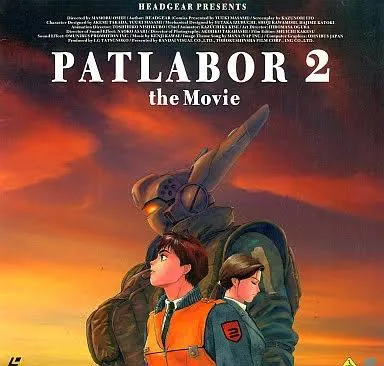
Released in 1993 and set four years after the first film, this sequel is a different beast entirely. A stealth bomber streaks over the skies of a “peaceful” Tokyo. A bridge is blown apart. Who is responsible? Into what was nominally a robot-anime sequel, Oshii hurled a head-on confrontation with postwar Japan’s self-deception — the idea that its “peace” might be an illusion.
The low accessibility score of 58 comes down to one thing: without the first Patlabor film, you won’t have the attachment to these characters that the film relies on. Flip that around, and watching it right after the first film doubles the impact. Tension crackles through the quiet scenes, and every line of dialogue lands with weight. The interplay of urban light and shadow here is the finest in all six films — rain-soaked Tokyo, bridges at dusk, a JSDF base in the fog. This is Production I.G pouring everything into background art.
Its Philosophy & Worldbuilding score of 93 is second only to Ghost in the Shell‘s 98. Its interrogation of postwar Japan’s peace has lost none of its edge today. Many fans call this the film where Oshii’s thinking most fully took physical form — and SpotGeeks stands with that assessment.
- Philosophy & Worldbuilding score of 93 — second of all six films. The culmination of Oshii’s thought
- Streaming on Hulu and Bandai Channel (as of May 2026)
- The finest urban imagery in any Oshii film — every corner of every frame is built with obsessive care
- Skipping the first film cuts its power in half. Watch Patlabor: The Movie first, always
- If you want Patlabor’s trademark levity and robot heroics, this isn’t that film
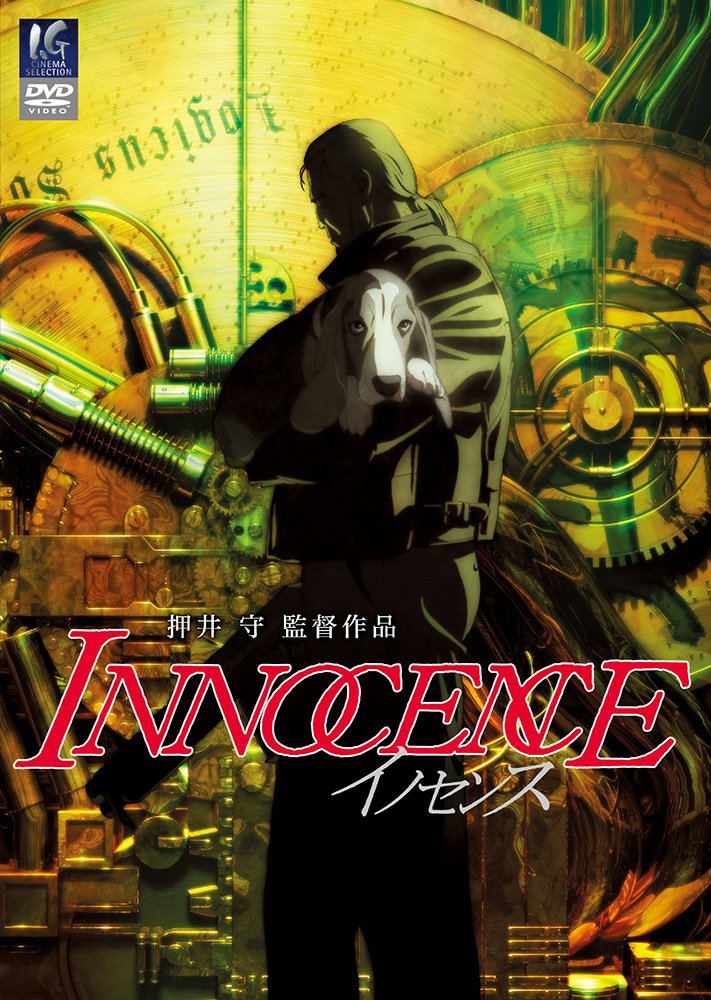
No. 5: Ghost in the Shell 2: Innocence — Dolls, Life, and the Most Beautiful Images in the Catalog
| Accessibility | Visuals & Direction | Philosophy & Worldbuilding | Immersion & Impact | Total Score |
|---|---|---|---|---|
| 52 | 95 | 96 | 80 | 323 |
Released in 2004, this direct sequel to Ghost in the Shell puts Batou in the lead role. It became the first animated film ever entered at the Cannes Film Festival, and its fusion of 3DCG and hand-drawn animation sent shockwaves through the industry at the time. On the Japanese review site Filmarks, it holds an average score of 3.9 across 23,804 reviews (as of May 2026) — remarkably strong staying power.
Its accessibility score of 52 is the lowest of the six. Without the first Ghost in the Shell, you’re missing the world, the characters, and the premise of its central questions all at once. The imagery alone is still an overwhelming experience — but reaching the story’s real depths requires the first film, full stop.
Batou’s lonely investigation into androids murdered by their doll-maker converges on two questions: Why do humans make dolls? And what is life? Its philosophy score of 96 ranks second among all the films, practically tied with Ghost in the Shell‘s 98. If you finished the first film thinking “I want to go deeper into that question,” this is your next stop.
- Visuals & Direction tied for first place among all six films (95, level with Ghost in the Shell)
- Its Cannes Film Festival selection says it plainly: this is animation as fine art
- Streaming on TELASA, Amazon Prime Video, and U-NEXT (as of May 2026)
- Watching Ghost in the Shell (1995) first is essential — we don’t recommend it as a standalone
- The dialogue is built from dense quotations of philosophy and literature — the most difficult film of the six, bar none
No. 6: The Sky Crawlers — Eternal Youth and the Question of a Repeating Everyday
| Accessibility | Visuals & Direction | Philosophy & Worldbuilding | Immersion & Impact | Total Score |
|---|---|---|---|---|
| 70 | 88 | 88 | 72 | 318 |
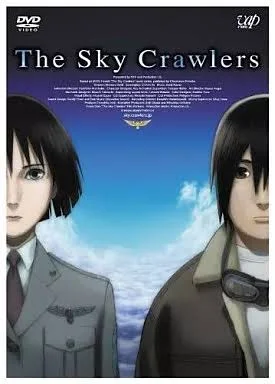
Released in 2008, this is Oshii’s most recent feature-length anime film (as of 2026). It follows fighter pilots who live as “Kildren” — beings who can never grow up — inside a war that is managed and staged as entertainment. Based on Hiroshi Mori’s novel series, it features aerial dogfights into which Production I.G poured everything its 3DCG pipeline had.
It lands in sixth place with the lowest immersion score, 72, for one reason: this is an extraordinarily quiet film. Dialogue is scarce, emotions are suppressed, and the same daily routine unspools over and over. The visuals are gorgeous, but if you come expecting the aggressive messaging of Ghost in the Shell, you may walk away deflated. It’s fiercely divisive, and choosing it as your first Oshii film carries a real risk of bouncing off him entirely.
And yet — for the people it hits, it hits deep. Its questioning of “simulated war experiences” consumed as games and videos, its resonance with young people worn down by a repeating everyday: this may be the Oshii film that lands hardest in 2026 of all years. Save it for last, after the other five, and sit with it quietly.
- Based on a standalone novel with no franchise baggage — structurally the easiest to watch on its own
- Streaming on Hulu (as of May 2026)
- The 3DCG aerial combat scenes are a genuine technical showcase
- The pace is extremely slow — plenty of viewers find it “boring,” and opinion splits hard
- High drop-off risk as a first Oshii film. Come to it after the others

Enjoying this article? Add us as a preferred source on Google.
Conclusion: The Definitive Mamoru Oshii Viewing Order for Beginners
Enter Oshii’s filmography through the wrong door, and its weight and difficulty will push you right back out. Here is the viewing order SpotGeeks recommends: 1) Urusei Yatsura 2: Beautiful Dreamer (a comedy on-ramp into the origin of Oshii’s world) → 2) Patlabor: The Movie (pure enjoyment as a sci-fi thriller) → 3) Ghost in the Shell (the philosophical summit). Watch those three and you’ll never be lost again. Patlabor 2, Innocence, and The Sky Crawlers are the depths waiting for you beyond.
Don’t fear the difficulty — just dive in. Oshii’s films belong to that rare handful of works that leave you feeling, afterward, that you yourself have changed.
Read Next

Snicker Kitamura




Leave a Reply