
Enjoying this article? Add us as a preferred source on Google.
“I keep hearing The Five Star Stories is amazing — but where on earth do I start?” If you’ve ever asked yourself that, congratulations: you’re asking exactly the right question. Let me be honest with you. FSS is one of the most notoriously difficult works in the entire history of Japanese manga. Mamoru Nagano’s grand epic has been running in Monthly Newtype since 1986, with 19 collected volumes to date. And here’s the kicker: it is not told in chronological order. From the moment you pick up Volume 1, you’re hurled headfirst into a history spanning thousands of years.
But that very difficulty is the source of FSS’s addictive pull — once it hooks you, there’s no escape. Set in a fictional galaxy called the “Joker Star Cluster,” it chronicles the millennia-spanning love and war of Amaterasu — a being who is essentially a god — and his Fatima (humanoid partner) Lachesis. The scale is cosmic, and the density of the lore is arguably the deepest of any comic on the planet. That’s no exaggeration.
This article is a complete strategy guide for FSS’s single biggest hurdle: the entry point. I’ll score five reading routes and present them as a ranking, and I’ll also lay out an organized, easy-to-follow timeline of the Joker Star Cluster’s history to help the story make sense. Get the timeline into your head once, and the scattered chronology snaps into a single straight line — and that moment is something special.
With 2026 marking 40 years of serialization, now is the time. Here is the optimal way to open the door to FSS.
Before we get to the ranking, let me sum up why FSS is so hard to follow in one line: the publication order of the volumes does not match the in-world chronology. Volume 1 depicts the events of Joker Calendar (J.C.) year 2988, yet scenes from centuries in the future and legends from millennia in the past get spliced in without warning. Know that going in, and you’ve already prevented 80 percent of the confusion.
The Five Star Stories: All 5 Reading Routes, Scored and Compared
We scored each route out of 100 across four criteria. “Ease of Entry” measures how easy it is for a newcomer to actually pick up that first book; “Story Comprehension” measures how well the route helps you grasp the big picture of FSS. Don’t just look at the totals — choose the route that wins on the axis you personally care about.
| Route | Ease of Entry | Story Comprehension | Character Grasp | World Immersion | Total |
|---|---|---|---|---|---|
| Reboot Vol. 1 first | 92 | 85 | 85 | 83 | 345 |
| Original Vol. 1 first | 75 | 90 | 90 | 83 | 338 |
| Timeline first → Vol. 1 | 70 | 98 | 78 | 84 | 330 |
| Anime film → Vol. 1 | 88 | 72 | 80 | 82 | 322 |
| Volumes 1–8 full-run route | 65 | 85 | 88 | 77 | 315 |
The Reboot edition is head and shoulders above the rest for ease of entry, but the original Vol. 1 route scores higher on story comprehension and character grasp. If you just want to start reading right now, go Reboot. If you want to fully understand FSS, the timeline-first route is unbeatable. Let’s break down each route in detail.
The Joker Star Cluster History Timeline | Every Era to Know Before You Read
FSS takes place in the Joker Star Cluster, a fictional expanse of space containing four solar systems. Its history spans tens of thousands of years across the A.D. century era, the Joker Calendar (J.C.), and the Solar Calendar — and the manga depicts only a cross-section of it. Get the timeline below into your head, even loosely, and the “what is even happening?” factor of Volume 1 drops dramatically.
Era 1 | The A.D. Century: The Age of the Super Empire Unio (A.D. 2000–9000s)
| Year (A.D. century) | Key Events |
|---|---|
| A.D. 2000 | Birth of the integrated nation Unio, a colossal super-state governing the entire star cluster |
| A.D. 3500 | Becomes the “Super Empire Unio”; humanity begins its search for a collective life form. Boasts the greatest hyper-technology in history |
| Around A.D. 5000 | Birth of the Flame Empress, “Helios Nine.” The humanoid war machine GTM (Gothicmade) is born |
| A.D. 6750 | The Flame Empress abdicates and vanishes |
| A.D. 8000 onward | The Super Empire Unio collapses and disappears. New nations such as “Das Lant” rise to power |
| A.D. 8383 | The Flame Empress briefly returns. The House of Amaterasu enters history |
The A.D. era barely appears in the manga directly, but it’s where FSS’s foundational lore was born: the origins of the GTMs, the Fatimas, and the Amaterasu dynasty. If you’ve ever wondered why Amaterasu is so overwhelmingly powerful, the answer lies in this era.
Era 2 | Early Joker Calendar: The Birth of the Fatimas and the Rise of Amaterasu (J.C. 0–2900s)
| Joker Calendar | Key Events |
|---|---|
| J.C. Year One | The four solar systems unite under a joint charter and the Joker Calendar begins. Corresponds to A.D. 9899 |
| 2310 | Birth of the Fatimas. Life forms equivalent to humans are created as computation units to control the GTMs. Weapon designation: “Automatic Flowers” |
| 2324 | Amaterasu becomes emperor of the ten eastern nations of the planet Delta Belune and opens peace talks with the Gas Gal Federation |
| 2629 | Amaterasu meets the genius scientist Chrome Ballanche — the man who will later create the Fatima “Three Goddesses of Fate” |
| 2810 | Formation of the Mirage Knights (Zarathustra Krieg Kampfritter Mirage), Amaterasu’s most elite personal guard |
| 2899 | Amaterasu takes control of all of Delta Belune. Birth of the A.K.D. (the Amaterasu Kingdom Demesnes) |
| 2988 | Ballanche completes the “Three Goddesses of Fate” — Atropos, Lachesis, and Clotho. This is where the direct setting of the main story (Vol. 1 onward) begins |
Era 3 | Mid Joker Calendar: The Main Story’s Stage (J.C. 2988–3100)
This is the main stage of Volumes 1 through 17. From Lachesis meeting Amaterasu to the Great Sorcery War, the bulk of the story is concentrated within this hundred-odd-year window.
| Joker Calendar | Key Events | Approximate Volumes |
|---|---|---|
| 2988 | Lachesis and Amaterasu meet. From Ballanche’s atelier, Lachesis departs for Amaterasu’s side | Vol. 1 |
| 2989 | The Colus–Hagooda War. The A.K.D. and the Trun Federation join the fight between the Colus royal family and Hagooda. Clotho is sealed away together with the GTM “The Endless” | Vols. 2–3 |
| 3008 | Amaterasu unveils the GTM “Zarathustra Apter Bringer” — the strongest machine ever seen, and it shakes the entire star cluster | Around Vols. 4–5 |
| 3010 | The Bakhtma Magic Empire declares war on the A.K.D.; Amaterasu ignores it. The raid on the Floating Temple and the Black Three incident | Vols. 6–8 (the de facto conclusion) |
| 3030 | The Great Sorcery War begins. The Bakhtma-led axis coalition invades Hathuha, which splinters and falls under occupation | Vols. 10–12 |
| 3075 | The Great Sorcery War ends. Magdal, the “Songstress of Time,” liberates the sacred palace of Ran in Minogusia. The great upheaval spreads to the planet Addler | Vols. 13–15 |
| 3073–3074 | Yohn Bainzel enters the story. The Mirage Knights take the field. The stage is set for the great war on planet Juno | Vols. 18–19 (currently serializing) |
Era 4 | Late Joker Calendar to the Solar Calendar: Amaterasu’s Unification and the Far Future (J.C. 3100–Solar Calendar)
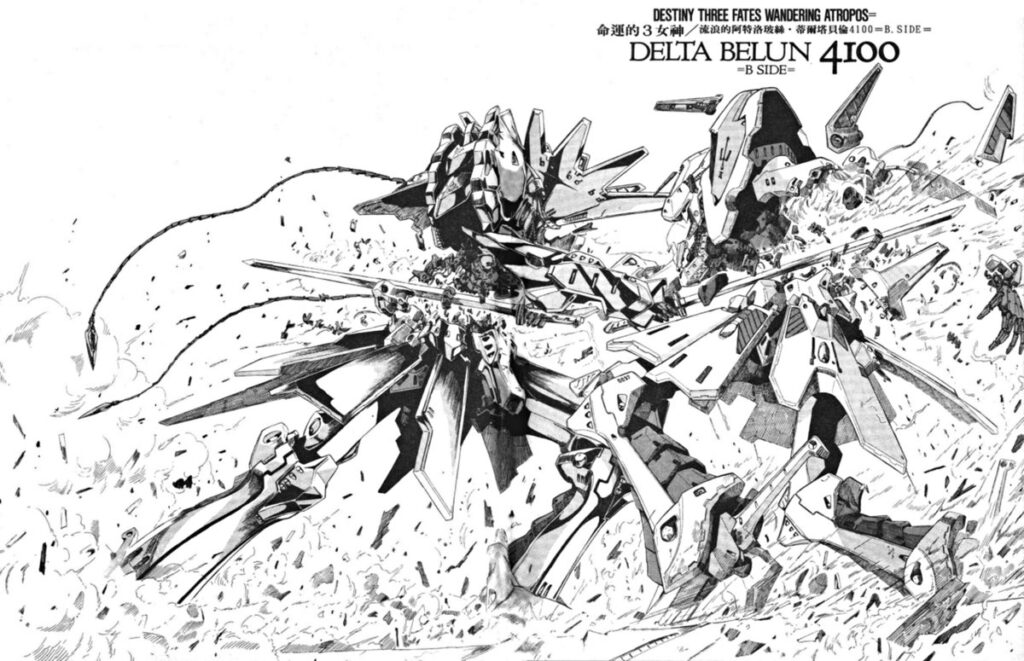
| J.C. / Calendar | Key Events |
|---|---|
| 3159 | Amaterasu invades the planet Addler by force, unleashing a merciless Buster Launcher bombardment and withdrawing from star cluster law |
| 3239 | The planet Kalamity is destroyed. Lachesis and the GTM “Magna Palace” vanish beyond time |
| 3961 | Amaterasu achieves dominion over the entire star cluster, then entrusts full authority to the Fatima “Eupandra” and disappears. The Mirage Knights disband |
| 4100 | The Colus army defeats the A.K.D. and liberates the star cluster. The flash of the Sentry “Live” obliterates Delta Belune. Amaterasu leaves the cluster |
| Solar Calendar 18000 onward | The far future. Princess Banarotte of planet Juno meets Mondo, a knight of the Sun Kingdom. Lachesis’s side story (her wanderings after J.C. 3239) runs in parallel |
| Lachesis side story, year 7777 | A fifth sun appears. On the green planet Fortune, Lachesis and Amaterasu reunite. Their daughter Karen is born. The story’s final destination |
From J.C. 3073–3074, where Volume 19 currently sits, to the story’s “ending” in 4100, there are still a thousand years of history left to tell. That is the true scale of FSS’s grandeur.
Are GTMs and Mortar Headds the Same Thing? Read This Before FSS’s Terminology Overhaul Confuses You
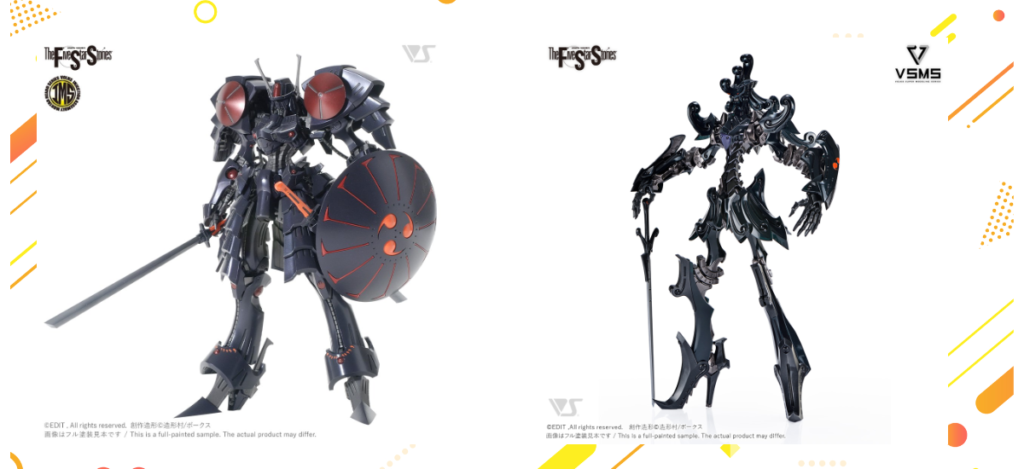
Dig around FSS online and you’ll run into the terms “MH” and “Mortar Headd.” Let me cut straight to the answer: GTM (Gothicmade) and Mortar Headd (MH) refer to the same weapon. Mortar Headd is the GTM’s former name; when Mamoru Nagano carried out a sweeping overhaul of the setting in the later volumes (and the Reboot edition), the name was unified as Gothicmade.
FSS’s world has been massively updated over its 40-year run. The renaming from Mortar Headd to Gothicmade was no mere label swap — it signified a reconstruction of the world-setting itself. This humanoid war machine, born in the Super Empire Unio era (around A.D. 5000), had its lore realigned under the GTM name and was repositioned within a far deeper world. This is why the generation that read the old edition and the readers who started with the Reboot use different terms in online analysis and reviews.
| Item | Old name: Mortar Headd (MH) | Current name: Gothicmade (GTM) |
|---|---|---|
| Main period of use | Early volumes of the original edition | Reboot edition and current canon |
| What it refers to | Humanoid war machine | Humanoid war machine (the same thing) |
| Abbreviation | MH | GTM |
| Born (in-story) | Around A.D. 5000 (Super Empire Unio era) | |
| Control scheme | Operated by a knight (Headdliner) and AF (Fatima) pair | |
For the generation that read FSS in the old edition, “MH” and “Mortar Headd” are burned into memory; readers who came in through the Reboot know only “GTM” and “Gothicmade.” Neither is wrong, but in the current canon, GTM is the official name — and this article uses GTM throughout. So if you stumble across “MH” somewhere, don’t panic. It’s the same weapon.
What Is the Relationship Between Fatimas and Automatic Flowers? The Truth About the Beings That Control the GTMs
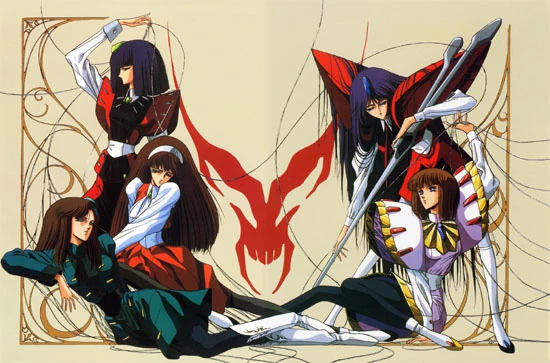
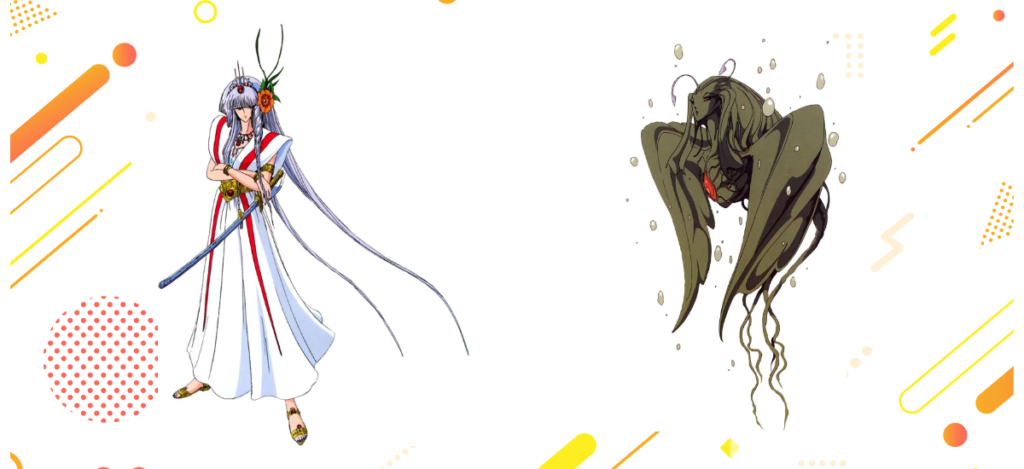
There’s one more pair of terms that trips up FSS newcomers: “Fatima” and “Automatic Flowers (AF).” The short answer: they refer to the same beings. The formal designation is “Automatic Flowers (AF)”; in everyday life, they are called “Fatimas.”
Why two names? Because “AF” is no mere alias — it’s a designation that encompasses their ability to shift into a “combat state”: boarding a GTM and taking over its computational control. Born in J.C. 2310, the AFs were manufactured as life forms equivalent to humans, purpose-built to control the GTMs. In peacetime they live within society as “Fatimas”; when they pair with a knight (Headdliner) and board a GTM, their full computational powers as AFs come online. That is what they are.
| Item | Details |
|---|---|
| Official name | Automatic Flowers (AF) |
| Common name | Fatima (the peacetime name) |
| Born (in-story) | J.C. 2310 |
| Role | Computation units that control the GTMs. Manufactured as life forms equal to humans |
| Operation | Pairs with a knight (Headdliner), boards the GTM, and handles its computational control |
| Highest-ranked AFs | Ballanche’s “Three Goddesses of Fate” (Lachesis, Atropos, Clotho) |
| Greatest AF maker (Fatima master) | Chrome Ballanche (the genius scientist Amaterasu discovered in J.C. 2629) |
Chrome Ballanche, regarded as the pinnacle of the “Fatima masters” (AF makers), is the genius scientist Amaterasu met in J.C. 2629. The “Three Goddesses of Fate” he completed in J.C. 2988 — Lachesis, Atropos, and Clotho — carry the very backbone of the entire saga. The story’s gears begin to turn the moment Lachesis departs for Amaterasu’s side, so it’s fair to say that without Ballanche, FSS would not exist.
The GTM–Mortar Headd relationship, and the Fatima–Automatic Flowers relationship — keep those two points in your head, and the terminology wall crumbles whenever you read old-edition passages or online lore discussions. FSS is a series that becomes unstoppable the moment “I don’t get it” flips into “I get it.”
No. 1: Start with Reboot Vol. 1 | The Best Entry Point in 2026
| Ease of Entry | Story Comprehension | Character Grasp | World Immersion | Total Score |
|---|---|---|---|---|
| 92 | 85 | 85 | 83 | 345 |
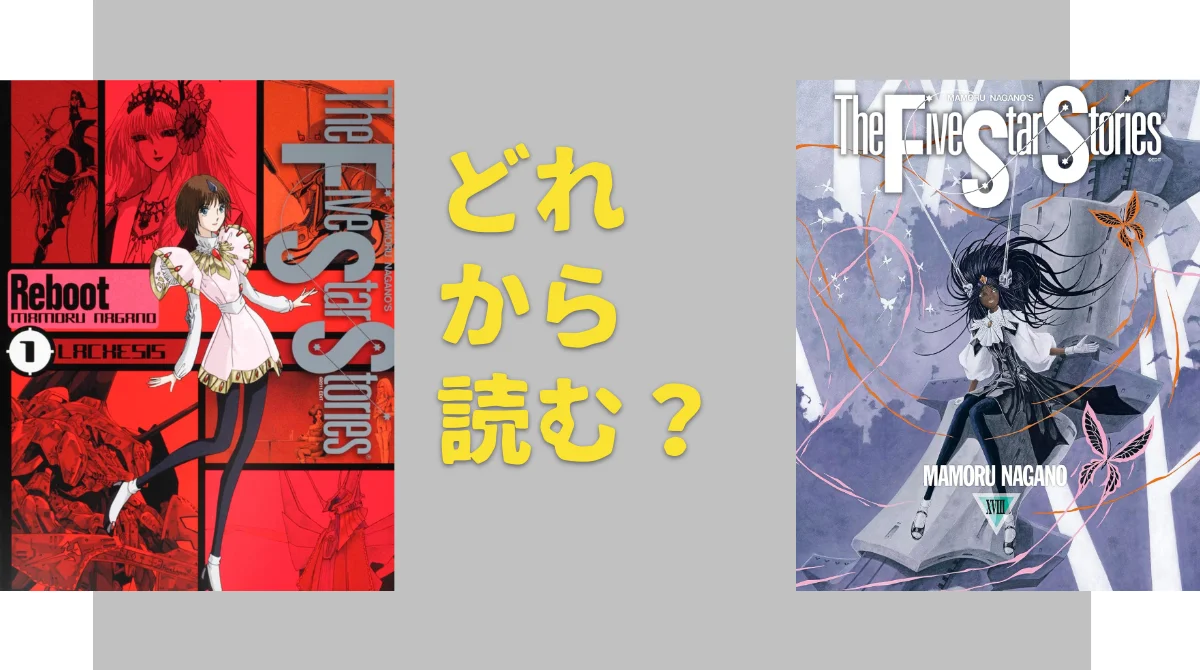
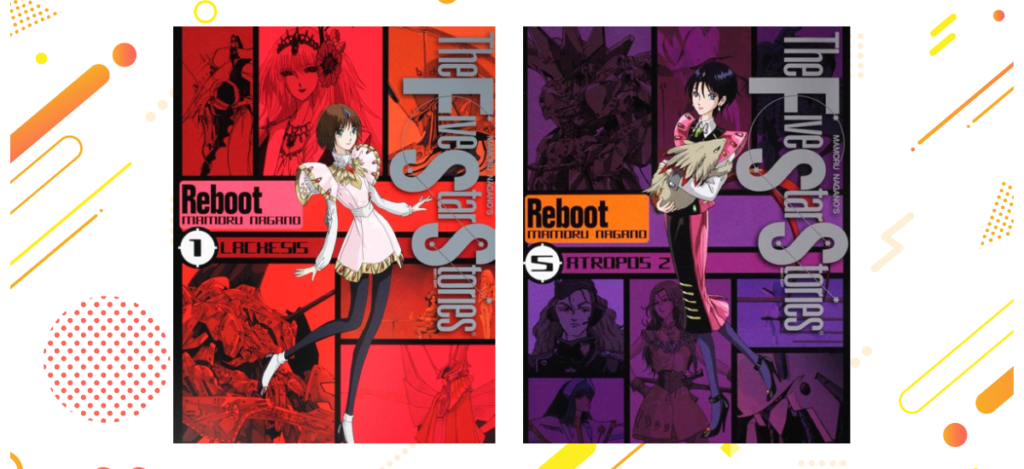
For anyone building a collection from scratch, my top recommendation is the Reboot edition. Published from 2012 onward (7 volumes), it re-edits the contents of the original edition’s Volumes 1–12 into seven books. Do the math: 7 Reboot volumes = 12 original volumes’ worth of content. That’s serious cost efficiency.
The Reboot’s greatest strength is that new copies are still easy to get today. Early volumes of the original edition can go out of print and command premium prices, but the Reboot is reliably available on Amazon and in bookstores (around 1,100 yen per volume, tax included). A continuation of the Reboot line has also been announced for 2026, so the format has a future ahead of it.
Content-wise, it follows the structure of the original magazine serialization while folding in setting revisions and newly added material. Page counts are up compared to the old edition, and it reflects Mamoru Nagano’s latest interpretation of his own world. If your priority is “I want to start reading, and I want a book in my hands now,” the best door into FSS at this moment is Reboot Vol. 1, “LACHESIS.”
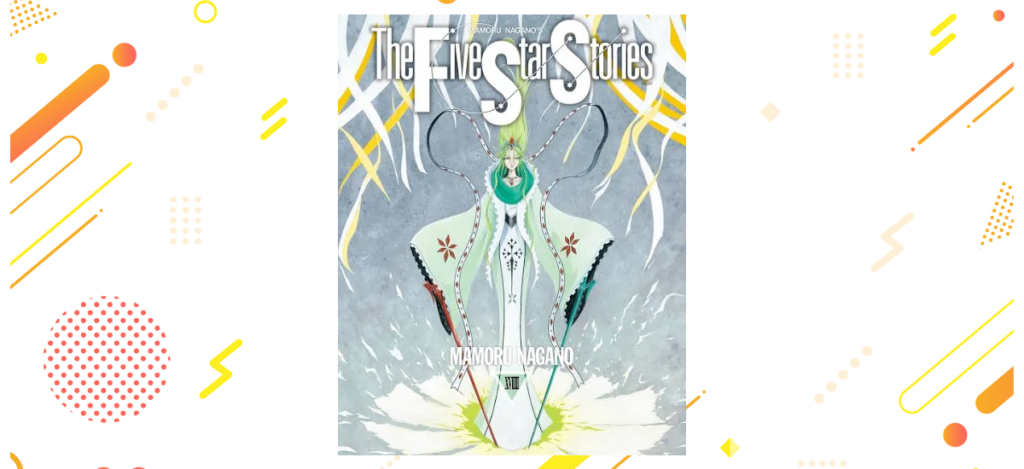
The Five Star Stories Reboot (2) CLOTHO — depicting the meeting between Clotho, the first “daughter” among the Ballanche Fatimas, and Colus III.
Source:KADOKAWA
From where SpotGeeks sits, the Reboot’s advantage comes down to one thing: the lowest possible barrier to actually starting. Chasing down the old edition exposes you to used-market price swings; the Reboot carries no such risk. And once you finish Vol. 7, you flow naturally into the original edition from Vol. 13 onward (or into future Reboot volumes as they arrive).
- Twelve original volumes condensed into seven affordable books (around 1,100 yen each)
- New copies remain easy to find, at stable prices
- Incorporates Nagano’s revisions and additions — the closest thing to the current canon
- Some content is ordered differently from the old edition, so cross-referencing both can get confusing
- The release pace of future Reboot volumes (Vol. 8 onward) is unconfirmed
No. 2: Start with the Original Vol. 1 | The Classic, Maximum-Volume Complete Route
| Ease of Entry | Story Comprehension | Character Grasp | World Immersion | Total Score |
|---|---|---|---|---|
| 75 | 90 | 90 | 83 | 338 |
Maybe the Reboot is sold out wherever you look, or maybe you want to own the entire original run — either way, if you want to read FSS in its most accurate, most original form, this is your route. The original tankobon edition has been in print since 1987 and currently runs to Volume 19, covering the story all the way to its present frontier.
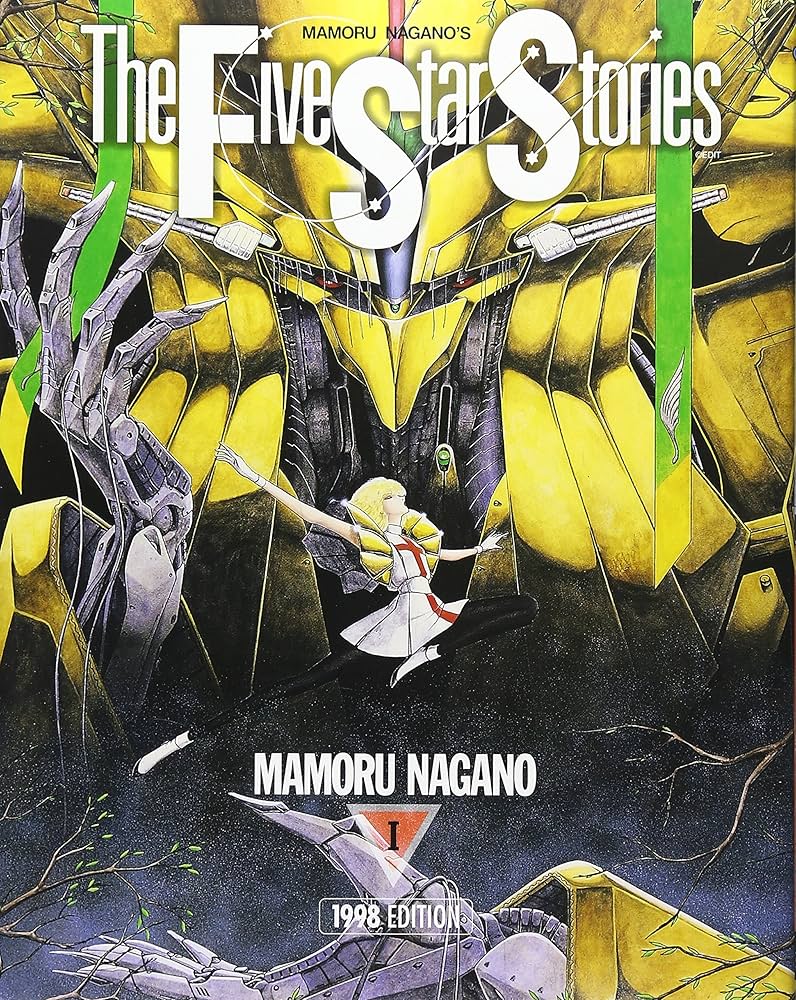
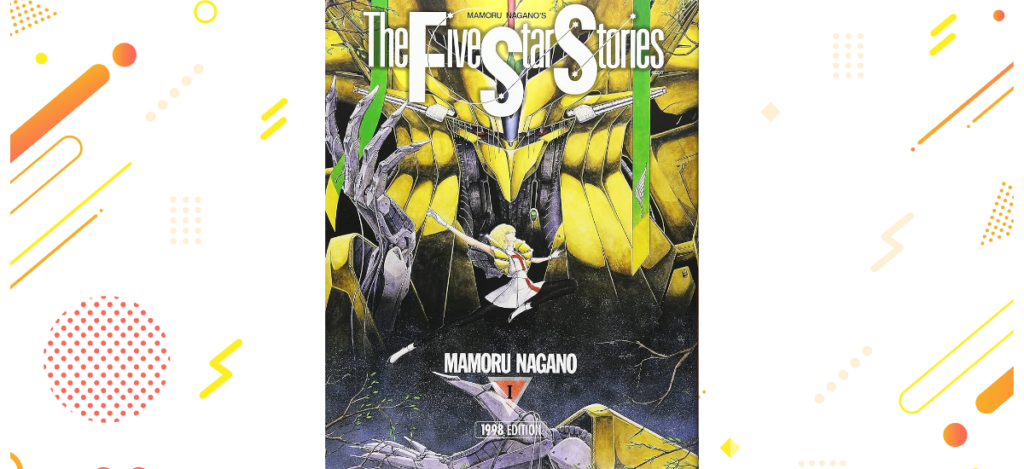
The original Vol. 1 opens with the “Black Knight” episode — a ferocious action sequence built around a duel with the L.E.D. Mirage. Hooking readers through the sheer shock of the artwork before explaining a single thing: that approach hasn’t changed since the serialization began in 1986. Volumes 2–3 then depict the Colus–Hagooda War as the bond between Lachesis and Amaterasu deepens.
The old edition’s defining feature is its lavish end-of-volume lore appendices — GTM spec sheets, Fatima profiles, maps of the star cluster. As a “companion reference,” its value is enormous. For core fans who love that density of information, nothing but the old edition will do. Newcomers shouldn’t try to absorb it all at once, though: the right way to live with the old edition is to enjoy the art and the atmosphere, then dip into the appendices whenever something sparks your curiosity.
The Five Star Stories Vol. 1 — the origin of Mamoru Nagano’s “fairy tale,” unchanged no matter how the calendar turns.
Source:KADOKAWA
The SpotGeeks-approved way to read the old edition: treat Volume 8 as your milestone. Mamoru Nagano himself has said the story “effectively concludes at Volume 8,” and it genuinely works as a stopping point. Read Volumes 1–8 first, feel out what kind of work FSS really is, and then decide whether to continue. That’s the smart play.
- Maximum volume — every chapter through the current Vol. 19, readable as the “complete edition”
- Rich end-of-volume lore appendices give the world unmatched resolution
- Nagano calls Vol. 8 the de facto conclusion, so you can experience it as a clean arc
- Early volumes (1–3) fluctuate in price on the used market and can be hard to obtain
- The information density per volume is high — expect a slow read until you acclimate
No. 3: Timeline First, Then Vol. 1 | The Ultimate Strategy for Maximum Comprehension
| Ease of Entry | Story Comprehension | Character Grasp | World Immersion | Total Score |
|---|---|---|---|---|
| 70 | 98 | 78 | 84 | 330 |
FSS’s most common casualty is the reader who opens Volume 1, understands nothing, and gives up. This is the most effective counter-strategy of all: read the Joker Cluster history timeline in this article first, then open Volume 1. That alone transforms your comprehension dramatically.
One core source of FSS confusion is having no idea where each character and event sits within thousands of years of history. Go in with the timeline in your head, and the context clicks into place: “ah, this scene is the Colus war of J.C. 2989,” or “so the Mirage Knights are that elite unit formed in J.C. 2810.”
Executing the timeline-first strategy is simple. Step one: skim the history timeline in this article (10–15 minutes). Step two: internalize that “the main story kicks off around J.C. 2988” and “most of the manga takes place roughly between J.C. 3000 and 3100.” Step three: pick up Reboot Vol. 1 or the original Vol. 1. That’s the whole plan. The route’s lower character-grasp score reflects an inherent limitation: a timeline can’t convey a character’s personality — only the manga itself can do that.
- Story comprehension score of 98 — the highest of any route, with the least “I don’t get it”
- This article’s timeline does the job, so the strategy costs you nothing extra
- Reading with the full sweep of history in mind makes the immersion run deeper
- The timeline inherently contains “spoiler” elements (endgame-level information), so it’s a poor fit for anyone who wants to go in completely blind
No. 4: Start with the Anime Film (1989) | Grasp the World Through Moving Pictures
| Ease of Entry | Story Comprehension | Character Grasp | World Immersion | Total Score |
|---|---|---|---|---|
| 88 | 72 | 80 | 82 | 322 |
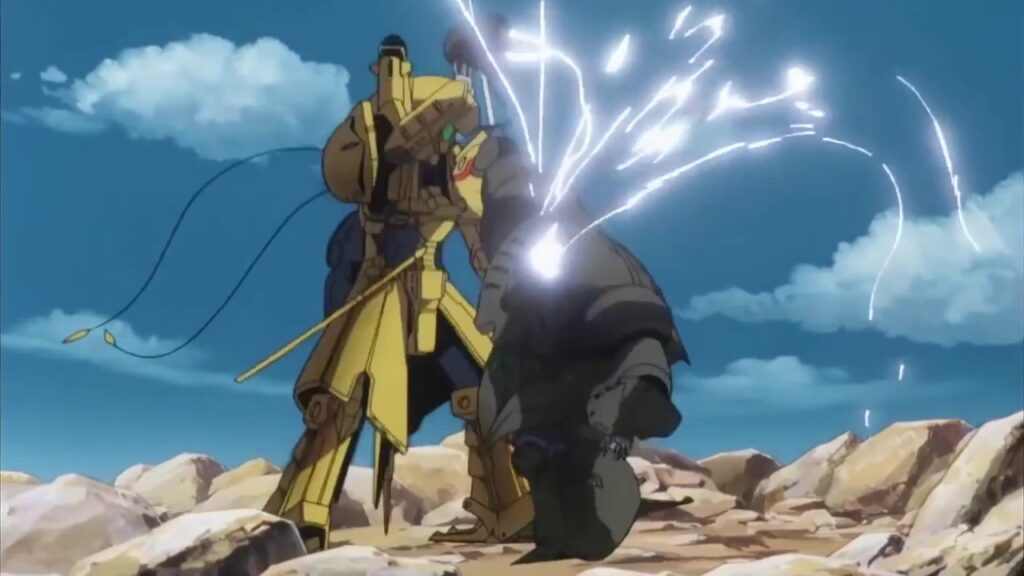
The 1989 theatrical anime “The Five Star Stories” adapts the manga’s opening chapter — Lachesis and Amaterasu’s meeting at Ballanche’s atelier — into a 75-minute film. It was directed by Akihiro Nishimori, with Mamoru Nagano handling the character designs. If you’d rather start with a screen than a page, this film is the fastest way to soak in the world of FSS.
The film’s high ease-of-entry score of 88 comes down to its clean, well-defined runtime: Volume 1’s contents distilled into 75 minutes. Film conveys the world’s visuals far faster than reading ever could, and for getting a gut-level feel — “so this is what the Joker Star Cluster is like” — it’s ideal. The lower story-comprehension score of 72, however, reflects the fact that the film covers only the saga’s prologue, nowhere near FSS’s full picture. If you walk away thinking “that was great, but what is this story actually about?”, that’s an entirely natural reaction. Treat it as pre-reading homework for Volume 1 and it serves you beautifully.
- The shortest route to visually grasping FSS’s world, mood, and main cast — just 75 minutes
- A genuinely accomplished theatrical anime that stands on its own
- Only the first chapter was ever animated; the story continues in manga form alone, so the film doesn’t complete the tale
- Blu-ray and streaming availability is limited — check your current viewing options first
No. 5: The Volumes 1–8 Full-Run Route | The Peak of “Finish One Season First”
| Ease of Entry | Story Comprehension | Character Grasp | World Immersion | Total Score |
|---|---|---|---|---|
| 65 | 85 | 88 | 77 | 315 |
For readers who look at 19 volumes and flinch, or who simply want to reach one satisfying stopping point, this is the strategy. Mamoru Nagano himself has declared that the story “effectively concludes at Volume 8,” and the original edition’s Volumes 1–8 (equivalent to Reboot Vols. 1–5) complete FSS’s first grand chapter.
The content through Volume 8 forms a complete arc: Lachesis and Amaterasu’s meeting → the Colus war → Ballanche’s atelier → the Black Three incident → the Floating Temple. The route’s high character-grasp score of 88 exists because the major players — Amaterasu, Lachesis, Decors, Atropos, Colus III and more — are all fully drawn within those eight volumes. Read 1–8, get swept away, and keep going; or read 1–8, feel satisfied, and stop right there. Either choice is correct.
The lower ease-of-entry score of 65 reflects two things: committing to an eight-volume run right out of the gate is a genuine hurdle, and a half-hearted attempt tends to stall somewhere in the middle. Use it as intended — a completion strategy with Volumes 1–8 set firmly as the goal.
- Experience one full cycle of FSS through Vol. 8 — the point Nagano himself calls the de facto conclusion
- The highest character-grasp score of any route (88)
- Early original-edition volumes can be hard to source (the Reboot works as a substitute)
- If you doubt you can actually stop at Vol. 8, start with all 19 volumes in mind
FSS Terminology and Mecha Name Changes: The Complete Conversion Table | Every Rename, Old to New
Across its 40-year run, FSS has undergone sweeping revisions to everything from its basic vocabulary to the names of every nation’s machines. When you’re reading older fan analysis or reviews and hit a name you’ve never heard of, consult the conversion tables below. Every category is covered in “old name → new name” format.
Basic Terminology Changes
| Old Name | New Name |
|---|---|
| Mortar Headd (MH) | Gothicmade (GTM) |
| Sivalace (knight) | War Caster / Headdliner |
| Fatima Fatis | Automatic Flowers (AF) (called Fatima in peacetime) |
| Meight | Garland |
| Meister | Slider |
| Diver (Force) | Byter / Glint Zwingen / Blitzen Force |
| Baia | Deubre / Zwei |
| Spaid (solid blade) | Gut Blow |
| Spad (light blade) | Gut Blow Wenig (short sword) |
| Priestess of Atoll | Utame (Songstress) |
| F.E.M.C. Mirage Knights | Z.K.K.M. Mirage Knights |
Machines of the A.K.D. (Amaterasu Dynasty)
| Old Name | New Name |
|---|---|
| Rouge Mirage | Afort Bringer (Type A) |
| L.E.D. Mirage | Zarathustra Apter Bringer / Z.A.P. (Type B) |
| Cross Mirage (male type) | Camerart Bringer (Type C) |
| The Knight of Gold / Destiny Mirage | Imperial Knight Magna Palace / Destiny Bringer (Type D) |
| The Knight of Gold A.T. / Patraqushe Mirage | Imperial Knight Megalocoat / Patraqushe Bringer (Type D2) |
| Emperial Mirage | Enzoot Bringer / Empire Bringer (Type E) |
| Flame Mirage / Jacaranda Mirage | Fultrim Bringer (Type F) |
| Cross Mirage (female type) | Grit Bringer (Type G) |
| Terror Mirage | Haifa Bringer (Type H) |
| Jagd Mirage / Orange Right Dragon / Green Left Demon | Grosser Zarathustra Detonator Bringer (DB) |
| Kurz Mirage | Kill Line Bringer (Type K) |
| Lux Mirage | Lushain Bringer (Type L) |
| Luger Mirage | Ryugal Bringer (Type R) |
| Speed Mirage / Wunder Schatze / Wolke Schatze | Speed Bringer |
| Precision L.E.D. Mirage II | Zarathustra Apter Bringer Second (Type Φ) |
| Horned Mirage | Holder Bringer (Type h) |
| Goat Mirage | Xenoah Apter Bringer (Type X) |
| Auge (Machine Messiah) | Ageha (AUGE=HA) Morpho the Sultan |
| Auge Alscule | Morpho les Tribanel / Tribanel Alscule |
| B2 Ikazuchimaru Babylons | Bringer B2 Shiun Ikazuchimaru |
| B4 Destonias Akatsukihime | Bringer B4 Hinohime Hitoefutae |
Machines of the Fillmore Empire
| Old Name | New Name |
|---|---|
| V Siren Prominence | Willys / Das Ghost (Holda Type 23) |
| V Siren Neptune | Merowla / Screamer / Nakimehka / Bansheeka (Holda Type 19) |
| Siren | Yurei (Holda Type 31A) |
| Arcana Siren | Yurei Baikal / Arcana Oder (Holda Type 33) |
| Phantom | Lamias |
| Crumars Byron | Houzairo Glent |
Machines of the Kubalkan Papal State and the Bakhtma Magic Empire
| Faction | Old Name | New Name |
|---|---|---|
| Kubalkan Papal State | Bang, the Doll of Destruction | Mk3 Ritter Jet / The Dalmas |
| Kubalkan Papal State | Cardinal Bang | Mk4 Ritter Jet / Mach Shaltoma |
| Kubalkan Papal State | Stillcore | The Russenfried |
| Bakhtma | Bash the Black Knight | Daccas the Black Knight |
| Bakhtma | Schpeltor | Demzambala / Schpeltor |
| Bakhtma | Gust Temple | Gailand Carbergen (Branden Type G) |
Machines of the Colus Dynasty and the Minogusia Alliance
| Faction | Old Name | New Name |
|---|---|---|
| Colus Dynasty | Junon / Judgment Mirage | SR4 The Endless (Type Am-J) |
| Colus Dynasty | Engage SR1 | Highleon SR1 Ahmes |
| Colus Dynasty | Engage SR2 | Highleon SR2 |
| Colus Dynasty | Engage SR3 (Jade Temple) | Highleon SR3 |
| Colus Dynasty | Berlin SR2 | Weimar SR2 (Dolby Branden) |
| Minogusia Alliance | The Empress Disturb | Die Kaiserin (Holda Type 17) |
| Minogusia Alliance | A-Toll | Berga Hari |
Mecha of Other Nations and Factions
| Faction | Old Name (Before) | New Name (After) |
|---|---|---|
| Republic of Gamashan | Phantom | Halo Galo – Lamias Eryuare |
| Republic of Gamashan | Sinker | Ekperaha |
| Republic of Gamashan | Rubicon | Suisen |
| Republic of Gamashan | Corsair | Sukhothai |
| Bakin-Rakan Empire | Kurmarus Vai o La | Houzairo Growdyne |
| Bakin-Rakan Empire | Phaedra | Al Tai |
| Trarn Federal Republic | Kurmarus Byblos | Houzairo Kerkimenas |
| Umoth National Socialist Federal Republic | Rote Cavalry | X-4 Boldox Ruby (“Crimson Shield Steel”) |
| Umoth National Socialist Federal Republic | Blue Knight (“Violet Hermit Steel”) | X-8 Boldox Amethyst (“Violet Hermit Steel”) |
| Umoth National Socialist Federal Republic | Blue Knight (“Aster Steel”) | X-9 Boldox Garnet (“Aster Steel”) |
| Umoth National Socialist Federal Republic | Devonsha | Raymonda |
| Rozzo Empire | Rheinschall Humetry | Groasch Type K Voice Over GA2 |
| Rozzo Empire | Hermine | Groasch Type H |
| Rozzo Empire | Barunsha | Bayaderka |
| Rozzo Empire | Zeit | Shamra |
| Meyoyo Dynasty | Flamberge Temple (“Himeshin Kongo”) | Agnim (“Himeshin Kongo”) |
| Meyoyo Dynasty | Ashura Temple | Horai (Branden Type A) |
| Cornela Empire | Kan Ary | SBB-00 Demoll Zorro |
| Cornela Empire | Kan | SBB-01 Demoll (Byblus) |
| Giller Dynasty | Gruen Eldagrine | Oscard |
| Giller Dynasty | Schachter | Baiglon |
| Iota Space Knights | Hydra Mirage (Suiomaru) | Bringer B3 Saisei Astragalus |
| Iota Space Knights | Harpoon Temple | De Havilland (Branden Type H) |
| Buray Mercenary Knights | Buray Sputnik | Buray Roukan |
| Buray Mercenary Knights | Buray Vostok | Buray Odeon |
| Buray Mercenary Knights | Buray (Umoth, unseen in the manga) | Buray Ramuad |
Mecha of the Super Empire Unio
| Old Name (Before) | New Name (After) |
|---|---|
| Machine Messiah Ensei | Goen Jikun Schutzien |
| Dragon Nature | Sentry |
| L.E.D. Dragon / White Dragon | Live Controller / God of Five Star Stories |
| Feather Dragon / Gold Dragon | Carat Vinder / The Reflections |
| Thunder Dragon / Blue Dragon | Blau Blitz / The Nebulous Storm |
| Jet Dragon / Black Dragon | Pulsar Flora / The Penetrator |
| Earth Dragon / Green Dragon | Magma Vibration / The Blast Fornes |
Terminology Changes: Combat Powers and Abilities
| Old Name (Before) | New Name (After) |
|---|---|
| Diver (combat) | Voltex |
| Para-Simal (prophecy) | Scoper |
| Hybrain (guidance) | Opera |
| Luschemi (alchemy) | Grain |
| Sorcerers’ Guild | Blitzen Beiter |
| Divers Para Guild | Tenseisha |
Terminology Changes: Mechanics and Systems
| Old Name (Before) | New Name (After) |
|---|---|
| Eraser Engine | Harmodic Engine |
| Neo-Chitin (armor) | Helios |
| Veil (shield) | Flyer |
| Mirage series | Bringer series |
| Temple series | Branden series |
| Parallel Linked Combat / Ride Gig | Parallel Computation Combat / Striper System |
Terminology Changes: AF / Fatima Suits
| Old Name (Before) | New Name (After) |
|---|---|
| Gross Face | Tigris Maisonette |
| Biscuit Style | Assyria Separate (Ice Dart Style) |
| Mantic Mode | Incatic Flags |
| Decadent Style | Arabic Prêt-à-Porter |
| Plastic Style | Euphra Collection |
With this many terms revised, it is no wonder the original run and the Reboot edition can feel like two completely different works. But the heart of it — the story of Amaterasu and Lachesis, the millennia-spanning epic woven by the GTMs and the Fatimas — has not changed at all. Push past the wall of terminology, and the real appeal of FSS is waiting on the other side.

Enjoying this article? Add us as a preferred source on Google.
The Five Star Stories: The Verdict on the Best Reading Route
The answer to “which one do I read first?” is clear: as of 2026, picking up Reboot Vol. 1, “LACHESIS,” is as close to correct as a first book gets. It is easy to find, it is great value for the money, and it drops you into the world of FSS in the form closest to the current canon. Add one piece of prep — read the timeline first — and your comprehension jumps enormously. Spend ten minutes with the history timeline in this article, then open Reboot Vol. 1. That is the optimal route through The Five Star Stories, as SpotGeeks figures it. In 2026, the 40th anniversary of the serialization, there has never been a better moment to open the door to this ten-million-copy universe.
With FSS, there is a moment when “I have no idea what is going on” flips into “this is incredible.” You owe it to yourself to experience that moment.
Read Next
Snicker Kitamura

Leave a Reply