



Enjoying this article? Add us as a preferred source on Google.
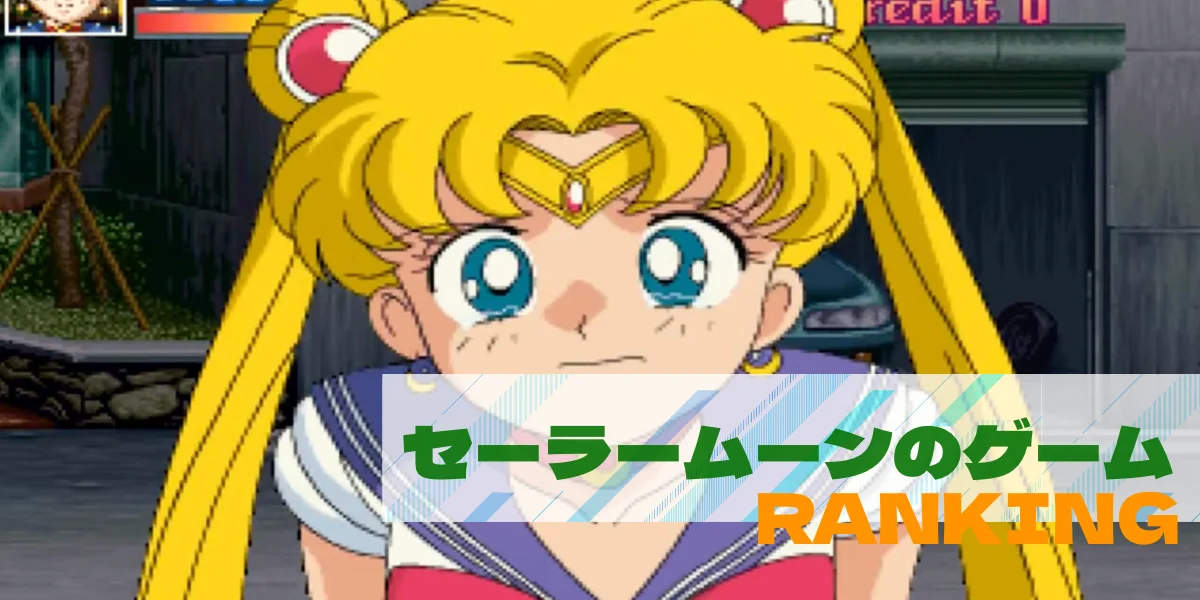
The first Sailor Moon retro game you should play is the Super Famicom’s Bishoujo Senshi Sailor Moon: Another Story. Released by Angel on September 22, 1995, it’s the only RPG the series ever got, and it runs on a completely original story written for the game by the manga’s creator, Naoko Takeuchi. This is a licensed tie-in that calmly steps over the fence most licensed tie-ins never get near.
Sailor Moon games were mass-produced across a span of just five years, from 1992 to 1996, and they hit almost every major platform of the era: Super Famicom, Game Boy, Mega Drive, PC Engine, Game Gear, 3DO, Sega Saturn, PlayStation, arcade, Playdia, and Pico. So “a Sailor Moon game” doesn’t actually describe anything. The genres are all over the map: side-scrolling beat-’em-ups, one-on-one fighters, an RPG, a puzzler, adventure games. Which one you pick changes the entire experience.
So for this article I picked the 10 most representative Sailor Moon games released on retro hardware and ranked them by scoring each one out of 100 on four axes: Playability, Graphics, Brutality, and Replay Value. Release dates, publishers, developers, and period-accurate specs have all been verified before writing. And while we’re here, I’ll admit I’m the kind of person who used to fish licensed games like these out of clearance bins because they were cheap, so I have a certain confidence in my nose for landmines.
And at the end, I’ll settle the question every retro-game article should answer. Can you actually play these 10 games on modern hardware as of September 2026? I’ll give you the conclusion with hard numbers in the second half. Fair warning up front: it gets rough.
- Score comparison table for all 10 Sailor Moon retro games (4 axes, 100 points each)
- #1 is the Super Famicom’s only RPG, Another Story (September 22, 1995, Angel)
- The complete lineup of Sailor Moon games released from 1992 to 1996
- Picks by goal: for action fans, fighting-game fans, and RPG fans
- Can these 10 games be played on modern hardware? The platform-by-platform verdict
The ranking is ordered by total score, but if you look at the breakdown across the four axes you should be able to spot the one that fits you almost immediately. Start with the full scoreboard for all 10 games.
Score Comparison: All 10 Sailor Moon Retro Games
Each game is scored out of 100 on four criteria. “Brutality” means the higher the number, the harder and more punishing the game; a low number means it’s gentle. The Total Score is the sum of all four axes.
| Rank | Title / Platform | Playability | Graphics | Brutality | Replay Value | Total Score |
|---|---|---|---|---|---|---|
| 1st | Bishoujo Senshi Sailor Moon: Another Story Super Famicom |
88 | 92 | 62 | 95 | 337 |
| 2nd | Bishoujo Senshi Sailor Moon S: Jougai Rantou!? Shuyaku Soudatsusen Super Famicom |
90 | 85 | 70 | 86 | 331 |
| 3rd | Bishoujo Senshi Sailor Moon Super Famicom |
86 | 88 | 72 | 74 | 320 |
| 4th | Bishoujo Senshi Sailor Moon arcade |
74 | 95 | 90 | 58 | 317 |
| 5th | Bishoujo Senshi Sailor Moon SuperS: Zenin Sanka!! Shuyaku Soudatsusen Super Famicom |
88 | 87 | 68 | 70 | 313 |
| 6th | Bishoujo Senshi Sailor Moon SuperS: Various Emotion Sega Saturn |
80 | 90 | 66 | 72 | 308 |
| 7th | Bishoujo Senshi Sailor Moon S 3DO |
78 | 86 | 64 | 74 | 302 |
| 8th | Bishoujo Senshi Sailor Moon S: Kondo wa Puzzle de Oshioki yo! Super Famicom |
84 | 62 | 66 | 80 | 292 |
| 9th | Bishoujo Senshi Sailor Moon Mega Drive |
76 | 80 | 78 | 56 | 290 |
| 10th | Bishoujo Senshi Sailor Moon R Super Famicom |
82 | 84 | 58 | 52 | 276 |
The interesting part is the difference in personality between #1 and #4. Another Story takes the top spot on the strength of a 95 in Replay Value, while the arcade game claws its way to fourth on a spiky 95 in Graphics and 90 in Brutality. At the other end, last-place Sailor Moon R lands at 58 Brutality and 52 Replay Value, because its thin content, just four stages total, shows up directly in the numbers. From here I’ll go through them one at a time and pin down exactly what separates them.
#1 Bishoujo Senshi Sailor Moon: Another Story | The Series’ Only RPG, and It’s Fully Realized
| Playability | Graphics | Brutality | Replay Value | Total Score |
|---|---|---|---|---|
| 88 | 92 | 62 | 95 | 337 |
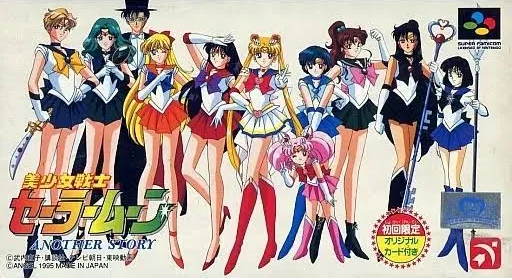
Bishoujo Senshi Sailor Moon: Another Story for the Super Famicom is an RPG released by Angel on September 22, 1995. Development was handled by Arc System Works and TNS. It was the sixth entry in the Super Famicom line, and the only RPG in the entire series. The simple fact that exactly one game here plays by different rules tells you most of what you need to know.
Its greatest asset is that the story is a fully original one written by series creator Naoko Takeuchi. The enemy organization, Hell Destiny, is built around the theme of “destiny,” and Takeuchi even drew the original artwork for the new villains. This isn’t an anime episode reenacted in sprite form; it’s a story built for the game, and the Sailor Guardians run it end to end. Joji Yuno served as producer.
On the combat side, the game makes the extravagant choice of putting all 10 Sailor Guardians in your hands as playable characters. The three Outer Guardians, who were restricted to versus mode in the series’ fighting games, are full party members here, moving under your own control. Licensed RPGs usually end up with one strong lead and a supporting cast padding out the roster, but everyone has a place here. Early print runs shipped with a special original card packed in, and if you bought the game specifically for that card, be honest and raise your hand. Mine’s up.
- A completely original story written by series creator Naoko Takeuchi (the enemy organization Hell Destiny)
- All 10 Sailor Guardians are playable, including the three Outer Guardians
- The sixth Super Famicom entry and the only RPG in the series. There is nothing else like it
- The special original card was packed in with early print runs only. Used copies are missing it as a matter of course
- Unlike the action games, it’s single-player only. Not the pick for playing with a friend
#2 Bishoujo Senshi Sailor Moon S: Jougai Rantou!? Shuyaku Soudatsusen | A Real Fighting Game Wearing a Licensed Face
| Playability | Graphics | Brutality | Replay Value | Total Score |
|---|---|---|---|---|
| 90 | 85 | 70 | 86 | 331 |
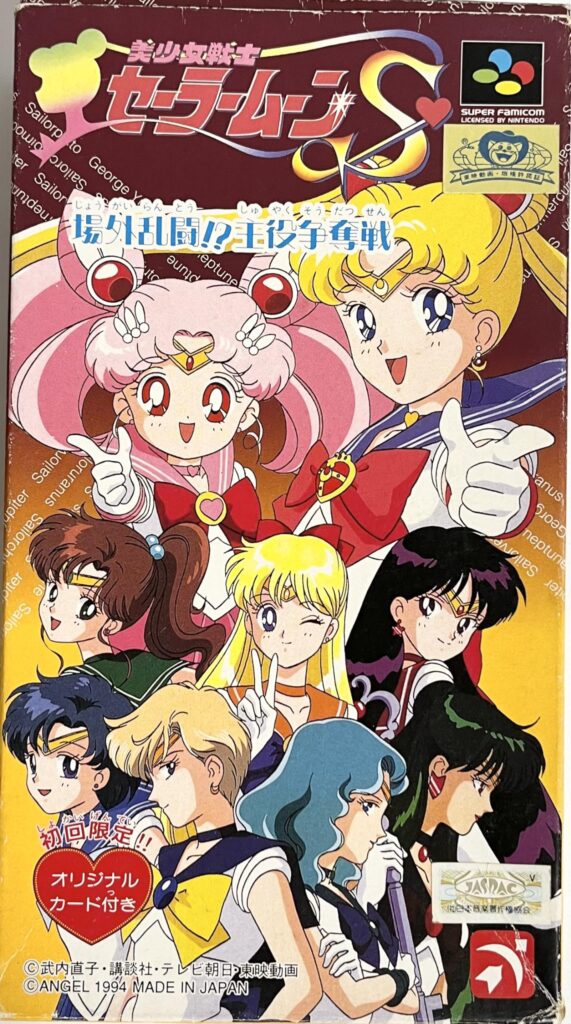
Released on December 16, 1994, Angel’s Super Famicom fighter Bishoujo Senshi Sailor Moon S: Jougai Rantou!? Shuyaku Soudatsusen (roughly, “Brawl Outside the Ring!? The Fight for the Lead Role”) is the one game in the series that actually gets respect as a fighting game. Development came from Arc System Works and TNS, the same pairing as Another Story. That combination is a big part of why Sailor Moon games of this era hit as often as they did.
The standard roster is six Sailor Guardians, and versus mode adds the three Outer Guardians: Sailor Uranus, Sailor Neptune, and Sailor Pluto. Under the hood you get link combos that demand precise timing and a backdash with invincibility frames, which turns matches into genuine guessing games. This is not a fighting game coasting on cute character art.
There’s also a touch that’ll make you grin. Clear the game and the title itself changes to the name of whichever Guardian won, so it becomes something like Bishoujo Senshi Sailor Mercury S. Exactly as the subtitle promises, the winner walks off with the lead role. That kind of small, precise flourish would still land in a modern game, wouldn’t it?
- Serious mechanics, including timing-based link combos and an invincible backdash
- Versus mode lets you use the three Outer Guardians (Sailor Uranus, Sailor Neptune, Sailor Pluto)
- The playful touch of the title changing to the winning Guardian’s name once you clear it
- The three Outer Guardians are versus mode only. You can’t take them through single-player
- Sailor Saturn isn’t in it (she joins with 1996’s Zenin Sanka!! Shuyaku Soudatsusen)
#3 Bishoujo Senshi Sailor Moon (Super Famicom) | The Two-Player Beat-‘Em-Up Everyone Played
| Playability | Graphics | Brutality | Replay Value | Total Score |
|---|---|---|---|---|
| 86 | 88 | 72 | 74 | 320 |
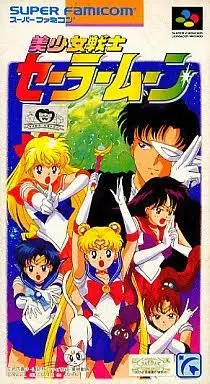
The series started on Super Famicom with Bishoujo Senshi Sailor Moon, released on August 27, 1993 by Angel, a Bandai subsidiary. Arc System Works developed it, and the genre is side-scrolling beat-’em-up. Its five stages can be cleared with two players at once.
Bishoujo Senshi Sailor Moon (August 27, 1993 / Angel). When it came to go-to titles for playing with a friend, this was it. I only realized it as an adult, but there’s something genuinely forceful about Sailor Guardians mowing down the enemies in their path with punches, kicks, and the occasional headbutt. Also, the enemy designs are quietly creepy.
Source:4Gamer.net
That “go-to title for two players” reputation captures the mood of the time exactly. You choose from five Sailor Guardians, and the performance gaps between them are clear-cut. Sailor Mercury moves fast, Sailor Jupiter hits hard, and Sailor Venus uses a chain. Your pick determines your role, which is what gives two-player pairings actual meaning.
The art carries real weight too. More than 300 pieces of original artwork by Kazuko Tadano were used, and on top of that, series creator Naoko Takeuchi designed three original rank-and-file enemies exclusively for the game. That’s the manga’s author sitting down to draw extra monsters for a licensed tie-in. For the record, the game never came out in North America; Europe got it from Bandai in 1994. A discount-bin licensed game in Japan turns into a collector’s item once it crosses an ocean. That’s just how the world works.
- Two-player simultaneous play. The most “play it with a friend” game in the series
- All five characters play differently (Mercury = speed / Jupiter = power / Venus = chain)
- Over 300 pieces of original art by Kazuko Tadano, plus three original enemies designed by Naoko Takeuchi
- Five stages total, so the volume is modest. Don’t come in expecting RPG length
- There’s no North American release. If you want a Western copy, the 1994 European version from Bandai is the only option
#4 Bishoujo Senshi Sailor Moon (Arcade) | The Best-Looking Game Here, and the Meanest
| Playability | Graphics | Brutality | Replay Value | Total Score |
|---|---|---|---|---|
| 74 | 95 | 90 | 58 | 317 |
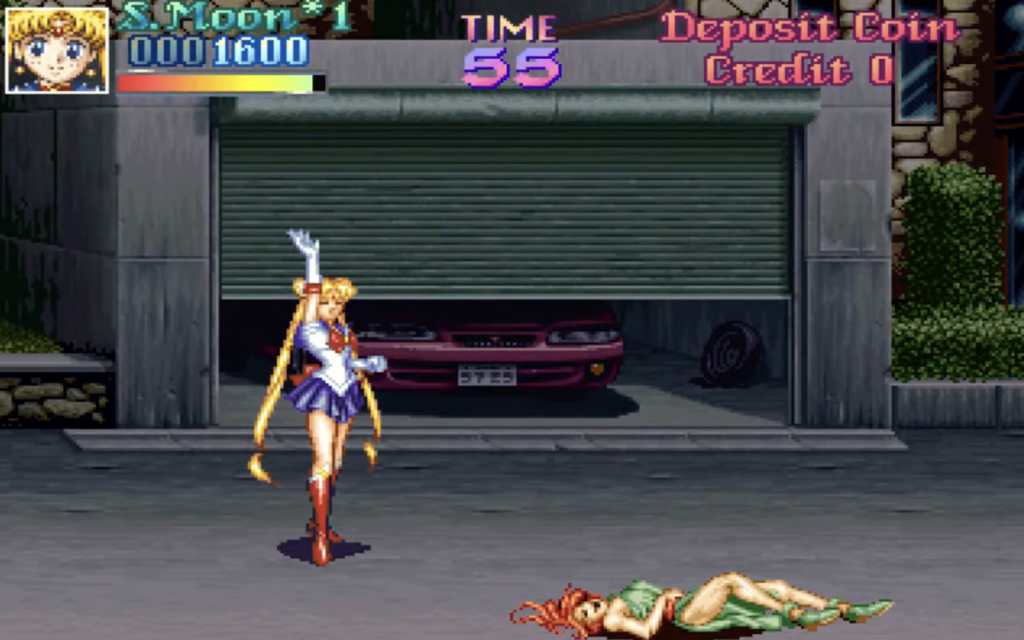
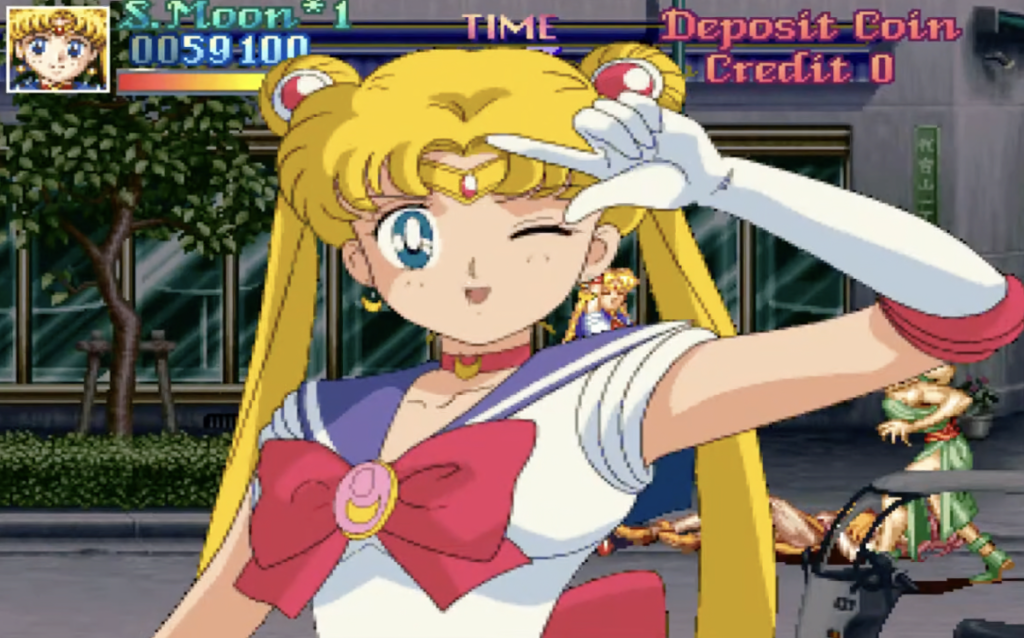
Banpresto’s arcade Bishoujo Senshi Sailor Moon (Banpresto is now Bandai Namco Amusement) hit cabinets on March 22, 1995, and nothing else in this top ten looks this good. The character art and backgrounds are in a completely different class from the console games, and the credits explain why: Kazuko Tadano as animation director, Seiichi Sakurai on music, Hiroyuki Fujimoto directing.
It’s a belt-scrolling brawler like the Super Famicom game, with the original five Guardians playable and two-player co-op supported. But all eight stages are hard. That’s the arcade for you, of course, yet walk in with console reflexes and your wallet gets lighter fast. The key to surviving is the crystal dropped by the blue Thetis, which powers up all five special moves at once.
Deep-cut time: there are three board revisions (95/03/21, 95/03/22 and 95/03/22B), and the earliest one has a bug that softlocks the game if you kill Tuxedo Mask with the crystal before he barges in. The enemy roster includes Oniwabandana from episode 43 of the anime, plus a masked man created for this game. Learn details like that and the cabinet looks different the next time you stand in front of it.
- The most detailed character and background art of all ten (animation director: Kazuko Tadano)
- The blue Thetis crystal powers up all five special moves, which turns every run into a gamble
- Eight stages and two-player co-op give it real arcade density
- The difficulty is steep, and console instincts won’t get you far
- Early board revisions have a progression-breaking bug (killing Tuxedo Mask before he cuts in)
#5 Bishoujo Senshi Sailor Moon SuperS: Zenin Sanka!! Shuyaku Soudatsusen | Sailor Saturn Joins, and the Roster Is Finally Complete
| Playability | Graphics | Brutality | Replay Value | Total Score |
|---|---|---|---|---|
| 88 | 87 | 68 | 70 | 313 |
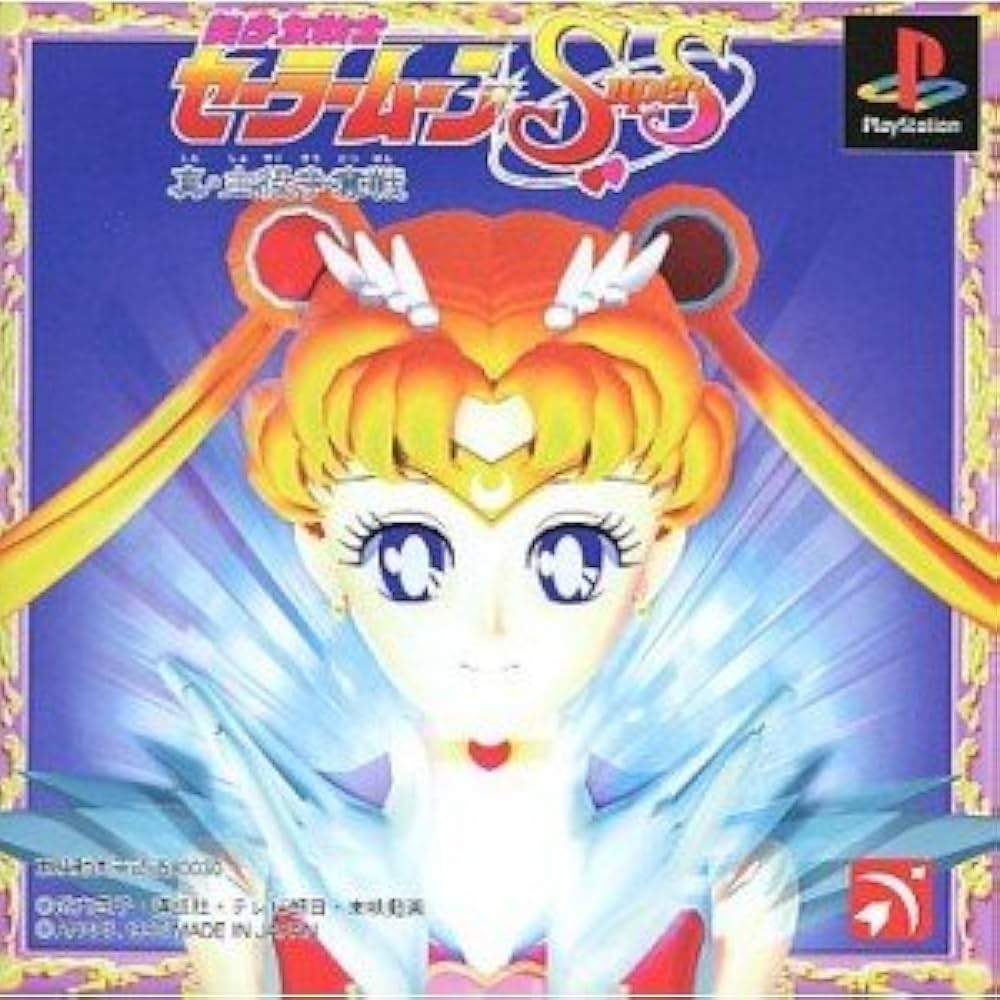
Released March 29, 1996 by Angel for the Super Famicom, the fighting game Bishoujo Senshi Sailor Moon SuperS: Zenin Sanka!! Shuyaku Soudatsusen builds on our #2 pick, Jougai Rantou!? Shuyaku Soudatsusen, and adds Sailor Saturn. The graphics and movesets were overhauled too, so this is no lazy roster patch.
Saturn also shows up as the final boss. “Zenin Sanka” — everyone participates — means exactly what it says, and this is where the series’ fighting games peak. Like its predecessor, it still pulls the trick of changing the title screen once you clear it.
I ranked it below the #2 game because the underlying system is an extension of that one. Flip that around, though, and if your motivation is “I want every character,” this is the right pick. Rebuilding and re-releasing a fighting game in the same slot between the end of 1994 and the spring of 1996 is genuinely impressive turnaround.
- Sailor Saturn joins the roster, making this the final form of the series’ Super Famicom fighters
- Graphics and moves were rebuilt from the previous game, so it looks and feels new
- The title screen still changes when you clear the game
- The foundation is still Jougai Rantou!? Shuyaku Soudatsusen, so it feels less fresh than the original
- Most of the roster carries over, so owning both means a lot of overlap
#6 Bishoujo Senshi Sailor Moon SuperS: Various Emotion | Brand-New Animation, Sega Saturn Only
| Playability | Graphics | Brutality | Replay Value | Total Score |
|---|---|---|---|---|
| 80 | 90 | 66 | 72 | 308 |
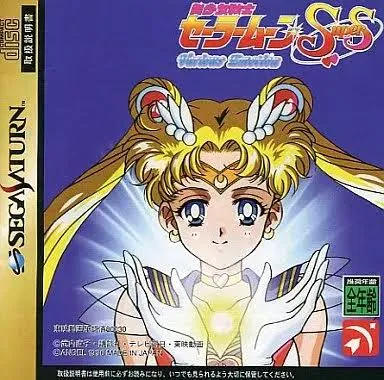
Angel put Bishoujo Senshi Sailor Moon SuperS: Various Emotion on the Sega Saturn on November 29, 1996. It’s a port of the PlayStation game SuperS: Shin Shuyaku Soudatsusen, but parts of the content differ. In other words, calling it “just a port” doesn’t cover it.
The headline attraction is the new animation in Story Mode. Above all, a Sailor Saturn transformation sequence that doesn’t exist in the anime itself can only be seen here. I’ll say it flat out: that alone makes this one worth hunting down. As a card-carrying Saturn kid back then, let me be loud about this one.
There are smaller refinements too. The Outer Guardians’ victory poses gained planet symbols, and Uranus, Neptune, Pluto and Saturn each picked up one new move. The fighting-game skeleton carries over from the PlayStation version, with extra showpieces bolted on top.
- Includes a Sailor Saturn transformation movie that doesn’t exist in the anime
- New animation added to Story Mode
- One new move each for Uranus, Neptune, Pluto and Saturn
- It’s based on the PlayStation Shin Shuyaku Soudatsusen, so the fighting engine itself isn’t new
- Sega Saturn exclusive, so you need real hardware or some other way to run Saturn software
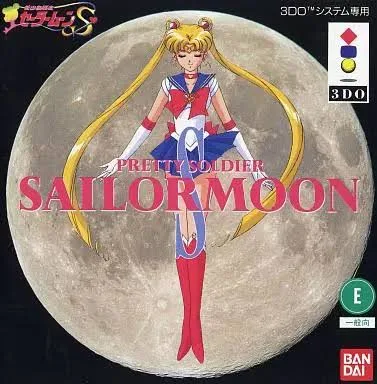
#7 Bishoujo Senshi Sailor Moon S (3DO) | The First Game in the Series with a 3D Opening
| Playability | Graphics | Brutality | Replay Value | Total Score |
|---|---|---|---|---|
| 78 | 86 | 64 | 74 | 302 |
Bandai released Bishoujo Senshi Sailor Moon S for the 3DO on March 17, 1995, and it’s the first fighting game in the series to open with a 3D animated intro. The character graphics are hand-painted cel art, and being on CD, it packs in the full set of answering-machine messages, character profiles and BGM.
There are five modes: Super Battle, VS, Team Battle, Options and Database. Nine characters are playable — everyone but Sailor Saturn — and the depth of that Database mode makes this feel like a game that doubles as a sourcebook. Choosing the 3DO is already a collector’s move, but the content itself is serious work.
It matters historically, too. Its system differs from the two Super Famicom fighters, and this is the system that later carried over to the PlayStation and Sega Saturn games. Meaning the ancestor of #6’s Various Emotion lives right here. Exactly one kid in my class had a 3DO, and it occurs to me now that he may have been the one who won.
- The first 3D opening animation in the series
- A Database mode with the complete set of answering-machine messages, profiles and BGM
- The prototype of the versus system inherited by the PlayStation and Sega Saturn games
- 3DO exclusive, and the hardest console of the ten to actually get hold of
- Sailor Saturn isn’t playable (nine characters)
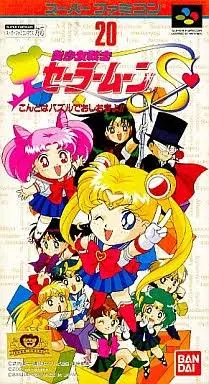
#8 Bishoujo Senshi Sailor Moon S: Kondo wa Puzzle de Oshioki yo! | Mouse Support, and Not a Falling-Block Puzzler
| Playability | Graphics | Brutality | Replay Value | Total Score |
|---|---|---|---|---|
| 84 | 62 | 66 | 80 | 292 |
Bandai’s Bishoujo Senshi Sailor Moon S: Kondo wa Puzzle de Oshioki yo! arrived on the Super Famicom on July 15, 1994, and it’s a puzzle game built on SameGame. Development was handled by Tom Create and Electronics Application. The fact that it supports the Super Famicom Mouse made it quite a luxury for the time.
You clear blocks of the same color SameGame-style, pick one of ten characters, and play across three modes. It doesn’t score well as a licensed tie-in, but as a pure puzzle game it has been praised in print — and that split verdict says everything about what this game is.
Put simply, it isn’t for people who want to play Sailor Moon; it’s for people who want to play a puzzle game. The click-click rhythm of clearing blocks with the mouse still holds up today. Buy it expecting an anime adaptation and you’ll come away disappointed. That’s the kind of game this is.
- The SameGame-based rules are dead simple and still work today
- Super Famicom Mouse support makes the click-to-clear action feel great
- Ten characters to choose from and three different modes
- It rates poorly as an anime tie-in and won’t satisfy anyone chasing faithful adaptation
- The presentation is bare-bones next to the action and fighting games
#9 Bishoujo Senshi Sailor Moon (Mega Drive) | A Single-Player Beat-‘Em-Up That Only Looks Like the Super Famicom Version
| Playability | Graphics | Brutality | Replay Value | Total Score |
|---|---|---|---|---|
| 76 | 80 | 78 | 56 | 290 |
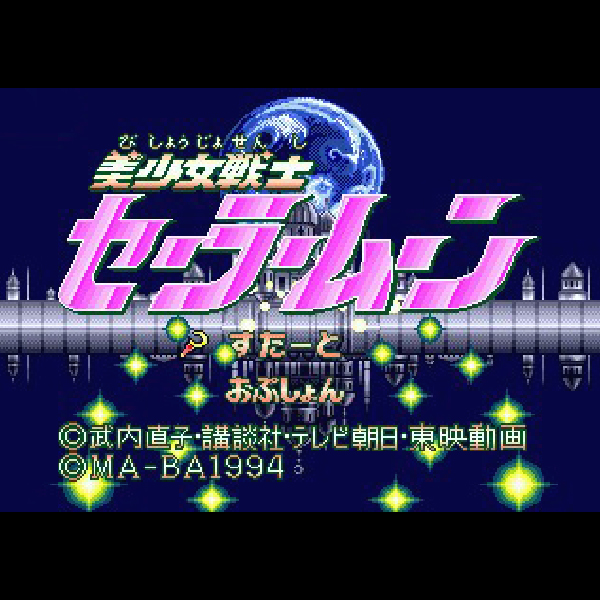
The Mega Drive Bishoujo Senshi Sailor Moon, out July 8, 1994, is a belt-scrolling brawler that matches the Super Famicom game in broad strokes while running different special moves, different stage layouts and different enemies. Which means there’s a real reason to play both. Aki Hata handled the music.
The publisher line is the fun part. This one was published by Ma-Ba, a Bandai/Mattel joint venture, because Bandai’s third-party contract with Nintendo meant the Bandai name couldn’t be used here, so Ma-Ba served as publisher of convenience. They literally couldn’t print “Bandai” on the box — the era is baked right into the packaging. Learn that and you’ll want to flip over every used copy you find.
There are six stages, running from the Juuban shopping district all the way to the Dark Kingdom. The thing to note is Hard difficulty, where a Queen Metalia fight is added after you beat Queen Beryl (the ending doesn’t change, though). I ranked it lower because it’s single-player only, which costs it the two-player co-op that makes the Super Famicom version shine.
- Different special moves, stages and enemies from the Super Famicom version, so it plays as its own game
- On Hard, a Queen Metalia fight is added after you defeat Queen Beryl
- Music by Aki Hata, and Sailor Moon on Mega Drive sound hardware is a rare thing
- Single-player only, with no two-player co-op like the Super Famicom version
- Reaching the Queen Metalia fight doesn’t change the ending
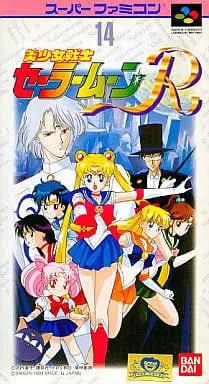
#10 Bishoujo Senshi Sailor Moon R (Super Famicom) | You Can Play as Chibiusa, but There Are Only Four Stages
| Playability | Graphics | Brutality | Replay Value | Total Score |
|---|---|---|---|---|
| 82 | 84 | 58 | 52 | 276 |
Released by Bandai for the Super Famicom on December 29, 1993, Bishoujo Senshi Sailor Moon R is a belt-scrolling brawler that arrived a mere four months after the previous game. Arc System Works handled development again, and this time Chibiusa is playable, which effectively functions as the game’s easy mode.
The feel is genuinely improved. The difficulty and sense of speed both went up, and the controls are tighter. The boss roster pulls in Prince Demande and the other senior Black Moon Clan officers, so the R storyline is properly represented. Two-player simultaneous co-op is supported as well.
I still put it at #10 because the thin four-stage runtime and the glaring gaps between character stats are exactly what dragged its reputation down back in the day. The first game had five stages, so the sequel actually lost one. This is a cartridge that wears the sheer commercial speed of the era right on its sleeve: another game, four months later. …Yeah, I still bought it. Of course I did.
- Chibiusa is playable, which works as a de facto easy mode
- Difficulty, speed and controls are all a step up from the first game
- Prince Demande and the senior Black Moon Clan officers show up as bosses, capturing the mood of the R arc
- Only four stages, so it is light on content, and reviews were lukewarm even at launch
- The performance gap between characters is stark, so your pick swings the difficulty enormously
How Many Sailor Moon Games Were There? The Full 1992-1996 Lineup by Platform
From the Game Boy release in December 1992 through the end of 1996 — roughly four years — more than a dozen Sailor Moon games hit consoles, handhelds, arcades and even toy hardware aimed at small kids. Beyond the ten in this ranking, here are the other titles worth knowing.
| Title | Platform / Release Date | Publisher / Genre |
|---|---|---|
| Bishoujo Senshi Sailor Moon | Game Boy / December 18, 1992 | Angel / ADV + action (Jadeite arc) |
| Bishoujo Senshi Sailor Moon R | Game Boy / April 22, 1994 | Angel / ADV + minigames |
| Bishoujo Senshi Sailor Moon | PC Engine / August 5, 1994 | Banpresto / adventure (original storyline) |
| Bishoujo Senshi Sailor Moon Collection | PC Engine / November 25, 1994 | Banpresto (developed by Tamtam) / visual collection |
| Bishoujo Senshi Sailor Moon S: Kurukkurin | Super Famicom / February 24, 1995 | Bandai (developed by Tom Create + Pixel) / puzzle |
| Bishoujo Senshi Sailor Moon SuperS: Fuwa Fuwa Panic | Super Famicom / December 8, 1995 | Bandai / puzzle |
| Bishoujo Senshi Sailor Stars: Fuwa Fuwa Panic 2 | Super Famicom / September 27, 1996 | Bandai / puzzle (the only Super Famicom Turbo title in the series) |
| Bishoujo Senshi Sailor Moon S | Game Gear / January 27, 1995 | Bandai / side-scrolling action |
| Bishoujo Senshi Sailor Moon SuperS: Shin Shuyaku Soudatsusen | PlayStation / March 8, 1996 | Angel / versus fighting (the series’ first 3D polygon game, with motion capture) |
| Quiz!! Bishoujo Senshi Sailor Moon: Wits, Stamina and Luck of the Draw | Arcade / 1997 | Banpresto / quiz |
On top of those, there were four Playdia games, three for Sega’s Pico and one for the Terebikko Cordless, so the franchise pushed into preschool hardware too. After the domestic series went quiet in 1996, a Nintendo DS game called Sailor Moon: La Luna Splende (developed by Open Sesame, published by Bandai Namco Games) launched in Italy on March 21, 2011, and the smartphone title Sailor Moon Drops (Bandai Namco Games) went live on September 3, 2015.
Line them all up and the density between 1994 and 1996 looks insane. Six games on Super Famicom alone, fighting games across four platforms, three puzzle titles. Speaking for the SpotGeeks team, this lineup is a specimen of just how rough — and how gloriously energetic — the licensed-character game market was back then.
Which One Should You Start With? How to Pick Based on What You Want
The short answer: go with ANOTHER STORY if you want story, the 1993 Super Famicom game if you want to play with a friend, and Jougai Rantou!? Shuyaku Soudatsusen if you want to test your skills. Here is the breakdown by goal.
| If You Are This Player | Recommended Title | Why |
|---|---|---|
| You want to sink into the story | ANOTHER STORY (Super Famicom, September 22, 1995) | An original RPG written for the game by Naoko Takeuchi. All ten characters are playable |
| You want to play side by side with someone | Bishoujo Senshi Sailor Moon (Super Famicom, August 27, 1993) | Two-player co-op plus stat differences that naturally split up the roles |
| You want competitive matches | Jougai Rantou!? Shuyaku Soudatsusen (Super Famicom, December 16, 1994) | Link combos and an invincible backstep create real mind games |
| You want a challenge and gorgeous art | Bishoujo Senshi Sailor Moon (arcade, launched March 22, 1995) | Graphics 95, Brutality 90. Eight punishing stages |
| You want the whole cast | Zenin Sanka!! Shuyaku Soudatsusen (Super Famicom, March 29, 1996) | The final form of the Super Famicom fighters, with the roster stretching all the way to Sailor Saturn |
The one thing to avoid is picking a puzzle game because you want to “play the Sailor Moon anime.” Kondo wa Puzzle de Oshioki yo! is a perfectly serious puzzler, but as a licensed-character game it landed poorly even at the time. Just matching your goal to the game’s actual personality changes your satisfaction more than you would expect.
Can You Play These 10 Sailor Moon Classics on Current Hardware? The Complete Platform Guide
✅ The Verdict
Of the ten titles covered here, zero are officially playable on current hardware (as of September 2026). Searching Nintendo’s official software search for “Sailor Moon” or “Bishoujo Senshi” returns nothing, a Steam store search returns nothing, and the Arcade Archives lineup does not include any of them either. No Sailor Moon-branded game app turned up on the App Store (Japan) either. In other words, the only way to play is to track down the original hardware and cartridges yourself.
(1) Titles Available via Subscription or Free
Neither the Nintendo Switch Online Expansion Pack nor any other subscription service includes a retro Sailor Moon title.
| Title | Platform | Price & Notes |
|---|---|---|
| None (0 titles) | — | As of September 2026, no subscription distribution could be confirmed |
(2) Titles Available as Standalone Purchases
There is no standalone digital release to buy, either. The arcade game is the most obvious candidate for an Arcade Archives release (the standard price is 838 yen (about US$5; converted at 153 yen = US$1) each on Switch and PS4), but its name is nowhere in the lineup.
| Title | Platform | Price & Notes |
|---|---|---|
| None (0 titles) | — | Not on Steam, Nintendo’s official software search or Arcade Archives |
(3) Titles Available as Remasters or Remakes
No remaster or remake exists for current hardware. Since the domestic game series stopped in 1996, none of these retro titles has ever come back in reissued form.
| Title | Platform | Price & Notes |
|---|---|---|
| None (0 titles) | — | As of September 2026, no remaster or remake of these 10 retro titles has been released |
(4) Titles That Are Hard to Get on Current Hardware
Which means all ten games in the ranking land in this bucket. Hunting down the original hardware and used cartridges is the only route. Below, I have noted the closest genre equivalents you can play today.
| Title | Original Platform / Release Date | Genre to Play Instead |
|---|---|---|
| ANOTHER STORY | Super Famicom / September 22, 1995 | Super Famicom-era licensed-character RPGs |
| Jougai Rantou!? Shuyaku Soudatsusen | Super Famicom / December 16, 1994 | 2D versus fighting (see the alternatives table below) |
| Bishoujo Senshi Sailor Moon | Super Famicom / August 27, 1993 | Two-player co-op belt-scrolling brawlers |
| Bishoujo Senshi Sailor Moon | Arcade / launched March 22, 1995 | Arcade-style belt-scrolling brawlers |
| Zenin Sanka!! Shuyaku Soudatsusen | Super Famicom / March 29, 1996 | 2D versus fighting |
| SuperS Various Emotion | Sega Saturn / November 29, 1996 | 2D versus fighting |
| Bishoujo Senshi Sailor Moon S | 3DO / March 17, 1995 | 2D versus fighting |
| Kondo wa Puzzle de Oshioki yo! | Super Famicom / July 15, 1994 | Falling-block and match-clearing puzzlers |
| Bishoujo Senshi Sailor Moon | Mega Drive / July 8, 1994 | Single-player belt-scrolling brawlers |
| Bishoujo Senshi Sailor Moon R | Super Famicom / December 29, 1993 | Two-player co-op belt-scrolling brawlers |
With that out of the way, here are the games you can buy on current hardware to get the same feel. Every price is the Nintendo Switch listing shown on Nintendo’s official software search, as of September 2026.
| Alternative Title | Platform | Price & Notes |
|---|---|---|
| Capcom Arcade Stadium: Final Fight | Nintendo Switch | 200 yen (about US$1) / the belt-scroller that started it all |
| Arcade Archives Nekketsu Kouha Kunio-kun | Nintendo Switch | 838 yen (about US$5) / a belt-scroller at the standard Arcade Archives price |
| Kunio-kun: The World Classics Collection | Nintendo Switch | 5,490 yen (about US$36) / a bundle of action games built around two-player play |
| Capcom Fighting Collection | Nintendo Switch | 2,990 yen (about US$20) / the ideal stand-in for ’90s 2D fighters |
| SEGA AGES Puyo Puyo | Nintendo Switch | 999 yen (about US$7) / a cheap way to sample a puzzler from the same era |
For the record, the availability information in this article was checked through four channels: Nintendo’s official software search, the Steam store search, the official Arcade Archives lineup and the App Store (Japan). The realistic move is to start with the 200-yen Final Fight, confirm how a belt-scroller of that era actually feels, and then decide whether to wade into the used market. As someone who prowls the secondhand shelves in Akihabara once a week, I can tell you the two Super Famicom games still turn up. The 3DO version? Steel yourself.
Enjoying this article? Add us as a preferred source on Google.
Final Thoughts: Pick Your Retro Sailor Moon Game by “RPG or Fighter”
The number one pick in this retro Sailor Moon ranking is Bishoujo Senshi Sailor Moon ANOTHER STORY (Super Famicom, September 22, 1995, Angel), number two is Bishoujo Senshi Sailor Moon S: Jougai Rantou!? Shuyaku Soudatsusen (Super Famicom, December 16, 1994, Angel), and number three is the Super Famicom Bishoujo Senshi Sailor Moon released on August 27, 1993. Their total scores are 337, 331 and 320 respectively, so the entire top three lives on the Super Famicom.
Viewed through the four axes, the choice is obvious. For story and long-haul depth, ANOTHER STORY (Replay Value 95). For competitive mind games, Jougai Rantou!? Shuyaku Soudatsusen (Playability 90). For art and challenge, the arcade game (Graphics 95, Brutality 90). At the other end, the four-stage Sailor Moon R finished last with 276 points.
And to repeat the key point: as of September 2026, not one of these ten games has been ported to current hardware. Nothing turns up on Nintendo’s official software search, Steam, Arcade Archives or the App Store (Japan), so playing them means assembling the original hardware and software. The closest things you can buy on current hardware are the Switch versions of Capcom Arcade Stadium: Final Fight (200 yen (about US$1)) and Arcade Archives Nekketsu Kouha Kunio-kun (838 yen (about US$5)).
Sailor Moon games get talked about as mass-produced licensed filler, but score them one by one and the story changes. There is an RPG written by the manga’s own creator, a fighting game with link combos that spread across four platforms, and an arcade title with Kazuko Tadano sitting in the animation director’s chair. The real value of this series is that so many seriously made licensed games appeared inside a window as short as 1993 to 1996.
Not being able to play a single one on current hardware genuinely stings. Which is exactly why, if you spot a Super Famicom copy on a used shelf, you grab it without hesitating. …I realize a guy with two divorces behind him telling you to buy something right now is a look, but games like these do not guarantee a second meeting.
Read Next
Snicker Kitamura



Leave a Reply