







Enjoying this article? Add us as a preferred source on Google.
- All 14 Yuji Horii works scored out of 100 on four axes: Story, Playability, Innovation and Replay Value
- Who is Yuji Horii? From magazine writer to Portopia, Dragon Quest and his 2025 state decoration
- No. 1 is Dragon Quest III: class changes, day and night, and the end of the Erdrick trilogy at 367 points
- Bonus section: Chrono Trigger, which he supervised, and Komiya of the Interrogation Room, built with AI in 30 minutes
- Can you play them on current hardware? A platform-by-platform guide to all 14 (as of October 2026)
Forty years is far too long a career to file away as “the Dragon Quest guy.” The first game Yuji Horii ever put out into the world was 1983’s The Portopia Serial Murder Case, and he wrote the scenario, drew the art and programmed it by himself. Forty-three years later, in November 2025, he became the first game creator to receive the Order of the Rising Sun, Gold Rays with Rosette, and in October 2026 he directed an AI to build a mystery adventure in 30 minutes and put it out for free.
For this piece I lined up the 14 games Horii is credited on as scenario writer or game designer and ranked them against each other. That means the 11 Dragon Quest games from I through XI, plus The Portopia Serial Murder Case, Hokkaido Rensa Satsujin: Okhotsk ni Kiyu and Itadaki Street. This isn’t an article about which Dragon Quest beats which Dragon Quest — read it as one writer’s body of work laid out side by side.
The four scoring axes are Story, Playability, Innovation and Replay Value, each out of 100. Story covers how the narrative is built and how hard the dialogue lands; Innovation is weighted by how much a game was the first to bring to the table. Itadaki Street, a board game, ends up at 40 for Story, and that isn’t a flaw — it’s a personality.
Even for a Dreamcast kid like me, the Famicom’s III was that whole frenzy in one cartridge. I still remember lying awake the night before it launched, heart pounding. I’ve put numbers on all of these, but you won’t waste your time no matter which of the 14 you start with. Let me say that up front.
All 14 Yuji Horii Works: The Full Scoring Comparison
I scored each game out of 100 from four angles. Innovation reflects the weight of the elements I could verify from sources as a series first or an industry first, while Replay Value covers the total volume of play, postgame and repeat runs included. Don’t stop at the totals — pick by the axis that matters to you.
| Title | Story | Playability | Innovation | Replay Value | Total Score |
|---|---|---|---|---|---|
| #1 Dragon Quest III: The Seeds of Salvation | 88 | 90 | 97 | 92 | 367 |
| #2 Dragon Quest V: Hand of the Heavenly Bride | 98 | 88 | 92 | 85 | 363 |
| #3 Dragon Quest XI: Echoes of an Elusive Age | 92 | 97 | 80 | 90 | 359 |
| #4 Dragon Quest IV: Chapters of the Chosen | 90 | 86 | 90 | 84 | 350 |
| #5 Dragon Quest VIII: Journey of the Cursed King | 90 | 90 | 85 | 84 | 349 |
| #6 Dragon Quest IX: Sentinels of the Starry Skies | 78 | 88 | 85 | 94 | 345 |
| #7 Dragon Quest X Online | 78 | 68 | 90 | 99 | 335 |
| #8 Dragon Quest VII: Fragments of the Forgotten Past | 86 | 70 | 80 | 96 | 332 |
| #9 Dragon Quest VI: Realms of Revelation | 82 | 80 | 82 | 86 | 330 |
| #10 The Portopia Serial Murder Case | 88 | 74 | 99 | 55 | 316 |
| #11 Dragon Quest | 75 | 84 | 96 | 60 | 315 |
| #12 Dragon Quest II: Luminaries of the Legendary Line | 72 | 70 | 85 | 70 | 297 |
| #13 Hokkaido Rensa Satsujin: Okhotsk ni Kiyu | 85 | 70 | 88 | 50 | 293 |
| #14 Itadaki Street | 40 | 85 | 80 | 88 | 293 |
All three of the top finishers bring at least one structural series first to the table, and all three are playable on current hardware. In the middle, IX, X and VII spike on Replay Value, while Portopia, Okhotsk and Itadaki Street at the bottom lean hard into either Innovation or Replay Value rather than both. The lower a game scores on Playability, the more it outperforms that number once you know the context it shipped into.
What Kind of Creator Is Yuji Horii? From Magazine Writer to Portopia to a State Decoration
Yuji Horii was born on January 6, 1954, in Sumoto, Hyogo Prefecture. He graduated from Waseda University’s First School of Literature in 1978 and worked as a writer, handling the reader-submission pages of the monthly magazine OUT and the Famicom Shinken column in Weekly Shonen Jump under the pen name Yu-tei. In 1982 he got involved with Enix’s first Game and Hobby Program Contest as a journalist covering it — then entered his own Love Match Tennis and won a prize. Meeting Door Door’s Koichi Nakamura at the awards ceremony is what eventually led to Dragon Quest.
| Item | Details |
|---|---|
| Born / hometown | January 6, 1954, Sumoto, Hyogo Prefecture |
| Education | Waseda University, First School of Literature (graduated 1978) |
| Writing years | Reader-submission pages of the monthly OUT (1980–82), Famicom Shinken in Weekly Shonen Jump (1985–88, as Yu-tei) |
| Debut | 1983, The Portopia Serial Murder Case (PC-6001, Enix). Made single-handedly |
| Signature work | The Dragon Quest series (1986 onward), scenario and game design |
| Major honors | Japan Game Awards Minister of Economy, Trade and Industry Award (2015), GDCA Lifetime Achievement Award (2022), Agency for Cultural Affairs Commissioner’s Commendation (2024), Order of the Rising Sun, Gold Rays with Rosette (November 2025, a first for a game creator) |
| 2026 activity | September 9: announced Zoku: The Portopia Serial Murder Case — Burial of Oblivion (original work and executive director, releasing 2027). October 11: released the AI-built Komiya of the Interrogation Room for free |
The thing to take away from that résumé is that Horii was a writer before he was anything else. Because he came to games through prose, Dragon Quest’s dialogue is short and its command-based conversations move at reading speed. That’s why Story and Innovation anchor the scoring here, and the rankings below swing mostly on those two axes.
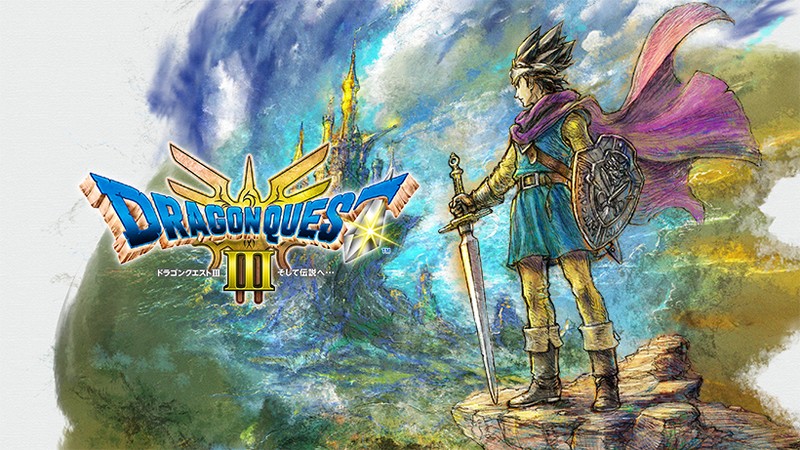
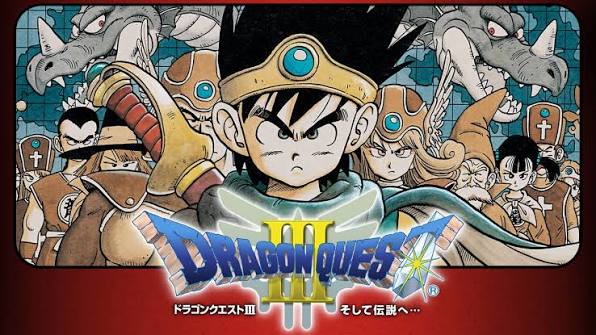
#1 Dragon Quest III: The Seeds of Salvation — Class changes, day and night, and the end of the Erdrick trilogy. The 1988 peak that became a social phenomenon
| Story | Playability | Innovation | Replay Value | Total Score |
|---|---|---|---|---|
| 88 | 90 | 97 | 92 | 367 |
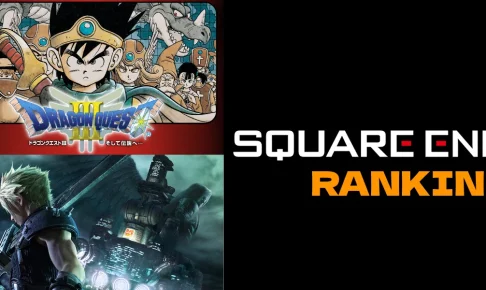
The third game, released by Enix for the Famicom on February 10, 1988. Chunsoft handled development, with Yuji Horii on scenario and game design. The class-change system, the concept of day and night, and battery-backup saving were all brought into the series by this entry, and the revival password retired here.
On launch day, lines stretched for kilometers outside big-box retailers and kids skipped school to go buy it — the press covered the whole thing as a social phenomenon. Domestic sales reached 3.8 million copies. It’s the finale of the Erdrick trilogy, so it hits hardest for anyone who played I and II first.
On November 14, 2024, an HD-2D version developed by Artdink arrived, and that December it passed 2 million copies worldwide. A new Ortega episode and a new Monster Wrangler class came with it, and a free update adding Switch 2 support went out on July 31, 2025. This is a game that wins on structural invention rather than narrative density, and I made its 97 for Innovation the highest in the series.
- Structural inventions — class changes, day and night, saving — that stuck with the series for good
- The HD-2D version at 7,678 yen (about US$50, converted at 153 yen to the US dollar), tax included, is the definitive version on current hardware
- The Switch and PS4 download versions cost 1,650 yen (about US$11), tax included, if you want something close to the original
- The original Famicom version’s innovations are hard to feel unless you know the before and after of the revival password being dropped
- The HD-2D version only has a physical release on Switch and PS5
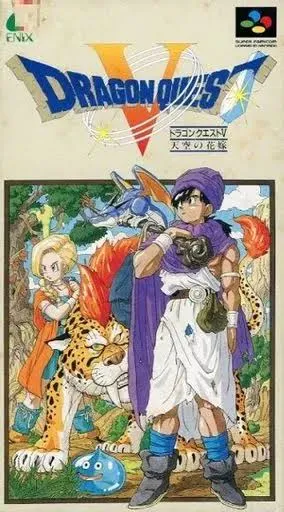
#2 Dragon Quest V: Hand of the Heavenly Bride — Three generations and a bride to choose. The high-water mark of Horii’s writing
| Story | Playability | Innovation | Replay Value | Total Score |
|---|---|---|---|---|
| 98 | 88 | 92 | 85 | 363 |
Enix released it for the Super Famicom on September 27, 1992. Chunsoft developed it, and Yuji Horii handled scenario and game design. It opens with a journey alongside your father, Pankraz, then carries the story through the hero’s boyhood, his adult years and on into the next generation. That three-generation structure is the only one of its kind in the series.
The monster-recruiting system is a series first here, with beaten enemies picking themselves up to join your party. And then there’s the wedding. A February 1993 Famicom Tsushin reader survey came back at 81.6% for Bianca and 18.4% for Nera, and Horii himself has said he expected nine out of ten players to pick Bianca. The Super Famicom version sold roughly 2.8 million copies, and the Famitsu Cross Review handed it 36 points and a place in the Platinum Hall of Fame.
The PS2 version arrived on March 25, 2004, and the DS version on July 17, 2008, with the DS release adding a third bride, Debora. It also took second place in TV Asahi’s nationwide game poll in 2021. I’m a Bianca guy myself, but it’s that choice that keeps people arguing 30 years on. The 98 for Story went down without hesitation.
- Three inventions — three generations, marriage and monster recruiting — sharing a single game
- 36 points and the Platinum Hall of Fame from Famitsu, plus second place in 2021’s game poll
- The DS version adds Debora, making it a three-way choice
- There is no Switch, PlayStation or Steam version. The only legitimate purchase on current platforms is the smartphone release at 2,400 yen (about US$16), tax included
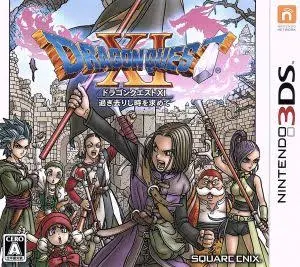
#3 Dragon Quest XI: Echoes of an Elusive Age — The revival password came back, in the 2017 culmination of everything
| Story | Playability | Innovation | Replay Value | Total Score |
|---|---|---|---|---|
| 92 | 97 | 80 | 90 | 359 |
Released simultaneously on PS4 and 3DS on July 29, 2017. The PS4 version was developed by Square Enix and Orca, the 3DS version by Square Enix and Toylogic, with Yuji Horii credited on game design and scenario. The 3DS version lets you switch between 3D and 2D, and you can carry your progress between the PS4 and 3DS versions using a revival password. The first game’s password coming back here means a great deal.
It cleared 3 million copies domestically in its first week, and XI and XI S combined passed 6 million worldwide in September 2020. At the Japan Game Awards 2018 it picked up an Award for Excellence and the Best Sales Award. Erik, Veronica, Serena, Sylvando, Jade, Rab and Hendrik all get their moment, and as an ensemble piece it holds together at a level the series hadn’t reached since IV.
The complete edition, Dragon Quest XI S, launched on Switch on September 27, 2019, came to PS4, Xbox One and Windows on December 4, 2020, and a Switch 2 version arrived on September 24, 2026 at 5,478 yen (about US$36), tax included. It bundles character voices and the 2D mode, and its 97 for Playability is the series high. I held Innovation to 80 because this is a culmination, not an invention.
- The S version includes voice acting, 2D mode and extra party-member stories for 5,478 yen (about US$36), tax included
- Switch 2, Switch, PS4, Steam and Xbox — the widest spread of current-hardware options in the series
- 6 million copies worldwide and an Award for Excellence at the Japan Game Awards 2018
- A summation rather than an invention. Perfect if this is your first time with the series, but look elsewhere if you want something sharp and new
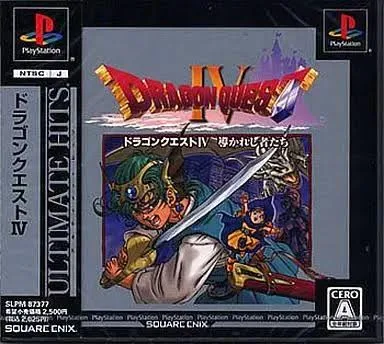
#4 Dragon Quest IV: Chapters of the Chosen — A five-chapter ensemble and AI battles. The last Dragon Quest on the Famicom
| Story | Playability | Innovation | Replay Value | Total Score |
|---|---|---|---|---|
| 90 | 86 | 90 | 84 | 350 |
Released February 11, 1990, by Enix, developed by Chunsoft. Yuji Horii wrote the scenario. Ragnar, Alena, Kiryl, Borya, Torneko, Meena and Maya each headline a chapter of their own before gathering around the hero in chapter five, and that five-chapter format made this the first Dragon Quest to attempt an ensemble story.
The series’ first AI battle system, Tactics, the wagon that lets you travel with more than five party members, and the series’ first casino all start here as well. Domestic sales came to 3.1 million copies, and at Famitsu’s 1990 Best Hit Game Awards it took Best Game and Best RPG. The story of Psaro, king of the monsters, and Rose is another reason people keep coming back to this one.
The PS version arrived on November 22, 2001, developed by Heartbeat and ArtePiazza, and added a sixth chapter after the credits. The DS version followed on November 22, 2007. There is no port for current home consoles, though: as of October 2026, the only legitimate way to play is the smartphone version at 2,400 yen (about US$16), tax included.
- A structure where the protagonist changes from chapter to chapter, still unique in the series
- The PS version and everything after it include the sixth chapter where Psaro joins you
- Best Game at Famitsu’s 1990 awards
- No Switch, PS4, PS5 or Steam version exists. The smartphone release at 2,400 yen (about US$16), tax included, is all there is
#5 Dragon Quest VIII: Journey of the Cursed King — A 3D field that runs as far as you can see, and the first numbered entry after the merger
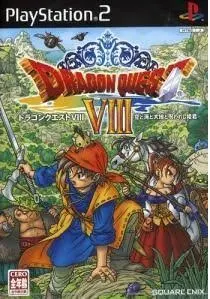
| Story | Accessibility | Innovation | Endgame Depth | Total Score |
|---|---|---|---|---|
| 90 | 90 | 85 | 84 | 349 |
Released on PS2 on November 27, 2004, this was the first brand-new numbered entry to arrive under the Square Enix name after the merger. Level-5 handled development, Akihiro Hino directed, and Yuji Horii took game design. It was the first fully 3D game in the series, a toon-rendered world you can walk across all the way to the horizon.
Tension, the Alchemy Pot and the skill-point system all debuted here as well. It shipped 3 million copies in three days, a first in PS2 history. Shipments finished at 3.7 million in Japan and 4.9 million worldwide, making it the best-selling PS2 game in Japan. Famitsu’s Cross Review scored it 39 points, and it took the Grand Award at the 9th CESA GAME AWARDS.
The 3DS version landed on August 27, 2015, adding Red and Morrie to the party and voice acting to every event. The road trip with Yangus, Jessica, Angelo and King Trode is still held in high regard, but there is no port on a current home console, which leaves the smartphone version at 3,800 yen (about US$25), tax included, as the only legitimate way to buy it. The 3DS eShop closed on March 28, 2023.
- Famitsu 39 points, Grand Award at CESA GAME AWARDS 2005
- Tension, the Alchemy Pot and skills: three systems every later game is built on
- 3 million copies in three days, a PS2 first
- No current home-console version. Smartphone only, 3,800 yen (about US$25), tax included
- The 3DS version is secondhand only
#6 Dragon Quest IX: Sentinels of the Starry Skies — Tag Mode got whole neighborhoods moving, and 4.15 million copies made it the series high
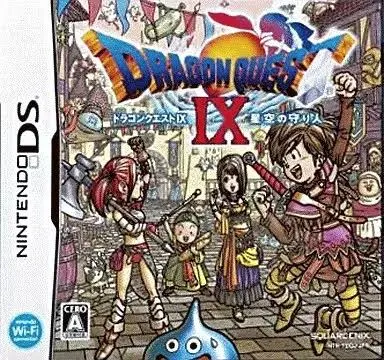
| Story | Accessibility | Innovation | Endgame Depth | Total Score |
|---|---|---|---|---|
| 78 | 88 | 85 | 94 | 345 |
Released on Nintendo DS on July 11, 2009. Level-5 and Square Enix shared development, with Yuji Horii on scenario and game design. It was the first numbered entry on a handheld, and it brought character creation for the hero plus the first multiplayer in a numbered game.
Swapping treasure maps over Tag Mode local wireless spread explosively and produced the craze around the legendary Masayuki’s Map. Its 117,577,073 wireless connections earned a Guinness World Record. Japanese shipments reached 4.15 million as of December 21, 2009, passing VII to set a new series high. At the Japan Game Awards 2010 it took an Award for Excellence and the Best Sales Award.
The scenario follows an angel hero and Stella and is told with real care, right through the reckoning with the fallen angel Corvus, but the star of this one is everything on the endgame side. The problem is getting hold of it today: no port, no remake, no download version. As of October 2026, a secondhand DS card is the only way to play it.
- Treasure maps plus Tag Mode earn an endgame depth score of 94
- A Guinness-certified wireless connection count
- 4.15 million copies, the series high in Japan
- No port, no remake. Secondhand DS boxed copies only (they run on 3DS and 2DS)
#7 Dragon Quest X Online: The Five Awakened Races — The only MMO among the numbered games, running 14 years, and the main story reaches its grand finale in 2026
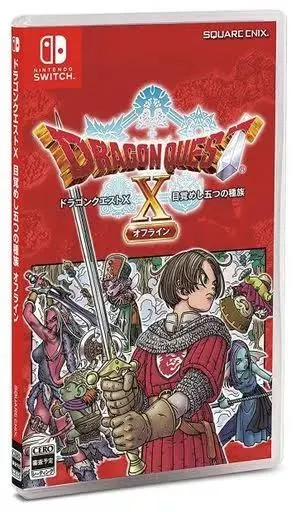
| Story | Accessibility | Innovation | Endgame Depth | Total Score |
|---|---|---|---|---|
| 78 | 68 | 90 | 99 | 335 |
Service began on Wii on August 2, 2012, making it the first online game among the numbered entries, developed in-house at Square Enix. Yuji Horii oversees the whole thing as general director. You pick one of five races — Ogre, Weddie, Elf, Dwarf or Pukulipo — and set out.
The Wii version shut down on November 15, 2017, the Wii U and 3DS versions on March 20, 2024, and the browser version on June 25, 2026, but the Windows, PS4 and Switch versions are still active. Square Enix has officially announced that Version 8, Children Adrift in Time and Space, released June 25, 2026, brings the main story to its grand finale, and story deliveries such as quests will continue after that ending. It took an Award for Excellence at the Japan Game Awards 2013.
If you would rather play solo, there is Dragon Quest X Offline: The Five Awakened Races, released September 15, 2022 (PS5, PS4, Switch and Steam, 8,580 yen, about US$56, tax included). The 99 for endgame depth is a score for 14 years of accumulated content, while the 68 for accessibility reflects the subscription ticket and the hurdle of an online-first design.
- Fourteen years of content, more than anything else in the series
- Version 8 completes the main story, 4,950 yen (about US$32), tax included
- The offline version needs no subscription ticket
- The online version requires a separate subscription ticket. PS5 and Switch 2 run it through compatibility, with no dedicated versions
#8 Dragon Quest VII: Fragments of the Forgotten Past — A hundred hours of widening the world one stone tablet at a time, rebuilt in 2026 as Reimagined
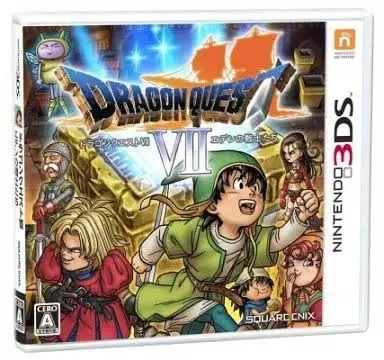
| Story | Accessibility | Innovation | Endgame Depth | Total Score |
|---|---|---|---|---|
| 86 | 70 | 80 | 96 | 332 |
Enix released it on PlayStation on August 26, 2000. Heartbeat and ArtePiazza developed it, with Yuji Horii on scenario and game design. It was the first numbered entry to appear on something other than a Nintendo machine, and the first to use 3D polygon maps. Collecting mysterious fragments to bring lost islands back produced the longest game in the series, past the 100-hour mark.
Its 4.12 million Japanese shipments make it the best-selling PlayStation game in the country, and it won the Grand Prize in the Digital Art division of the 4th Japan Media Arts Festival and an Award for Excellence at the 5th Japan Game Awards. Traveling with Kiefer, Maribel, Ruff, Aishe and Mervyn has the flavor of a short-story collection, each island wrapping up its own tale.
On February 5, 2026 (February 6 on Steam), HexaDrive’s Dragon Quest VII Reimagined launched at 8,778 yen (about US$57), tax included, with Horii credited on game design and scenario direction. It sold 456,462 copies in its first week and cleared 550,000 for the month of February. The 70 for accessibility is a number that reflects the original’s length and its slow opening, and if you play Reimagined instead it feels higher than that.
- An endgame depth score of 96. Fragment hunting combined with class changing runs long
- Reimagined is the 2026 current-console version, strong on both reception and sales
- Grand Prize at the Japan Media Arts Festival
- The original PS version takes a few hours to reach a battle, so brace yourself for the slow opening
- Reimagined costs 8,778 yen (about US$57), tax included, full new-release money
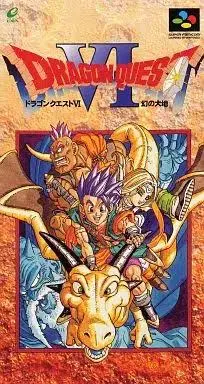
#9 Dragon Quest VI: Realms of Revelation — A double world of dream and reality, and 3.2 million copies closing out the Zenithia trilogy
| Story | Accessibility | Innovation | Endgame Depth | Total Score |
|---|---|---|---|---|
| 82 | 80 | 82 | 86 | 330 |
Enix released it on Super Famicom on December 9, 1995. Heartbeat developed it, with Yuji Horii on game design. Its biggest distinguishing feature is the structure: two world maps, a dream world and a real one, that you travel back and forth between. It is the closing chapter of the Zenithia trilogy.
The class-change system born in III returned with per-vocation proficiency levels, and this is also the game where human characters started learning special moves. Sales of roughly 3.2 million put it third all time among Super Famicom games and first for 1995. Famitsu’s Cross Review gave it 34 points for a Gold Hall of Fame spot, and the party members, Terry above all, are hugely popular.
The DS version, developed by ArtePiazza, arrived on January 28, 2010 and passed 1 million shipped. There is no port to a current home console, though, so as of October 2026 the smartphone version at 2,400 yen (about US$16), tax included, is the only legitimate way to get it.
- The double-world structure belongs to this game alone, before or since
- Class changing with proficiency levels earns an endgame depth score of 86
- 3.2 million copies, third all time on Super Famicom
- No current home-console version. Smartphone only, 2,400 yen (about US$16), tax included
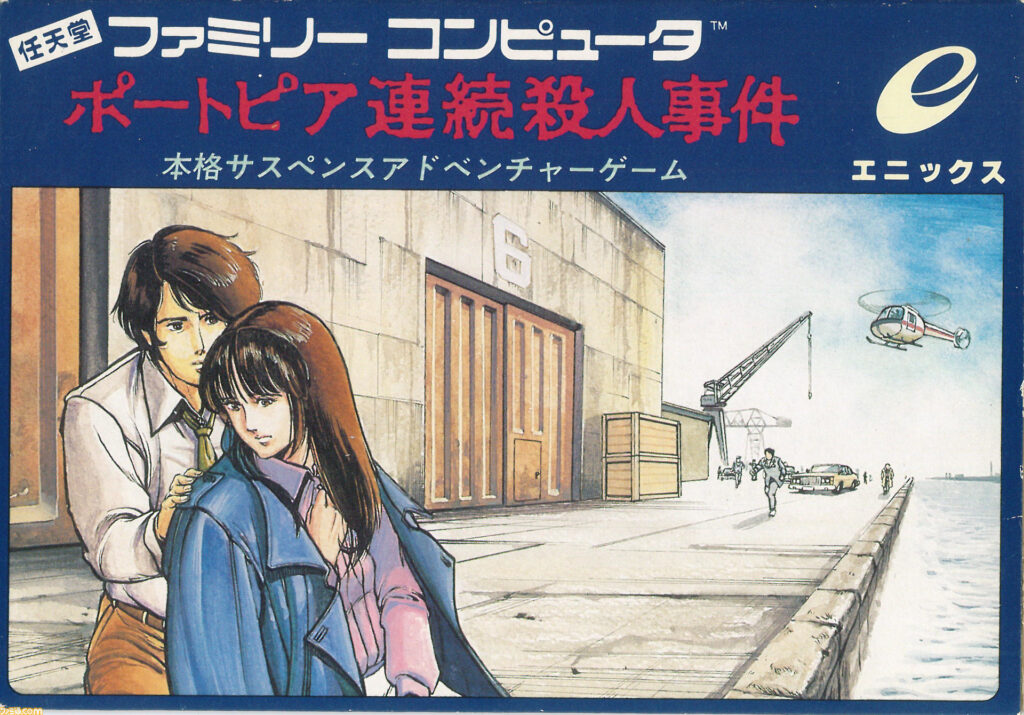
#10 The Portopia Serial Murder Case — A 1983 adventure game built by one man, and the culprit is Yasu
| Story | Accessibility | Innovation | Endgame Depth | Total Score |
|---|---|---|---|---|
| 88 | 74 | 99 | 55 | 316 |
Enix put it out for the PC-6001 in June 1983. Yuji Horii handled the scenario, the graphics and the programming himself, alone. Set in Kobe, it follows a nameless detective who, alongside Yasuhiko Mano — Yasu — chases down the murder of Kozo Yamakawa.
The Famicom version followed on November 29, 1985, programmed by Chunsoft’s Koichi Nakamura, who was 19 at the time. Rebuilding the PC version’s typed commands into a menu-selection system made this the first adventure game on Famicom, and sales are put at 600,000 to 800,000 copies. It is also one of the three games Hideo Kojima names as his biggest influences.
On April 24, 2023 it was released free on Steam as the SQUARE ENIX AI Tech Preview, where its user reviews sit at Overwhelmingly Negative. Then, at the Nintendo Direct on September 9, 2026, Zoku Portopia Renzoku Satsujin Jiken: Bokyaku no Maiso, the sequel to The Portopia Serial Murder Case, was announced. It is due in 2027 on Switch, Switch 2 and Steam, published by G-mode, with Horii credited as original creator and executive director. That 99 for innovation is the highest score in this article.
- The origin point that made menu-selection adventure games stick on Famicom
- The Steam version is free to try
- A sequel is already officially announced for 2027
- Neither the Famicom nor the PC version is distributed on current platforms
- The Steam version is an AI conversation tech demo, a different animal from the original experience
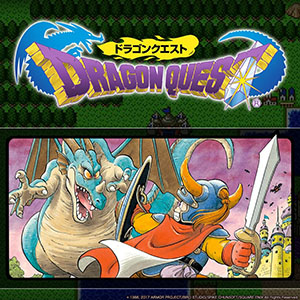
#11 Dragon Quest — Japan’s first original home-console RPG, and the place everything starts
| Story | Accessibility | Innovation | Endgame Depth | Total Score |
|---|---|---|---|---|
| 75 | 84 | 96 | 60 | 315 |
Enix released it on Famicom on May 27, 1986. Chunsoft developed it, with Yuji Horii on scenario and game design. It is regarded as Japan’s first original home-console RPG, and it sends you out alone from Tantegel Castle across Alefgard, where the Dragonlord waits.
A million and a half copies in Japan, more than 2 million worldwide. One hero, one continent, one goal: that minimal setup is a design built from the ground up to teach the genre to people who had never touched an RPG. The 75 for story is not about the volume of narrative; I kept it as credit for the role it played in handing the name Erdrick down to the games that came after.
On October 30, 2025, the HD-2D version Dragon Quest I&II arrived at 7,678 yen (about US$50), tax included, on Switch 2, Switch, PS5, Xbox Series and Steam. The download version on Switch and PS4 runs 660 yen (about US$4) and the smartphone version 480 yen (about US$3), so the form closest to the original is easy to reach as well.
- The 660 yen (about US$4) download version is an origin-point experience you can finish in a day
- The HD-2D I&II lets you play it in its newest form too
- The starting line for Japanese console RPGs
- A solo journey with single-enemy battles, so by modern standards it is light on content
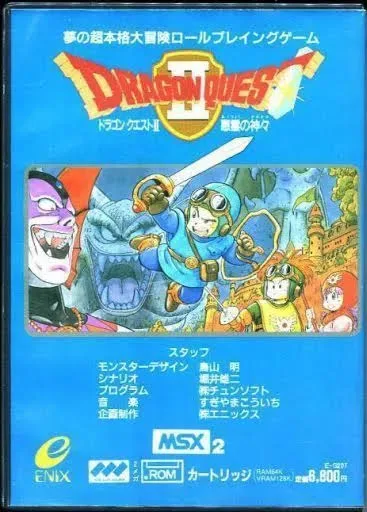
#12 Dragon Quest II: Luminaries of the Legendary Line — A party, a ship, and the baptism of fire called Rhone
| Story | Accessibility | Innovation | Replay Value | Total Score |
|---|---|---|---|---|
| 72 | 70 | 85 | 70 | 297 |
Enix shipped this one for the Famicom on January 26, 1987, with Chunsoft handling development. The heirs to the three royal houses of Midenhall, Cannock and Moonbrooke band together in the series’ first party system, and multi-enemy battles, the ship and the password resurrection spells all make their debut here too.
It sold 2.4 million copies in Japan and pulled a 38 in Famitsu’s Cross Review, good enough for the Platinum Hall of Fame. The Cave to Rhone, the gauntlet standing between you and Hargon and Malroth, is still shorthand for a punishing dungeon today. That 70 for accessibility is an honest reaction to the difficulty.
The HD-2D version of Dragon Quest I & II, released October 30, 2025, adds the Princess of Cannock as a new party member. The download versions on Switch and PS4 are 935 yen (about US$6), tax included, and the smartphone version is 800 yen (about US$5).
- The three-person party and the ship blow the world wide open
- The HD-2D version brings in the Princess of Cannock as a fourth member
- Download version is 935 yen (about US$6), tax included
- Rhone is one of the toughest stretches in the series. Steel yourself for the original version
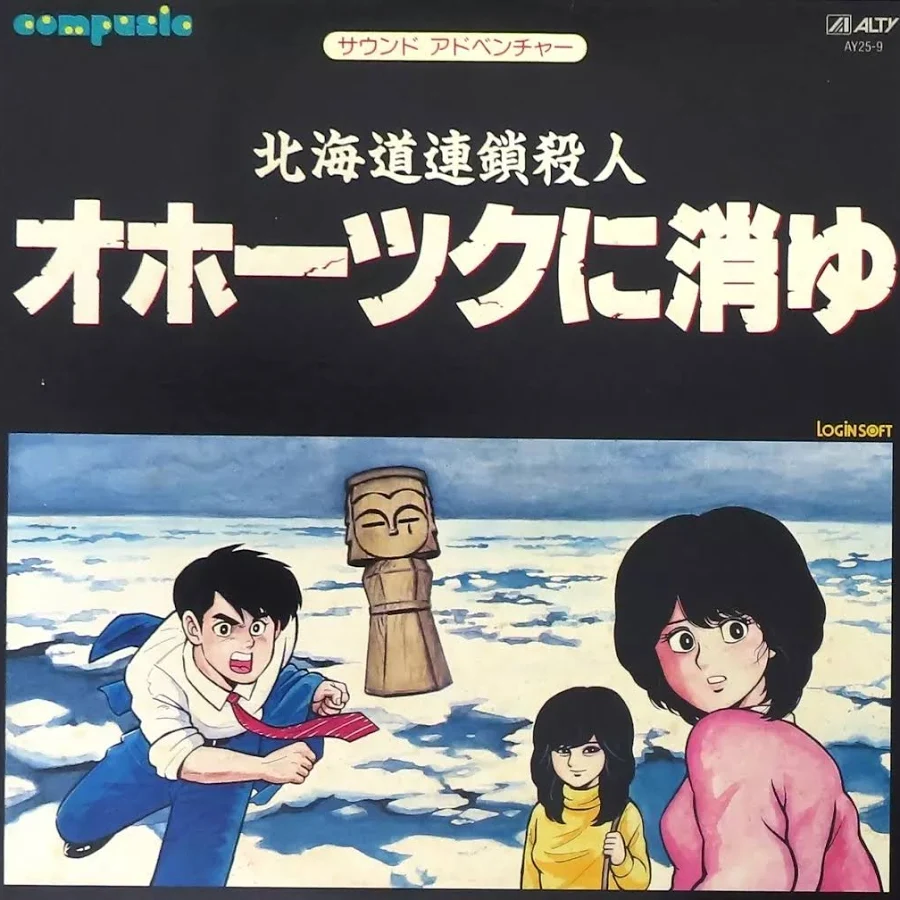
#13 Hokkaido Rensa Satsujin: Okhotsk ni Kiyu — The first game Horii devoted to the scenario alone, and the new chapter that followed 37 years later in 2024
| Story | Accessibility | Innovation | Replay Value | Total Score |
|---|---|---|---|---|
| 85 | 70 | 88 | 50 | 293 |
ASCII released it on December 21, 1984 for the PC-6001 and PC-8801, with Login Soft developing. It is the first game in which Yuji Horii stepped away from programming and concentrated purely on the scenario. Kushiro police detective Shunsuke Saruwatari follows the case from Tokyo’s Harumi Pier up to Kushiro, Abashiri, Monbetsu and Sapporo, and a Nipopo doll turns out to be the key to all of it.
The Famicom version landed on June 27, 1987, and it is usually filed among the early titles that popularized command-selection adventures. On September 12, 2024, G-Mode released Shin Hokkaido Rensa Satsujin: Okhotsk ni Kiyu – Tsuioku no Ryuhyo, Namida no Nipopo Ningyo on Switch and Steam, developed by Game Studio with Horii supervising. Set in 2024, 37 years after the original case, it adds a completely new story starring Marina Saruwatari, the daughter of Shunsuke and Makiko, and Horii wrote the lyrics for the theme song, a first for him.
It moved 23,370 copies in its first two weeks. The Switch download is 4,800 yen (about US$31) and the boxed edition with the Famicom version included is 8,800 yen (about US$58), both tax included, while the Steam version is 4,800 yen (about US$31).
- The remake is a double feature: the original plus a new chapter set 37 years on
- The boxed edition includes the Famicom version
- The first game Horii wrote as a dedicated scenario writer
- No PlayStation or smartphone version. It is Switch or Steam, period
- Light on replay content; the value is in that one playthrough
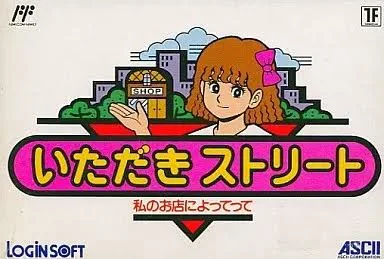
#14 Itadaki Street — Stocks and the five-times buyout, or 35 years of Horii’s board game design
| Story | Accessibility | Innovation | Replay Value | Total Score |
|---|---|---|---|---|
| 40 | 85 | 80 | 88 | 293 |
The series started with Itadaki Street: Watashi no Omise ni Yottette, released by ASCII for the Famicom on March 21, 1991. Yuji Horii handled game design, Kiyokazu Arai the character art, Toshiyuki Ueno the music. The design that dropped stock trading and the five-times buyout into a roll-and-move board game has not changed its skeleton in 35 years.
The series ran on through Super Famicom, PS, PS2, PSP, DS and Wii, and the DS entry sold 430,000 copies. The newest release is Itadaki Street: Dragon Quest & Final Fantasy 30th ANNIVERSARY from October 19, 2017 (PS4 and PS Vita), currently on sale on the PS Store for 8,580 yen (about US$56), tax included. There has been no new entry since 2017, and the series hit its 35th anniversary on March 21, 2026.
The 40 for story is simply because the game has no story, and that is not a flaw. The conversation that breaks out when four people crowd around the board is part of Horii’s design too, as far as I am concerned.
- The rules have barely budged since 1991 and still hold up in the current games
- 30th ANNIVERSARY assembles the Dragon Quest and Final Fantasy casts
- 88 for replay value, on the strength of head-to-head play
- No Switch or Steam version. The PS4 release is the only current option
- No new entry since 2017
Bonus Round: Chrono Trigger, the Game He Supervised, and the AI-Built Komiya in the Interrogation Room
Here are the two games I left out of the main ranking. Both get talked about under Yuji Horii’s name, but they do not belong on the same scoring field.
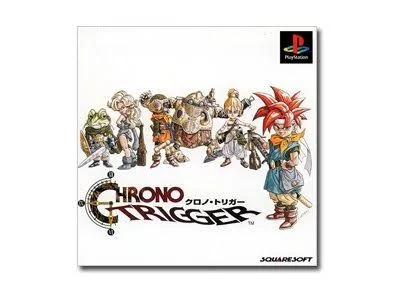
Chrono Trigger (1995, Square) — Horii gets story concept and supervision credits
Square released it for the Super Famicom on March 11, 1995, and the pairing of executive producer Hironobu Sakaguchi with character designer Akira Toriyama got the whole thing branded a dream project. On the staff roll, though, Horii’s title reads SUPERVISOR, and press coverage lists him under story concept and scenario supervision. STORY PLAN belongs to Masato Kato. Scoring it on the same yardstick as the 14 games whose scenarios and game design Horii wrote himself does not add up, so it goes in the bonus section.
The game itself is beyond reproach. Symbol encounters, 12 multiple endings, New Game+: this is the title that spread those ideas, and worldwide shipments passed 5 million as of March 2025. Right now you can play it on Steam for 1,980 yen (about US$13) or on smartphones for 1,600 yen (about US$10), both tax included, but there is no Switch, PS5 or PS4 version, and no official announcement of a remake (as of October 2026).
Komiya in the Interrogation Room (2026) — a mystery adventure he built in 30 minutes by giving an AI orders
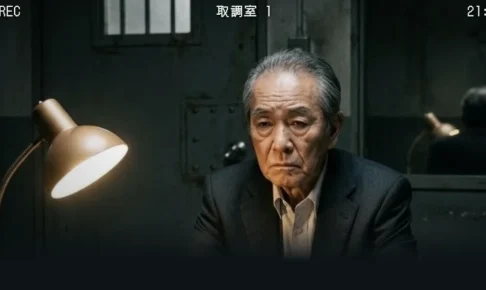
On October 11, 2026, Yuji Horii posted a browser-based mystery adventure on his own X account, free to play. You are the police officer assigned to a safe-cracking at a pawnshop, and your suspect is Komiya, a 72-year-old former locksmith. Komiya lies sometimes, so you poke at his contradictions while watching two meters: Agitation and Resistance. Let Resistance hit 100 and he clams up, which ends the run, and your clear rating shifts depending on how much of the lying you exposed.
Development time, by his own report: “just about 30 minutes.” Back in the Portopia days he wrote the story, drew the art and coded the thing himself; now he can simply give an AI instructions and a halfway decent game comes out, and Horii himself sounds amazed by it. It went up as a prototype rather than a commercial product, so I am not scoring it, but the fact that the interrogation format he established with The Portopia Serial Murder Case has been rebuilt in its barest form 43 years later is worth knowing before or after you read the #10 entry below. There is no word on how long it will stay up or whether the URL will be maintained, so play it sooner rather than later.
Can You Play All 14 Yuji Horii Games on Current Hardware? A Platform-by-Platform Guide
Bottom line
Of the 14 games in the main ranking, 13 can be played legitimately on some current platform as of October 2026. Only eight of them run on a current home console, though: IV, V, VI and VIII are smartphone-only, and for IX there is no route at all beyond a used DS cartridge.
① Titles you can play free or through a subscription
| Title | Platform | Price and notes |
|---|---|---|
| The Portopia Serial Murder Case | Steam (SQUARE ENIX AI Tech Preview) | Free. An AI conversation tech demo, a different animal from the original |
| Komiya in the Interrogation Room (bonus) | Browser | Free, through the link Horii pointed to on X |
I could not confirm a single Horii game included in a subscription service as of October 2026. The two above are the only ones you can touch for free.
② Titles you buy individually
| Title | Platform | Price (tax incl.) |
|---|---|---|
| Dragon Quest | Switch / PS4 / smartphone | 660 yen (about US$4) / 660 yen (about US$4) / 480 yen (about US$3) |
| Dragon Quest II: Luminaries of the Legendary Line | Switch / PS4 / smartphone | 935 yen (about US$6) / 935 yen (about US$6) / 800 yen (about US$5) |
| Dragon Quest III: The Seeds of Salvation | Switch / PS4 / smartphone | 1,650 yen (about US$11) / 1,650 yen (about US$11) / 1,600 yen (about US$10) |
| Dragon Quest IV: Chapters of the Chosen | Smartphone only | 2,400 yen (about US$16) |
| Dragon Quest V: Hand of the Heavenly Bride | Smartphone only | 2,400 yen (about US$16) |
| Dragon Quest VI: Realms of Revelation | Smartphone only | 2,400 yen (about US$16) |
| Dragon Quest VII: Fragments of the Forgotten Past | Smartphone | 2,400 yen (about US$16) (for Reimagined, see ③) |
| Dragon Quest VIII: Journey of the Cursed King | Smartphone only | 3,800 yen (about US$25) |
| Dragon Quest X Online | Windows / PS4 / Switch | Version 8 is 4,950 yen (about US$32) plus a play ticket. The offline version is 8,580 yen (about US$56) on PS5 / PS4 / Switch / Steam |
| Dragon Quest XI: Echoes of an Elusive Age S | Switch 2 / Switch / PS4 / Steam / Xbox | 5,478 yen (about US$36) each |
| Itadaki Street: DQ & FF 30th ANNIVERSARY | PS4 | 8,580 yen (about US$56) |
| Chrono Trigger (bonus) | Steam / smartphone | 1,980 yen (about US$13) / 1,600 yen (about US$10) |
Every price here is the list price as of October 2026, and the Switch, PlayStation and Steam versions can fall a long way in a sale. That IV through VI and VIII never reached a current home console is the biggest hole of all for anyone hunting an entry point into the series.
③ Titles available as remasters or remakes
| Title | Platform | Price (tax incl.) and notes |
|---|---|---|
| Dragon Quest I & II HD-2D Version | Switch 2 / Switch / PS5 / Xbox Series / Steam | 7,678 yen (about US$50). Released October 30, 2025 |
| Dragon Quest III HD-2D Version | Switch / PS5 / Xbox Series / Steam (Switch 2 support patched in) | 7,678 yen (about US$50). Erdrick Trilogy set 12,760 yen (about US$83) |
| Dragon Quest VII Reimagined | Switch 2 / Switch / PS5 / Xbox Series / Steam | 8,778 yen (about US$57). Released February 5, 2026 |
| Shin Hokkaido Rensa Satsujin: Okhotsk ni Kiyu – Tsuioku no Ryuhyo, Namida no Nipopo Ningyo | Switch / Steam | Download 4,800 yen (about US$31), boxed 8,800 yen (about US$58) with the Famicom version included |
④ Titles that are hard to get on current hardware
| Title | Status | Alternative |
|---|---|---|
| Dragon Quest IX: Sentinels of the Starry Skies | DS only. No port, no download version, and the 3DS eShop is closed | Used DS cartridges only. The substitute is XI S (no character creation, but it is the series’ summation on current hardware) |
| Dragon Quest IV, V, VI and VIII (home consoles) | No Switch, PS or Steam version exists | Fall back on the smartphone versions. No official announcement of an HD-2D treatment as of October 2026 |
| Itadaki Street (Famicom version) | Not distributed digitally | Substitute the PS4 release of 30th ANNIVERSARY |
| The Portopia Serial Murder Case (Famicom and PC versions) | Not distributed digitally | Zoku Portopia Renzoku Satsujin Jiken: Bokyaku no Maiso, due in 2027, includes a full remake of the Famicom version |
The shortest route as of October 2026 is to play I through III in order on the Switch or PS4 download versions, then step up to XI S if they click. IX, V and VIII have the fewest routes in, so grab them the moment you spot them.
Enjoying this article? Add us as a preferred source on Google.
Wrap-Up: Which Yuji Horii Game Should You Play First? The Final Answer, Sorted by What You Want
First place goes to Dragon Quest III: The Seeds of Salvation (367 points), second to Dragon Quest V: Hand of the Heavenly Bride (363), third to Dragon Quest XI: Echoes of an Elusive Age (359). Choose by structural invention and the answer is III; choose by story and it is V; choose by whichever form is easiest to play right now and it is XI S.
The Portopia Serial Murder Case sits at #10, but its 99 for innovation is the highest single score in this article, and it is worth getting under your belt before the 2027 sequel arrives. Chrono Trigger went into the bonus section because Horii supervised it rather than wrote it, which is not a knock on the game. And Komiya in the Interrogation Room is a prototype thrown together in 30 minutes, yet the Portopia template is alive inside it, untouched.
| What you want | Where to start |
|---|---|
| Your first Dragon Quest | Dragon Quest XI S (5,478 yen, about US$36). The complete edition, with voice acting and 2D mode |
| A story that makes you cry | Dragon Quest V (smartphone, 2,400 yen, about US$16). Three generations and a bride to choose |
| A look at where it all started | Dragon Quest I through III (Switch / PS4 download versions, 660 to 1,650 yen, about US$4 to US$11), or the HD-2D versions |
| Something to sink hours into | Dragon Quest X Offline (8,580 yen, about US$56) or VII Reimagined (8,778 yen, about US$57) |
| A handle on Horii’s adventure games | The Okhotsk ni Kiyu remake (4,800 yen, about US$31), then on to Zoku Portopia in 2027 |
What jumps out once all 14 games are lined up is that Yuji Horii added exactly one new structure every single time. The party in II, class changes in III, chapters in IV, marriage in V, twin worlds in VI, stone tablets in VII, 3D in VIII, a handheld and Tag Mode in IX, going online in X. Rank them by the size of the invention and III, V and XI float to the top. Portopia and Okhotsk score low, but they built the foundation itself, conversation through command selection, and without that the 11 games above them simply do not exist.
The biggest frustration as of October 2026 is that IV, V, VI and VIII are not on a current home console. Whether HD-2D goes to V next or to IV, that is where my hopes are parked.
Read Next
Snicker Kitamura











Leave a Reply