
Enjoying this article? Add us as a preferred source on Google.
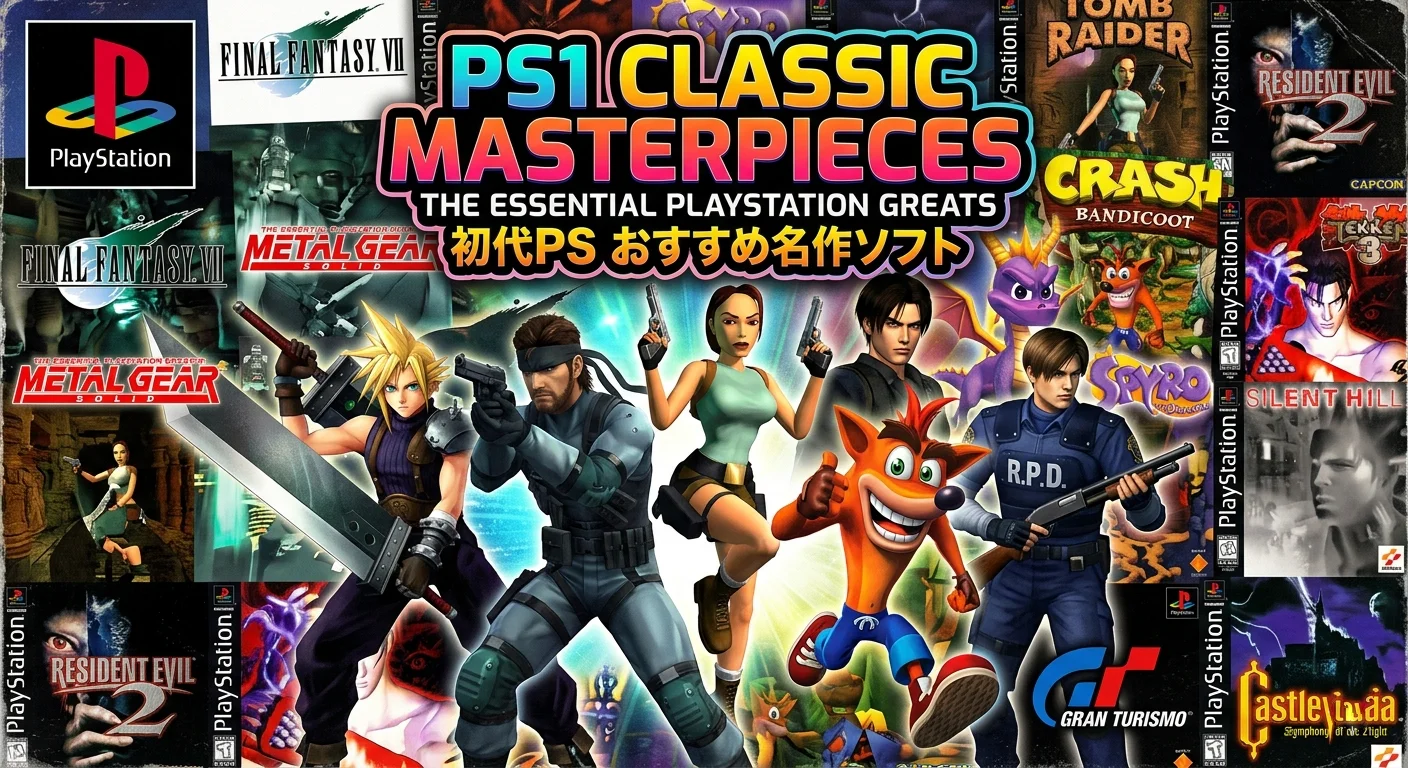
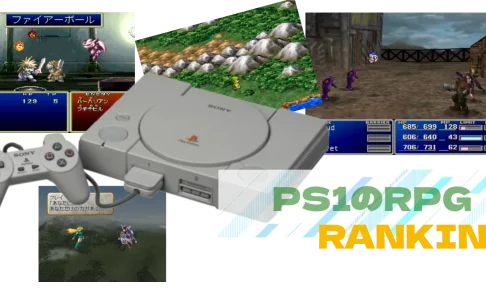
More than 30 years have passed since the original PlayStation — “PS1” for short — launched on December 3, 1994. Roughly 20 million units sold in Japan and over 100 million worldwide: numbers that tell you just how hard this machine moved the needle on an entire era.
What the PS1 changed was the very definition of 3D gaming. Final Fantasy VII’s polygonal characters sprang to life, Resident Evil used 3D camera work to wring dread out of a lonely mansion, and Metal Gear Solid proved what games could be with its cinematic storytelling. You simply cannot understand where modern games came from without talking about this era.
For this article, we’ve hand-picked 50 games on the original PlayStation that are still worth your time. From RPGs to fighting games, shooters, and adventure titles, these are masterpieces that hold up today regardless of genre — and we’ll cover how to actually play them in 2026, too.
There are more ways than ever to play PS1 games today: the PlayStation Classic mini console (20 built-in titles), digital releases on the PlayStation Store, the PlayStation Plus Premium classics catalog (for select titles), plus ports to Steam, Switch, and smartphones. A huge number of these classics are genuinely easy to play on modern hardware.
What Kind of Console Was the Original PlayStation? A Look Back at Its History
The PS1 was a fifth-generation game console released by Sony Computer Entertainment (now Sony Interactive Entertainment) on December 3, 1994. Born out of the ashes of a failed joint project with Nintendo, its CD-ROM-based design — low cost, huge capacity — turned the entire games industry on its head.
| Item | Details |
|---|---|
| Release date | December 3, 1994 (Japan) |
| Launch price | 39,800 yen |
| CPU | MIPS R3000A (33.8688MHz) |
| Media | CD-ROM |
| Worldwide shipments | Approx. 102 million units |
| Key features | High capacity and low cost via CD-ROM; brought 3D polygon graphics to the masses |
14 Essential RPGs — The Golden Age of JRPGs, Born on the PS1
The PS1 era is often called the first golden age of the JRPG. This is the turning point where the genre leapt from the Super Famicom’s 2D sprites to 3D polygons — where characters started to move, speak, and show real emotion.
1. Final Fantasy VII (1997)

The game that defines the PS1, and one of the biggest hits in the history of Japanese RPGs. An epic that sprawls from slum streets to outer space, the unforgettable contrast between Cloud and Sephiroth as hero and villain, and yes — THAT scene. This is the masterpiece that sat on the throne of the PS1 era. With the Remake project that began in 2020 still marching toward the conclusion of its trilogy, FF7 remains very much a living classic.
2. Final Fantasy VIII (1999)

The follow-up, built around the love story of Squall and Rinoa. Its unconventional Junction growth system and jaw-dropping FMV cutscenes proved this was cutting-edge technology at the time. A divisive entry, sure — but in sheer polish and visual craft, it is unmistakably among the series’ finest.
3. Final Fantasy IX (2000)

The grand return to the series’ roots. Back in a world of swords and sorcery, the journey of Zidane and Garnet nails exactly what Final Fantasy is supposed to feel like. With a colorful cast covering every classic job archetype, this is the entry many fans call the best FF on the PS1.
4. Chrono Cross (1999)

The spiritual successor to the Super Famicom classic Chrono Trigger. A masterpiece that fuses a staggering roster of 45 playable characters with an epic tale spanning time and parallel worlds. Yasunori Mitsuda’s soundtrack is still spoken of as one of the towering achievements of game music. It was remastered in 2022 as Chrono Cross: The Radical Dreamers Edition.
5. Xenogears (1998)

Square’s sci-fi-plus-robots-plus-philosophy RPG. Its combat system blends on-foot battles with giant mechs called Gears, and its dense narrative — steeped in Nietzsche and Freud — drew criticism for being impenetrable while breeding a fiercely devoted fanbase. Even the infamous story of its troubled development, which left Disc 2 as a wall of narrated text, has become part of its legend.
6. Dragon Quest VII (2000)

Japan’s national RPG series made its PS1 debut here. Collecting stone fragments to travel into the past and literally rebuild the world, its enormous story — easily topping 100 hours — had RPG fans of the day utterly hooked. The 3DS remake remains a go-to way to play it.
7. Tales of Phantasia (1998)

A PS1 remake of the beloved Super Famicom RPG. With fully voiced characters and an evolved Linear Motion Battle System, this is the definitive version. As the origin point of the Tales series, it’s a historically important bridge to everything that came after.
8. Tales of Eternia (2000)

The peak of the Tales series’ PS1 era. The journey of Reid, Farah, and Meredy fuses with the exhilarating, further-refined LMBS combat into a genuine masterpiece. Whenever series fans argue about the best Tales game ever made, this one’s name always comes up.
9. Wild Arms (1996)

A gunslinger, a swordsman, and a mage roam a one-of-a-kind world blending the American West with high fantasy. Mami Kingetsu’s theme song “Into the Wilderness” is still remembered as one of the PS1’s great musical moments, and this is where a long-running multimedia series began.
10. SaGa Frontier (1997)

A free-form RPG that lets you choose among seven protagonists, each with their own story. Combo techniques and the “glimmer” skill-sparking system create real strategic depth inside a wonderfully strange world. Starting the story by asking “which hero do I pick first?” is peak SaGa design.
11. Breath of Fire IV (2000)

The fourth entry in Capcom’s RPG series. Its dual narrative structure alternates between past and present, while dragon powers add depth to combat. Storybook visuals and a weighty story that refuses easy good-versus-evil framing are why many call it the series’ finest hour.
12. Parasite Eve (1998)

A bio-horror RPG based on Hideaki Sena’s award-winning horror novel. Set in New York City with a startlingly original premise — mitochondria in revolt — it delivers Hollywood-caliber staging and relentless tension. One of the most acclaimed experiments of Square’s PS1 era.
13. Valkyrie Profile (1999)

A Norse mythology-inspired RPG about gathering the souls of fallen heroes. Its fusion of side-scrolling exploration and tactical command battles, paired with a dramatic story that stares death straight in the eye, creates an experience like nothing else. Following Star Ocean (1996, Super Famicom), it was the ambitious tri-Ace project that laid a rock-solid foundation for everything the studio built afterward.
14. Ore no Shikabane wo Koete Yuke (1999)

A demon-slaying RPG from designer Shoji Masuda. Its premise is utterly unique: you guide a short-lived cursed bloodline across generations, each child climbing over their parents’ corpses to carry on the fight. With its roguelike-flavored philosophy of accepting death, it forged an emotional experience RPGs had never offered before.
10 Action-Adventure Greats — The Games That Turned Cinema Into Something Playable
The story of PS1 action games is the story of the birth and evolution of games that play like movies. Metal Gear Solid and Resident Evil stand as its twin pillars — the foundation stones of modern gaming.
15. Metal Gear Solid (1998)

The pinnacle of stealth action from Hideo Kojima. Codec conversations that fleshed out every character, fourth-wall-breaking tricks that weaponized the game system itself, boss fights staged as psychological warfare — everything here rewrote what a game could be. Its cinematic quality isn’t just top-tier for the PS1 era; it ranks among the finest in the history of the medium.
16. Resident Evil (1996)

A masterclass in terror built from fixed camera angles and claustrophobic spaces. Rationing scarce ammo and healing items while solving puzzles and pushing past zombies within the confines of that mansion — the tension still works today. This is the historic title that established the survival horror genre.
17. Resident Evil 2 (1998)

A sequel that blew past its predecessor in every way. A fight for survival scaled up to the entire city of Raccoon City, the intertwining Leon and Claire scenarios, and the “2nd Run” system that reshuffled events on replay added up to overwhelming value. It’s a permanent contender in any “best in the series” debate.
18. Crash Bandicoot (1996)

Naughty Dog’s platforming breakout. Crash became the face of the PS1 — hugely popular even in Japan — serving as Sony’s answer to Nintendo’s Mario. The series was lovingly remastered in 2017 as the Crash Bandicoot N. Sane Trilogy.
19. Spyro the Dragon (1998)

A 3D platformer developed by Insomniac Games, published in Japan by SCE on April 1, 1999. The sheer joy of exploring vast worlds as the little dragon Spyro, plus a wealth of collectibles, captivated kids and adults alike. In the West, it stood shoulder to shoulder with Crash Bandicoot as a flagship PS1 action title.
20. Boku no Natsuyasumi (2000)

An adventure game published by Sony Computer Entertainment and developed by Millennium Kitchen. Following a young boy simply living out his summer vacation in the Japanese countryside, its warm, nostalgic recreation of a lost Japanese summer is still talked about with real affection. The photorealistic environments and the surprisingly deep bug-catching and fishing are highlights.
21. King’s Field (1994)

FromSoftware’s debut — and the origin point of the Souls lineage. Its slow, first-person crawl through pitch-dark dungeons and its die-and-learn philosophy lead in a straight line to Dark Souls. Radically uncompromising design for its time, and it still commands a devoted following.
22. Armored Core (1997)

The first entry in FromSoftware’s mech action series. The world of the “AC” — customizing your machine down to the last part before heading into battle — started right here. FromSoftware’s mech pedigree has endured ever since, still going strong with 2023’s ARMORED CORE VI.
23. Bushido Blade (1997)

Square’s real-time weapons-based dueling game. No health bars — one clean strike ends it — a design that captured the deadly seriousness of a true samurai duel. A one-of-a-kind fighting game still celebrated for its concept and experimental daring.
24. PoPoLoCrois Story (1996)

A heartwarming RPG adventure based on Tamori Atsuya’s manga. The coming-of-age tale of young Prince Pietro is aimed at children yet carries a depth that hits adults just as hard. With its gentle visuals and music, it’s cherished as the game you reach for when life gets rough.
8 Fighting Games — Witnessing the Evolution of 3D Polygon Fighters
The PS1’s fighting game scene was a rich era where 2D titles from SNK and Capcom coexisted with Namco’s 3D Tekken series.
25. Tekken 3 (1998)

The third entry in Namco’s flagship fighting series, widely hailed as its finest. One of the best-selling PS1 games in Japan, it delivered fluid animation, a deep roster, and rich combat systems all at once. Enduring favorites like Ling Xiaoyu and Eddy Gordo were born right here.
26. Tekken 2 (1996)

The second entry that cemented the series’ foundations. It won praise both for its presentation breakthroughs — every character got a cinematic CG ending movie — and for its sharpened competitive play. Many of the traditions that define Tekken today were established here.
27. Street Fighter EX Plus α (1997)

An ambitious reimagining of the 2D Street Fighter universe in 3D polygons. With a raft of original newcomers like Pullum and Allen, it offered fighting game fans something genuinely fresh.
28. Fighters’ Impact (1996)

A 3D fighter from Tecmo, positioned as the forerunner of the Dead or Alive series. The prototype of the hit mechanics that DOA would later perfect is right here.
29. Darkstalkers 3 (1998)

The PS port of Capcom’s 2D fighter Vampire Savior, released in Japan on November 5, 1998 as Vampire Savior EX Edition. Its gothic-horror cast running riot in a singular world, plus a mountain of mechanics like chain combos and pursuit attacks, are the series’ greatest draw. This version bundles content from Savior, Savior 2, and Hunter 2, and adds Marionette on top of the Sega Saturn version’s extra characters. The sprite work stands as one of the peaks of Capcom’s 2D fighting craft. The freedom of movement demands serious practice, and the competitive barrier to entry is not low — but that’s exactly why it feels so glorious once you can really make these characters dance.
30. Rival Schools: United by Fate (1997)

A Capcom fighting classic, bursting with a one-of-a-kind world where youthful passion explodes on screen.
Combos flow from just two buttons, and the signature “Team Up” tag attacks — bonds of love and friendship made flesh — are gloriously flashy and hot-blooded!
The home version adds a full life-sim school diary mode, making it dangerously easy to get attached to the cast.
A fighting game whose competitive craft and high-school-drama excitement fuse perfectly — an oddball masterpiece that hasn’t aged a day.
31. Street Fighter Alpha 3 (1999)

The perfected form of Capcom’s Alpha series. A sprawling world, a diverse roster, and refined systems come together in what stands as 2D fighting at its most complete. The PS1 version boasts a near-flawless conversion, too.
32. THE KING OF FIGHTERS ’98 (1998)

The perfected form of SNK’s flagship series, and the game that defined team-based fighting as a genre. Rather than continuing the storyline, it was built as a “dream match” gathering the series’ entire historical cast in one place. The result is an unmatched roster and freedom of team composition — the battle begins the moment you start assembling your three-fighter squad. The choice between Advanced and Extra modes is smart design too, letting players tailor their fighting style to taste. If you’re new to the series, this is unquestionably the place to start. The fact that its name still comes up in competitive play today says everything about how well it was made.
8 Shooters and Racers — Next-Generation Speed and Firepower
The PS1 generation caught shoot-’em-ups mid-leap from 2D to 3D — a golden age when wildly different approaches to the genre flourished side by side.
33. R-Type Delta (1998)

Irem’s legendary side-scrolling shooter reborn for the PS. A masterpiece fusing polygon-rendered graphics with the crushing difficulty R-Type is famous for. The eerie menace of the Bydo and the raw satisfaction of the wave cannon rank among the series’ finest.
34. Gradius Gaiden (1997)

A PS-exclusive entry in Konami’s Gradius series. It inherits everything great about the series — the power-up system, the white-knuckle stage runs — while layering on new PS1-era ideas, resulting in a superbly polished shooter.
35. RayStorm (1997)

Taito’s lock-on shooter. The fusion of exhilarating vertical-scrolling lock-on lasers with polygon visuals embodied the cutting edge of its day. The PS1 version is a highly faithful arcade conversion, standing alongside the Sega Saturn release as the definitive home version.
36. G-Darius (1997)

The culmination of Taito’s Darius series. Duels to the death against colossal fish-shaped war machines rendered in 3D, plus a signature capture system that lets you seize enemies and turn them into weapons. Branching stage routes give it serious replay value.
37. Colony Wars (1997)

A space combat shooter developed and published by Psygnosis. Starship battles unfold across vast reaches of space at overwhelming scale, with mission-based scenarios that pull you deep into the fiction. Especially acclaimed in the West, it’s the definitive PS1 space-combat experience.
38. Ridge Racer (1994)

The 3D racing masterpiece that arrived as a PS1 launch title. Drift-powered cornering technique and 3D visuals that were flat-out shocking at the time brought the arcade experience home. To this day, “PS1” and “Ridge Racer” remain practically synonymous.
39. Gran Turismo (1997)

Sony’s serious racing simulator. Faithful recreations of real-world cars combined with license tests and a deep tuning system established an entire genre: the “real driving simulator.” Over 10 million copies sold worldwide — and that was no accident.
40. Gran Turismo 2 (1999)

A sequel that dramatically surpassed the original. With an overwhelming lineup of more than 650 cars and a two-pronged structure of Arcade and Simulation modes, it set a new standard for racing games. The high-water mark of the GT series’ PS1 era.
6 Adventure and Visual Novel Picks — Stories Told Through the Power of Text
During the PS1 era, visual novels and adventure games each evolved along their own paths. Full voice acting became the norm, and the art of storytelling in games took a dramatic leap forward.
41. Snatcher (1996)

Hideo Kojima’s landmark cyberpunk adventure. Wearing its Blade Runner influences proudly, it spins a dense suspense thriller about hunting “Snatchers” — mysterious beings that kill humans and take their place. Meticulously crafted world-building, cinematic direction, and a score dripping with tension fuse flawlessly, pulling the player deep into its decaying future city. A one-of-a-kind classic of the adventure genre whose singular aesthetic and immersion haven’t faded one bit.
42. Tokimeki Memorial 2 (1999)

The second entry in the genre-defining dating sim series. It keeps the core loop of three years of high school life with a new cast of heroines, while dramatically upgrading the presentation and music. Plenty of series fans call it the best entry ever made.
43. EVE the LOST ONE (1998)

An adventure game that serves as the sequel to EVE burst error. Praised for its ties to the previous game’s protagonists and the intricate mystery woven through its story. A testament to how strong the PS1’s adventure game library really was.
44. Kamaitachi no Yoru (1994; PS version 1997)

Chunsoft’s sound novel. This locked-room murder mystery at a snowbound ski lodge, with its distinctive silhouetted characters, single-handedly established the sound novel genre. Counting the PS1 arrangement of the Super Famicom original, it stands as a monument of mystery gaming.
45. Machi: Unmei no Kousaten (1998)

The culmination of the sound novel form, built on live-action photographs. Eight interlocking stories play out across Shibuya, advanced in parallel through an ingenious channel-zapping system. Its sheer craftsmanship leads many fans to call it the greatest adventure game ever made.
46. Policenauts (1996)

Hideo Kojima’s space-noir adventure. This detective story set on a space colony lost none of its craft in the PS1 version — which, released on January 19, 1996, actually beat the Sega Saturn version (September 13 of the same year) to market. Essential for any Kojima fan counting the days until Metal Gear Solid.
4 More Masterpieces — Brilliant Oddities Beyond Genre
The PS1 is home to several singular masterpieces that refuse to fit into any of the categories above.
47. LSD Dream Emulator (1998)
Published by ASCII, and quite possibly the strangest game ever made. You do nothing but wander endlessly through incomprehensible 3D spaces generated from a real dream journal — a surreal, logic-free world like nothing else in gaming. A cult classic still discussed today as a bizarre answer to the question “what is a game, anyway?”
48. Intelligent Qube (1997)
A puzzle game developed by Sony Computer Entertainment. Its striking premise — sprinting across a platform to erase gigantic cubes as they roll toward you — made it a brilliantly original 3D puzzler that put the PS1’s processing power to real use.
49. Soukaigi (1999)
A Japanese-mythology action adventure from Square. With a world steeped in Shinto legend and seamless field exploration, it was an experimental push against the very limits of PS1 technology. Its singular atmosphere and soundtrack keep a devoted fanbase to this day.
50. Aquanaut’s Holiday (1995)
An undersea exploration simulator developed and published by Artdink. There is no goal: you simply drift through the ocean, observing fish in their habitats — a “game that isn’t much like a game” that pointed the industry in a genuinely new direction. Its forward-thinking approach is still admired today. On April 23, 2026 it was revived for Nintendo Switch and Steam as ARTDINK GAME LOG: Aquanaut’s Holiday, making it playable on modern hardware (as of September 4, 2026).
Can You Play These 50 PS1 Classics on Modern Platforms? The Complete Platform-by-Platform Guide
✅ The Verdict
Of the 50 original PlayStation games featured here, 15 were confirmed playable on modern platforms as of September 4, 2026. Marquee titles like Final Fantasy VII, VIII, and IX, Chrono Cross, and Metal Gear Solid have been ported across the board to Switch, PS4, and PC. High-quality remasters abound too — the Crash and Spyro remastered trilogies, Valkyrie Profile: Lenneth, and more — making PS1-era classics arguably the easiest retro library of all to play on current hardware.
① Titles Playable via Game Pass and Subscription Services
| Title | Service | Notes |
|---|---|---|
| Metal Gear Solid | Xbox Game Pass | Included in Master Collection Vol. 1 |
| Resident Evil (HD Remaster) | PlayStation Plus (catalog) | Availability varies by plan — check before subscribing |
② Titles Available for Individual Purchase (Switch / PS4 / Steam)
Prices listed are only those confirmed as of September 4, 2026. They fluctuate with sales, so check each storefront before buying.
| Title | Platforms | Price / Notes |
|---|---|---|
| Final Fantasy VII | PS4 / Switch / Xbox / Steam | Official Square Enix digital release |
| Final Fantasy VIII Remastered | PS4 / Switch / Xbox / Steam | Remastered in HD |
| Final Fantasy IX | PS4 / Switch / Xbox / Steam | Official Square Enix digital release |
| Metal Gear Solid (Master Collection Vol. 1) | PS4 / PS5 / Switch / Xbox / Steam | Bundle including MGS 1-3 (2023) |
| Resident Evil (HD Remaster) | PS4 / Switch / Xbox / Steam | Substantially polished remaster |
| Street Fighter Alpha 3 | Switch / PS4 / Xbox / Steam | Included in Capcom Fighting Collection |
| Gradius Gaiden | Switch / PS4 | Arcade Archives, 838 yen each |
| G-Darius | Switch / PS4 / Steam | Included in Darius Cozmic Collection |
| Aquanaut’s Holiday | Switch / Steam | 2,420 yen. Revived April 23, 2026 as an ARTDINK GAME LOG release |
| Valkyrie Profile: Lenneth | PS4 / PS5 | 2,750 yen. Adds rewind and quick-save features (2022) |
| SaGa Frontier (Remastered) | Switch / PS4 / Steam | Adds a new playable character (2021) |
③ Titles Playable via Remasters and Remakes
| Title | Remaster/Remake | Platforms |
|---|---|---|
| Chrono Cross | The Radical Dreamers Edition (2022) | Switch / PS4 / Xbox / Steam |
| Resident Evil 2 | Resident Evil 2 (full remake, 2019) | PS4 / PS5 / Xbox / Steam |
| Crash Bandicoot | N. Sane Trilogy (HD remaster, 2017) | Switch / PS4 / Xbox / Steam |
| Spyro the Dragon | Reignited Trilogy (HD remaster, 2018) | Switch / PS4 / Xbox / Steam |
④ Titles Hard to Obtain on Modern Platforms — and Their Alternatives
As of September 4, 2026, the following titles have no confirmed official digital release on current platforms. Square Enix-related titles in particular often face rights and licensing hurdles. Original hardware — or the FPGA-based compatible console “SuperStation One” — is worth keeping on your radar as an option.
| Title | Genre | Alternatives / Successors |
|---|---|---|
| Xenogears | RPG | The Xenoblade series (Switch) is its spiritual successor |
| Tales of Phantasia / Eternia | RPG | Tales of Arise (PS4/PS5/Steam) |
| Wild Arms | RPG | No remaster announced yet — hunt down a used copy |
| Parasite Eve | RPG | The Resident Evil series (recommended for horror-RPG fans) |
| Armored Core (PS1) | Mech action | Armored Core VI (PS4/PS5/Xbox/Steam) |
| Gran Turismo 1 & 2 | Racing | Gran Turismo 7 (PS4/PS5) |
| R-Type Delta / RayStorm | Shoot-’em-up | R-Type Final 3 Evolved (PS4/Switch/Steam) |
| Ore no Shikabane wo Koete Yuke / PoPoLoCrois Story | RPG | The used market or original hardware is your best bet |
On the whole, PS1-era classics have been ported remarkably well. Major titles like FF7 through FF9, Chrono Cross, and MGS can be picked up easily across multiple platforms. Start there, then go digging through used game shops for the titles that catch your eye — that’s when you’ll really feel just how deep the PS1’s library goes.
Enjoying this article? Add us as a preferred source on Google.
Final Thoughts: The Original PlayStation Witnessed the Moment Games Caught Up With the Movies
Looking back across these 50 games, one theme rises to the surface — this was the era when games finally became cinematic experiences. Metal Gear Solid’s filmic direction, FF7’s opening with its polygonal characters sprinting through Midgar, Resident Evil’s fixed cameras carving dread out of empty rooms — every one of these innovations was born at the dawn of 3D gaming that was the PS1.
As for playing them today: FF7, FF8, and FF9 are all available on Steam, PS4, and Switch. Chrono Cross lives on as The Radical Dreamers Edition, and Valkyrie Profile has a remaster on PS4 and PC. Metal Gear Solid is included in the Master Collection. The paths to playing these games without original hardware keep multiplying — that’s where we stand today.
SPOTGEEKS VERDICT
The original PlayStation’s golden age was a miracle window in which JRPGs, stealth action, 3D fighters, and racing sims all bloomed at once. Play through these 50 games and you’ll see clearly how much of modern game design was locked in during the PS1 era. If you can only pick one: RPG fans should grab Final Fantasy VII or Xenogears, action fans Metal Gear Solid or Resident Evil 2, racing fans Gran Turismo 2 — whichever you choose, an experience you will never forget is waiting.
To talk about the original PlayStation is to talk about the moment games grew up.
Read Next
Snicker Kitamura

Leave a Reply