



Enjoying this article? Add us as a preferred source on Google.
“Super Robot Wars — where the heck do I even start?” If that’s the question rattling around your head, I get it. More than a quarter century has passed since Super Robot Wars Alpha landed in 2000, and the series has since blown past 20 titles. There are so many great ones that plenty of people freeze up, buy three at once, and watch them rot on the backlog shelf.
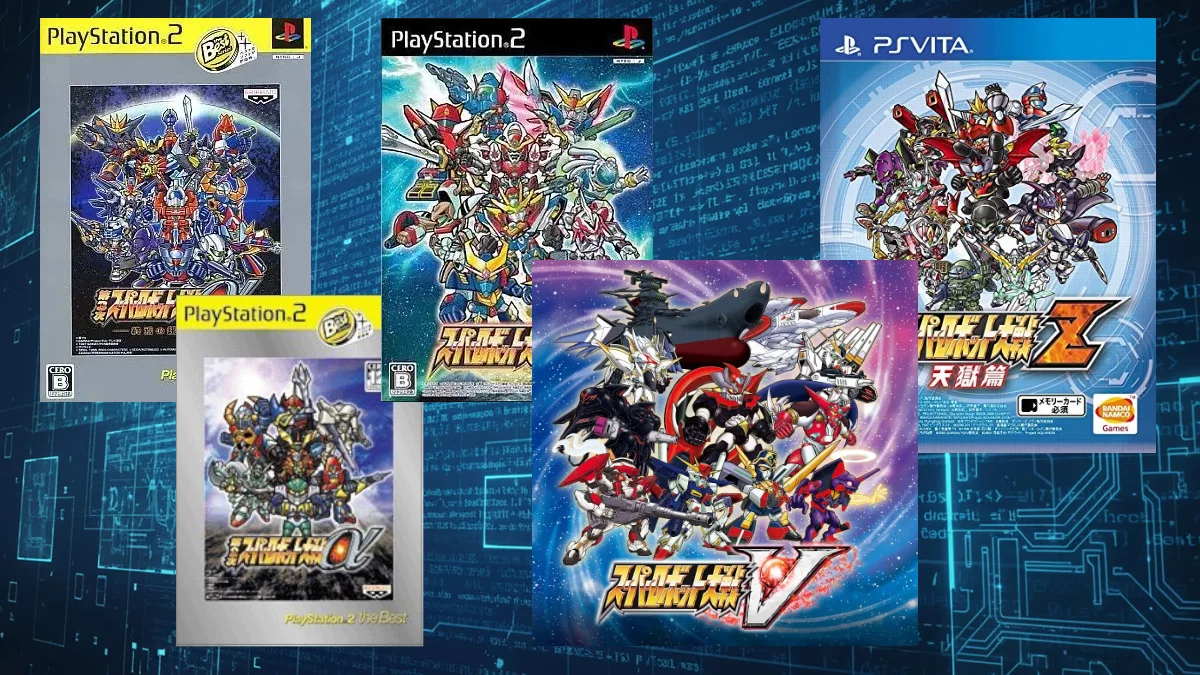
This article picks the 10 best titles from every entry released from the Alpha series onward, scoring each one out of 100 points across four categories — story, series lineup, systems, and replay value — and then ranking them. It should work as a signpost for newcomers choosing their very first game, and as ammunition for veterans wondering which one to tackle next.
I’ve followed this franchise in real time since the Alpha era and cleared more than 30 titles. That experience is the basis for these rankings: this isn’t a popularity poll, it’s a list ordered by how satisfying each game actually is to play.
Super Robot Wars Alpha and Beyond: The Top 10 and a Full Scored Comparison Chart
Every title is scored out of 100 across four lenses. “Story” covers narrative craft and emotional payoff, “Series Lineup” covers the quality of the roster and how faithfully each anime is reproduced, “Systems” covers controls and strategic depth, and “Replay Value” covers how deep the repeat playthroughs and upgrade hooks run.
| Title | Story | Series Lineup | Systems | Replay Value | Total Score |
|---|---|---|---|---|---|
| Super Robot Wars Alpha 3 | 93 | 95 | 85 | 92 | 365 |
| Super Robot Wars Alpha 2 | 95 | 88 | 88 | 90 | 361 |
| Super Robot Wars Z | 92 | 90 | 87 | 88 | 357 |
| Super Robot Wars V | 88 | 88 | 92 | 85 | 353 |
| Super Robot Wars W | 90 | 85 | 82 | 88 | 345 |
| The 2nd Super Robot Wars Z: Saisei-hen | 88 | 87 | 82 | 85 | 342 |
| Super Robot Wars Alpha | 85 | 90 | 78 | 82 | 335 |
| Super Robot Wars 30 | 80 | 82 | 90 | 78 | 330 |
| Super Robot Wars MX | 82 | 80 | 84 | 80 | 326 |
| Super Robot Wars Impact | 80 | 85 | 70 | 90 | 325 |
The gap worth paying attention to is the one between “Series Lineup” and “Systems.” Older entries tend to score higher on story and roster satisfaction, while newer ones have far more polished systems. Which of those two you value most should decide how you pick.
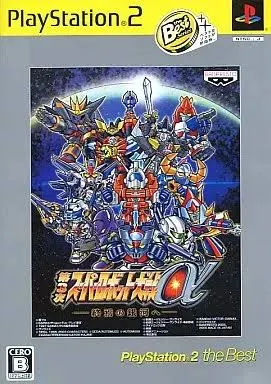
[No. 1] Super Robot Wars Alpha 3: To the End of the Galaxy — the Alpha series’ greatest curtain call
| Story | Series Lineup | Systems | Replay Value | Total Score |
|---|---|---|---|---|
| 93 | 95 | 85 | 92 | 365 |
Released on PS2 in 2005, this is the finale of the trilogy that began with Super Robot Wars Alpha. The roster runs past 50 series — Mazinger Z, the Getter Robo shows, Mobile Suit Zeta Gundam, Neon Genesis Evangelion, The King of Braves GaoGaiGar FINAL — a lineup so stacked you’ll do a double take and wonder how they got all of it moving at once. Put your hands on the controller and the sheer density of the crossover writing, with characters from wildly different shows playing off each other like they belong together, is genuinely overwhelming.
Nearly every thread the Alpha series scattered across three games gets tied off here. If you’ve played the first two, you get one “oh, THAT’s what that scene was setting up” moment after another. The campaign runs past 60 stages, and even after the credits roll there’s no end to the upgrade-part hunting and SR Point retries. The battle animations were top of the class for the PS2 era, too, and they floored people at the time.
Its weakness is that newcomers to the Alpha series simply can’t follow the story. The whole thing is designed around playing from the original Alpha forward, so jumping in here leaves you with zero grasp of who these people are to each other. But if you have followed the Alpha series from the start, I’ll recommend this one without hesitation as the greatest finale the franchise has ever delivered.
- A stunning climax that pays off every thread the Alpha trilogy planted
- Over 50 series on the roster — one of the most stacked lineups in franchise history
- Bonus stages and upgrade-part collecting keep you going for 100-plus hours after clearing it
- Assumes you’ve played Alpha, then Alpha 2, in order — playing it standalone is not recommended
- PS2 exclusive, so it won’t run on current hardware; you’ll need to track down a console
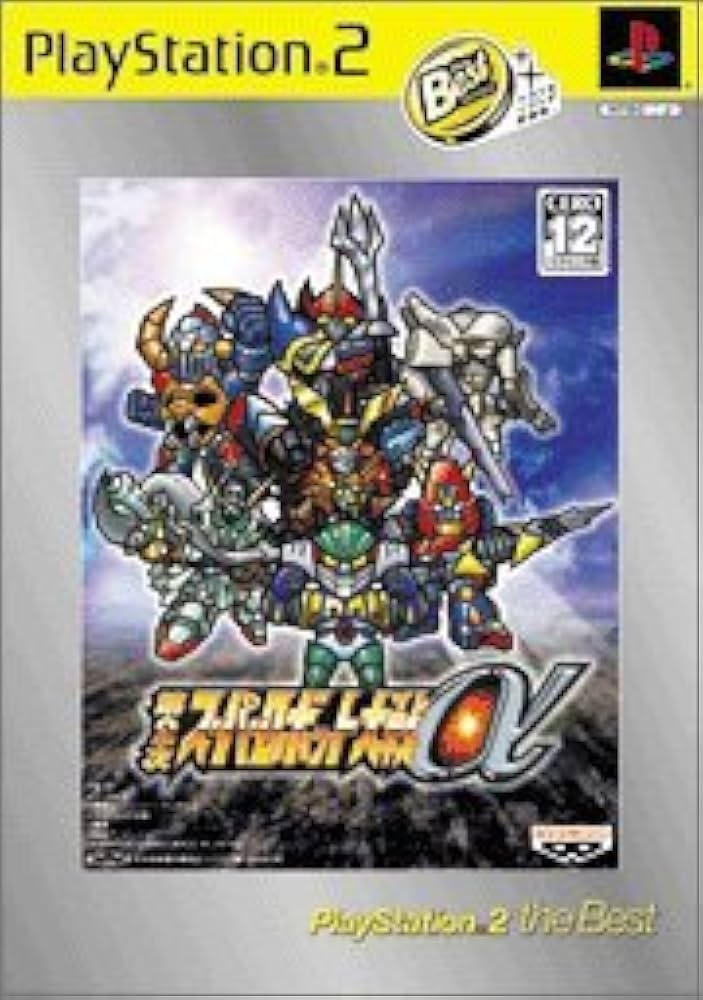
[No. 2] Super Robot Wars Alpha 2 — the game that built the modern template
| Story | Series Lineup | Systems | Replay Value | Total Score |
|---|---|---|---|---|
| 95 | 88 | 88 | 90 | 361 |
With this 2003 PS2 release, Super Robot Wars clearly reached another plane entirely. Battle animation quality took a massive leap, delivering character expressions and movement that were unimaginable in the PS1 days. This is also where the pilot training system arrived in earnest, and the freedom to decide which stats to push opened way up.
Sitting in the middle of the Alpha trilogy, it strings one story peak after another. The King of Braves GaoGaiGar and Steel Jeeg made their series debuts here, and the chemistry they strike with the returning cast is ferocious. The first time I played through the Alpha series, one late-game stage in Alpha 2 made me shout out loud in my own living room — that’s how well-staged this thing is.
Its story score of 95 is the highest in this entire ranking. Even as a middle chapter, the climax builds to something extraordinary, and there are people who argue that on pure narrative density it beats Alpha 3. The systems were as refined as anything from that era, too, and they hold up fine today.
- A story score of 95 — a masterpiece packed with the Alpha trilogy’s mid-series high points
- The pilot training system hugely expands how you build your roster
- Debut appearances from The King of Braves GaoGaiGar and Steel Jeeg are must-sees for fans
- Assumes you’ve played Alpha first — on its own you won’t grasp half the story
- PS2 exclusive, with no current-hardware support
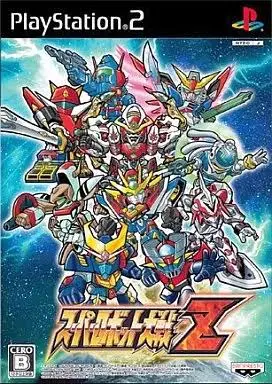
[No. 3] Super Robot Wars Z | The start of the Z series, and still its high-water mark
| Story | Lineup | Gameplay | Replay Value | Total Score |
|---|---|---|---|---|
| 92 | 90 | 87 | 88 | 357 |
Released in 2008, in the dying days of the PS2, this is the first entry in the Z series. Built around the concept of a “multiverse,” its original scenario pits Chaos against Order, and it’s still held up as one of the best-written stories the franchise has produced. The roster – Mobile Suit Zeta Gundam, Aura Battler Dunbine, Eureka Seven, Tengen Toppa Gurren Lagann – is exactly the kind of lineup you want when the goal is to paint a universe that spans separate worlds.
Two things define this one: MAP weapon animations that hit harder than ever, and a cap on how many units you can deploy, which suddenly turned squad selection into a real strategic decision. Which machines do you bring to the battlefield? Strategy begins at the deployment screen, and that design choice is what hooked veteran players.
Because the story is entirely self-contained, you can start here with zero Z series background. Sequels in the form of 2nd Super Robot Wars Z and 3rd Super Robot Wars Z are waiting if you like what you find, which makes this an excellent gateway.
- Fully self-contained, no prior knowledge required – the ideal entry point to the Z series
- The multiverse premise lets Gurren Lagann and Eureka Seven cross paths naturally
- Deployment limits add real depth to squad-building strategy
- PS2 exclusive, so it won’t run on current hardware
- The series jumps to different hardware starting with 2nd Z (PSP, 2011)
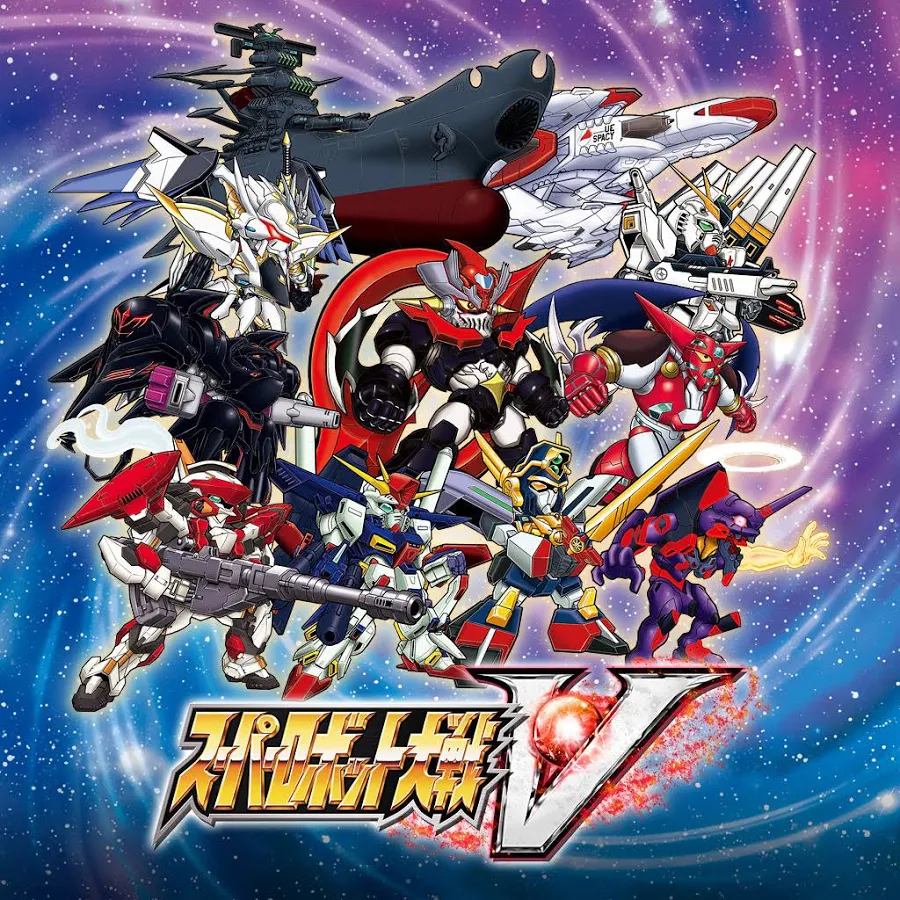
[No. 4] Super Robot Wars V | The one newcomers should pick up first
| Story | Lineup | Gameplay | Replay Value | Total Score |
|---|---|---|---|---|
| 88 | 88 | 92 | 85 | 353 |
Launched February 23, 2017 on PS4 and PS Vita, with later ports to Switch and Steam. Its playability score of 92 is the highest in this entire ranking, and the verdict that “V is the peak of Super Robot Wars quality-of-life” hasn’t budged since. Load times before battle are effectively zero, and the sheer momentum of moving from scenario to scenario is among the best in the franchise.
Space Battleship Yamato 2199 made its series debut here, and distinctive picks like Cross Ange and Brave Express Might Gaine get woven together by the original scenario. The plot runs a single, self-contained line, so you lose nothing by skipping the entries around it. It picked up a Gold Prize at PlayStation Awards 2018 and shipped over 500,000 copies – commercial proof to match the critical praise.
If you’ve never touched Super Robot Wars but want in, V is the first one I’d hand you. It’s playable on Switch and Steam too, which makes it the easiest title in the series to actually get running on modern hardware.
- Near-zero loading and a forgiving difficulty curve – the correct first pick for beginners
- Available on Switch and Steam, so you can play this “classic-formula” entry on current hardware
- Space Battleship Yamato 2199’s series debut, with all 26 shows crossing over naturally
- The low difficulty can leave veterans wanting more resistance
- The roster is a little narrow, which may disappoint fans of Showa-era mecha
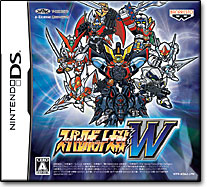
[No. 5] Super Robot Wars W | A DS classic with a staggeringly dense two-part structure
| Story | Lineup | Gameplay | Replay Value | Total Score |
|---|---|---|---|---|
| 90 | 85 | 82 | 88 | 345 |
Released March 1, 2007 for the Nintendo DS. The “W” in the title nods both to the DS’s dual screens and to the game’s two-part scenario structure. Plenty of people will tell you it’s the best handheld Super Robot Wars ever made, and it still commands a devoted following as a game people keep talking about.
The roster leans on early-2000s anime hits – Full Metal Panic!, The King of Braves GaoGaiGar FINAL, Mobile Suit Gundam SEED – so you don’t need an encyclopedic knowledge of older mecha shows to enjoy it. By bringing sequels and sister series in together, the crossover writing goes deeper than usual, and the result works as character drama rather than just a combat game.
Difficulty sits on the low side, and the balance is loose enough that sloppy upgrade spending won’t sink you – which is kind for newcomers. Being a DS cart, you’ll need to hunt down a used copy, but prices have settled and the value proposition is strong.
- A story score of 90 – the finest script in handheld Super Robot Wars
- Full Metal Panic!, GaoGaiGar and Gundam SEED make this catnip for the 2000s anime generation
- Easygoing difficulty, and used copies stay cheap and easy to find
- A DS title, so it isn’t supported on current hardware (a 3DS will run it)
- DS-specific visuals mean the battle animations are a generation behind
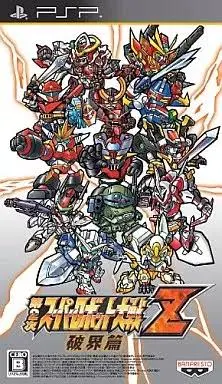
[No. 6] 2nd Super Robot Wars Z: Saisei-hen | The peak of the Z series’ middle stretch
| Story | Lineup | Gameplay | Replay Value | Total Score |
|---|---|---|---|---|
| 88 | 87 | 82 | 85 | 342 |
Released April 5, 2012 for PSP. It’s the back half of a two-part story, paying off every thread planted in Hakai-hen (2011), and the 2nd Z narrative reaches its conclusion here. Macross Frontier, Code Geass and Tengen Toppa Gurren Lagann all share the stage, and the crossover chemistry goes off like a bomb.
For a handheld game, the battle animation quality lands close to console standard, making this a rare title that balances pick-up-and-play convenience with genuinely dense presentation. Play it straight through from Hakai-hen and the catharsis of the finale gives up nothing to the console entries.
- The Macross Frontier and Code Geass crossover has a density you wouldn’t believe from a PSP game
- Carry a save over from Hakai-hen and you get one of the series’ most moving climaxes
- It assumes you’ve played Hakai-hen – on its own you only get half the story
- PSP exclusive, so you’ll need to source the hardware
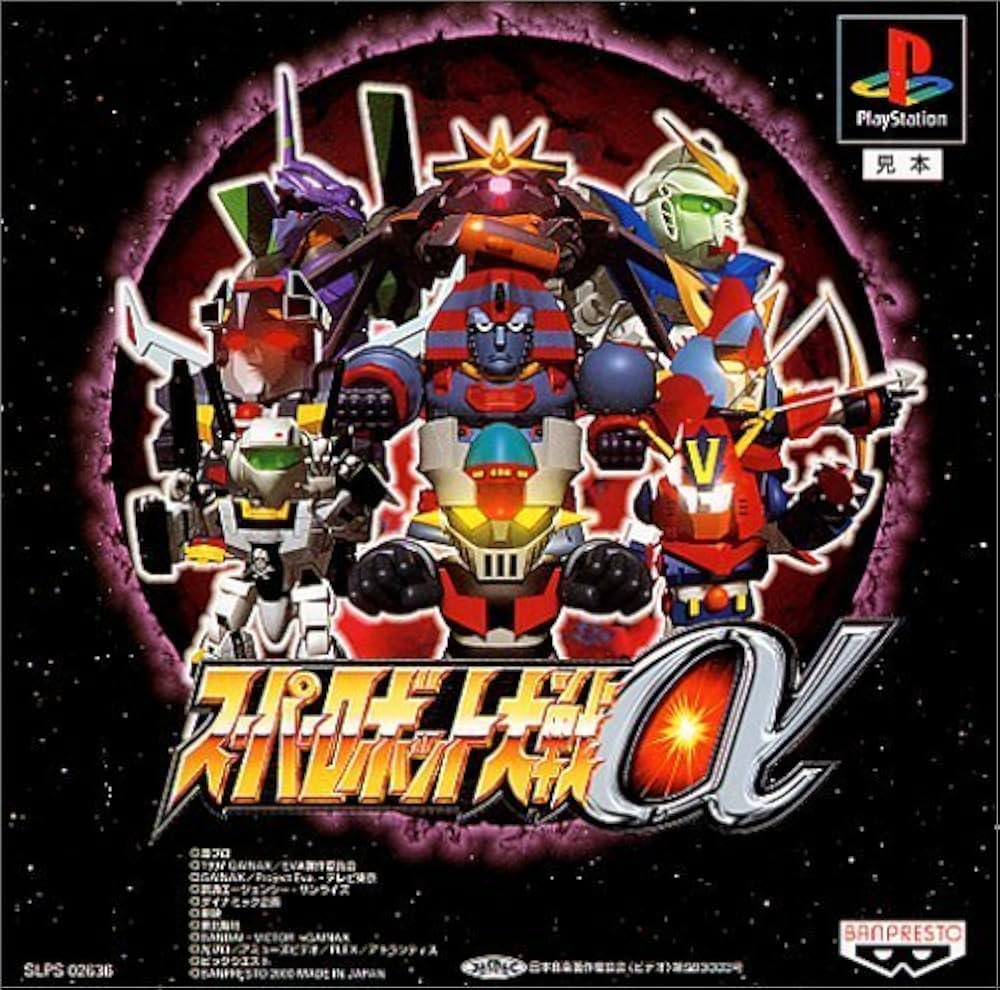
[No. 7] Super Robot Wars Alpha | The origin point that built the modern formula
| Story | Lineup | Gameplay | Replay Value | Total Score |
|---|---|---|---|---|
| 85 | 90 | 78 | 82 | 335 |
Released for PlayStation in 2000, this is the legendary entry that posted the highest sales figures in series history. Its leap forward in battle animation was incomparable to anything the franchise had done before, and it’s the game that explained what Super Robot Wars actually is to a mainstream audience. Neon Genesis Evangelion, Macross Plus and Macross: Do You Remember Love? all join the fight, and the lineup score of 90 is among the highest in this ranking.
Judged by modern standards the systems are undeniably dated, but as the starting point of a trilogy it’s non-negotiable if you want the full emotional payoff of the Alpha saga. If you plan to follow all three, start right here.
- The best-selling game in the series, and the one that became shorthand for Super Robot Wars itself
- Evangelion, Macross: Do You Remember Love? and Macross Plus together earn a lineup score of 90
- As a PS1 game the systems are behind modern standards, and parts of the UI are awkward to navigate
- You’ll need a PS1 console and a used copy of the disc
[No. 8] Super Robot Wars 30 | The 30th Anniversary Entry, and the One You Can Play on Current Hardware
| Story | Roster | System | Replay Value | Total Score |
|---|---|---|---|---|
| 80 | 82 | 90 | 78 | 330 |
Released October 28, 2021, simultaneously on Switch, PS4 and Steam. It’s the 30th anniversary title, and the most recent mainline entry you can play on modern hardware. Famitsu’s Cross Review handed it 33 out of 40 for a Gold award, with critics noting that a long accumulation of small refinements had finally pushed the series into genuinely good territory.
The mission-select structure is almost open-world in spirit, letting you tackle stages in whatever order you like — a genuinely fresh idea for the series. Its system score of 90 ties with Super Robot Wars V for the highest in this ranking, and the polish of the controls and UI is the best in the entire franchise. Factor in the DLC roster and the total package gets seriously hefty.
- On Switch, PS4 and Steam — the newest entry you can start playing right now
- A system score of 90, with mission select that bends to any play style
- Enough content, DLC included, to keep you busy for months
- A story score of 80 — some players feel the original plot lacks the depth of older entries
- The DLC is paid, so the full experience costs extra
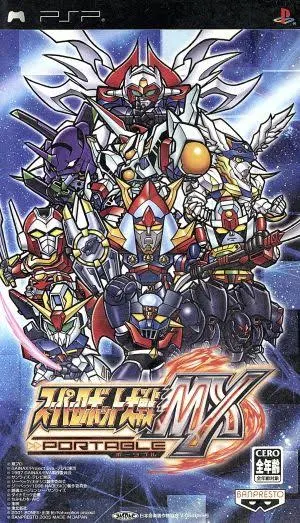
[No. 9] Super Robot Wars MX | The Hidden Gem — a PS2 Classic That’s Kind to Newcomers
| Story | Roster | System | Replay Value | Total Score |
|---|---|---|---|---|
| 82 | 80 | 84 | 80 | 326 |
Launched on PS2 on May 27, 2004. Twenty-one series joined the fight, including Mazinger Z, Mobile Suit Zeta Gundam and Evangelion, and the game introduced new mechanics like Double Attack and support attacks. The consensus is that the difficulty sits on the low side and the campaign moves briskly, which makes MX a great next step if the Alpha games felt punishing.
Compared with IMPACT, the overall length is far better judged, and the story keeps a steady rhythm. It also stands apart from the Alpha continuity, so you can enjoy it entirely on its own. If someone asks me whether to play MX or IMPACT for their PS2 Super Robot Wars fix, I’ll point a newcomer to MX every time.
- Forgiving difficulty and a sensible running time make it the ideal PS2-era entry point
- A self-contained story that needs no knowledge of the games before or after it
- PS2 exclusive, with no release on current hardware
- Veterans may find the roster and the density of the writing a step below the Alpha games
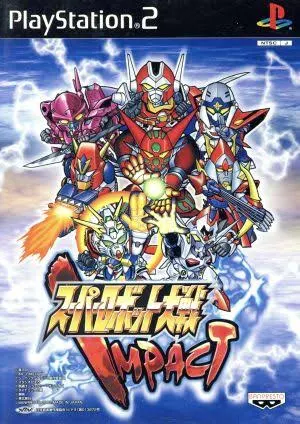
[No. 10] Super Robot Wars IMPACT | 101 Missions — an Epic Built for Showa-Era Robot Diehards
| Story | Roster | System | Replay Value | Total Score |
|---|---|---|---|---|
| 80 | 85 | 70 | 90 | 325 |
Released March 28, 2002 as the first Super Robot Wars on PS2. Its calling cards are a staggering 101-mission campaign and a roster built around Showa-era robot anime, with Martian Successor Nadesico and Mobile Fighter G Gundam in the mix. It took home a Gold Prize at the PlayStation Awards 2002, cementing its place as the game that carried the series onto PS2.
That replay value score of 90 is the highest in this entire ranking. Clearing every mission alone runs 50 to 60 hours, and chasing full completion past the 100-hour mark is hardly unusual. The difficulty is steep, so this is designed for veterans hunting a challenge rather than for newcomers. If you have any real affection for Showa robot anime, IMPACT’s lineup will hit you square in the chest.
- A replay value score of 90 — 101 missions plus full completion adds up to a 200-hour monster
- A lineup centered on ’80s and ’90s classics that lands perfectly for Showa robot anime fans
- High difficulty and enormous length make it a poor fit for beginners
- PS2 exclusive with no current-hardware release, and the systems feel a generation behind
Enjoying this article? Add us as a preferred source on Google.
The Super Robot Wars Ranking | How to Pick the Right One for You
Going purely by the total scores in this ranking is one valid approach, but the best answer shifts depending on what you personally care about. Here’s a quick reference broken down by goal.
| If this is you | Play this |
|---|---|
| Total newcomer to Super Robot Wars | Super Robot Wars V (Switch, Steam) |
| Want the series at its absolute peak | 3rd Super Robot Wars Alpha (after Alpha and 2nd Alpha, in order) |
| Want to play right now on modern hardware | Super Robot Wars 30 (Switch/PS4/Steam) |
| Want a real challenge and huge length | Super Robot Wars IMPACT |
| Grew up on 2000s anime | Super Robot Wars W (DS) |
| Want something compact on PS2 | Super Robot Wars MX |
Treat the Alpha trilogy the way you’d treat a trip worth packing for: start with the first Alpha and work through them in order. Bail partway and you’ll be left unsatisfied, but see it through and you’ll experience the highest point this entire genre has ever reached. If you come in through V or 30 and fall for it, digging back into the older games is a perfectly good route. There’s no wrong place to start — and that generosity is exactly what makes Super Robot Wars what it is.
If you forced me to name a single best Super Robot Wars from the Alpha era onward, I’d say 3rd Super Robot Wars Alpha without hesitating. The rush of watching the trilogy pay off every last thread it planted beats anything else in the franchise. If you want something on current hardware, make V your first stop and you won’t go wrong. Either way, the sheer heat of watching a row of super robots charge into battle side by side doesn’t change.
Great games don’t have an expiration date — pick one up and see for yourself.
When this article was first published, we listed “Macross Zero” and “Mobile Suit Gundam SEED Destiny” among the series appearing in Super Robot Wars W. Neither appears in that game (the SEED-related entries are Mobile Suit Gundam SEED, Gundam SEED Astray and Gundam SEED X Astray). We also incorrectly listed The King of Braves GaoGaiGar as appearing in Super Robot Wars Alpha; its first appearance in the series was in 2nd Super Robot Wars Alpha. We have corrected both passages following reader feedback, and we apologize for the errors.
Read Next
Snicker Kitamura
Leave a Reply