



Enjoying this article? Add us as a preferred source on Google.
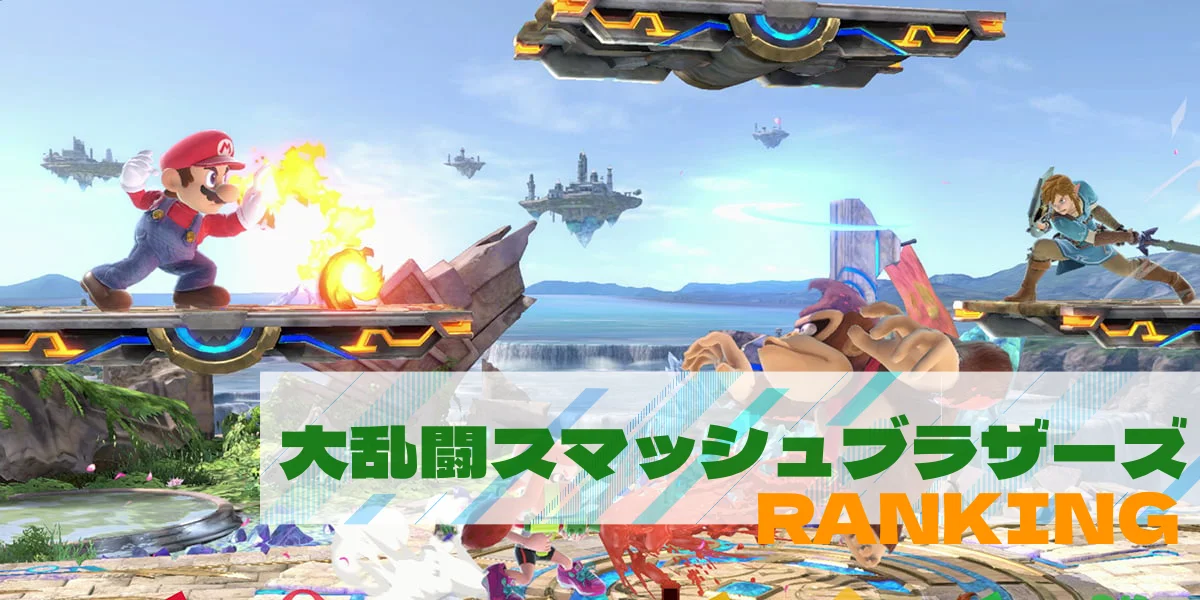
If you’re getting into Super Smash Bros. right now, there is exactly one answer: Super Smash Bros. Ultimate. 89 fighters, more than 100 stages, 38.14 million copies sold worldwide — those numbers are in a class of their own not just within this series but across the history of competitive games, and the whole thing runs on Nintendo Switch 2 as it is. End the conversation there, though, and Melee’s razor-sharp fighting, Brawl’s Subspace Emissary and Wii U’s 8-Player Smash all go back on the shelf unmentioned.
The series began on the Nintendo 64 on January 21, 1999, and by the time Ultimate landed on December 7, 2018, it had produced six games (counting Super Smash Bros. for Nintendo 3DS and for Wii U separately). Masahiro Sakurai directed every single one, and each time out he broke the previous game’s rules with something new: “Everyone Is Here,” third-party fighters, 8-Player Smash. Which is why the answer to “which one is the best” shifts depending on what you value.
For this ranking I scored all six games out of 100 on four axes — Accessibility, Content Volume, Competitive Depth and Availability — and ordered them by total score. Each entry also carries the basics: release date, developer and lifetime sales. At the end there is a rundown of which games you can actually play on current hardware as of October 2026. I will spoil it now: only one of the six.
Back in my younger days, the original cartridge lived permanently in my girlfriend’s Nintendo 64. That was 27 years ago. Of all the GameCube games on my shelf, Melee is the only case worn white at the edges, and that is because I pulled it out and shoved it back in more times than I can count.
(It was the copy she left behind when she walked out, and yes, I played it again and again with tears running down my face.)
- The four-axis score table for all six games
- No. 1 Ultimate: 89 fighters, 38.14 million sold, runs on Switch 2
- No. 2 Brawl: the first third-party fighters, The Subspace Emissary, a perfect 40 from Famitsu
- No. 4 Melee: a perfect score for competitive depth, dragged down by availability
- Which ones can you play on current hardware? Why only one of the six qualifies
Start with the score table.
*Prices in this article are converted from Japanese yen at a reference rate of ¥153 = US$1.
All Six Super Smash Bros. Games: Four-Axis Score Comparison
Every game is scored out of 100 on four criteria. Accessibility is how fast a first-timer gets to the fun. Content Volume covers the fighter count and the number of modes. Competitive Depth is how high the skill ceiling climbs. Availability is how little hassle it takes to line up the console and the game as of October 2026. Do not read only the totals — choose by the axis you care about most.
| Title | Accessibility | Content Volume | Competitive Depth | Availability | Total Score |
|---|---|---|---|---|---|
| No. 1 Super Smash Bros. Ultimate | 92 | 100 | 90 | 100 | 382 |
| No. 2 Super Smash Bros. Brawl | 90 | 90 | 72 | 50 | 302 |
| No. 3 Super Smash Bros. for Wii U | 88 | 85 | 80 | 45 | 298 |
| No. 4 Super Smash Bros. Melee | 85 | 70 | 100 | 40 | 295 |
| No. 5 Super Smash Bros. for Nintendo 3DS | 80 | 80 | 75 | 55 | 290 |
| No. 6 Super Smash Bros. (Nintendo 64) | 85 | 50 | 70 | 35 | 240 |
Availability is what moves these rankings the most. None of the five games other than Ultimate are available on Nintendo Switch Online, so you need the console of the era and a copy of the game. Measured on Competitive Depth alone, Melee stands by itself at 100. If this table is already enough to make you say “I am a Melee person,” go right ahead.
No. 1 Super Smash Bros. Ultimate: 89 Fighters on the Roster, and It Runs on Switch 2
| Accessibility | Content Volume | Competitive Depth | Availability | Total Score |
|---|---|---|---|---|
| 92 | 100 | 90 | 100 | 382 |
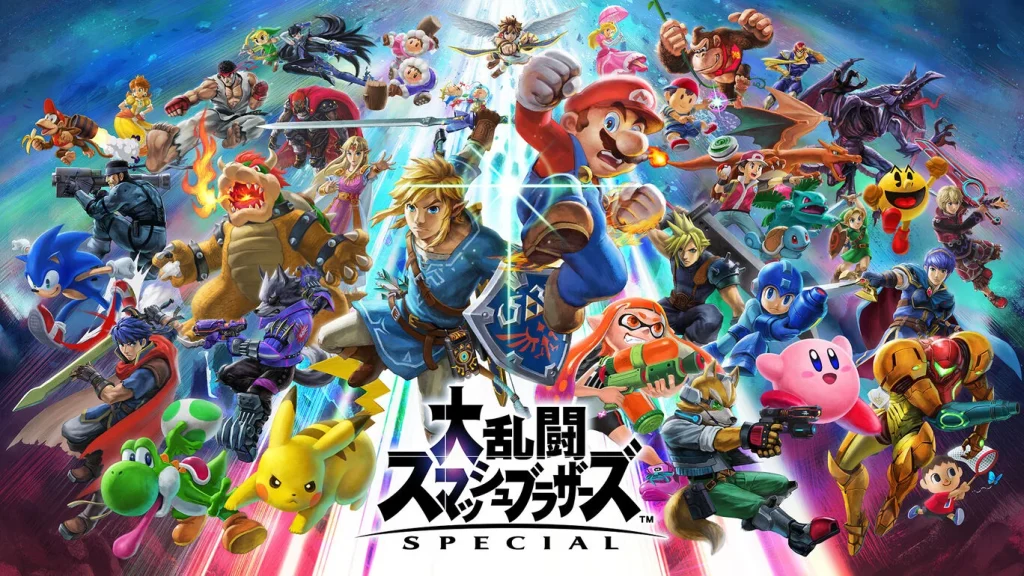
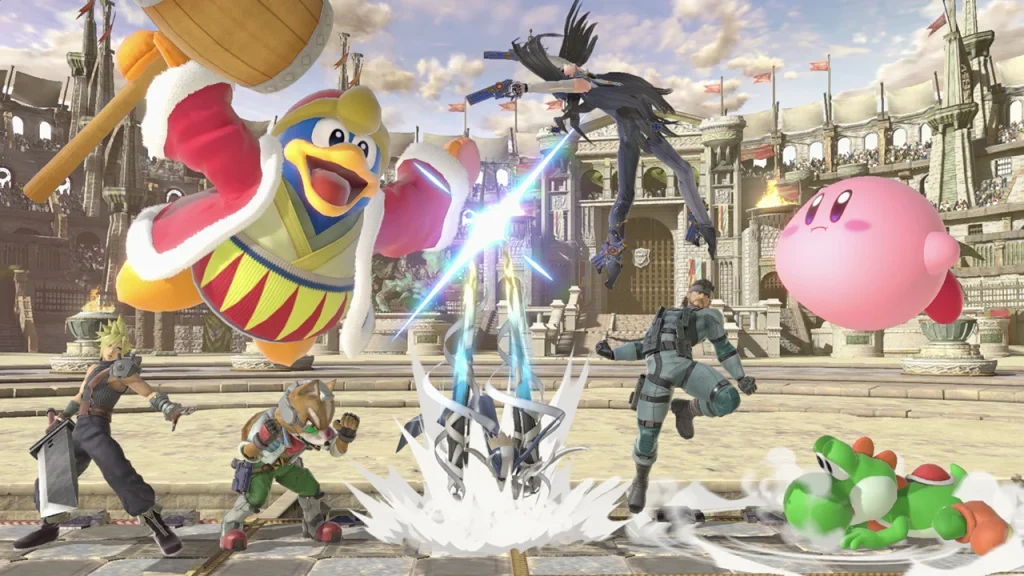
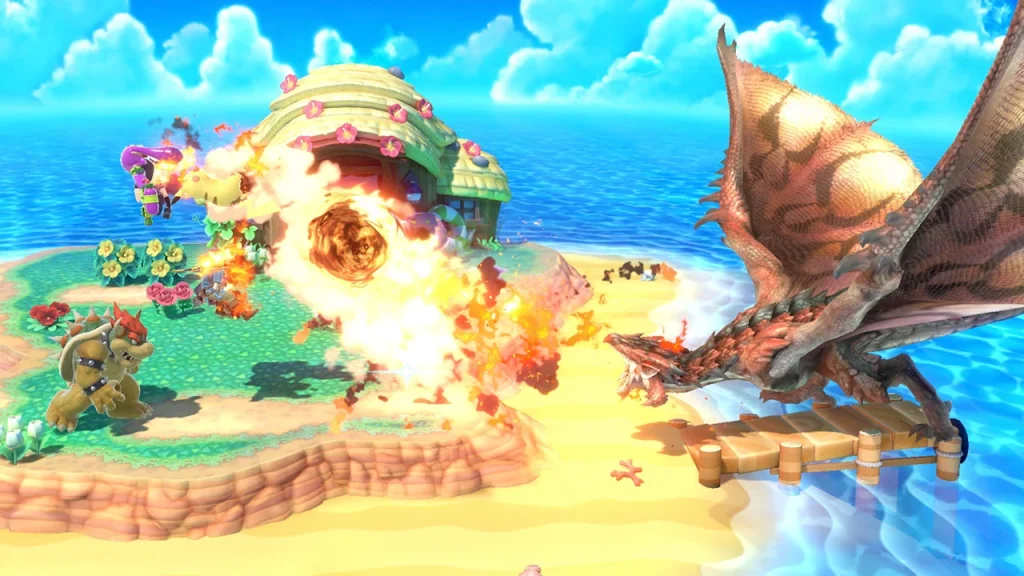
Super Smash Bros. Ultimate launched on Nintendo Switch on December 7, 2018, developed by Sora Ltd. and Bandai Namco Studios and published by Nintendo. The concept was “Everyone Is Here”: every fighter from every previous game came back, and the launch roster of 74 grew to a final 89 once the DLC was done. The last fighter added was Sora from Kingdom Hearts, released on October 19, 2021.
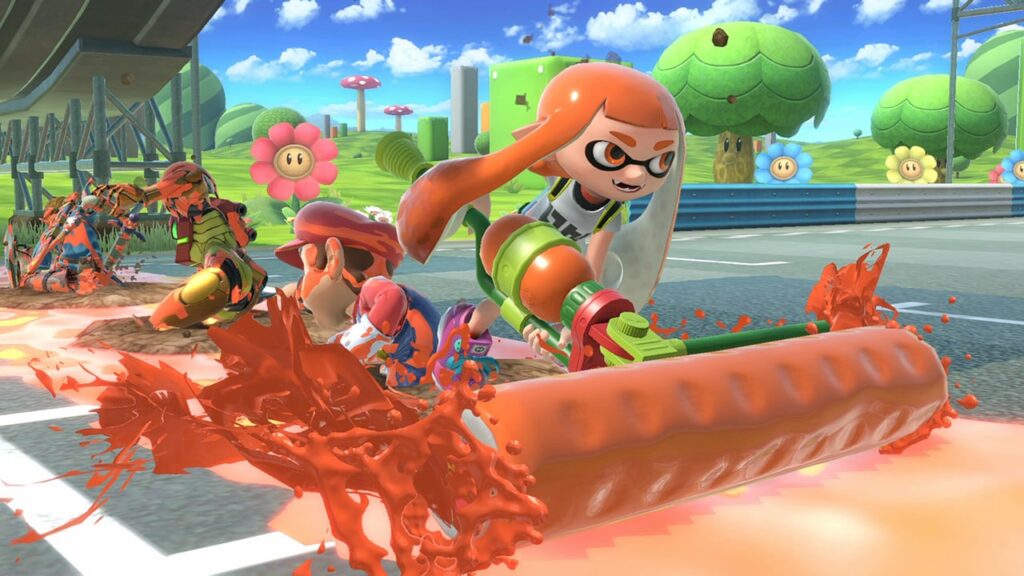
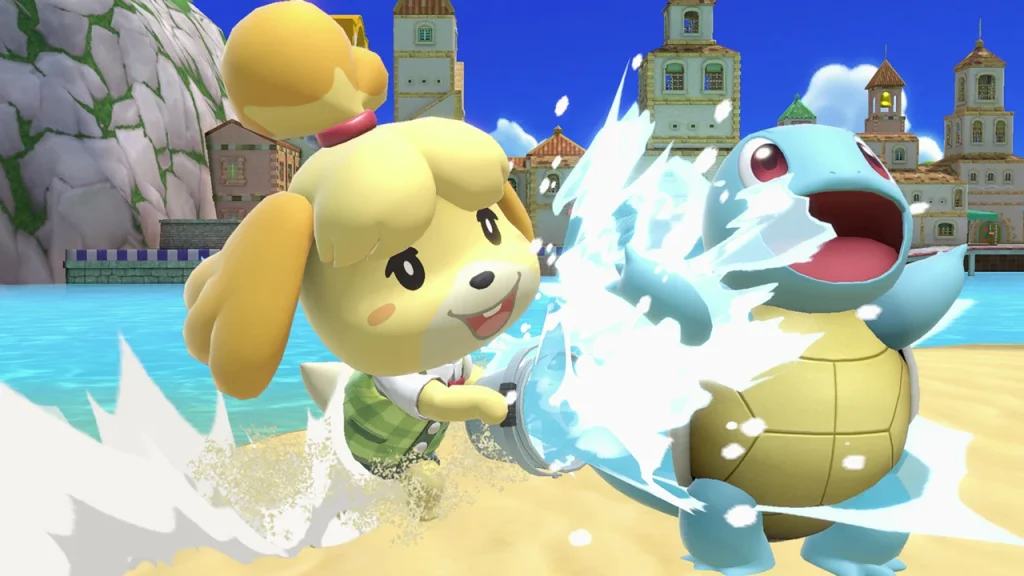
As of the end of June 2026 it had sold 38.14 million copies worldwide and 8.39 million in Japan, a single game outselling the combined total of every entry before it. There are more than 100 stages and over 800 music tracks, and the single-player adventure is World of Light. Spirits, which took the place of trophies, work as both a collection and an upgrade system, so they hold up as a reason to keep playing even if you have no idea which game a given character came from.
| Item | Details |
|---|---|
| Release date | December 7, 2018 |
| Platform | Nintendo Switch (also runs on Nintendo Switch 2) |
| Developer / Publisher | Sora Ltd., Bandai Namco Studios / Nintendo |
| Fighters | 74 at launch, 89 including DLC |
| Price | $52 (tax included). Fighters Pass Vol. 1 is $18 for 5 fighters, Vol. 2 is $22 for 6 |
| Players | 1 to 8 players on a single console, up to 4 over the internet |
| Sales | 38.14 million worldwide, 8.39 million in Japan (as of the end of June 2026) |
A word on the Switch 2 situation. Ultimate runs on Switch 2 through backward compatibility. Just after that console arrived, in June 2025, a bug turned up that instantly ended online matches when a Mii Fighter was used, but it was fixed on June 19 by Switch 2 system version 20.1.5, and a game-side update, Ver. 13.0.4, followed on June 25. A new entry for Switch 2 has been reported to be in development, but as of October 2026 there has been no official announcement from Nintendo, and no Switch 2 Edition of Ultimate has been announced either.
I settled on 92 for Accessibility because choosing from 89 fighters is a heavy lift for a beginner all by itself. Content Volume and Availability are a no-argument 100 apiece. The 90 for Competitive Depth reflects a design that aims at balancing the whole cast rather than chasing the razor-edged controls of Melee.
- 89 fighters, 100-plus stages and 800-plus music tracks make it the largest game in the series
- Runs on Switch 2 as it is, and as of October 2026 no new entry has been announced
- The only Smash Bros. game you can still buy new, at $52
- Completing the DLC means over $39 more for the two Fighters Passes
- Beginners face a long haul just narrowing 89 fighters down to one
No. 2 Super Smash Bros. Brawl: The First Third-Party Fighters, The Subspace Emissary, a Perfect 40 From Famitsu
| Accessibility | Content Volume | Competitive Depth | Availability | Total Score |
|---|---|---|---|---|
| 90 | 90 | 72 | 50 | 302 |
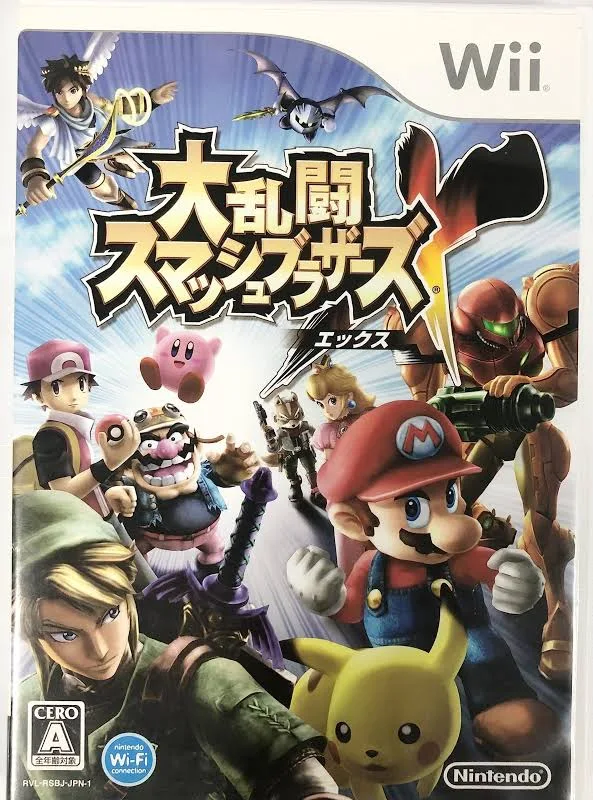
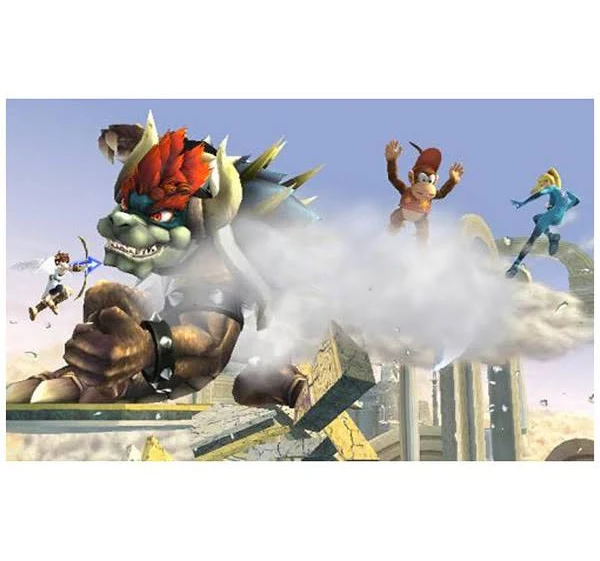
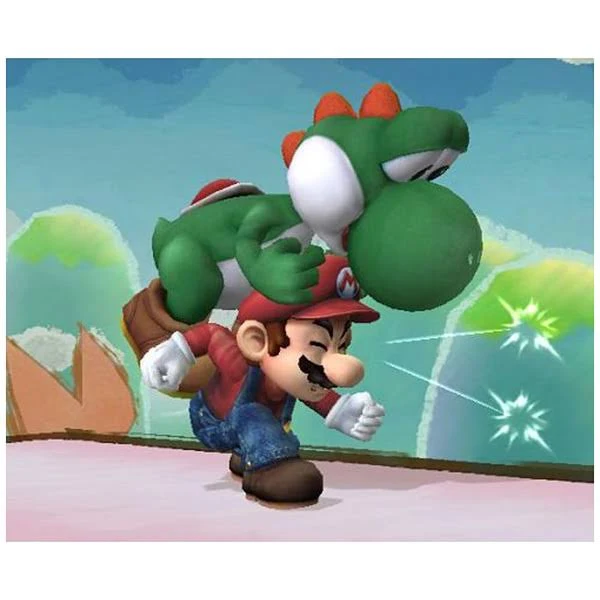
Super Smash Bros. Brawl arrived on Wii on January 31, 2008. Sora Ltd. led development, with Game Arts shouldering the core of the work, and Nintendo published it. The roster numbers 35 fighters, and this is the game where characters from other companies joined the fight for the first time in Sonic and Snake. Final Smashes start here, too.
The single-player Subspace Emissary is big enough to stand on its own as a side-scrolling action game, and it pulls every fighter into one story. Online battles over Nintendo Wi-Fi Connection were a series first as well. Famitsu’s Cross Review gave it a perfect 40 out of 40, only the seventh game to earn the magazine’s top marks. Sales reached 13.32 million worldwide as of the end of March 2024, the series record until Ultimate showed up.
| Item | Details |
|---|---|
| Release date | January 31, 2008 |
| Platform | Wii (also runs through Wii U backward compatibility) |
| Developer / Publisher | Sora Ltd. (with development support from Game Arts) / Nintendo |
| Fighters | 35 |
| Series firsts | Third-party fighters (Sonic, Snake), Final Smashes, The Subspace Emissary, online battles |
| Sales | 13.32 million worldwide (as of the end of March 2024) |
I held Competitive Depth down to 72 because this is the entry that has long been described as slower than Melee and less suited to serious play thanks to additions like random tripping. In return, its solo content is the richest in the series. The 90 for Content Volume is The Subspace Emissary’s doing. Availability sits at 50, reflecting that the Wii disc still turns up used but the Wii Shop Channel closed on January 31, 2019, leaving no digital route in.
- The Subspace Emissary is the only full-scale side-scrolling adventure in the series
- A historic release: the first time Sonic and Snake turned up in Smash Bros.
- If you already have a Wii, a used disc makes this a cheap pickup
- The pace of play is slower than Melee and not built for competition
- Online service has already shut down, so it is local play only now
No. 3 Super Smash Bros. for Wii U: 8-Player Smash, HD Visuals and amiibo
| Accessibility | Content Volume | Competitive Depth | Availability | Total Score |
|---|---|---|---|---|
| 88 | 85 | 80 | 45 | 298 |
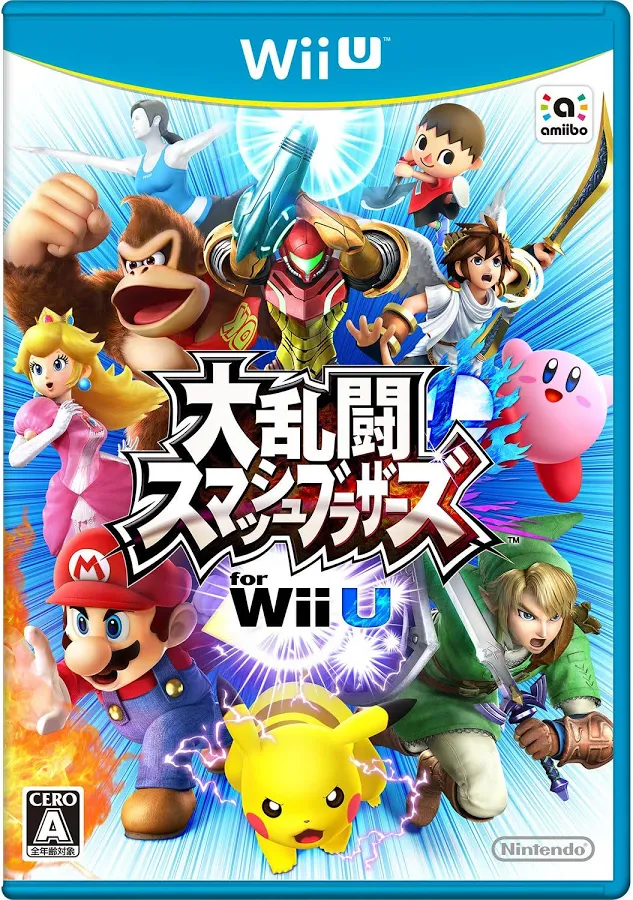
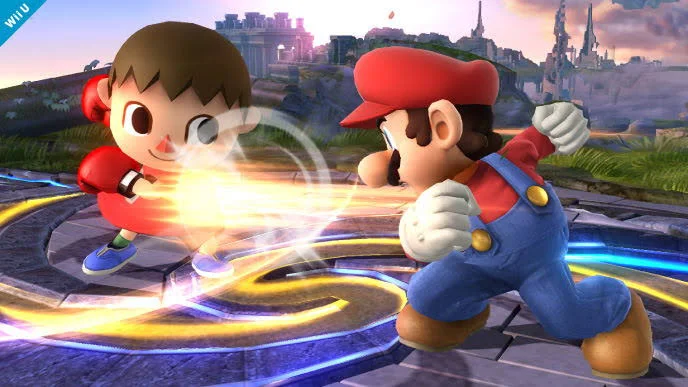
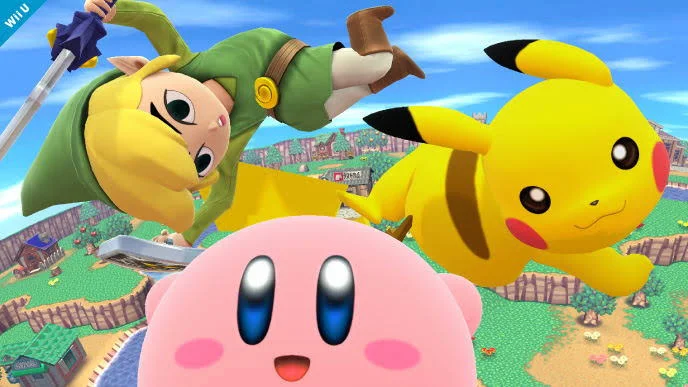
Super Smash Bros. for Wii U released on December 6, 2014, developed by Bandai Namco Studios and Sora Ltd. and published by Nintendo. It was the first game in the series to run in HD, and the first to offer 8-Player Smash, in which up to eight people fight at once. The final roster, DLC included, comes to 58 fighters.
amiibo support, which lets you scan a figure and raise that fighter into a rival or a partner, began with the for games, this one and the 3DS version together. DLC fighters, kicked off by Mewtwo, also debuted in the series with these two releases. Custom special moves, which let you swap out a fighter’s attacks, are shared by both versions as well. It sold 5.38 million copies worldwide, a strong showing considering how many Wii U consoles were actually out there.
| Item | Details |
|---|---|
| Release date | December 6, 2014 |
| Platform | Wii U |
| Developer / Publisher | Bandai Namco Studios, Sora Ltd. / Nintendo |
| Fighters | 58 in the final roster (DLC included) |
| Series firsts | 8-Player Smash and the series’ first HD visuals. amiibo support, DLC fighters and custom special moves are shared with the 3DS version |
| Sales | 5.38 million worldwide |
The 88 for Accessibility rewards how immediately legible the fun of 8-Player Smash is. Availability comes in at 45 because the Wii U is out of production and the Nintendo eShop for 3DS and Wii U closed on March 28, 2023, which leaves hunting down a used physical copy as the only way in. DLC fighters can no longer be bought at all.
- 8-Player Smash was pulled off here for the first time in the series
- First to bring in HD visuals and amiibo training
- Works with the GameCube Controller Adapter
- With the eShop closed, DLC fighters can no longer be purchased
- You need to buy a used Wii U console along with the game
No. 4 Super Smash Bros. Melee: A Perfect Score for Competitive Depth, Dragged Down by Availability
| Accessibility | Content Volume | Competitive Depth | Availability | Total Score |
|---|---|---|---|---|
| 85 | 70 | 100 | 40 | 295 |
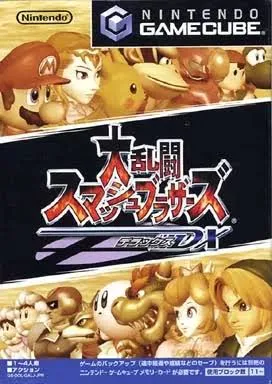
Super Smash Bros. Melee arrived on the Nintendo GameCube on November 21, 2001, developed by HAL Laboratory and published by Nintendo. The roster runs to 26 fighters (counting Sheik, Zelda’s transformation, separately), more than double the original’s 12. Side special moves and Adventure Mode both debuted here.
Roughly 350,000 copies moved at launch, which is reported to have outpaced the roughly 300,000 GameCube consoles sold in the same window. The worldwide lifetime figure is 7.38 million. There’s also the well-worn story of Sakurai working 13 months without a day off, with Nintendo’s Satoru Iwata pitching in on debugging. More than 20 years later the competitive scene is still running tournaments, and the game is known for the uniquely advanced techniques it produced.
| Item | Details |
|---|---|
| Release date | November 21, 2001 |
| Platform | Nintendo GameCube (also runs via Wii backward compatibility) |
| Developer / Publisher | HAL Laboratory / Nintendo |
| Fighters | 26 (including Sheik) |
| Series firsts | Side special moves, Adventure Mode |
| Sales | 7.38 million worldwide |
That 100 for Competitive Depth is the only perfect score in the series. The game moves fast, and the precision of your inputs shows up directly in the result. The flip side is Accessibility, which I held to 85. Put a newcomer up against a veteran and they get knocked off the stage without doing a thing. Availability at 40 is a harsh number, but the reality is that you need a GameCube disc: Melee still isn’t on the Nintendo GameCube service on Nintendo Switch Online as of October 2026, and the Wii Shop Channel has already shut down.
- The fastest fighting and the highest skill ceiling in the series
- The origin of Adventure Mode and side special moves
- Playable on GameCube hardware or through Wii compatibility
- Not on the NSO GameCube service, and used discs run expensive
- The widest gap between beginners and experts
No. 5 Super Smash Bros. for Nintendo 3DS: The First Smash You Could Play on a Handheld
| Accessibility | Content Volume | Competitive Depth | Availability | Total Score |
|---|---|---|---|---|
| 80 | 80 | 75 | 55 | 290 |
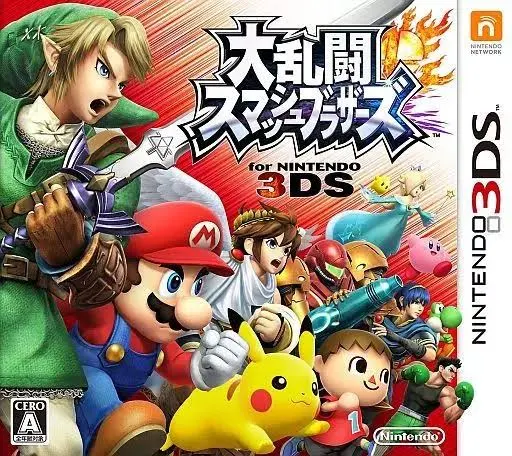
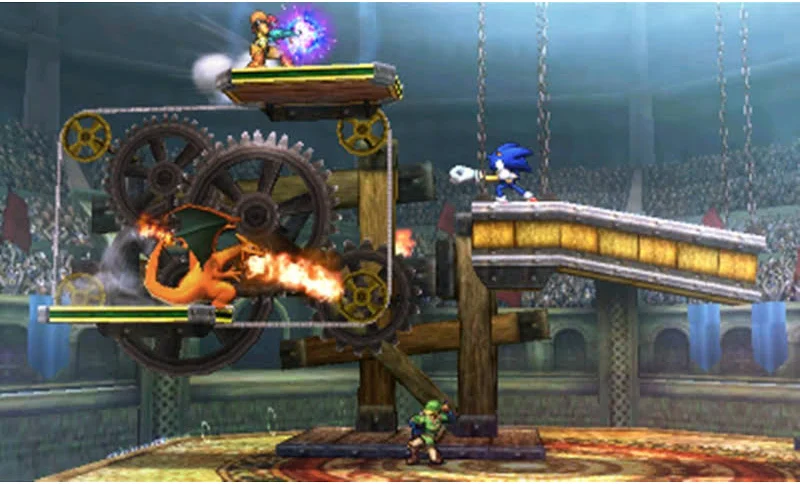
Super Smash Bros. for Nintendo 3DS launched on September 13, 2014, developed by Bandai Namco Studios and Sora Ltd. and published by Nintendo. It was the first Smash to land on a handheld, reaching shelves three months ahead of the Wii U version. The final roster, DLC included, was 58 fighters, the same as the Wii U release. Sales came to 9.65 million worldwide and 3.18 million in Japan (as of the end of 2022), beating the Wii U version.
Smash Run is the mode exclusive to the 3DS version. You tear around a field collecting power-ups against the clock, then fight it out at the end. It also links up with the Wii U version, letting you use a 3DS as a controller for it. Being able to play Smash on a handheld at all was an event in itself back then.
| Item | Details |
|---|---|
| Release date | September 13, 2014 |
| Platform | Nintendo 3DS |
| Developer / Publisher | Bandai Namco Studios, Sora Ltd. / Nintendo |
| Fighters | 58 in the final roster (DLC included) |
| Series firsts | First handheld entry, Smash Run, linking with the Wii U version |
| Sales | 9.65 million worldwide, 3.18 million in Japan (as of the end of 2022) |
Accessibility sits at 80 because the small screen and the 3DS Circle Pad make the controls feel cramped no matter what. I put Availability at 55 since used 3DS systems are relatively cheap and physical copies were printed in quantity, which makes this easier to assemble than the Wii U version. The eShop closed on March 28, 2023, though, so the DLC is no longer buyable.
- The only Smash you can play on a handheld
- Used systems and copies are relatively cheap
- Smash Run is exclusive to the 3DS version
- The screen is small, and it feels worse to control than the Wii U version
- With the eShop closed, the DLC fighters can’t be obtained
No. 6 Super Smash Bros. (N64): The 12 Fighters That Started Everything
| Accessibility | Content Volume | Competitive Depth | Availability | Total Score |
|---|---|---|---|---|
| 85 | 50 | 70 | 35 | 240 |
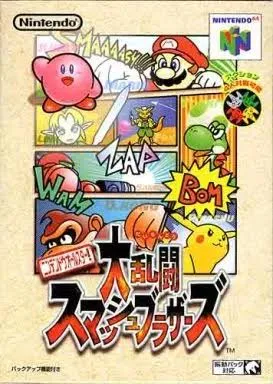
Super Smash Bros. arrived on the Nintendo 64 on January 21, 1999, developed by Nintendo EAD and HAL Laboratory, published by Nintendo and directed by Masahiro Sakurai. There were 12 fighters, and the idea of putting Nintendo characters like Mario, Link and Pikachu on the same screen to beat each other up started right here. Sales were 5.55 million worldwide and 1.97 million in Japan (as of the end of 2022).
Piling on damage to launch opponents off the screen, smash attacks off a flick of the stick, items raining down into the brawl. The skeleton of the series was already finished in this one game, and the five that followed have been adding muscle to it. It also fit the N64’s design beautifully, with four controller ports for four-player matches.
| Item | Details |
|---|---|
| Release date | January 21, 1999 |
| Platform | Nintendo 64 (also offered on the Wii Virtual Console) |
| Developer / Publisher | Nintendo EAD, HAL Laboratory / Nintendo |
| Fighters | 12 |
| Series firsts | Every core rule of the series |
| Sales | 5.55 million worldwide, 1.97 million in Japan (as of the end of 2022) |
Content Volume at 50 scores the scale of the time exactly as it was: 12 fighters and a short stage list. Availability at 35 is the lowest of the six. The Wii Virtual Console release stopped being purchasable when the Wii Shop Channel closed on January 31, 2019, and the game still isn’t on the NINTENDO 64 service on Nintendo Switch Online as of October 2026. Playing it means N64 hardware and a cartridge.
There is one unofficial wrinkle. Overseas outlets reported that in July 2025, an image of the original Smash turned up in the background of a Nintendo Switch Online promotional video, and Donkey Kong 64 and Forsaken 64, which appeared in that same video, were later actually added to the service. So a release is possible. That’s as far as it goes for now.
- The origin point. Even with 12 fighters, the fun of a four-way brawl is already fully formed
- Four controllers, four players: the N64 luxury of its day
- Matches are short, so it’s easy to pass around when people are over
- Not on NSO, and with the Virtual Console gone, playing it takes real N64 hardware
- With 12 fighters and few stages, playing solo feels thin
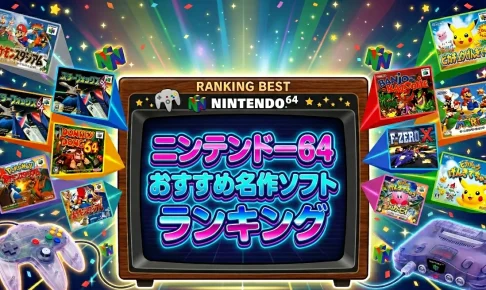
Can all six Super Smash Bros. games be played on current hardware? A complete platform-by-platform guide
✅ The bottom line
Of the six games covered here, only one, Ultimate, can be played on current hardware as of October 2026. Not one Smash game has been added to either the NINTENDO 64 or the Nintendo GameCube service on Nintendo Switch Online. The other five mean tracking down the original hardware and software.
① Games playable through a subscription or for free
| Title | Platform | Price and notes |
|---|---|---|
| None | — | Neither NINTENDO 64 Nintendo Classics nor Nintendo GameCube Nintendo Classics (Switch 2 only, launched June 5, 2025) carries a Smash game as of October 2026. Under the July 1, 2026 revision, the Expansion Pack costs $39 for a 12-month individual plan and $65 for a 12-month family plan |
② Games playable as a standalone purchase
| Title | Platform | Price and notes |
|---|---|---|
| Super Smash Bros. Ultimate | Nintendo Switch, Nintendo Switch 2 (backward compatible) | $52 (tax included). Fighters Pass Vol. 2 is $22 |
③ Games playable as a remaster or remake
| Title | Platform | Price and notes |
|---|---|---|
| None | — | No remaster or remake exists anywhere in the series. A Switch 2 Edition of Ultimate is also unannounced as of October 2026 |
④ Games that are hard to get on current hardware
| Title | How to play it | Alternative |
|---|---|---|
| Super Smash Bros. (N64) | Nintendo 64 hardware and a cartridge. Wii Virtual Console purchases ended January 31, 2019 | All 12 fighters appear in Ultimate |
| Super Smash Bros. Melee | GameCube hardware, or a Wii with backward compatibility plus the disc | All 26 fighters appear in Ultimate. The speed of the fighting is another matter |
| Super Smash Bros. Brawl | Wii hardware, or a Wii U with backward compatibility plus the disc. Online service has ended | World of Light in Ultimate works as the single-player substitute |
| Super Smash Bros. for Nintendo 3DS | 3DS hardware and a physical copy. The eShop closed on March 28, 2023 | For playing on the go, Ultimate’s handheld mode |
| Super Smash Bros. for Wii U | Wii U hardware and a physical copy. The eShop closed on March 28, 2023 | Ultimate carries 8-Player Smash over wholesale |
Start with Ultimate. Every fighter from the older games is in there. And if the speed of Melee starts nagging at you after that, go set off on a hunt for a used GameCube.
Enjoying this article? Add us as a preferred source on Google.
In summary: the key points of our Super Smash Bros. ranking
First place on total score is Super Smash Bros. Ultimate (382 points): released December 7, 2018, 89 fighters, 38.14 million copies worldwide, $52, and it runs on Switch 2. Second is Brawl (302 points), released January 31, 2008, with the first third-party guest fighters, The Subspace Emissary and a 40 out of 40 from Famitsu. Third is for Wii U (298 points) for 8-Player Smash and HD visuals. Fourth-place Melee (295 points) holds the series’ only 100 for Competitive Depth, but it’s a GameCube game from November 21, 2001 and hard to get hold of. Fifth is for Nintendo 3DS (290 points), and sixth is the January 21, 1999 original (240 points). As of October 2026, Ultimate is the only one playable on current hardware, and not a single game in the series has been added to Nintendo Switch Online.
On the numbers, Ultimate is running away with it. 89 fighters, 38.14 million copies, $52, and Switch 2 compatibility. But look only at the Competitive Depth column of the scorecard and Melee, from 2001, still sits at 100, above Ultimate. The series has exactly one peak, but everyone’s favorite entry is different. And that’s fine.
If the N64 version ever comes to NSO, I’m chasing that break room feeling all over again. Until it does, I’ll be picking those 12 fighters in Ultimate.
Read Next
Snicker Kitamura


Leave a Reply