







Enjoying this article? Add us as a preferred source on Google.
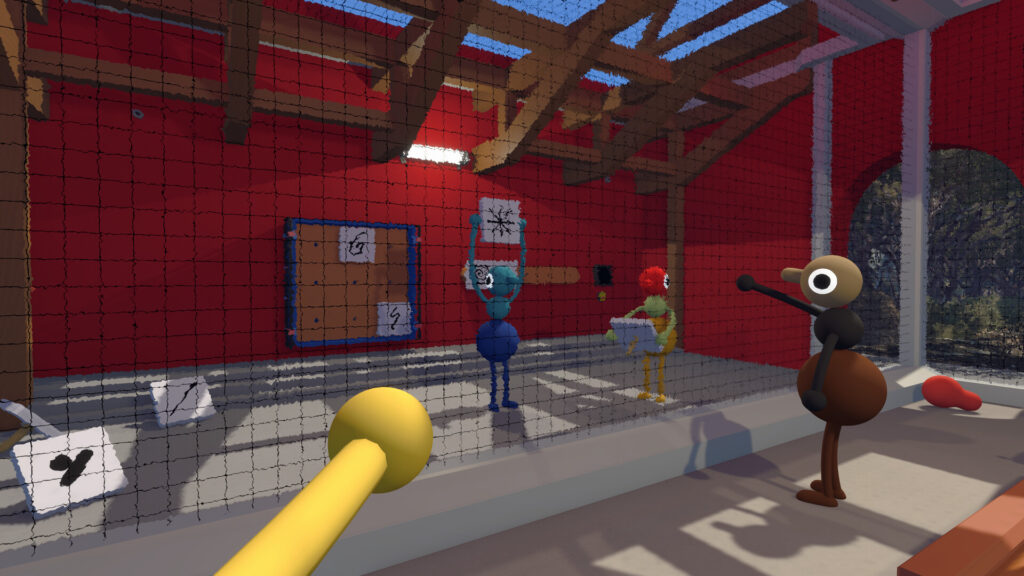
House House, the studio behind Big Walk, has disclosed that it made limited use of an LLM during the final stage of development. The usage accounts for less than 0.1% of the total codebase, and the studio says no generative AI was used anywhere else in the project.
The trigger for the disclosure was the IGF Awards. After a joint statement from some of the jurors revealed that the presence or absence of AI usage weighs heavily on judging, House House decided to publish the contents of its own IGF submission form, calling it a matter of public interest.
The studio also flatly described pushing ahead with development without an internal generative AI policy in place as “a failure”, and says it will work on drafting a comprehensive one. It stated its support for efforts to limit the harms of generative AI, then apologized for the possibility that this very announcement falls short of that standard.
At the same time, the studio voiced a worry that voluntary disclosure might itself help normalize the technology. The pressure to disclose, and the fear that disclosing accelerates adoption. Having both of those in the same document is what makes this announcement awkward, and also what makes it honest.

What was the LLM actually used for? A sunrise and sunset frame-rate drop

The LLM was used to fix a bug that made the game run roughly 50% slower for about 20 seconds at sunrise and sunset. The cause sat inside third-party code.
House House had already taken the problem to the third party’s own engineers, who concluded it could not be solved. From there, the studio took the solution the LLM proposed and heavily rewrote it until it worked.
| Item | Details |
|---|---|
| The bug in question | Performance drops 50% for about 20 seconds at sunrise and sunset |
| Cause | Third-party code |
| Steps taken first | Asked the third party’s engineers, who concluded it was unsolvable |
| The LLM’s role | Proposed a solution that was heavily rewritten before it worked |
| Scale of use | Less than 0.1% of the total codebase |
This is the part that matters. Nobody pasted in an LLM’s answer and shipped it. A human rewrote the proposal from scratch as a starting point, on a problem the official engineers had already called impossible. Flatten all of that into the phrase “used generative AI” and you lose sight of what actually happened.
That said, small scale does not mean no problem. It was used, less than 0.1% or not, and House House itself decided disclosure was necessary and put it out there. The right move is to take that at face value rather than discount it.
Why come forward now?
The immediate reason is that a joint statement from some IGF Awards jurors made clear that AI usage weighs heavily on the judging. House House judged that a matter of public interest and published what it had written on its IGF submission.
The studio also explained why none of this was public before. Steam never asked it to disclose generative AI use relating to code or chatbots, so there was no occasion to disclose it.
Read it as a case study in the gaps in platform disclosure rules. Steam’s generative AI disclosure is weighted toward assets and content, and does not cover code written during development. The result is that awards-circuit criteria tightened first, and the studio moved to disclose on its own initiative second.
What is House House owning up to?
House House said outright that developing without an internal generative AI policy was a failure, and committed to working on a comprehensive one.
In the same breath it voiced support for efforts to limit the harms of generative AI, and apologized for the possibility that this announcement falls short of that standard. It went on to raise the concern that voluntary disclosure may help normalize the technology.
| What was stated | Summary |
|---|---|
| Internal policy | Admits developing without one was a failure, will work on a comprehensive policy |
| Position | Supports efforts to limit the harms of generative AI |
| Apology | For the possibility that this announcement falls short of that standard |
| Concern | That voluntary disclosure could normalize the technology |
That last concern lands. If “we used it, but for less than 0.1%” becomes a line every studio recites, disclosure eventually turns into ritual, and the using becomes the default. Anyone demanding disclosure has to design the system with that endpoint in mind.
Personally, I respect a studio that writes out the timeline and the scope in this much detail. Saying nothing and letting “we didn’t use it” stand would have been the easy option. Taking inventory voluntarily because of an awards jury’s criteria, and then writing an apology on top, is choosing a genuinely inconvenient road.

Enjoying this article? Add us as a preferred source on Google.
Big Walk’s AI disclosure, in short
House House has disclosed limited LLM use during the final stage of Big Walk’s development. The usage amounts to less than 0.1% of the total codebase, with no generative AI used anywhere else. It went toward fixing a bug, rooted in third-party code, that made the game run 50% slower for about 20 seconds at sunrise and sunset.
The disclosure was prompted by word that AI usage weighs heavily on IGF Awards judging. None of it was public before because Steam never required disclosure for code or chatbots. House House admits that developing without an internal policy was a failure and says it will work on drafting a comprehensive one.
The small number matters less than the fact that House House wrote out the whole thing: how it happened, what it was used for, and what the studio regrets. Describing a bug the official engineers called unsolvable, and a fix built by heavily rewriting an LLM’s proposal, is an unusually concrete account of process. The case also exposed a real gap, with Steam’s disclosure rules unable to reach code at all.
The studio’s own fear carries the most weight: the more disclosure there is, the more it becomes a formality. That line is aimed squarely at the people writing the rules.
Read Next
Nokko Oda













Leave a Reply