
Enjoying this article? Add us as a preferred source on Google.
When it comes to Japanese mecha anime, there’s one studio you simply can’t leave out of the conversation: Sunrise (now Bandai Namco Filmworks). Beyond the Gundam franchise, it gave the world Code Geass, Votoms, GaoGaiGar and a long list of other classics. The catch? The catalog is so massive that plenty of newcomers end up staring at it and asking, “Where do I even start?”
So the SpotGeeks editorial team picked the 20 Sunrise mecha anime we most want you to watch as of 2026, scored each one on four criteria (story, animation, characters and emotional impact), and ranked them. Whether you’re a total beginner or a veteran who’s itching to dig back into the classics, this list is for you.
The four scoring criteria are Story, Animation, Characters and Emotional Impact. Each is scored out of 100, and the shows are ranked by total score. For every title streaming on DMM TV, we’ve included a watch link too, so if something catches your eye, go check it out right away.
Sunrise Mecha Anime for Beginners: Score Comparison of All 20 Shows
Let’s start by comparing every show at a glance. As you pick, think about what you’re after: do you care more about story, or about characters?
| Title | Story | Animation | Characters | Emotional Impact | Total Score |
|---|---|---|---|---|---|
| 🥇 Code Geass: Lelouch of the Rebellion | 95 | 88 | 95 | 92 | 370 |
| 🥈 Mobile Suit Gundam: The Witch from Mercury | 88 | 95 | 92 | 88 | 363 |
| 🥉 Mobile Suit Gundam SEED | 82 | 85 | 92 | 88 | 347 |
| Mobile Suit Gundam 00 | 85 | 82 | 88 | 85 | 340 |
| The King of Braves GaoGaiGar | 80 | 78 | 90 | 88 | 336 |
| Mobile Suit Gundam: Iron-Blooded Orphans | 82 | 82 | 85 | 82 | 331 |
| Mobile Suit Zeta Gundam | 88 | 75 | 82 | 85 | 330 |
| Mobile Suit Gundam (1979) | 88 | 70 | 85 | 80 | 323 |
| Armored Trooper Votoms | 85 | 72 | 82 | 78 | 317 |
| Gundam Build Fighters | 75 | 80 | 82 | 78 | 315 |
| Space Runaway Ideon | 82 | 62 | 75 | 85 | 304 |
| Round Vernian Vifam | 75 | 70 | 80 | 78 | 303 |
| Blue Comet SPT Layzner | 72 | 73 | 78 | 75 | 298 |
| Fang of the Sun Dougram | 78 | 65 | 75 | 78 | 296 |
| Aura Battler Dunbine | 76 | 66 | 78 | 74 | 294 |
| Heavy Metal L-Gaim | 72 | 72 | 76 | 72 | 292 |
| Mashin Hero Wataru | 70 | 72 | 82 | 67 | 291 |
| Metal Armor Dragonar | 72 | 74 | 74 | 70 | 290 |
| Invincible Superman Zambot 3 | 78 | 58 | 72 | 80 | 288 |
| Combat Mecha Xabungle | 70 | 66 | 76 | 72 | 284 |
For the strongest story and characters, it’s Code Geass (95 in each). For the most cutting-edge visuals, it’s The Witch from Mercury (95 for animation). If you’re a complete beginner, the golden route is to start with Build Fighters or SEED, then work your way back through Ideon, Dougram and Votoms once you’ve found your footing.
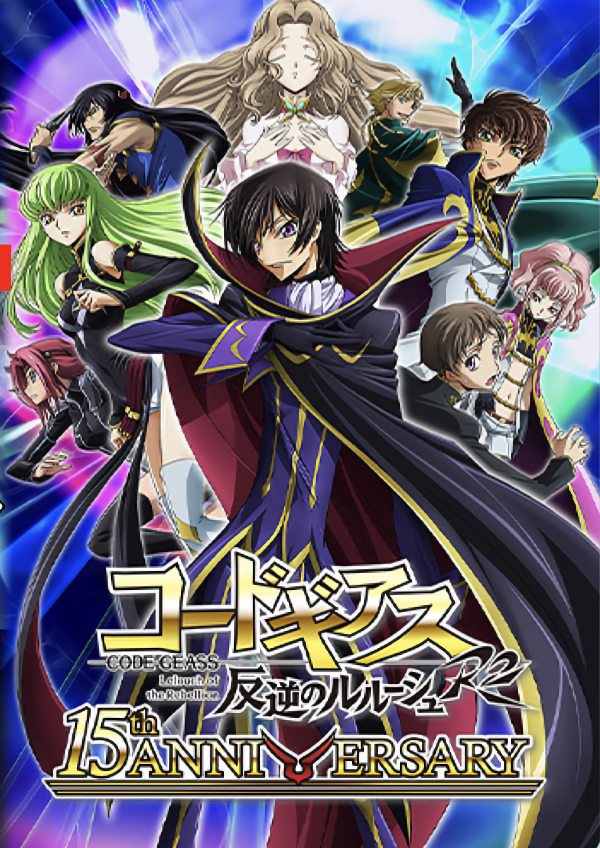
No. 1: Code Geass: Lelouch of the Rebellion | Peak Story and Characters, a Masterpiece You Absolutely Need to Watch, Even Now
| Story | Animation | Characters | Emotional Impact | Total Score |
|---|---|---|---|---|
| 95 | 88 | 95 | 92 | 370 |
Aired 2006 to 2007 (directed by Goro Taniguchi). It’s a political conspiracy thriller wearing a mecha anime’s skin, and that’s exactly what makes Code Geass special. Protagonist Lelouch Lamperouge gains Geass, a power that lets him bend others to his commands, and plots a rebellion against the superpower Britannia. The mind games, the twists and the brutally effective cliffhangers never let up across all 25 episodes (50 including the second season).
It’s a mecha anime that walks its own path, neither Gundam nor a sentai-style show, and its door is wide open: even people who don’t care for robots can get hooked on it “as a human drama.” Its 95 for story and 95 for characters are the highest marks on this list, and even in 2026, plenty of fans still call it “my favorite anime of all time.”
- Killer cliffhangers every episode, built for binge-watching
- Works as a human drama even if you’re not into robots
- Wraps up properly across 50 episodes over two seasons
- The ultra-cool protagonist won’t click with everyone
- Be ready to jump straight into Season 2 after that shocking Season 1 finale
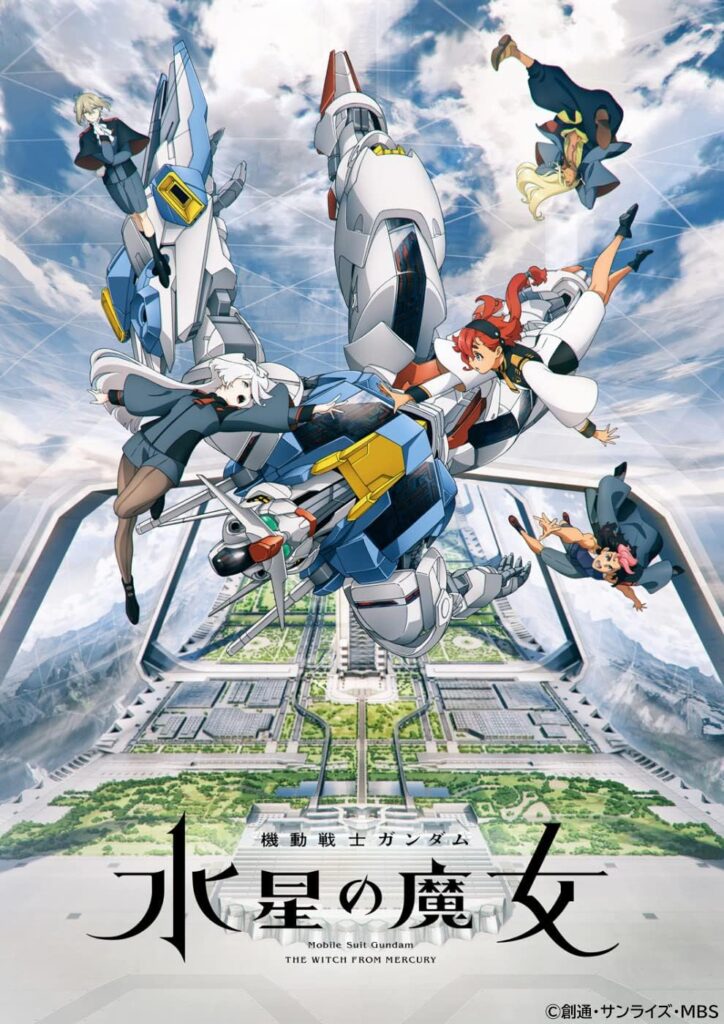
No. 2: Mobile Suit Gundam: The Witch from Mercury | The Best of Modern Gundam, With Some of the Franchise’s Best Animation Ever
| Story | Animation | Characters | Emotional Impact | Total Score |
|---|---|---|---|---|
| 88 | 95 | 92 | 88 | 363 |
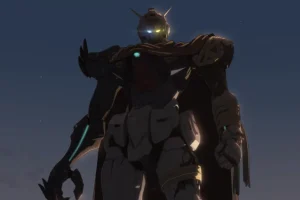
Aired 2022 to 2023. Suletta Mercury, the Gundam franchise’s first female lead, anchors a fresh fusion of school drama, corporate politics and mobile suit combat. Its 95 for animation ties for the top mark on this list, and the action sequence in Episode 1 in particular is one of the best visual experiences in Gundam history. The line “Take a bride from the witch” took the internet by storm.
It wraps up neatly in 24 episodes. It’s also wide open to newcomers, blowing away every worry like “Isn’t Gundam complicated?” or “Can I enjoy it without knowing the Universal Century?” This was the first Gundam in a generation to become a genuine social phenomenon, with fans riding the reactions on social media in real time.
- The most beginner-friendly Gundam of the 2020s
- Animation quality among the best the franchise has ever seen
- Wraps up cleanly in 24 episodes
- The second half gets rough, which divides viewers
- No prior Gundam knowledge needed, but the corporate politics get complicated
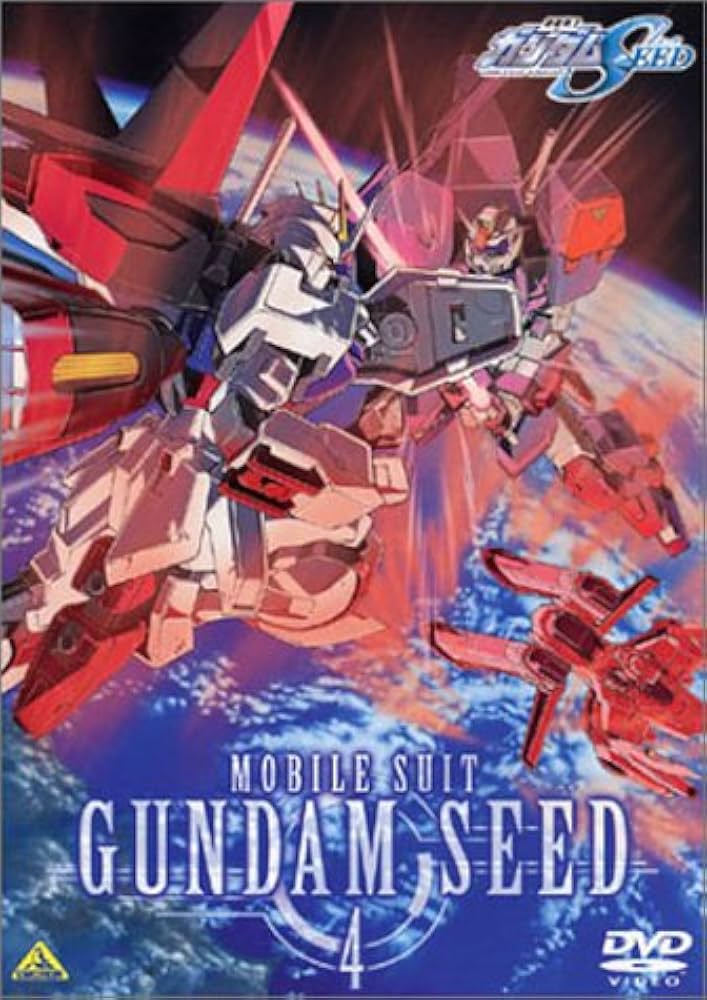
#3: Mobile Suit Gundam SEED | The Classic Gateway to Gundam, With Characters Fans Still Adore
| Story | Animation | Characters | Emotional Impact | Total Score |
|---|---|---|---|---|
| 82 | 85 | 92 | 88 | 347 |
Aired 2002–2003. Built around the conflict between the genetically enhanced Coordinators and ordinary humans known as Naturals, it follows the clash between Kira Yamato and Athrun Zala. Its character popularity is the strongest in the entire franchise, and the fandom is still so fired up that a new movie, “FREEDOM,” hit theaters in 2024. Gorgeous character designs and drama that’s easy to get invested in pulled in a huge, wide-ranging audience.
At 50 episodes it runs a little long, but each episode moves at a brisk pace, and once you hit the midpoint you won’t be able to stop. You need zero knowledge of the Universal Century timeline, since SEED has its own self-contained world. There’s still a whole generation out there for whom “Gundam started with SEED.”
- A cast of pretty boys and girls who regularly top character popularity polls
- A standalone story you can jump into with zero Universal Century background
- The sequel movie “FREEDOM” already released in 2024
- 50 episodes is a commitment (over 100 if you add DESTINY)
- Heavy use of flashback scenes rubs some viewers the wrong way
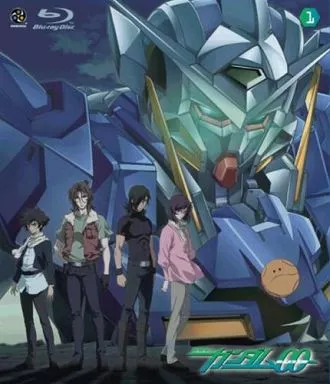
#4: Mobile Suit Gundam 00 | Ending War by Force: A Two-Season Masterpiece That Hits Hard Today
| Story | Animation | Characters | Emotional Impact | Total Score |
|---|---|---|---|---|
| 85 | 82 | 88 | 85 | 340 |
Aired 2007–2009 (directed by Seiji Mizushima). The paradoxical premise, a private military organization called Celestial Being trying to wipe out war through armed intervention, still feels fresh. Protagonist Setsuna F. Seiei is portrayed as a “human weapon” stripped of nearly all emotion, and the show tackles the meaty question of what war really is.
Season 1 (25 episodes) and Season 2 (25 episodes) make for a complete 50-episode run, capped off by the movie “A wakening of the Trailblazer.” No Universal Century knowledge required, and the way it explores “Can peace be achieved through force?” in a modern context still feels relevant today.
- Wraps up cleanly across Season 1, Season 2, and the movie
- Modern themes of war, terrorism, and peace
- An ensemble drama where a diverse cast all get their moment
- The quiet, emotionless lead takes a while to warm up to
- The tone shifts between Season 1 and Season 2
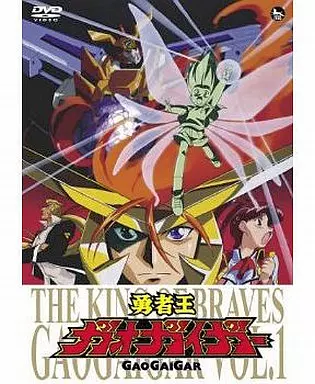
#5: The King of Braves GaoGaiGar | Burn Bright! The Pinnacle of Super Robot Spirit
| Story | Animation | Characters | Emotional Impact | Total Score |
|---|---|---|---|---|
| 80 | 78 | 90 | 88 | 336 |
Aired 1997–1998. The grand finale of the Brave series and a towering landmark of super robot anime. The father of protagonist Mamoru Amami becomes Guy, a Brave Robot with a human mind transplanted into a cyborg body, and battles the space monsters known as Zonder. Come on, that concept alone is enough to get your blood pumping. When it comes to sheer hot-blooded passion and catharsis, it stands at the very top of Sunrise’s catalog.
It may have aired in 1997, but hot-blooded battles, over-the-top finishing moves, and bonds between comrades are timeless, so it doesn’t feel dated at all even now. The drama that builds toward the final battle earned it a high Emotional Impact score of 88. It’s that rare show that started out aimed at kids and ended up driving grown-up otaku wild.
- The pinnacle of super robot spirit, with the most hype of anything on this list
- Absolutely overwhelming finishing moves and combination sequences
- Characters score 90, with a hot-blooded cast you’ll love to the last member
- The early enemy-of-the-week pattern can feel repetitive (it changes completely midway)
- 49 episodes is on the long side
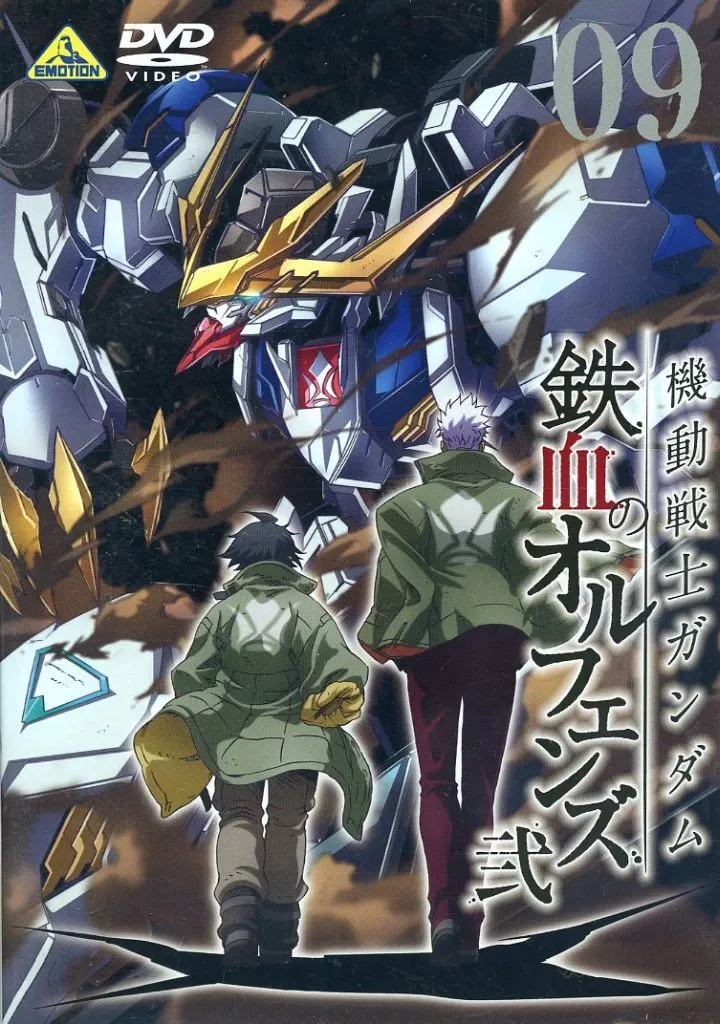
#6: Mobile Suit Gundam: Iron-Blooded Orphans | Child Soldiers and Inequality: A Real Robot Story That Resonates Today
| Story | Animation | Characters | Emotional Impact | Total Score |
|---|---|---|---|---|
| 82 | 82 | 85 | 82 | 331 |
Aired 2015–2017. Child soldiers exploited on Mars band together to form Tekkadan and try to survive a brutal world. At the heart of the story is the brotherly bond between Orga and Mika, who pilots Barbatos, a machine built on ancient technology called the Gundam Frame. Inequality, exploitation, betrayal: it takes on hard-hitting themes head-on that you’d never expect from a show for kids.
No Universal Century knowledge needed. It has its own original setting in a near-future solar system, and its close-quarters, melee-focused action stands out as unusual for the franchise. Both seasons together total 50 episodes. The bittersweet ending is divisive, but that’s exactly why people are still talking about it.
- Tackles heavy themes like inequality and child soldiers head-on
- The brotherly bond between Orga and Mika hits you right in the heart
- Melee-focused battles bring a kind of fun that’s unique in the franchise
- The ending is bittersweet, so brace yourself for the aftertaste
- 50 episodes total, and Season 2 has a different feel from Season 1
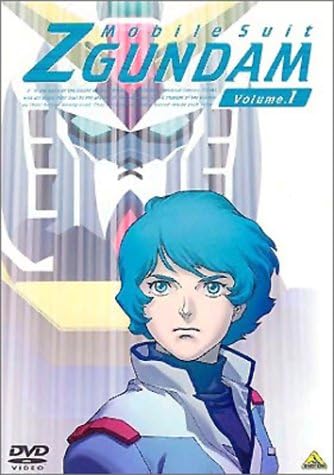
#7: Mobile Suit Zeta Gundam | Beyond Amuro: A Classic That Dives Deep Into the Universal Century
| Story | Animation | Characters | Emotional Impact | Total Score |
|---|---|---|---|---|
| 88 | 75 | 82 | 85 | 330 |
Aired 1985–1986 (directed by Yoshiyuki Tomino). Set in U.C. 0087, seven years after the original Gundam. Protagonist Kamille Bidan crosses paths with Char Aznable while standing up to the Titans, a corrupt faction inside the Earth Federation Forces. With a Story score of 88, it carries forward the emotional power of the original while depicting far more complex relationships and political structures.
If you want to go deep on Universal Century Gundam, this is the show to watch right after the original. The animation shows the limits of its era, but the density of the story and its emotional punch haven’t faded one bit. Kamille’s psychological portrayal is among the deepest in all of Tomino’s work, and the shock of the final episode is still talked about today.
- One of the deepest stories in all of Universal Century Gundam
- Char Aznable at the height of his screen time
- The shock of the final episode is an experience only those who’ve watched it will understand
- Assumes you’ve seen the original Gundam (watch the 1979 series first)
- The animation is 1985-standard, so don’t compare it to modern anime
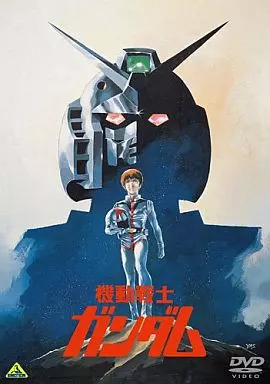
#8: Mobile Suit Gundam (1979) | Where It All Began: You Can’t Talk Mecha Anime Without Amuro and Char
| Story | Animation | Characters | Emotional Impact | Total Score |
|---|---|---|---|---|
| 88 | 70 | 85 | 80 | 323 |
Aired 1979–1980 (directed by Yoshiyuki Tomino). This is the landmark series that flipped mecha anime from the “super robot” formula to the “real robot” genre. Across 43 episodes, it chronicles the rivalry between Amuro Ray and Char Aznable and the One Year War that kicks off the Universal Century timeline. It wasn’t “just another robot cartoon” — it was a revolutionary show that tackled the human drama of people trying to survive a war head-on.
That 70 for animation is purely a product of its 1979 production limits; in terms of sheer innovation, nothing else on this entire list comes close. If you want to understand the history, or you want to understand Char, this is the one to watch before anything else. The movie trilogy (Mobile Suit Gundam I, II: Soldiers of Sorrow, and III: Encounters in Space) tightens up the footage and makes a great starting point, too.
- The origin point of Japanese mecha anime — essential viewing for any fan
- The movie trilogy streamlines the footage and is much easier to watch
- Amuro and Char’s influence still reaches today’s anime
- The animation is 1979-level — don’t hold it up against modern anime
- The early episodes still have a kids’-show vibe (it really gets going midway through)
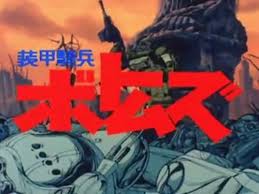
#9: Armored Trooper Votoms | Kiriko on a Barren Battlefield: Real Robot Taken to Its Extreme
| Story | Animation | Characters | Emotional Impact | Total Score |
|---|---|---|---|---|
| 85 | 72 | 82 | 78 | 317 |
Aired 1983–1984 (directed by Ryosuke Takahashi). Set on a brutal battlefield where the piloted “Armored Troopers” (ATs) are treated as disposable, expendable gear, it follows Kiriko Cuvie, a man fated to survive no matter what. It’s a hard-boiled sci-fi drama about an emotionless sniper drifting from one warzone to the next, and it’s the darkest, grittiest, driest show in mecha anime history.
Its 52 episodes are split into four arcs (Uoodo, Kummen, Sunsa, and Quent), and each chapter has its own distinct atmosphere. That 85 for story is seriously high, and if you want to experience the real robot genre at its absolute peak, there’s nothing else like it.
The big reveal at the very end is one of the best in mecha anime history. Please, go watch it.
- Real robot sci-fi drama at its most extreme — nothing else compares
- The four-arc structure keeps a long series from getting stale
- Kiriko is a one-of-a-kind character
- Banjo Ginga’s poetic narration is a treat in every episode
- The animation and pacing are 1983-level and feel very different from modern anime
- A dark, heavy world — not for anyone looking for something upbeat
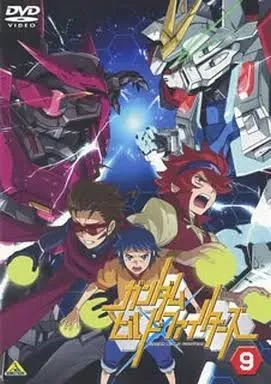
#10: Gundam Build Fighters | Gunpla Come to Life! The Perfect Gateway into Mecha Anime
| Story | Animation | Characters | Emotional Impact | Total Score |
|---|---|---|---|---|
| 75 | 80 | 82 | 78 | 315 |
Aired 2013–2014. The show is built around “Gunpla Battle,” a real-world competitive sport where people fight with their Gunpla, and it’s hands down the most accessible entry point into the Gundam franchise. No heavy war themes, no tangled politics — just kids who love Gunpla, fiery battles, and friendship.
The fan service is off the charts, with a flood of mobile suits from past Gundam series, and the more Gundam you’ve seen, the more gags you’ll catch. It may only rank 10th overall, but it’s the show we’d recommend most as the very first watch for anyone starting Gundam today. Wrapping up at a brisk 25 episodes is a big plus, too.
- No heavy war themes — perfect for mecha anime newcomers
- Wraps up at a brisk 25 episodes
- Packed with fan service as classic Gundam mobile suits keep showing up
- The story is on the lighter side — may feel thin if you want deep themes
- The sequel, Gundam Build Fighters Try, has a different feel
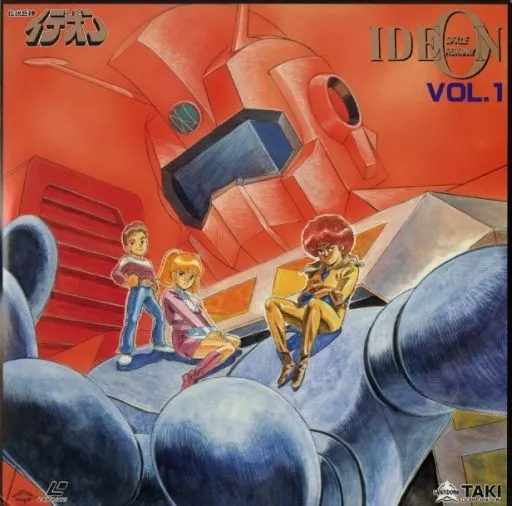
#11: Space Runaway Ideon | A Harrowing Total-Annihilation Ending: The Most Shocking Finale in Anime History
| Story | Animation | Characters | Emotional Impact | Total Score |
|---|---|---|---|---|
| 82 | 62 | 75 | 85 | 304 |
Aired May 1980 – January 1981 (directed by Yoshiyuki Tomino). In the 2300s, the alien Buff Clan, hunting for a mysterious energy called “Ide,” attack Solo, a planet colonized by humans from Earth. Cosmo and the other kids of Solo climb aboard “Ideon,” a giant robot dug up from ancient ruins, and the show becomes a space odyssey of running and fighting, over and over.
Beyond the 39-episode TV series (which was canceled), two films — “A Contact” and “Be Invoked” — hit theaters in 1982. “Be Invoked” in particular ends with nearly the entire cast dying, and it’s still talked about as one of the most shocking finales in anime history. That overwhelming psychological gut punch is exactly why it earns an 85 for emotional impact.
The 62 for animation is down to its 1980 production limits and has nothing to do with the depth of the content. Its theme — the despair born from humans and aliens constantly misunderstanding each other — hasn’t lost any of its power even in 2026. The Ideon’s design, which Director Tomino likened to a longhorn beetle, has a presence all its own, too.
- The ending of the “Be Invoked” movie is one of the most shocking in anime — the kind of experience you’ll need to talk through with someone afterward
- The fated tragedy of piled-up misunderstandings between humans and aliens cuts deep
- The animation and pacing are 1980-level — and since the TV series was canceled, the movies are a must to fill in the ending
- It’s heavy and bleak, so we recommend watching when you’re in a good headspace
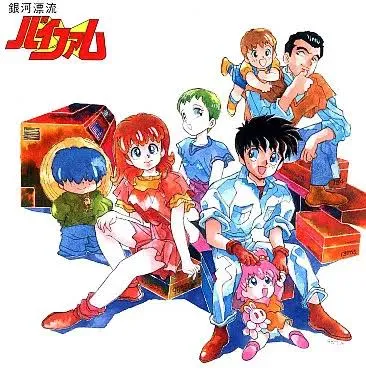
#12: Galactic Drifter Vifam | Kids Adrift in Space on Their Own: A Masterpiece Carried by Its Carefully Crafted Ensemble
| Story | Animation | Characters | Emotional Impact | Total Score |
|---|---|---|---|---|
| 75 | 70 | 80 | 78 | 303 |
Aired October 1983 – September 1984 (directed by Takeyuki Kanda). When a colony on the planet Eris is suddenly attacked by the mysterious alien “Billbine,” 13 kids separated from the adults set out for Earth, relying on the robot “Vifam” — that’s the setup for all 46 episodes. The concept of “kids traveling without any grown-ups” gives it a unique warmth and bittersweetness you won’t find in other mecha anime.
Each of the 13 young characters gets careful attention, and it’s a remarkably well-built ensemble drama. Fear, loneliness, growth, and friendship all play out realistically against the backdrop of space, making it one of the real robot shows most invested in human drama. Its 80 for characters ties for the highest among ranks 11–20.
The big mystery of the war with the Billbine gets a thorough resolution, too, and the series wraps up properly in 46 episodes. “Kids are the heroes, but it never feels childish” — that’s Vifam’s greatest strength.
- All 13 kids have their own personalities and growth arcs, making for a polished ensemble drama
- The no-adults journey creates a unique mix of loneliness and solidarity that sticks with you
- Complete in 46 episodes — everything, including the war with the mysterious aliens, wraps up neatly
- The animation is 1983-level — don’t hold it up against modern anime
- With such a big cast, it takes a little while to learn everyone’s names early on
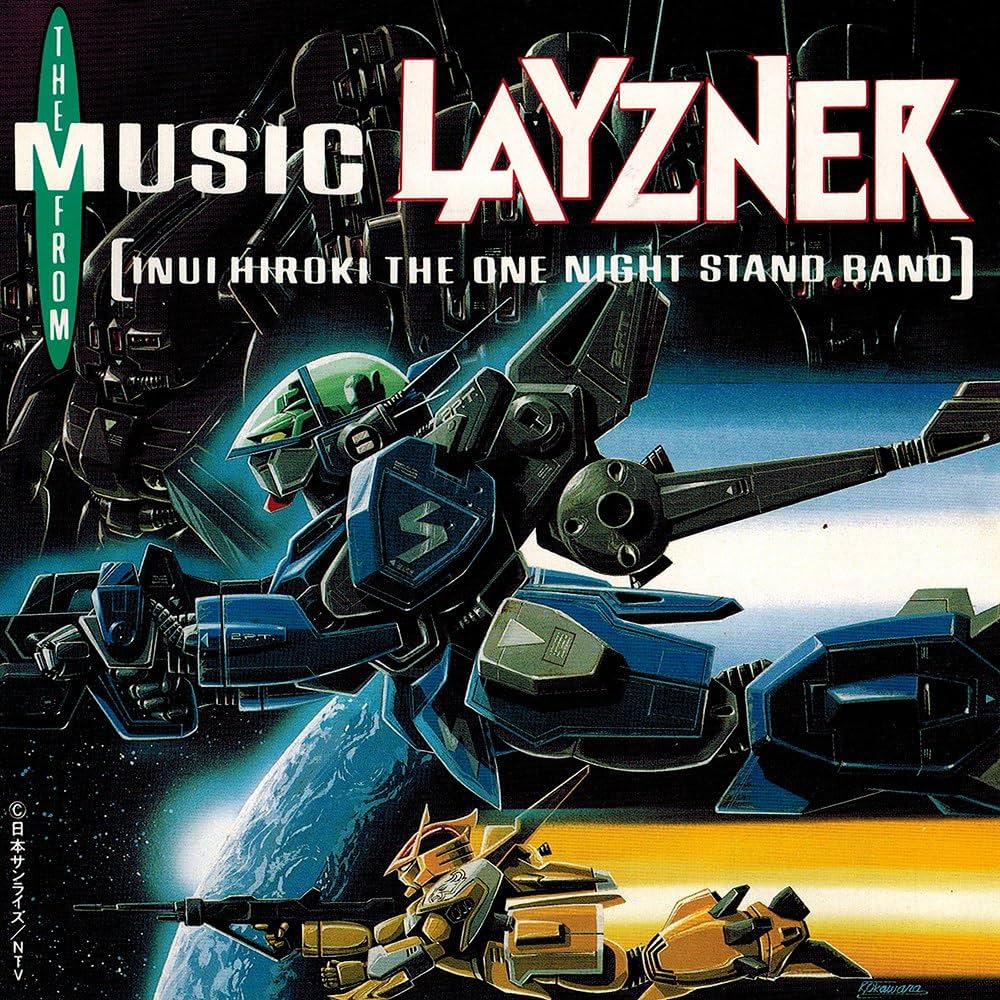
#13: Blue Comet SPT Layzner | The Sting of Cancellation, Yet Still a Near-Masterpiece of Alien-Invasion Sci-Fi
| Story | Animation | Characters | Emotional Impact | Total Score |
|---|---|---|---|---|
| 72 | 73 | 78 | 75 | 298 |
Aired October 1985 to June 1986 (directed by Tadao Nagahama, then Takeyuki Kanda). This 38-episode sci-fi drama follows Eiji Asuka, a half-human, half-alien boy who single-handedly tries to stop the Gradosian Empire from conquering Earth. The SPT Layzner, which shifts colors alongside its signature “Le-Me” line, is still one of the all-time great machine designs in mecha anime history.
In 1986 the show got cancelled because the sponsor’s toys weren’t selling, and the final five episodes were filled in with a recap OVA. Without that cancellation, the story would have been far more polished, and fans still mourn it as a “lost masterpiece.” The 72 for Story is a penalty for the rushed post-cancellation pacing; the world-building and the lead’s appeal are easily worth more than that.
For 1986, it held itself to a genuinely high hard sci-fi standard, and Eiji’s lonely fight struck a chord with viewers. Three OVAs (“Eiji, 16 Years Old: The Battlefield”) fill in something close to the originally intended ending, so I recommend watching them together with the TV series.
- Eiji’s lonely sense of mission and the SPT Layzner’s design are both outstanding
- Praised for hard sci-fi-level world-building that was remarkable for 1986
- The cancellation turns the TV ending into a recap, so the three OVAs are required viewing
- The setting is complex, so expect to focus on the lore early on
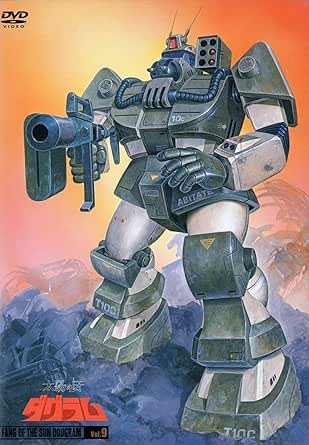
#14: Fang of the Sun Dougram | 75 Episodes of Political Realism, the Hardest-Edged Rebellion Story in Mecha Anime
| Story | Animation | Characters | Emotional Impact | Total Score |
|---|---|---|---|---|
| 78 | 65 | 75 | 78 | 296 |
Aired October 1981 to March 1983 (directed by Ryosuke Takahashi). This 75-episode series chronicles the independence movement on Deloyer, a colony planet under Earth Federation rule. What makes it unique is its lead, Crinn Cashim: the son of a Federation cabinet official who throws himself into the Deloyer independence army, the “Fang of the Sun.” Its robots, called Combat Armors (CA), work like realistic weapons of war, and they were a huge hit in the model kit market too.
At its core, this is a political drama more than a robot-battle show. Colonial rule, ethnic conflict, political corruption, and the gap between ideals and reality are all depicted in painstaking detail across the full 75 episodes. Calling it “a political drama disguised as a mecha anime” is spot-on, and it’s one of the meatiest dramas of 1980s anime. Its 78 in both Story and Emotional Impact puts it at the top of the #11–#20 bracket.
Seventy-five episodes can be a real hurdle, but for viewers who say “I don’t mind if it’s short, I just want heavy-hitting drama,” this is required viewing right alongside Armored Trooper Votoms.
- The hardest-edged drama in mecha anime history, tackling politics and colonial independence head-on
- 78 in both Story and Emotional Impact, top-tier depth within #11–#20
- A long 75 episodes, so be ready to commit if you plan to finish it
- 1981-era animation and heavy political drama may not suit every viewer
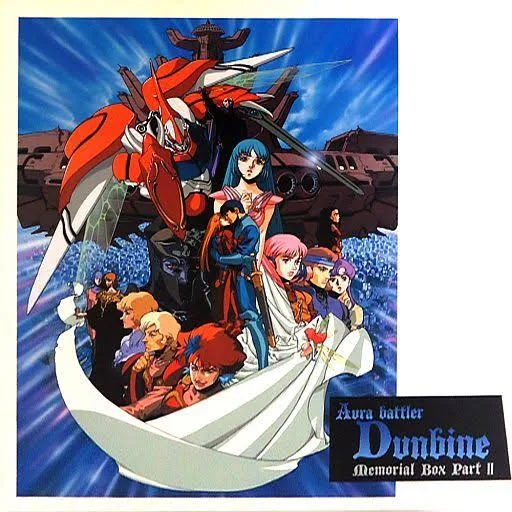
#15: Aura Battler Dunbine | The Granddaddy of Isekai, and the World of Byston Well
| Story | Animation | Characters | Emotional Impact | Total Score |
|---|---|---|---|---|
| 76 | 66 | 78 | 74 | 294 |
Aired February 1983 to January 1984 (directed by Yoshiyuki Tomino). In this 49-episode series, Show Zama, a young man from modern-day Japan, is suddenly summoned to the other world of Byston Well, where he pilots an Aura Battler, an organic, insect-inspired robot. Seen from today’s isekai anime boom, it was a pioneer more than 40 years ahead of its time and counts as the genre’s granddaddy.
The insect-inspired Aura Battler designs have an organic look totally unlike any robot that came before, and they left a strong impression on audiences at the time. The setup, where Show brings modern-world values into the politics of a medieval fantasy world, still feels fresh today. There’s even a later stretch set in modern Japan, so the story’s scale ends up far bigger than you’d expect.
All 49 episodes are packed with the tangled relationships and tragic turns you’d expect from Tomino, so if you’re hoping for a happy ending, you may be in for a letdown. Still, experiencing “the origin of isekai mecha” is well worth it.
- The granddaddy of isekai mecha anime, worth it just to trace the genre’s history
- The organic, insect-inspired Aura Battler designs are one of a kind
- Tragic developments in true Tomino fashion, so don’t expect a happy ending
- The early episodes take patience until you adjust to the 1983 animation and unique setting
#16: Heavy Metal L-Gaim | Mamoru Nagano’s Gorgeous Mecha, the Bridge from Gundam to The Five Star Stories
| Story | Animation | Characters | Emotional Impact | Total Score |
|---|---|---|---|---|
| 72 | 72 | 76 | 72 | 292 |
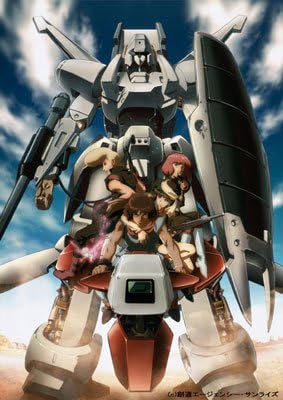
Aired February 1984 to February 1985 (directed by Yoshiyuki Tomino). Set in a galaxy ruled by the tyrannical Poseidal empire, this 54-episode series follows Daba Myroad, a descendant of a frontier royal family, as he takes on the empire with robots called Heavy Metals. Mecha designer Mamoru Nagano would later create The Five Star Stories and become a titan of the design world, and his design sense is already exploding right here in L-Gaim.
The Heavy Metal designs, starting with the L-Gaim Mk-II, have a refined look that’s hard to believe came out in 1984, and plastic model and garage kit fans still hold them in high regard. The story centers on Daba’s quest for revenge, but his entanglements with multiple female characters bring the kind of complexity you’d expect from a Tomino show.
If you love The Five Star Stories or are curious about Nagano’s mecha, this is a must-watch as the starting point. On pure Story and Emotional Impact it can’t match the higher-ranked shows, but its design value is in a league of its own.
- Nagano’s Heavy Metal designs are refined far beyond 1984 standards
- A must for Five Star Stories fans as the series’ starting point
- A longish 54 episodes with a divisive back half, so watching for the mecha is closest to the right call
- Like most Tomino works, the tangled relationships will split viewers
#17: Mashin Hero Wataru (Original) | Ryujinmaru and Young Wataru, Sunrise’s Hidden Gem for Kids
| Story | Animation | Characters | Emotional Impact | Total Score |
|---|---|---|---|---|
| 70 | 72 | 82 | 67 | 291 |
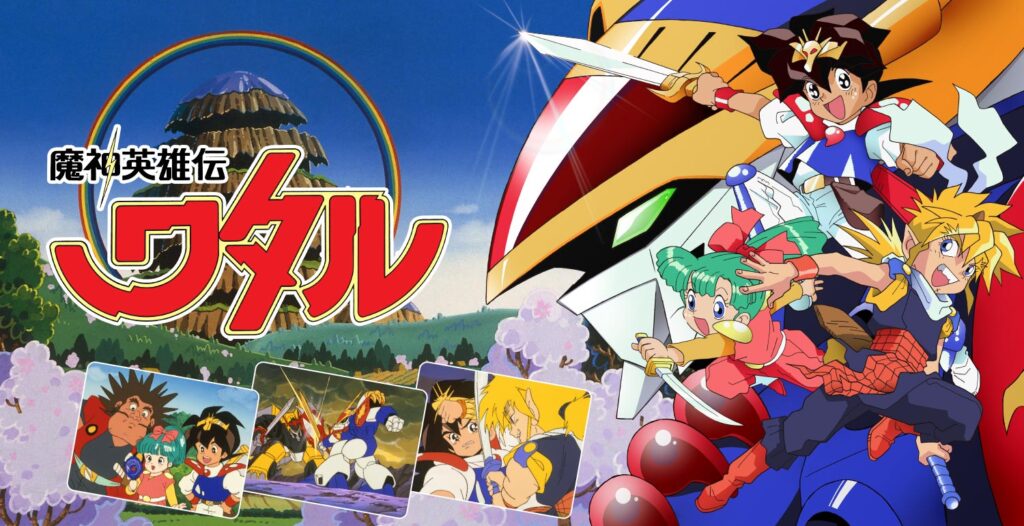
Aired April 1988 to March 1989 (directed by Keizo Kusakawa). In this 45-episode series, Wataru, an elementary schooler, is summoned to the Shinkikai realm and sets out on a journey aboard the Shinki Ryujinmaru to defeat Dowarder, ruler of the Majinkai realm. It follows in the footsteps of kids’ hero robot shows while carving out its own fantasy flavor.
Its 82 for Characters is the highest in the #11–#20 bracket, and characters like Wataru, Shibaraku, and Drumlo were massively popular with kids in the late 1980s. The robot designs, evolving from Ryujinmaru to Kouou to Ryujinmaru Kai, drove elementary school boys of the era wild too. It grew into a hit franchise with games and sequels, and it remains a long-running series that keeps getting remakes today.
Adults watching now may find some scenes a bit too kid-energy, but for anyone who grew up in the ’80s and ’90s, this is guaranteed nostalgia. As the flagship of the “upbeat robot adventure” style Sunrise created on a different track from Gundam and Votoms, it can’t be left off this list.
- 82 for Characters, the highest in #11–#20, with Wataru and Ryujinmaru’s bond burning bright all the way through
- A polished ’80s–’90s kids’ mecha anime you can enjoy with a side of nostalgia
- The kid-friendly tone is strong throughout, so it may not suit viewers after serious drama
- Adults watching now may notice how simple the plot is
#18: Metal Armor Dragonar | The 1987 Gem That Set Out to Be Gundam’s Successor
| Story | Animation | Characters | Emotional Impact | Total Score |
|---|---|---|---|---|
| 72 | 74 | 74 | 70 | 290 |
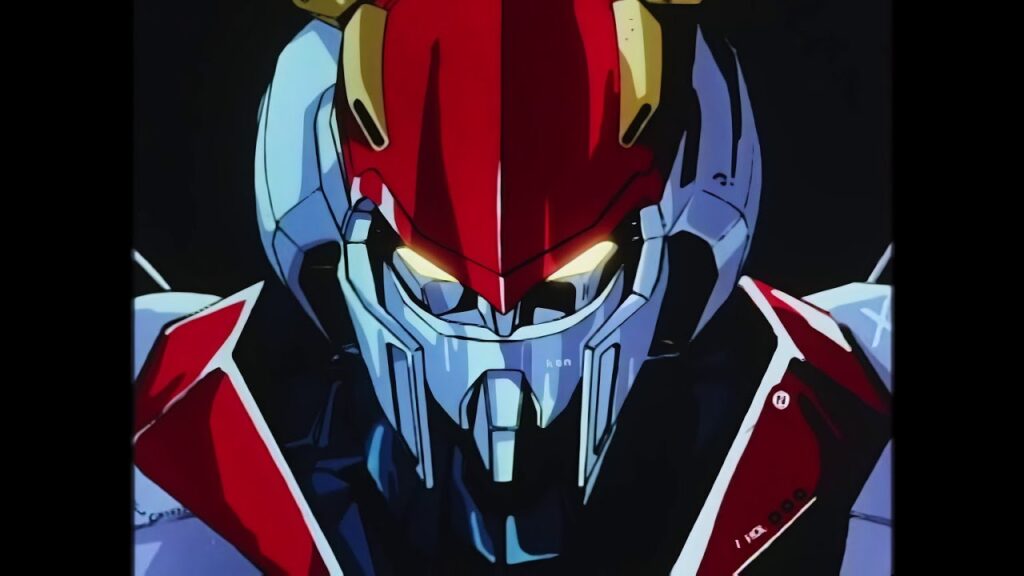
Aired February 1987 to January 1988 (directed by Toshiyuki Kato). Set in a near future where the alien Giganos Empire has seized the Moon and invaded Earth, this 48-episode series follows protagonist Ken Wakaba and two other teens as they fight in robots called Dragonars. It arrived carrying big expectations as “Gundam’s successor” and “the next real robot show.”
The trio setup, with each of the three leads piloting a different Dragonar, felt fresh, and the designs of those three machines helped fuel the model kit boom of the day. Story, animation, and characters all land evenly in the 70–74 range, and honestly, the fairest verdict is “plenty to get hooked on, but no single standout strength.”
If you’re looking for “the next real robot show” after Gundam and Votoms, it absolutely holds up. It doesn’t excel on any one axis, but it’s a solid, dependable watch that lets you soak up the full vibe of ’80s robot anime.
Fond memory: Masami Obari’s animation in the opening was so ridiculously cool that the gap between it and the actual episodes was almost comical.
- The banter between the three leads and the designs of the three Dragonars are the highlights
- A comfortable, reliable watch built on the classic ’80s real robot anime formula
- Overall, it falls a step short of Gundam and Votoms in terms of impact
- At 48 episodes it runs long, and the pacing sags in the middle stretch
#19: Invincible Super Man Zambot 3 | The 1977 Revolution: How the “Human Bombs” Changed Robot Anime History
| Story | Animation | Characters | Emotional Impact | Total Score |
|---|---|---|---|---|
| 78 | 58 | 72 | 80 | 288 |
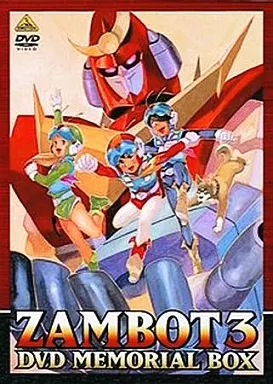
Aired October 1977 to March 1978 (directed by Yoshiyuki Tomino). In this 23-episode series, Kappei (no, not Kamille Bidan) of the Jin family climbs into Zambot 3 to defend humanity from the alien Gaizok closing in on Earth. Super robot anime back then was dominated by bright, black-and-white tales of heroes beating monsters, and this show flipped that formula on its head.
The biggest shock is the “human bomb” episode. Civilians get captured by the Gaizok and turned into living bombs, a level of cruelty unheard of for a 1977 kids’ show, and letters of complaint reportedly flooded in when it aired. That idea that “people die, even in robot anime” became the foundation for Tomino’s later work, including Gundam, Ideon, and Votoms.
The 80 for emotional impact reflects the value of that shock. The 58 for animation comes down to the limits of 1977, but the revolutionary content transcends its era. If you’re a history buff who wants to know “what Sunrise was like before Gundam,” this is an absolute must-watch.
- The “human bomb” episode changed robot anime history. Experience the origin of anime’s dark side
- An 80 for emotional impact: 23 episodes packed with the cruelty and raw intensity of pre-Gundam Tomino
- The animation is 1977-standard and looks very different from modern anime
- It wraps up in 23 episodes, but the emotionally heavy developments keep coming, so brace yourself
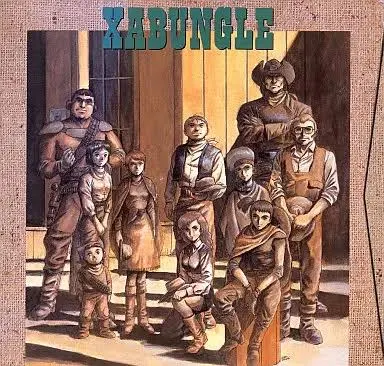
#20: Combat Mecha Xabungle | The One and Only Western Robot Anime
| Story | Animation | Characters | Emotional Impact | Total Score |
|---|---|---|---|---|
| 70 | 66 | 76 | 72 | 284 |
Aired February 1982 to January 1983 (directed by Yoshiyuki Tomino). This 50-episode series is set on the ravaged planet Eitarus, a lawless frontier ruled by one unique rule, “anything goes if three days have passed,” where robots called Walker Machines run rampant. It’s an adventure following protagonist Jiron Amos as he tears across a Wild West-style wasteland hunting for his family’s killers.
In contrast to the gloom hanging over Tomino’s earlier work (Gundam, Ideon, Dunbine), Xabungle is built on a bright, comedic tone. People call it “the silliest, most fun Tomino show,” and that’s spot-on. The fact that it never gets too serious is actually a strength. Its 76 for characters comes from the sheer presence of its colorful supporting cast.
It sits dead last in the ranking (#20), but please don’t read that as “it’s #20 because it has flaws.” Think of it as a relative score against the other 19 shows. No other series can replace its one-of-a-kind Western-meets-robots genre.
- Light on the usual Tomino darkness with a cheerful comedic touch. Experience “fun Tomino”
- The only Western-meets-robots genre mashup among all 20 shows
- At 50 episodes it runs long, with a Western-style lull in the middle
- The 1982-era animation and Tomino’s quirky direction take some getting used to

Enjoying this article? Add us as a preferred source on Google.
Wrap-Up: Getting Into Sunrise Robot Anime Today — Which Show Is Right for You?
Let’s look back at our Top 20 Sunrise robot anime to start watching today. Code Geass took #1 overall (370 points). Spots #11–20 are packed with 1977–1988 works from Tomino, Takahashi, and Kanda, like Ideon, Dougram, and Zambot 3. For a true “start today” entry point, go with Build Fighters (#10) or The Witch from Mercury (#2). And if you want to dig into history, working your way up backward from #20 is a perfectly good plan too.
If you want to experience the depth of the Universal Century, knock out the original Gundam (#8) and then Zeta Gundam (#7), in that order. Craving that super robot spirit? GaoGaiGar (#5) is your pick. And if you love gritty, heavy drama, Votoms (#9) is a can’t-miss option.
If someone asks me “Where should I start?”, my instant answer for total robot anime newbies is Gundam Build Fighters or The Witch from Mercury, and for anyone who cares most about human drama, it’s Code Geass. Wherever you jump in, climbing back out of the Sunrise robot anime rabbit hole is basically impossible. That’s how stacked this lineup of classics is.
Just start with one. That’s all it takes. After that, you’ll find yourself hunting for the next one on your own.
Read Next
Snicker Kitamura



Leave a Reply