
Enjoying this article? Add us as a preferred source on Google.
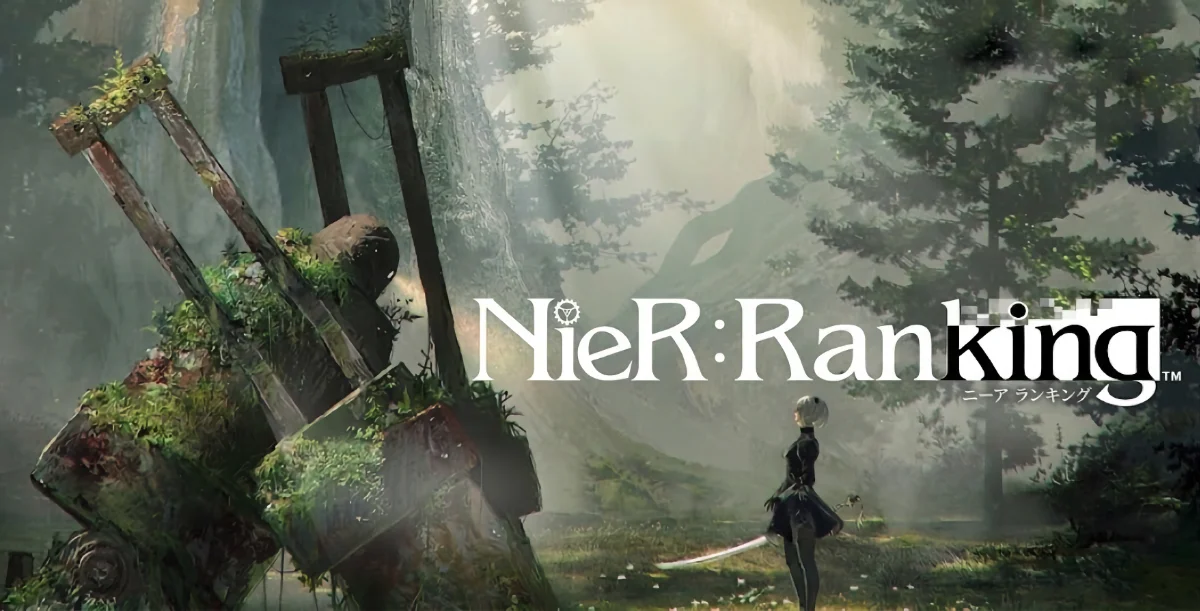
The worlds are all secretly connected. The story goes to some genuinely dark places. The music is on another level entirely. If you’ve heard the reputation but keep wondering “where am I even supposed to start?” — you’re not alone. The Drakengard and NieR series form a lineage of dark action RPGs stretching back to 2003, with Yoko Taro at its center. Drakengard’s Ending D became the seed from which NieR was born, and the NieR series went on to global mega-success with NieR:Automata — a single narrative current running for more than 20 years.
For this ranking, we took the six main games across the two series, added four related titles directed by Yoko Taro, and scored all ten on four axes — Accessibility, Graphics, Cruelty Rating, and Replay Value — each out of 100, with final placement decided by total score. Use it as an entry guide if you’re new, or read it as a veteran checking where your personal favorite lands. Either way, this is the complete edition.
A full guide to playing these games on current hardware waits at the end of the article. Whether this is your first plunge into the series or you’ve been here since the Drakengard days, stick with me to the finish.
NieR & Drakengard: The Complete Score Comparison for All 10 Games
We scored every game out of 100 across four criteria. The higher the Cruelty Rating, the harder the game. Accessibility measures how easily a newcomer can get in. Note that the mobile titles whose service has ended (Re[in]carnation and SINoALICE) score low on Replay Value and Accessibility for exactly that reason.
| Title | Accessibility | Graphics | Cruelty Rating | Replay Value | Total |
|---|---|---|---|---|---|
| NieR:Automata | 90 | 92 | 58 | 92 | 332 |
| NieR Replicant ver.1.22 | 78 | 80 | 65 | 90 | 313 |
| Drakengard 3 | 55 | 60 | 85 | 82 | 282 |
| NieR Replicant/Gestalt (2010) | 60 | 55 | 68 | 82 | 265 |
| Drakengard (the original) | 50 | 40 | 82 | 78 | 250 |
| Drakengard 2 | 65 | 52 | 72 | 55 | 244 |
| NieR Re[in]carnation | 70 | 78 | 38 | 48 | 234 |
| SINoALICE | 72 | 75 | 40 | 42 | 229 |
| Voice of Cards: The Isle Dragon Roars | 78 | 72 | 38 | 38 | 226 |
| Voice of Cards: The Forsaken Maiden | 76 | 70 | 35 | 38 | 219 |
NieR:Automata takes the triple crown with 90 in Accessibility, 92 in Graphics, and 92 in Replay Value. The highest Cruelty Rating belongs to Drakengard 3 at 85 — its final rhythm-game boss is legendarily difficult. The mobile titles (Re[in]carnation and SINoALICE) score low because their services have already shut down.
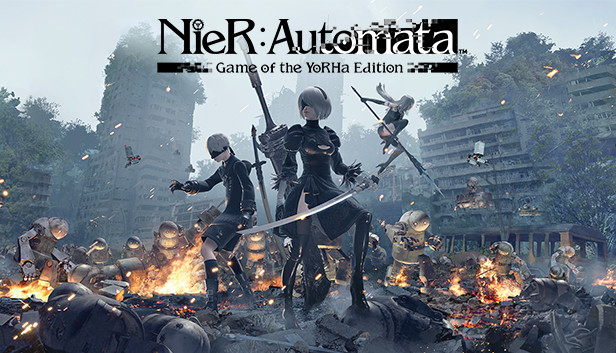
No. 1: NieR:Automata — 10 Million Copies Worldwide and a Permanent Place in Modern Gaming History
| Accessibility | Graphics | Cruelty Rating | Replay Value | Total Score |
|---|---|---|---|---|
| 90 | 92 | 58 | 92 | 332 |
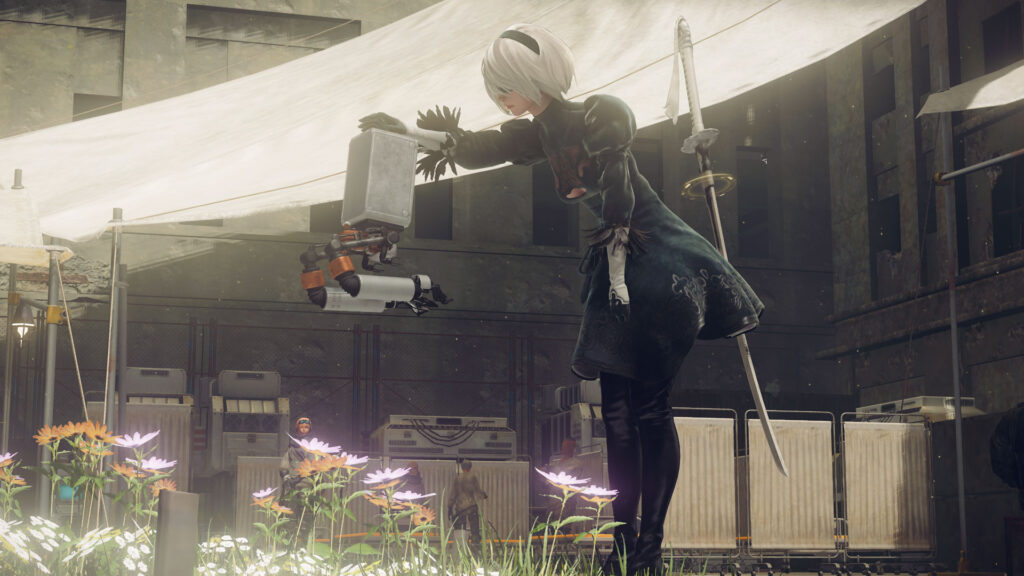
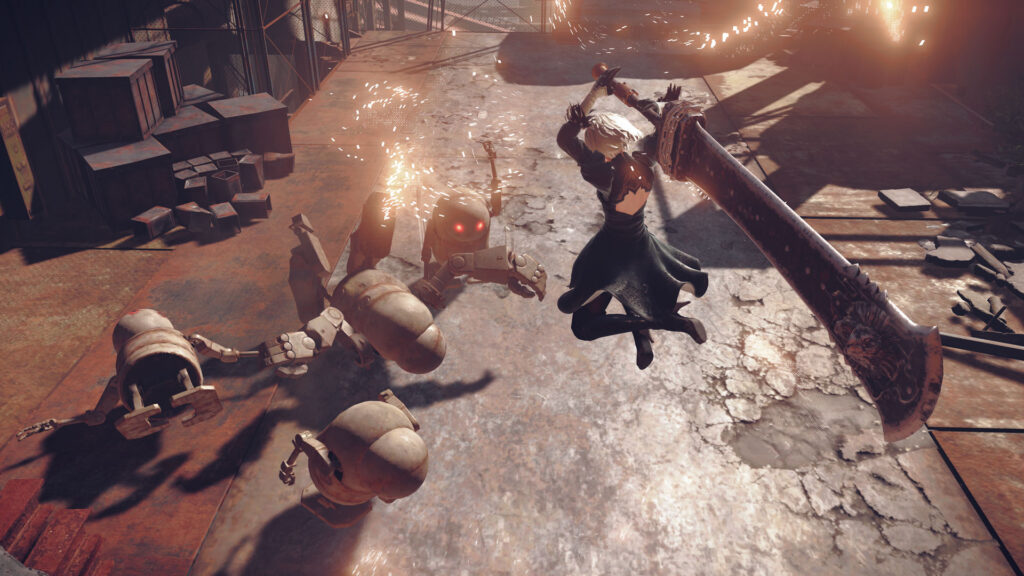
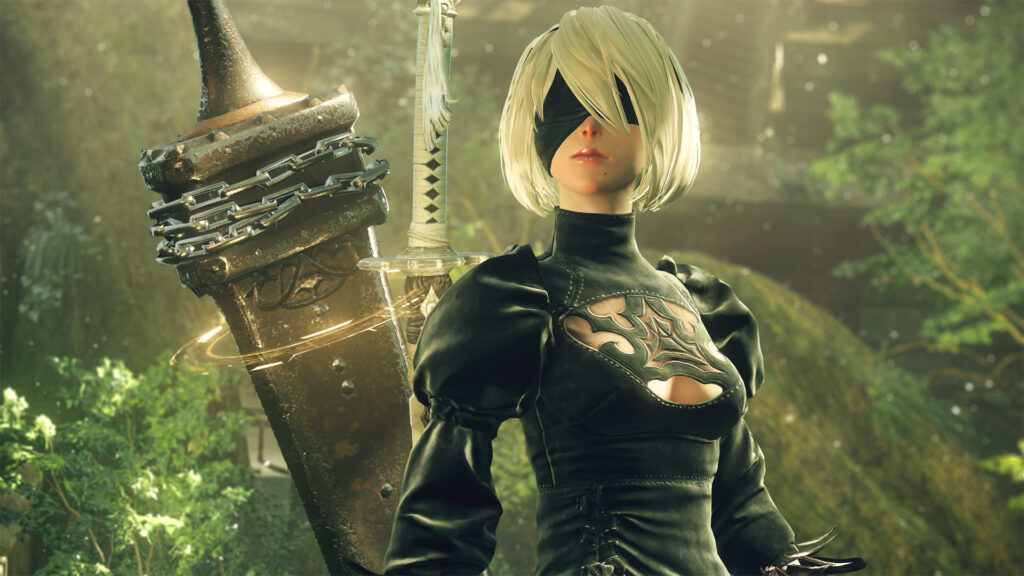
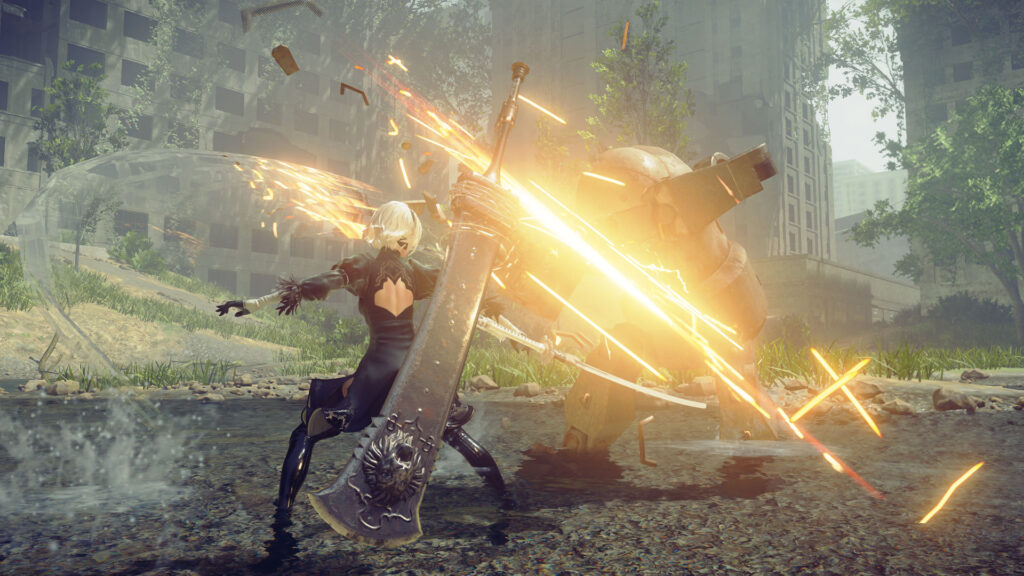
Released February 23, 2017, for PS4, PC (Steam), Xbox One, and Nintendo Switch. With over 10 million copies sold worldwide as of 2026 and a Metacritic score of 91 — the best numbers in the series — this is a masterpiece etched into modern gaming history. Yoko Taro’s trademark bleak twists and meta-theatrics fused with PlatinumGames’ top-shelf action to produce a smash hit nobody saw coming.
The sci-fi setup — android weapons 2B and 9S fighting the machine lifeforms, humanity’s enemy, as part of the YoRHa squadron — looks grandiose, but at its core it is an intensely personal story about what it means to be alive. The structure demands multiple playthroughs: finish Route A and you’ve seen barely 30 percent of the story. Route B sends you back through on a new-game replay, Route C confronts you with the choice between the B and C endings, and then comes the legendary Ending E — the experience design itself has been celebrated as game art.
Why the Accessibility score of 90? PlatinumGames’ polished, exhilarating combat, plus the existence of a Very Easy difficulty. Even if action games aren’t your thing, the design lets you focus purely on “reading the story.” Keiichi Okabe’s soundtrack still places high in the game-music rankings every single year, and “Wait for Us” is the kind of track that can bring tears all on its own.
- A 91 on Metacritic and 10 million-plus copies worldwide — the series’ crowning achievement
- Available to buy right now on PS4, Switch, and Steam (easy to find, used copies included)
- The Very Easy difficulty means even action-averse players can enjoy it
- Stop after one playthrough and you’ll never reach the heart of the story. Three runs minimum
- Not for you if bleak twists and philosophical themes are a dealbreaker
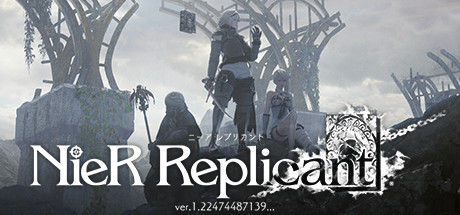
No. 2: NieR Replicant ver.1.22474487139… — The Remaster That Evolved the Original into Its Definitive Version
| Accessibility | Graphics | Cruelty Rating | Replay Value | Total Score |
|---|---|---|---|---|
| 78 | 80 | 65 | 90 | 313 |
Released April 22, 2021, for PS4, Xbox One, and Steam. A version upgrade of 2010’s NieR Replicant (the PS3 version), and honestly closer to “practically a new game” than a mere remaster. Its Metacritic 84 is a massive improvement over the PS3 version’s 69. Famitsu put it this way: “If someone asked me my favorite game of all time, this would be worth naming without a moment’s hesitation.”
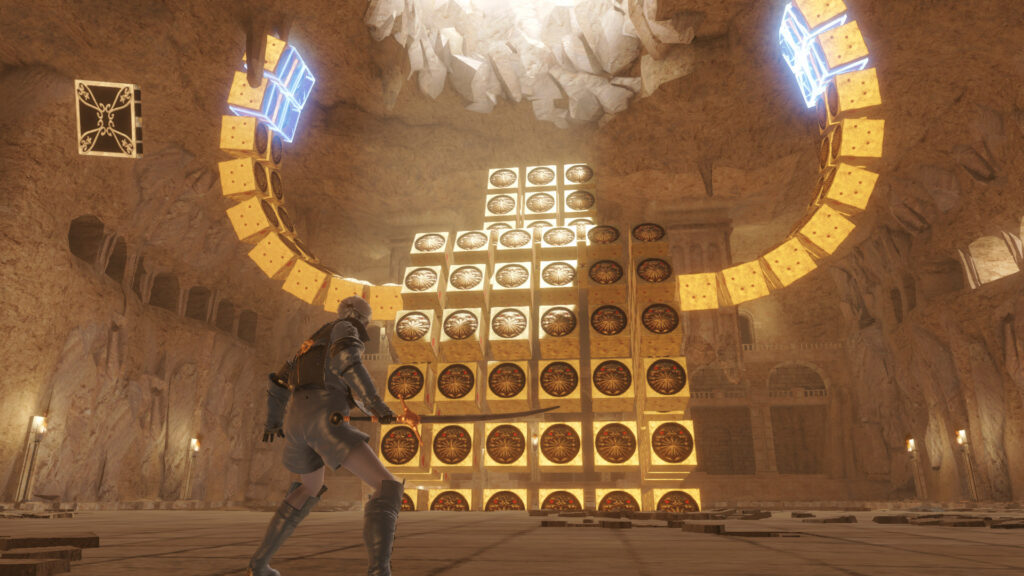
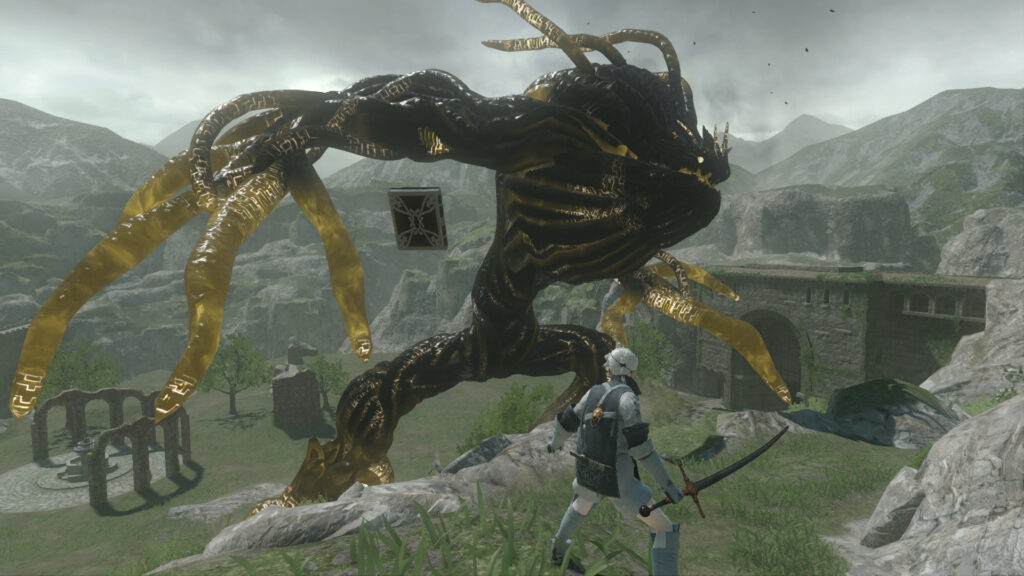
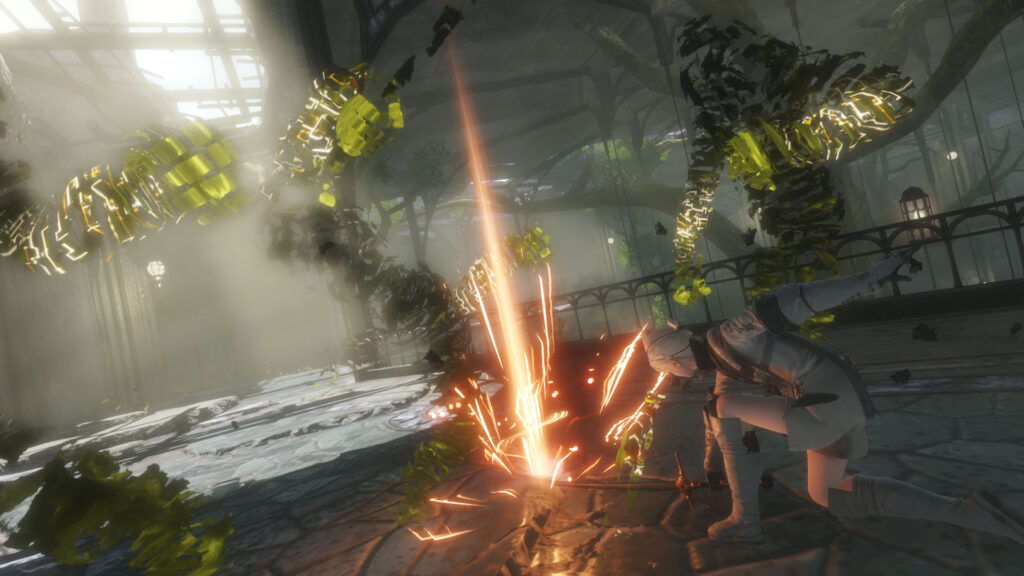
The additions are especially generous. Full voice acting (the PS3 version only had partial coverage), a new lock-on feature that makes combat far more satisfying, the in-game integration of “The Little Mermaid” — a new episode based on a short story — and a brand-new episode, “Ending E (The Lost World),” depicting the main story’s true ending beyond Ending D. That new ending alone is worth the price of admission.
This is the story set in the world born from Drakengard’s Ending D — why Nier fights so desperately to save his daughter (or younger sister), the meaning of Kainé’s existence, the transformation of Emil — all of it unraveled across multiple routes, functioning as the payoff for NieR:Automata’s foreshadowing. Play this, then go back to Automata, and a whole different set of emotions will be waiting for you.
- Massively upgraded from the PS3 version: full voice acting, new episodes, improved combat
- Replay Value 90: multiple routes plus the new Ending E keep it gripping to the very end
- Available on PS4 and Steam. Required reading as Automata’s prequel
- The new developments start on the second playthrough. Quit after one run and you’ll miss half the story
- No Switch version (PS4/Xbox One/Steam only)
No. 3: Drakengard 3 — Cruelty Rating 85 and the Legendary Rhythm-Game Final Boss
| Accessibility | Graphics | Cruelty Rating | Replay Value | Total Score |
|---|---|---|---|---|
| 55 | 60 | 85 | 82 | 282 |
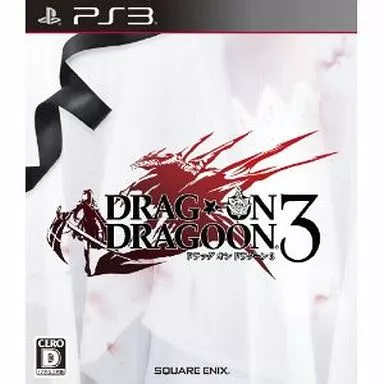
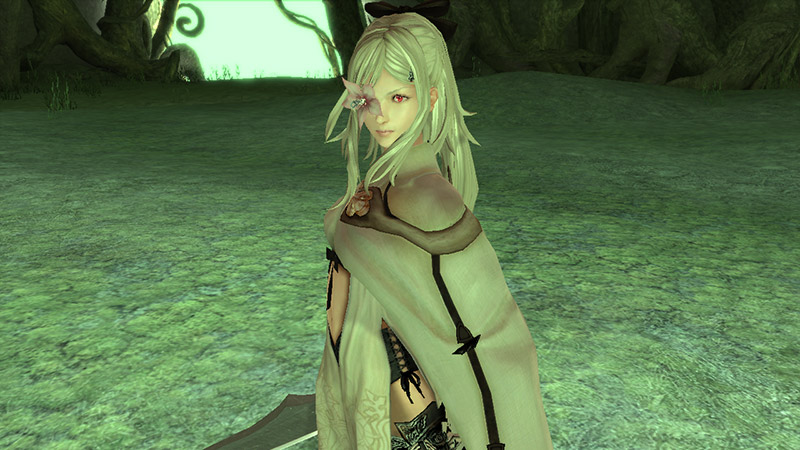
Released December 19, 2013, for PS3. Drakengard 3 is the crucial chronological bridge between the NieR and Drakengard series, telling the story of Zero and One — the origin that flows onward into Drakengard and NieR. It also marked Yoko Taro’s full return as creative director for the first time since the original Drakengard.
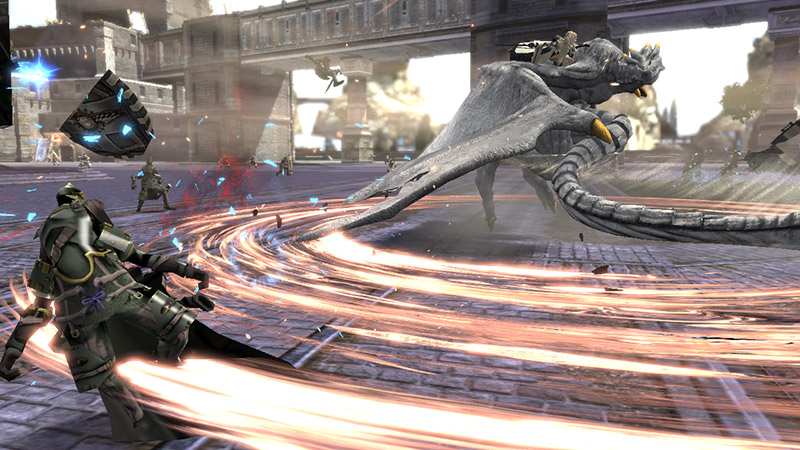
Its greatest infamy is the final boss of the final route (Route D). A rhythm-game boss battle that has you pressing buttons in time with a full orchestral score, it has been described as “a difficulty not every human being can clear” — the single biggest driver of the Cruelty Rating of 85. Add the well-documented frame-rate drops on PS3, and you arrive at the Accessibility score of 55.
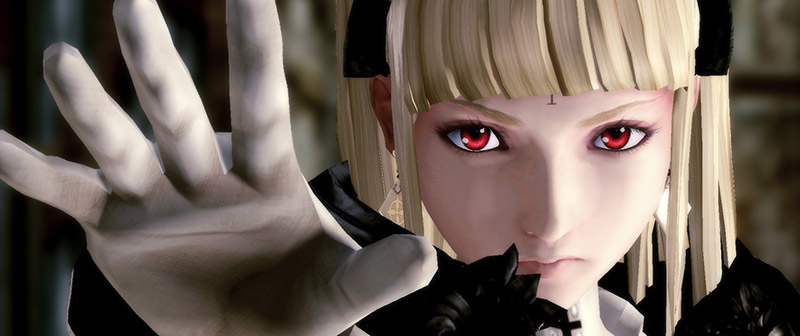
So why does Drakengard 3 still land at No. 3? Because of its Replay Value of 82 and the magnetic pull of the most gloriously broken characters in the entire series. The banter with Zero, each branch’s storyline, that distinctly Yoko Taro sensation of a story ending without ever handing you an answer — this is the Drakengard series at its absolute peak.
- The single most important game in the timeline for understanding how Drakengard connects to NieR
- Four-route multi-ending structure keeps you motivated for repeat playthroughs
- Route D’s final boss is a brutally hard rhythm game. Steel yourself
- PS3 hardware only. There is no way to play it on current platforms
No. 4: NieR Replicant/Gestalt (2010) — The Original Text of the NieR Series
| Accessibility | Graphics | Cruelty Rating | Replay Value | Total Score |
|---|---|---|---|---|
| 60 | 55 | 68 | 82 | 265 |
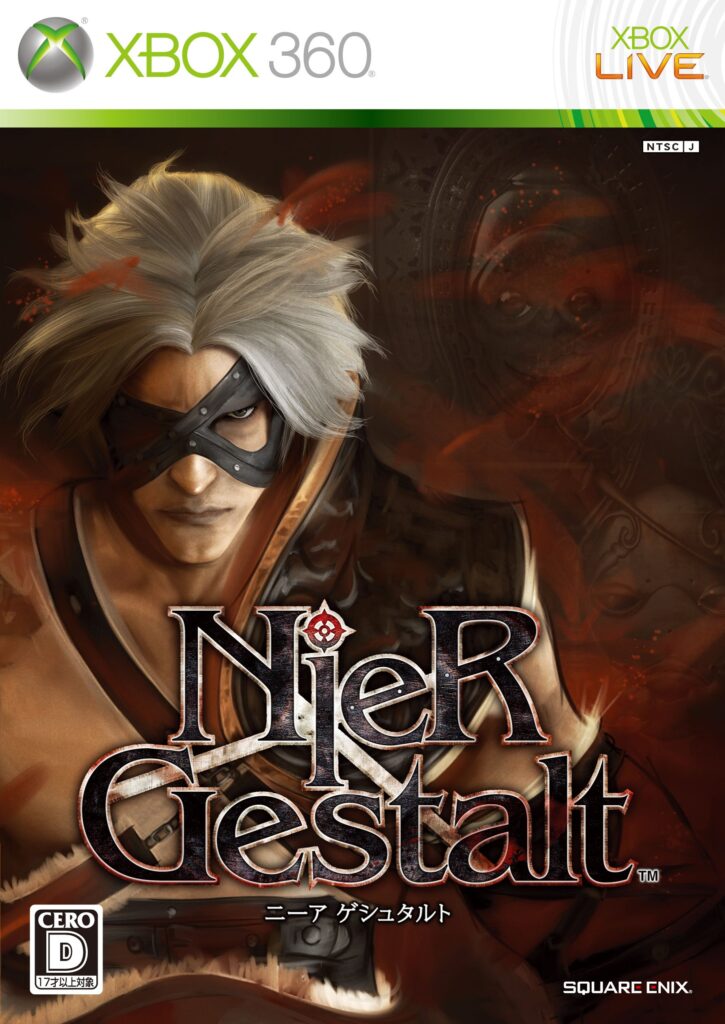
Released April 22, 2010, as NieR Replicant (PS3) and NieR Gestalt (Xbox 360/PS3). Two versions launched on the same day: Replicant starred a young male Nier (for Japan), while Gestalt featured a middle-aged Nier (for Western audiences) — but the story is virtually identical. This article treats them together as “the 2010 version.”
Set roughly 1,300 years after Drakengard’s Ending D made history as the “Shinjuku Ending,” this is where the NieR series begins. Yoko Taro’s grim worldview, truths revealed only through repeated playthroughs, Keiichi Okabe’s music — every bit of it started here. The Metacritic 69 comes down to complaints about dated controls; the story itself has been highly regarded since launch.
Now that 2021’s ver.1.22 is playable on current hardware, there’s little practical reason to go out of your way for the 2010 version. But knowing what the “original text” actually was is essential for anyone digging deep into the series.
- The origin point for the NieR series’ world and characters
- Replay Value 82: a singular experience where the story layers itself across multiple routes
- Requires original PS3/Xbox 360 hardware. On current platforms, ver.1.22 is the way to go
- Controls and graphics show their age by modern standards
No. 5: Drakengard (the Original) — The Legendary Feel-Bad Classic Where “Every Ending Is a Bad Ending”
| Accessibility | Graphics | Cruelty Rating | Replay Value | Total Score |
|---|---|---|---|---|
| 50 | 40 | 82 | 78 | 250 |
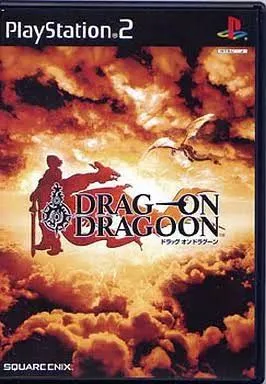
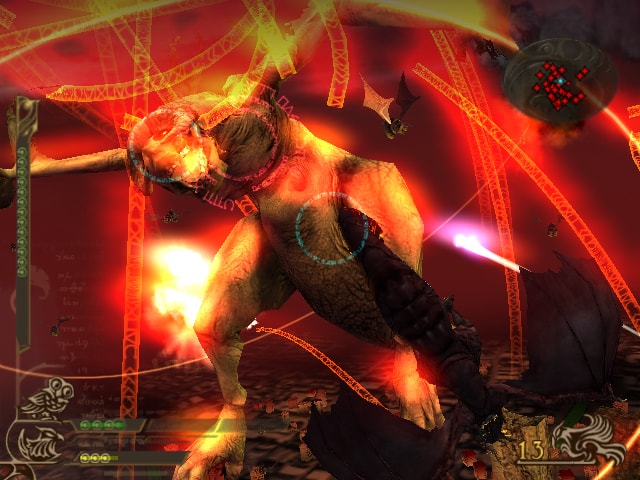
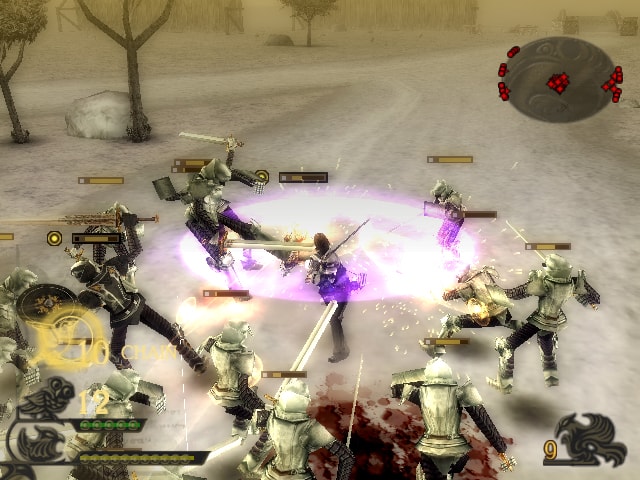
Released September 11, 2003, for PS2. The progenitor — still spoken of today, decades on, as the definitive feel-bad game. Five endings, every single one of them a bad ending. A “world of despair populated entirely by deviants.” A palette that seems to seep red-black out of the screen. The warped human-and-dragon relationship between Caim and Angelus. Every piece of it flew in the face of what games were supposed to be.
But the game’s greatest significance lies in the history that followed. Of its five endings, the events of “Ending D” became the direct origin of the NieR series. “What happened in Shinjuku in 2014?” — Drakengard’s Ending D holds the answer. For series fans, witnessing this ending is practically a sacred duty.
The Graphics score of 40 is a product of PS2-era limits. Accessibility sits at 50 because the repetitive ground-and-aerial combat loop feels tedious by modern standards. Even so, the Cruelty Rating of 82 and Replay Value of 78 are fully underwritten by five routes’ worth of concentrated despair.
- “Ending D” is the origin point of everything NieR. Essential for understanding the series
- A historic masterpiece (and glorious oddity), passed down as the legendary feel-bad game
- Requires original PS2 hardware. There is no current-gen option
- Graphics and controls are PS2-era. Playing it today takes real commitment
No. 6: Drakengard 2 — A “Story Toward Hope,” Even Without Yoko Taro
| Accessibility | Graphics | Cruelty Rating | Replay Value | Total Score |
|---|---|---|---|---|
| 65 | 52 | 72 | 55 | 244 |
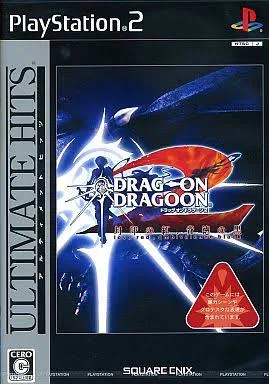
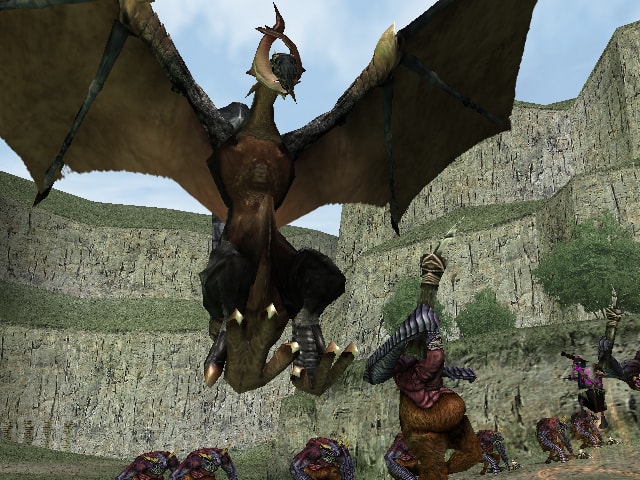
Released June 16, 2005, for PS2. A direct sequel set 18 years after the original Drakengard — but Yoko Taro had no hand in its development. As a result, the tone is a world away from the despair-soaked extremity of the first game, and it is remembered instead as “the story that carried despair toward hope.”
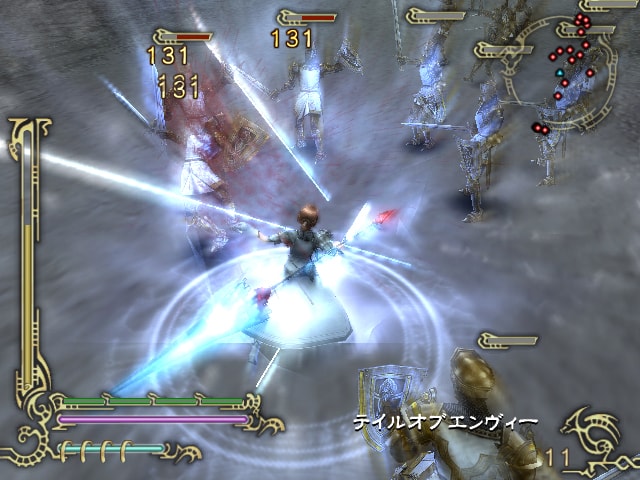
Centered on the protagonist Nowe and the dragon Manah, the story unfolds in the same world as its predecessor but with far clearer emotional stakes. The action improves on the original too — jump attacks were added, among other refinements — earning an Accessibility score of 65 against Drakengard’s 50. That said, its ties to the NieR series’ world are thin, and some argue there’s little need to play it if your goal is following the Yoko Taro throughline.
It’s often called “the one game in the series you can safely skip,” but as a story depicting another possible future for the Drakengard world, it has genuine value. Play Drakengard, then 2, then 3 in order, and the series’ shifting colors come into sharp relief.
- More playable than Drakengard 1: jump attacks and punchier action
- A story depicting “another shape of hope” for its predecessor’s world
- Thin ties to the NieR series’ world. Skipping it won’t hurt your understanding of the saga
- Requires original PS2 hardware. There is no current-gen option
No. 7: NieR Re[in]carnation — The Phantom “Yoko Taro Mobile Experience,” Now Unplayable
| Accessibility | Graphics | Cruelty Rating | Replay Value | Total Score |
|---|---|---|---|---|
| 70 | 78 | 38 | 48 | 234 |
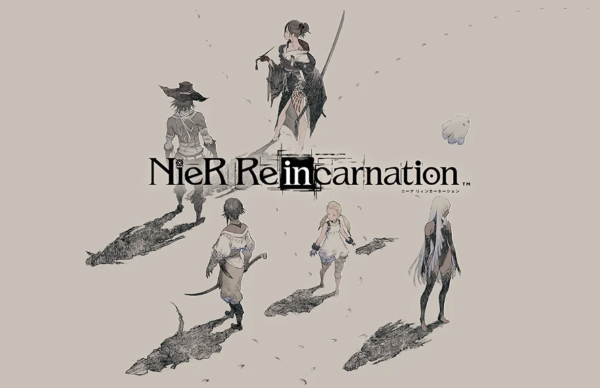
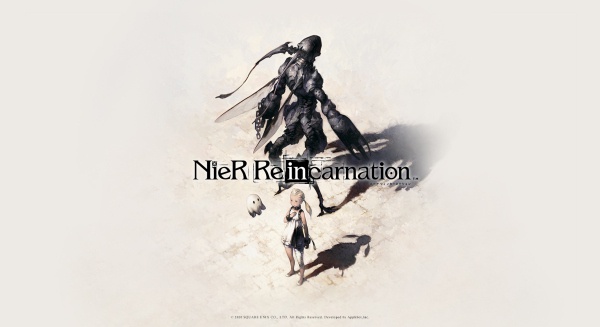
Service ran from February 18, 2021, until its shutdown on April 30, 2024, on iOS/Android. The first official mobile NieR title made with Yoko Taro’s involvement, it was deeply loved by a devoted slice of the fanbase for its gorgeous 2D visuals and singular narrative structure.
The eerie tale spun by a girl journeying through the beautiful “Cage” alongside a mysterious being called Weasel illuminated another face of the NieR universe. The Graphics score of 78 reflects visuals of exceptionally high quality for a mobile game. But with the service’s end on April 30, 2024, the game is now effectively impossible to play. The Replay Value of 48 and Cruelty Rating of 38 reflect that post-shutdown reality.
- A one-of-a-kind story showing the NieR universe from a different angle
- 2D visuals of exceptional quality for a mobile game
- Service ended April 30, 2024. Currently unplayable
- As a gacha-based mobile game, it carried paid elements
No. 8: SINoALICE — Yoko Taro’s Absurdist Fairy Tale, Service Now Ended
| Accessibility | Graphics | Cruelty Rating | Replay Value | Total Score |
|---|---|---|---|---|
| 72 | 75 | 40 | 42 | 229 |
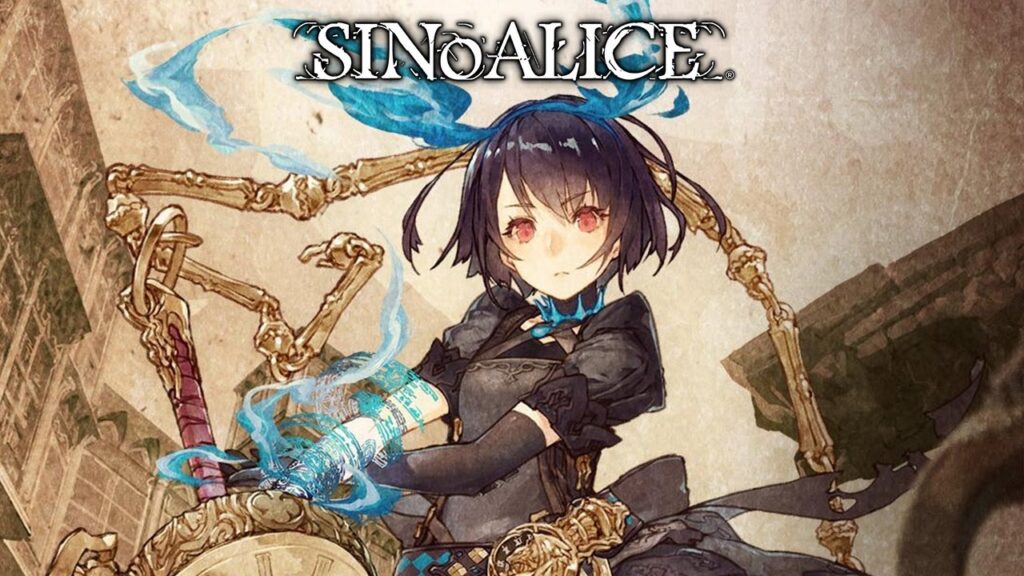
Service ran from June 6, 2017, until its shutdown on January 15, 2024, on iOS/Android. A mobile RPG with world and story concept by Yoko Taro, its absurd premise — fairy-tale characters taking up murder weapons and going to war — radiated a magnetism all its own. Cinderella, Snow White, Alice, Pinocchio and other storybook figures appear in fallen, corrupted forms, and the whole worldview is warped in that unmistakably Yoko Taro way.
As the service wound down, a roundtable featuring Yoko Taro himself was held, where he revealed he had “originally pitched a model designed to end after one year.” After roughly six and a half years of service, the curtain fell on January 15, 2024. It can no longer be played, but the story from those years can still be revisited through fan-made compilation videos and the like.
- Absurdist fairy tales crossed with Yoko Taro’s dark worldview — utterly one of a kind
- The story reached completion with the final “Yokubou” arc before shutdown
- Service ended January 15, 2024. Currently unplayable
- No world connection to NieR/Drakengard (a fully standalone setting)

No. 9: Voice of Cards: The Isle Dragon Roars — A Yoko Taro-Flavored Dark RPG Told Entirely in Cards
| Accessibility | Graphics | Cruelty Rating | Replay Value | Total Score |
|---|---|---|---|---|
| 78 | 72 | 38 | 38 | 226 |
Released October 28, 2021, for PS4, Nintendo Switch, and Steam (with iOS/Android versions following in 2023). A wholly original RPG in which three core NieR creators — Yoko Taro, Keiichi Okabe, and Kimihiko Fujisaka — render an entire world of swords and sorcery using nothing but cards.
Everything — fields, enemies, buildings — is depicted as cards, while a Game Master (voiced by Hiroki Yasumoto) narrates the story in tabletop-RPG fashion. Steam reviews sit at 81% positive. That said, complaints about slow pacing and a high encounter rate are real, and action-oriented NieR fans may come away wanting more.
There’s no world connection to NieR or Drakengard, but as one of the few ways to play “a Yoko Taro dark fantasy” on current hardware, it earns its keep. Being playable on Switch is a welcome bonus, too.
- Available to buy now on PS4, Switch, and Steam — a Yoko Taro game on current hardware
- An experimental card-based dark RPG from the NieR team
- Slow pacing may leave action-oriented NieR fans cold
- No world connection to NieR/Drakengard
No. 10:  — The Next Chapter in the Isle Dragon Roars Lineage
| Accessibility | Graphics | Cruelty Rating | Replay Value | Total Score |
|---|---|---|---|---|
| 76 | 70 | 35 | 38 | 219 |
Released February 17, 2022, for PS4, Nintendo Switch, and Steam. The second entry in the Voice of Cards series, following The Isle Dragon Roars. With a new setting and a new protagonist, the story revolves around another “imprisoned isle,” while the fundamentals carry over from the first game — the card-rendered world and the Game Master’s tabletop-style narration are both intact.
If you’ve already played the first game, slipping into this world is smooth, which secures an Accessibility score of 76. But some find it shorter than its predecessor, and lighter on the darkness. There are players who feel Yoko Taro’s committed dark streak thins out with each successive entry. Among currently purchasable current-gen titles, The Isle Dragon Roars remains the better front door into the Voice of Cards series.
- Available to buy now on PS4, Switch, and Steam
- Veterans of the first game will slide straight into the world
- The recommended entry point to Voice of Cards is the first game, The Isle Dragon Roars
- No world connection to NieR/Drakengard
Can You Play All 10 NieR & Drakengard Games on Current Hardware? The Complete Platform Guide
✅ The Bottom Line
Of the 10 games, 4 are still playable on current hardware in 2026 (NieR:Automata, NieR Replicant ver.1.22, and the two Voice of Cards titles). The older PS2/PS3 Drakengard and NieR games require original hardware. The two mobile titles (Re[in]carnation and SINoALICE) have ended service and cannot be played. Starting with NieR:Automata or NieR Replicant ver.1.22 is the optimal play in 2026.
① Titles You Can Buy and Play Right Now
| Title | Platforms | Price & Notes |
|---|---|---|
| NieR:Automata | PS4 / PS5 / Xbox / Switch / Steam | From 3,000 yen used or on sale |
| NieR Replicant ver.1.22474487139… | PS4 / Xbox One / Steam | No Switch version. From 2,000 yen used or on sale |
| Voice of Cards: The Isle Dragon Roars | PS4 / Switch / Steam / iOS / Android | 1,980 yen list price on Steam |
| Voice of Cards: The Forsaken Maiden | PS4 / Switch / Steam / iOS / Android | 1,980 yen list price on Steam |
② Titles Hard to Access on Current Hardware (Original Consoles Required)
| Title | Required Hardware | Alternatives |
|---|---|---|
| Drakengard (the original) | Original PS2 | Track down a used PS2 console and a copy. Entering the series via Drakengard 3 is also an option |
| Drakengard 2 | Original PS2 | Track down a used PS2 console and a copy |
| NieR Replicant/Gestalt (2010) | Original PS3/Xbox 360 | On current hardware, NieR Replicant ver.1.22 is the recommended way to play |
| Drakengard 3 | Original PS3 | Track down a used PS3 console and a copy |
③ Titles Whose Service Has Ended (Unplayable)
| Title | End of Service | Notes |
|---|---|---|
| NieR Re[in]carnation | Ended April 30, 2024 | Currently unplayable |
| SINoALICE | Ended January 15, 2024 | Currently unplayable |
If you’re new to the series, NieR:Automata or NieR Replicant ver.1.22 is the optimal entry point as of 2026. If you want to chase the Drakengard side of the family tree, you’ll need to set up used PS2 and PS3 hardware — and believe me, it’s worth the trouble.

Enjoying this article? Add us as a preferred source on Google.
Wrapping Up: The NieR & Drakengard Series Top 10, Ranked
- No. 1 NieR:Automata (332 pts): Metacritic 91, over 10 million copies worldwide. Top pick for newcomers — playable right now on PS4/Switch
- No. 2 NieR Replicant ver.1.22 (313 pts): Replay Value 90. Required reading as Automata’s prequel
- No. 3 Drakengard 3 (282 pts): Cruelty Rating 85 — the bridge from Drakengard to NieR. Home of the legendary rhythm-game boss
- No. 4 NieR Replicant/Gestalt 2010 (265 pts): NieR’s original text. ver.1.22 is playable on current hardware
- No. 5 Drakengard, the original (250 pts): Every ending is a bad ending. Ending D is the origin of NieR itself
- No. 6 Drakengard 2 (244 pts): A “story of hope” that shines even without Yoko Taro
- No. 7 NieR Re[in]carnation (234 pts): Ended April 2024 — currently unplayable
- No. 8 SINoALICE (229 pts): Ended January 2024 — currently unplayable
- No. 9 Voice of Cards: The Isle Dragon Roars (226 pts): The NieR team’s current-gen release. PS4/Switch/Steam
- No. 10 Voice of Cards: The Forsaken Maiden (219 pts): Sequel to The Isle Dragon Roars. PS4/Switch/Steam
The chain of madness that began with Drakengard’s Ending D has run unbroken from 2003 to 2026. Now that NieR:Automata has cleared 10 million copies worldwide, this series’ place in history is settled. Newcomers: start with NieR:Automata — no hesitation. The moment you witness Ending E, you’ll feel the pull to trace the road backward, from Replicant to Drakengard 3 to the original Drakengard. Walk the full length of the story that a singular creator named Yoko Taro spent more than 20 years weaving — with your own two hands.
“Feel-bad games” doesn’t even begin to cover it. Dive in and drown in just how deep this series goes.
Read Next

Snicker Kitamura




Leave a Reply