
Enjoying this article? Add us as a preferred source on Google.
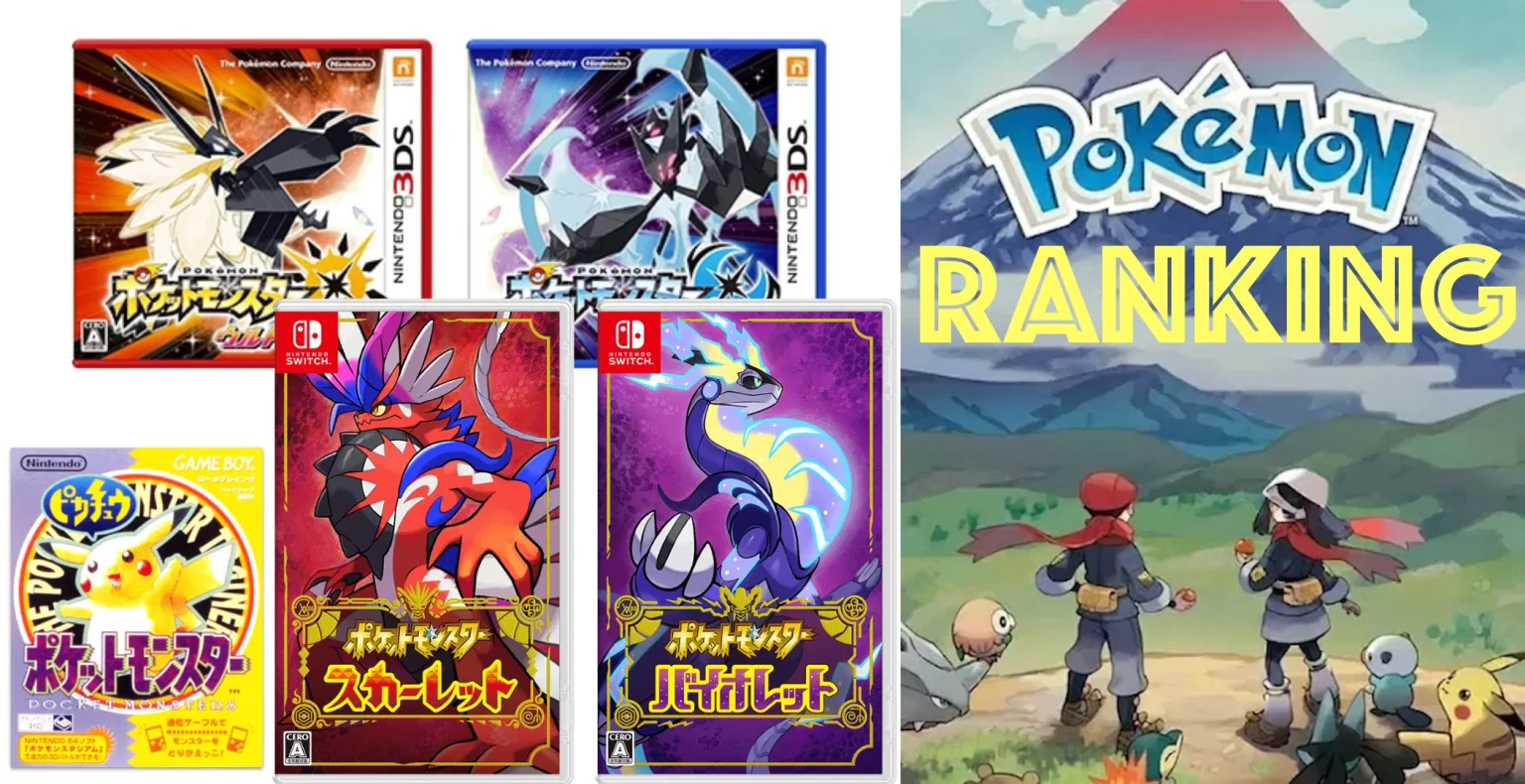
Here it is: our ranking of the top 10 mainline Pokémon games of all time. The crown — the one our editorial team names first when the talk turns to the series’ true masterpiece — goes to Pokémon Gold and Silver. And to the question “Which one should a beginner start with?”, I can answer instantly: Pokémon Scarlet and Violet, playable right now on Nintendo Switch. No. 2 is the boldly innovative Pokémon Legends: Arceus, and No. 3 is the remake perfected, Pokémon HeartGold and SoulSilver. From the 1996 originals all the way to 2022’s Scarlet and Violet, we’ve picked our winners from more than a quarter century of history.
That said, ranking Pokémon games is genuinely hard. Everyone’s first game is special to them, and each generation carries its own weight of memories. That’s exactly why, this time, we scored every title out of 100 across four axes — accessibility, graphics, depth, and innovation — to make the order as objective as possible.
The numbers are only a guide. Pick by the axis that matters most to you, and that becomes your personal No. 1. Sales figures, release dates, and other data are as of August 2026, based on official sources and publicly available information.
First up, let’s look at the score chart that puts all 10 titles side by side. The razor-thin gaps in total score are where each generation’s personality shines through.
Top 10 Mainline Pokémon Games Ranked: Full Score Comparison Chart
We scored every title out of 100 across four criteria. “Innovation” measures what each game brought to the series; “Depth” measures how hard it hooks you into replaying and training. Don’t just look at the totals — picking by the axis that speaks to you is the right way to use this chart.
| Title | Accessibility | Graphics | Depth | Innovation | Total Score |
|---|---|---|---|---|---|
| No. 1 Gold and Silver | 91 | 73 | 97 | 99 | 360 |
| No. 2 Legends: Arceus | 88 | 85 | 85 | 97 | 355 |
| No. 3 HeartGold and SoulSilver | 93 | 78 | 96 | 81 | 348 |
| No. 4 Black and White | 88 | 80 | 87 | 89 | 344 |
| No. 5 Ruby and Sapphire / Emerald | 87 | 74 | 91 | 88 | 340 |
| No. 6 Diamond and Pearl / Platinum | 86 | 73 | 90 | 87 | 336 |
| No. 7 Red and Blue | 78 | 60 | 92 | 100 | 330 |
| No. 8 Scarlet and Violet | 80 | 76 | 90 | 80 | 326 |
| No. 9 X and Y | 85 | 80 | 77 | 80 | 322 |
| No. 10 Sword and Shield | 84 | 78 | 80 | 76 | 318 |
Here’s the fascinating part: newer does not mean higher total score. New releases win the graphics fight hands down, but the older games claw their way back on innovation and depth. The series’ “evolution,” it turns out, is anything but a simple upward line.
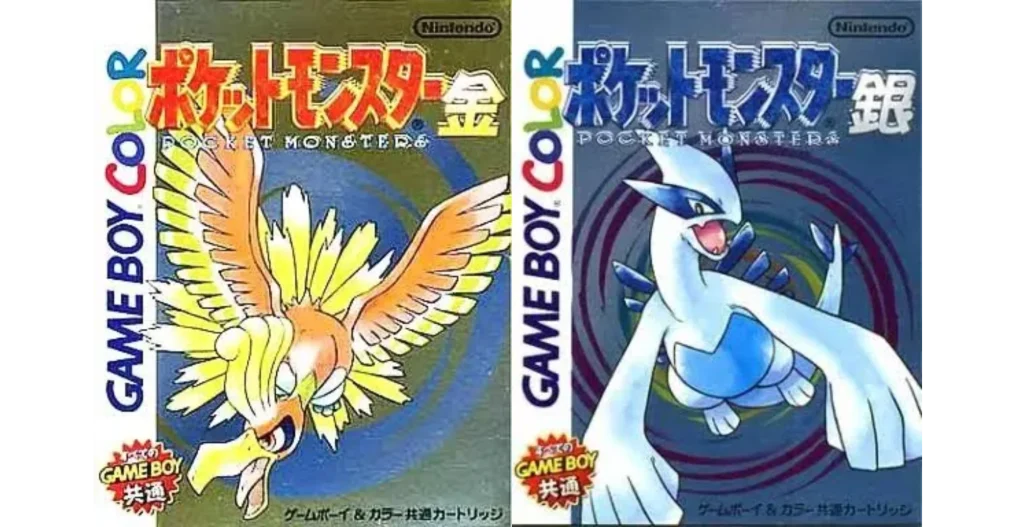
No. 1: Pokémon Gold and Silver — The Shock of Two Regions in One Cartridge
| Accessibility | Graphics | Depth | Innovation | Total Score |
|---|---|---|---|---|
| 91 | 73 | 97 | 99 | 360 |
Taking the top spot with room to spare is Pokémon Gold and Silver, released in Japan on November 21, 1999. Arriving with Game Boy Color support, 100 brand-new Pokémon, and the all-new Johto region, it took the frenzy sparked by the originals and threw gasoline on it.
The biggest shock of all: after beating the game, you could travel to a second region — Kanto. Two entire regions crammed into a single cartridge. Kids at the time simply could not believe the sheer amount of game in the box. On top of that, it introduced the real-time day-and-night cycle, Pokémon genders, and held items — the foundation everything after it was built on — all in one go. That contribution is impossible to overstate. The 99 for innovation is no exaggeration.
The graphics are, admittedly, of their era, but the density of content more than makes up for it. And that final battle against you-know-who — one of the most emotional moments in series history, and I still get goosebumps talking about it. This is the monumental title where the series’ quality leapt up a whole level.
- Overwhelming volume: two full regions in one game
- Innovations like day/night and genders that became series bedrock
- Postgame depth that keeps going long after the credits
- Graphics are of their generation and look dated today
- No official release on current hardware, so it’s hard to obtain
No. 2: Pokémon Legends: Arceus — The Thrill of “Hunting” Pokémon
| Accessibility | Graphics | Depth | Innovation | Total Score |
|---|---|---|---|---|
| 88 | 85 | 85 | 97 | 355 |
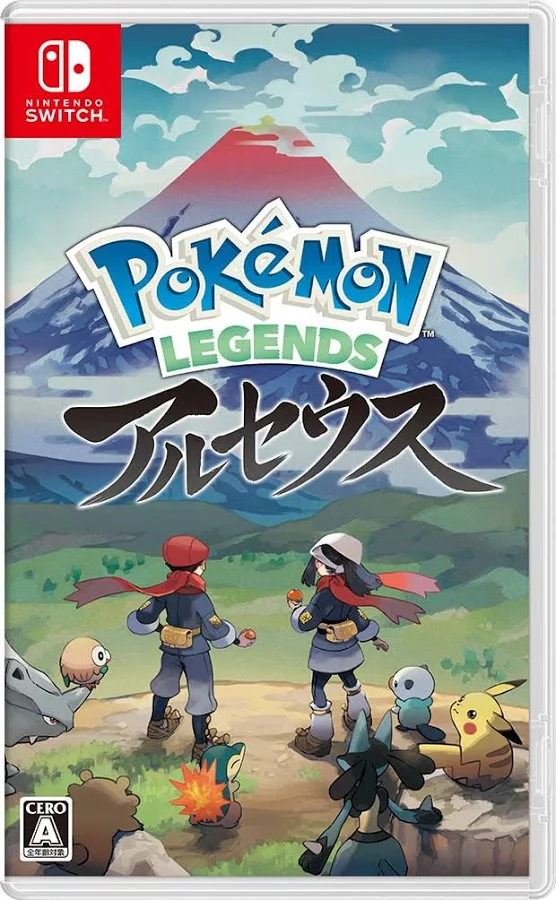
No. 2 is Pokémon Legends: Arceus, released January 28, 2022. Set in Hisui — the Sinnoh region of the distant past — it’s an action RPG that flipped the series’ conventions on their head, sending you sprinting across the field yourself to complete the Pokédex. In Japan it has sold roughly 3.64 million copies (as of March 2023).
Above all, it transformed the act of catching Pokémon. Crouching in the grass, hurling a ball, sometimes getting charged by an angry wild Pokémon — that tension simply didn’t exist in the series before. The 97 for innovation recognizes a game that dared to redesign, from the ground up, how a 25-year-old series plays.
At the same time, there’s no denying the rough edges: sparse environmental detail, thinly populated areas. But none of that shakes its achievement in showing us a new shape for Pokémon. The more burned out you are on the formula, the harder this one will hit.
- Catching gameplay that ranks as the series’ biggest innovation
- A genuinely fresh experience you can play on Switch today
- Perfect for anyone tired of battle-only Pokémon
- Rough spots remain, such as sparse background detail
- Battling and trading features are lighter than in mainline entries
No. 3: Pokémon HeartGold and SoulSilver — The Pinnacle of Remakes

| Accessibility | Graphics | Depth | Innovation | Total Score |
|---|---|---|---|---|
| 93 | 78 | 96 | 81 | 348 |
No. 3 is Pokémon HeartGold and SoulSilver for the Nintendo DS, released September 12, 2009. A remake of our No. 1 pick, Gold and Silver, it preserves everything that made the original great while layering on modern conveniences — a textbook example of how remakes should be done.
The crown jewel is the walking-Pokémon system. The lead Pokémon in your party trots along behind you, and that one touch transforms the journey into a road trip with your best friend. Add slick touch controls and an enormous roster of obtainable Pokémon, and you get those lofty scores: 93 for accessibility and 96 for depth.
For veterans of the original it’s the perfect homecoming; for newcomers it’s the definitive gateway to Gold and Silver. The one regret is that there’s no official release on current hardware, so tracking it down today takes some effort. If you spot a used copy, grab it without hesitation.
- The definitive modern way to play the classic Gold and Silver
- The brilliant walking-Pokémon feature, with your partner at your heels
- A huge roster of Pokémon means near-endless replay value
- No official release on current hardware, so copies are scarce
- You’ll need actual DS hardware and a cartridge to play
No. 4: Pokémon Black and White — The Outlier With a Story That Hits Hard

| Accessibility | Graphics | Depth | Innovation | Total Score |
|---|---|---|---|---|
| 88 | 80 | 87 | 89 | 344 |
No. 4 is Pokémon Black and White, released September 18, 2010. A late-era Nintendo DS title, it’s remembered as the series’ great outlier: a bold design that filled the entire adventure with nothing but brand-new Pokémon, paired with one of the heaviest, most substantial stories the franchise has ever told.
The story confronted players head-on with a question: is it right to keep Pokémon at our side at all? It cut deep at the time. The drama surrounding the villainous Team Plasma and the enigmatic N carries a weight that goes well beyond a kids’ game. The 89 for innovation honors that thematic courage.
The graphics — pixel art pushed to its absolute peak — are another highlight. The expressiveness of those animated sprites hasn’t aged a day. And that controversial “new Pokémon only” restriction? Looking back, it was the right call after all.
- One of the deepest, heaviest stories in the series
- Sprite work that stands as the pinnacle of pixel-art Pokémon
- A fresh adventure built entirely on new Pokémon
- No familiar fan-favorite Pokémon appear in the early game
- No port on current hardware, so it’s hard to obtain
No. 5: Pokémon Ruby and Sapphire / Emerald — Nature, Secret Bases, and Adventure
| Accessibility | Graphics | Depth | Innovation | Total Score |
|---|---|---|---|---|
| 87 | 74 | 91 | 88 | 340 |
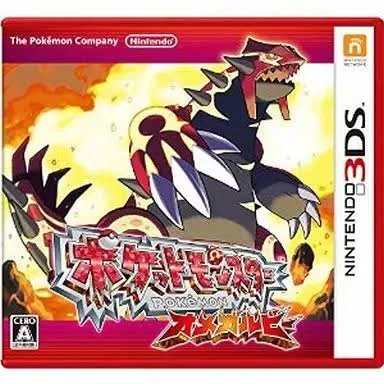
No. 5 is Pokémon Ruby and Sapphire from 2002 (plus 2004’s Pokémon Emerald). This is where the series went truly full-color on the Game Boy Advance, staging its adventure in the lush, nature-rich Hoenn region. It’s also the generation that introduced Abilities, Natures, and Double Battles — the very backbone of competitive play as we know it today.
The 91 for depth comes down to that leap in the battle system. Abilities and Natures made Pokémon training dramatically deeper overnight, and the foundation of serious competitive battling was laid right here. Building secret bases and playing around with Secret Power tickled every kid’s imagination at the time, too.
Hoenn, with all its seas and islands, makes exploration a particular joy. A 3DS remake, Omega Ruby and Alpha Sapphire, followed later. Both original and remake are hard to buy new on current hardware, but this remains a beautifully polished title that defines its generation.
- Established the fundamentals of competitive play with Abilities and Natures
- Rich freeform fun like building secret bases
- Exploring the nature-rich Hoenn region is a delight
- Both original and remake are hard to obtain on current hardware
- Graphics are of their generation
No. 6: Pokémon Diamond and Pearl / Platinum — The Game That Changed Competitive Battling
| Accessibility | Graphics | Depth | Innovation | Total Score |
|---|---|---|---|---|
| 86 | 73 | 90 | 87 | 336 |
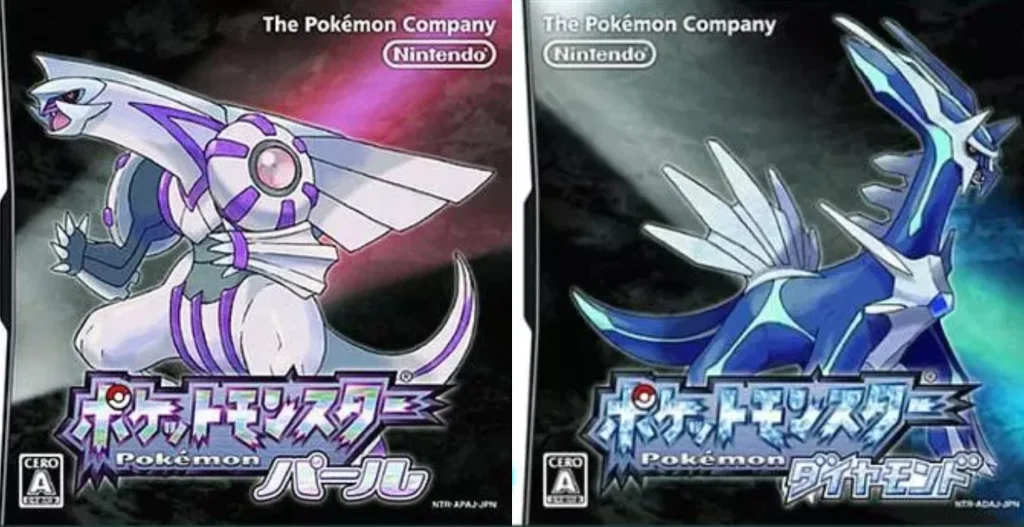
No. 6 is Pokémon Diamond and Pearl from 2006 (plus 2008’s Pokémon Platinum). Debuting on the Nintendo DS, it brought full-scale Wi-Fi battling and trading with players around the world — the title that truly took the series online.
The reclassification of moves into physical and special categories rewrote the competitive scene from its foundations. It massively widened the pool of viable Pokémon, feeding directly into that 90 for depth. The Sinnoh region’s brooding atmosphere and mythology-laden story keep its fanbase fiercely loyal to this day.
In 2021, the Switch remake Pokémon Brilliant Diamond and Shining Pearl arrived, making the Sinnoh journey playable on current hardware. If you love a slow-burn, deliberate adventure, this generation is not to be skipped.
- The physical/special split massively evolved competitive battling
- Playable on current hardware via the Switch remake
- Sinnoh’s mythic, weighty world-building
- The original Diamond and Pearl campaign has a leisurely pace
- The originals’ graphics are of their generation
No. 7: Pokémon Red and Blue — Where It All Began
| Accessibility | Graphics | Depth | Innovation | Total Score |
|---|---|---|---|---|
| 78 | 60 | 92 | 100 | 330 |
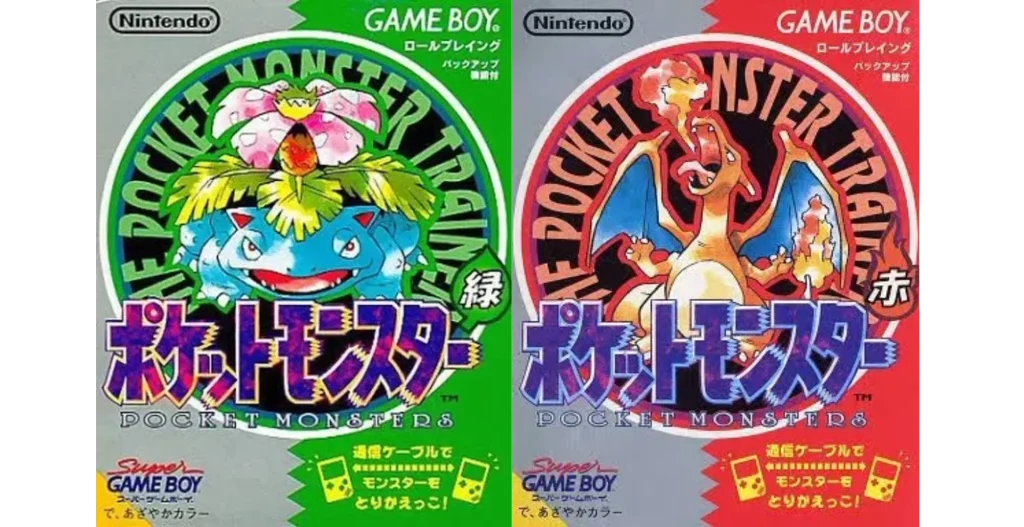
No. 7 is where it all began: Pokémon Red and Blue, first released in Japan (as Red and Green) on February 27, 1996. Born on the humble Game Boy, this pair of cartridges lit the fuse on a worldwide phenomenon. Innovation: a flawless 100 — and how could it be anything else? This is the game that invented the very concept of “Pokémon.”
The two-version system, built around trading and link battles, changed how games could even be played. “Your Pokédex can’t be completed unless you cable up with a friend and trade” — as a design decision in 1996, that was nothing short of revolutionary. And the 92 for depth? Anyone who lived through the mania of collecting all 151 will nod along.
Of course, by today’s standards the controls and graphics are rough-hewn, and the game’s infamous bug count is the stuff of legend. But without this one cartridge, none of the games that followed would exist. It is the origin — a legend that will never fade.
- The historic origin point that spawned the entire series
- The inspired invention of trading and link battles
- The primal joy of collecting all 151 Pokémon
- Controls and graphics are extremely dated
- Numerous bugs make it a rough play by modern standards
No. 8: Pokémon Scarlet and Violet — The Leap to Open World
| Accessibility | Graphics | Depth | Innovation | Total Score |
|---|---|---|---|---|
| 80 | 76 | 90 | 80 | 326 |
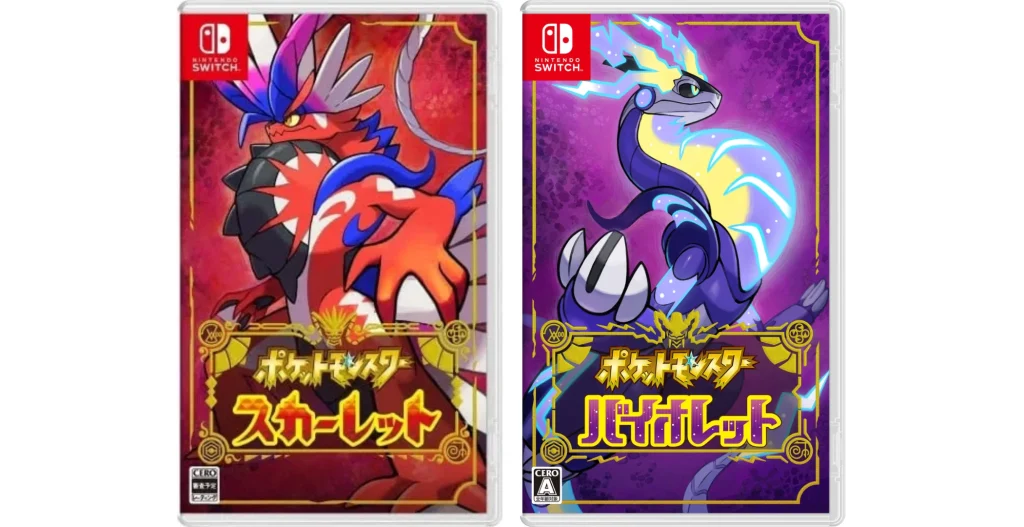
No. 8 is Pokémon Scarlet and Violet, released November 18, 2022. The series’ first fully open-world entry, it’s an ambitious work that lets you roam the Paldea region with no boundaries at all. Japanese sales stand at 8.66 million copies (as of end of March 2025) — the highest in series history.
The freedom to tackle its three storylines in any order, along with a memorable cast of characters, earned real praise. The 90 for depth reflects just how rich that adventure is. On the flip side, the launch period was dogged by widely reported frame drops and rendering glitches, which dragged down its graphics score. It’s a game where the brilliance and the roughness sit side by side, plain to see.
Even so, being the newest generation playable on Switch right now is a massive advantage. If you want to experience current Pokémon and the modern competitive scene, this is the practical entry point. Call it the pivotal work that will tell us where the series goes next.
- The series’ first fully open world
- The latest generation, with the highest Japanese sales in series history
- The current competitive scene, playable on Switch today
- Frame drops and glitches were prominent at launch
- Graphical polish has its rough patches
No. 9: Pokémon X and Y — The Generation Where Pokémon Moved in 3D
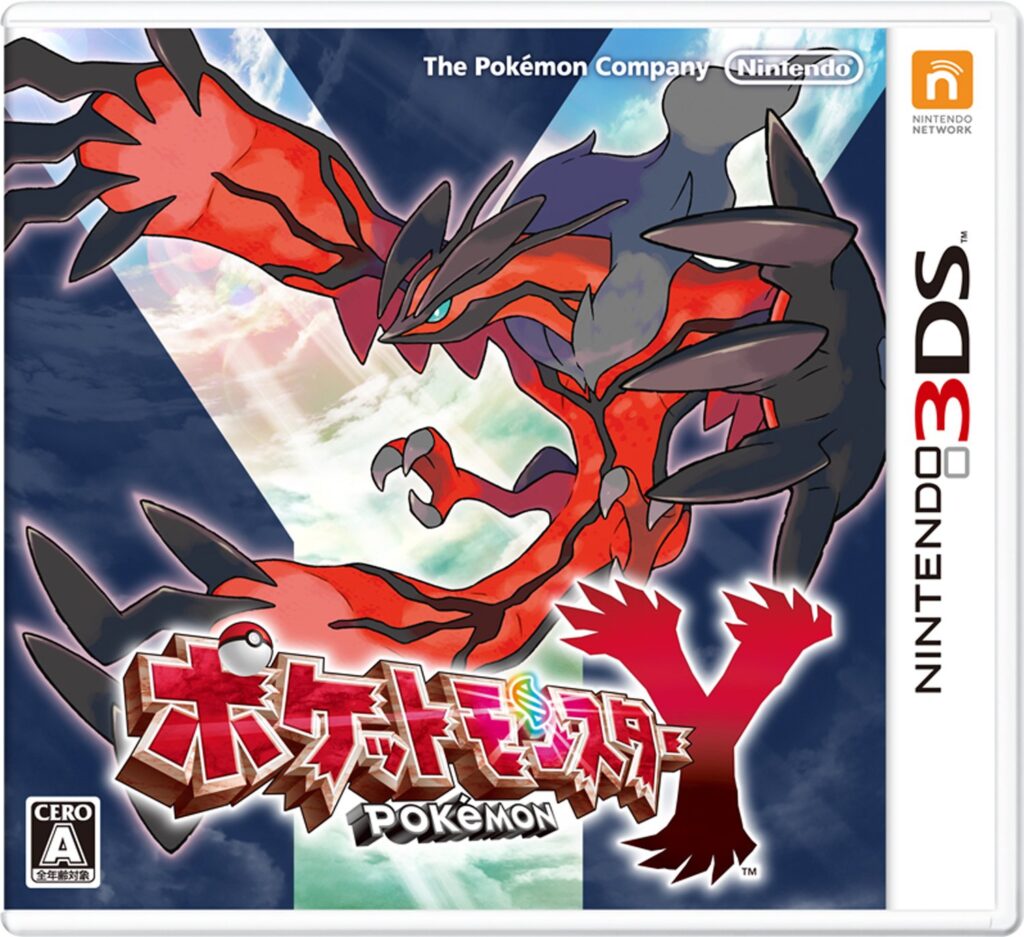
| Accessibility | Graphics | Depth | Innovation | Total Score |
|---|---|---|---|---|
| 85 | 80 | 77 | 80 | 322 |
No. 9 is Pokémon X and Y from 2013 — the landmark generation where the series went fully 3D on the Nintendo 3DS. Watching Pokémon move and fight as full three-dimensional models floored longtime fans. The France-inspired Kalos region, all elegance and glamour, is a charm of its own.
The headline feature is Mega Evolution. Letting certain Pokémon evolve one step further mid-battle injected a whole new layer of mind games into competitive play. The 80 for graphics honors that giant stride: the series’ transition into 3D.
On the other hand, some argue the story and the training endgame feel a bit thin next to later generations. Even so, its significance as the starting point of 3D Pokémon is untouchable. If you want to experience the series’ great turning point, this is the one to seek out.
- The series’ first true 3D graphics
- Mega Evolution adds fresh mind games to battles
- The glamorous world of the Kalos region
- The story is sometimes called a little thin
- A 3DS title, so it’s hard to obtain on current hardware
No. 10: Pokémon Sword and Shield — The Dawn of the Switch Era
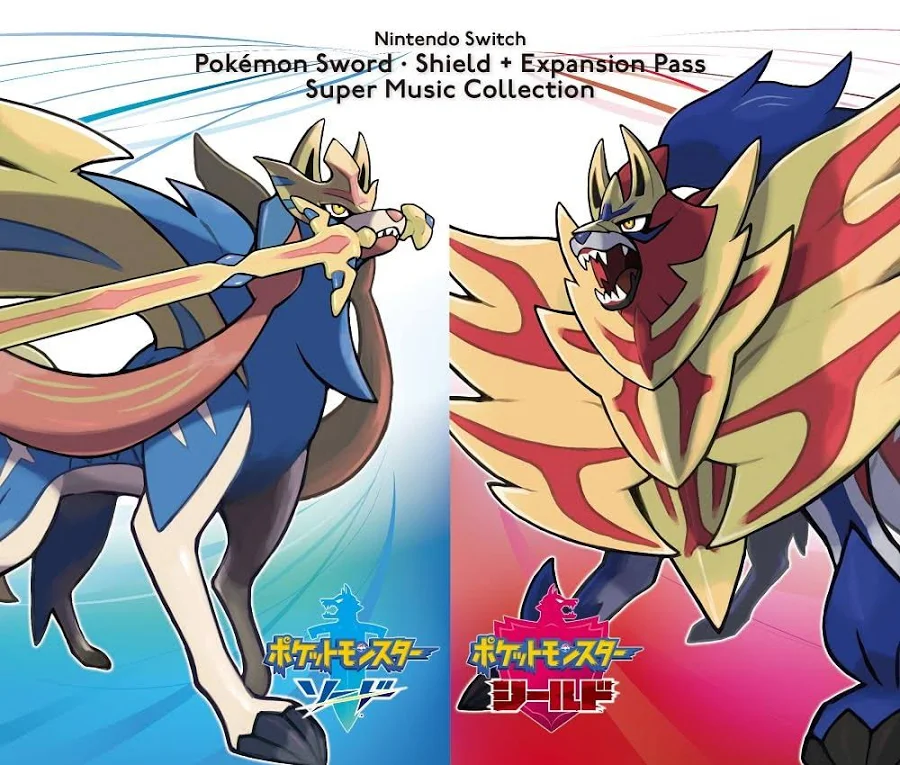
| Accessibility | Graphics | Depth | Innovation | Total Score |
|---|---|---|---|---|
| 84 | 78 | 80 | 76 | 318 |
No. 10 is Pokémon Sword and Shield from 2019 — the milestone entry that brought the mainline series to Nintendo Switch, a console you can play docked on the big screen, for the very first time. Set in the Britain-inspired Galar region, its giant-sized Dynamax battles give the adventure a stadium-rock energy.
In the sprawling Wild Area, huge numbers of Pokémon roam the overworld, delivering a sense of scale only the Switch could provide. The Dynamax spectacle in packed stadiums is flashy and satisfying, too. The 84 for accessibility reflects the smooth, comfortable play that current hardware makes possible.
On the other hand, the decision to drop the National Pokédex — the so-called “Dexit” — ignited a firestorm of debate at the time. The 76 for innovation weighs that controversy in the balance. Still, as a mainline game you can pick up casually on Switch today, it’s more than polished enough to serve as anyone’s first Pokémon.
- The mainline series’ first outing on Switch
- The Wild Area’s sense of openness feels fresh
- An easy, beginner-friendly start on current hardware
- Dropping the National Pokédex sparked heavy debate
- Graphical polish leaves something to be desired
Bonus Round: Is the Latest Release, Pokémon Legends: Z-A, a Masterpiece? (Scored Separately From the Top 10)
| Accessibility | Graphics | Depth | Innovation | Total Score |
|---|---|---|---|---|
| 86 | 79 | 84 | 94 | 343 |
Let me be clear up front: this score is a bonus evaluation, entirely separate from the Top 10. The lineup, order, and scores of the ten games above remain untouched. Pokémon Legends: Z-A launched on October 16, 2025 — still fresh — and its historical place within the series hasn’t settled yet. So rather than folding it into the main ranking, we measured its raw ability on the same four axes.
It runs on Nintendo Switch and Nintendo Switch 2, priced at 7,128 yen (tax included) for the physical edition and 7,100 yen (tax included) for the download version. Developed by Game Freak and published by The Pokémon Company, its official genre is “action RPG.” It’s a bold experiment that abandons the traditional turn-based command battles for real-time combat. Its Metascore on the review aggregator Metacritic sits at 81 (as of coverage of the October 2025 tally) — one of the stronger starts in series history. Graphics and story, however, have divided opinion, and you can see that reflected in the scores.
Here’s the breakdown across the four axes. Accessibility, 86: brisk real-time combat and a welcoming structure, minus a few points because the action focus won’t suit everyone. Graphics, 79: reflecting a visual presentation that splits opinion. Depth, 84: collection and training built around Mega Evolution, plus the momentum of the expansion DLC “M Dimension Rush.” And innovation, 94 — overhauling the battle system may not quite reach Gold and Silver or Red and Blue territory, but it’s one of the boldest moves in the series’ entire history. A total of 343 would land it mid-table if we dropped it into the Top 10. I can’t wait to see it officially ranked in the next revision, once the dust settles.
- Exhilarating real-time battles that break the series mold
- Supports both Switch and Switch 2 — playable on current hardware now
- A Metascore of 81, among the series’ best-reviewed entries
- Graphics and story have divided opinion
- Action-heavy combat may not suit turn-based purists
Can You Play These 10 Pokémon Classics on Current Hardware? The Complete Platform Guide
✅ The Verdict
Of the 10 ranked titles, 5 are playable in some form on current hardware (Nintendo Switch) as of August 2026. Beyond the three recent releases, remakes let you relive the older adventures too. Meanwhile, many of the Game Boy and DS era classics have become difficult to obtain through official channels since the 3DS Nintendo eShop closed.
1. Titles Playable via Subscription or for Free
Unfortunately, even as of August 2026, no mainline Pokémon game is included in Nintendo Switch Online or any other subscription service. The “subscribe and play the back catalog” option simply doesn’t exist for the mainline series right now.
2. Titles You Can Buy Outright (Current Hardware)

| Title | Platform | Notes |
|---|---|---|
| Scarlet and Violet | Nintendo Switch | Latest generation. Sold digitally and physically |
| Pokémon Legends: Arceus | Nintendo Switch | Sold digitally and physically |
| Sword and Shield | Nintendo Switch | Sold digitally and physically |
And don’t forget the newest release we scored in the bonus round, Pokémon Legends: Z-A — it’s on sale now for Switch and Switch 2 (physical edition 7,128 yen, tax included). If you want to start with “the newest Pokémon there is,” that’s a valid door in.
3. Titles Playable via Remaster or Remake

| Original | Playable Version on Current Hardware | Platform |
|---|---|---|
| Diamond and Pearl | Brilliant Diamond and Shining Pearl | Nintendo Switch |
| Red and Blue (Kanto region) | Let’s Go, Pikachu! and Let’s Go, Eevee! | Nintendo Switch |
| Red and Blue (Kanto region) | FireRed and LeafGreen (GBA versions on Switch) | Nintendo Switch (download only, 2,000 yen each, tax included) |
The big tailwind here is Pokémon FireRed and LeafGreen, which began digital distribution on February 27, 2026. The GBA remakes of the first-generation games arrived on Switch as download-only titles at 2,000 yen each (tax included), dramatically lowering the barrier to experiencing the original adventure on current hardware.
4. Titles Hard to Obtain on Current Hardware

| Title | Original Hardware | Alternatives / Notes |
|---|---|---|
| Gold and Silver | Game Boy Color | The HGSS remake (DS) is also scarce. Secondhand is your best bet |
| HeartGold and SoulSilver | Nintendo DS | No current-hardware version. Requires a used cartridge plus DS hardware |
| Ruby and Sapphire / Emerald | Game Boy Advance | The ORAS remake (3DS) is also scarce since the eShop closed |
| Black and White | Nintendo DS | No port or remake. Secondhand is your best bet |
| X and Y | Nintendo 3DS | No digital purchase since the eShop closed. Used physical copies only |
If you just want to enjoy the latest Pokémon with zero hassle, you can’t go wrong starting with Scarlet and Violet or Legends: Arceus, both on sale for Switch. The older classics are steadily creeping up in price on the secondhand market, so if one’s on your wishlist, the smart move is to secure it while used copies are still affordable.
Pokémon Ranking FAQ: Your Questions Answered
Finally, here are straight answers — conclusions first — to the questions people most often have when searching for Pokémon rankings.
Which Pokémon game is the most popular and the best of all time?
By our four-axis scoring, Pokémon Gold and Silver takes first place with a total of 360 points — the greatest game in series history, and the definition of a masterpiece. Its one-of-a-kind two-region adventure and sheer innovation sealed the win; you’ll find the full scoring rationale in the comparison chart at the top and the No. 1 section.
Which game should beginners start with?
Beginners should start with Pokémon Scarlet and Violet, on sale now for Nintendo Switch. It’s the latest generation, its open world offers tremendous freedom, and — crucially — you can buy and play it on current hardware today. If you prefer action-leaning gameplay, starting with Pokémon Legends: Arceus is a perfectly good call too.
Why isn’t the latest release, Pokémon Legends: Z-A, in the ranking?
Z-A launched on October 16, 2025 — too recently for its reputation to have settled — so this time we scored it on the same four axes as a separate bonus entry (total: 343 points). Consider it a leading candidate for official inclusion in the next revision.
Does this article cover the popularity ranking of individual Pokémon characters?
No — this article ranks the games themselves, not individual characters like Pikachu. For character popularity standings, check fan polls or the official popularity votes. That said, if your question is “which game should I play to see my favorites in action?”, our score chart is exactly the tool for the job.


Enjoying this article? Add us as a preferred source on Google.
Final Thoughts: Which Pokémon Game Is Your Personal No. 1?
Let’s recap the essentials. The overall winner of our all-time ranking — the series’ definitive masterpiece — is Gold and Silver, that bundle of innovation that lets you journey across two regions. No. 2 is Legends: Arceus, which reinvented the series through its catching gameplay, and No. 3 is HeartGold and SoulSilver, the pinnacle of remakes. If you’re choosing by historical greatness, these top three are the no-brainer picks.
If you want to play on current hardware right now, your realistic entry points are Scarlet and Violet, Arceus, and Sword and Shield on Switch, plus the remake Brilliant Diamond and Shining Pearl — and, since February 2026, the digital release of FireRed and LeafGreen. Meanwhile, the Game Boy and DS era classics are only getting harder to find, so if any of them call to you, move sooner rather than later.
In the end, there is no single correct answer with Pokémon. The first one you ever played will always be your masterpiece. But maybe this ranking is the perfect excuse to set out for one of those regions all over again.
What the scoring made clear is this: a Pokémon game’s greatness cannot be measured by how new its graphics are. The proof is right there in the chart — the older games muscle into the top ranks on innovation and depth. The heart of this series has always been the joy of collecting, training, and connecting. Play the new releases if you want current hardware; play the classics if you want history. Choose by purpose, and you won’t regret a thing.
So — in which region is your next partner waiting? It’s time to grip that Poké Ball again.
Read Next
Snicker Kitamura





Leave a Reply