





Enjoying this article? Add us as a preferred source on Google.
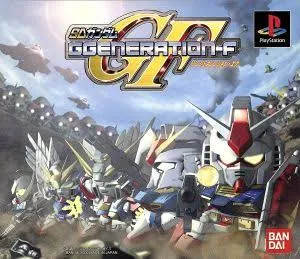
If somebody puts a gun to your head and says “pick exactly one Gundam game,” the answer is SD Gundam G Generation F. Released for the PlayStation by Bandai on August 3, 2000, this single disc is a genuinely unhinged strategy game that crammed 38 different series and more than 1,000 units onto one piece of plastic, and 26 years later nothing has topped it on the “all of Gundam in one box” front.
The catch is that Gundam games cover a frighteningly wide spread of genres. There are strategy games where you level up units and hop across every series in the franchise, war games that let you run the One Year War at the national level, cockpit-view 3D shooters, arcade-bred competitive action, and real-time tactics where you command a Zeon special forces unit. If you’ve ever searched for “best Gundam games” and come away confused, I’m betting that sheer breadth is the reason.
So for this feature, I picked seven titles with a heavy retro lean and scored each one out of 100 across four axes: source accuracy, challenge, roster volume, and replay depth. On top of that, I’m giving a separate slot to the one freak entry that could never have existed on a home console at all: the arcade cabinet game Mobile Suit Gundam: Bonds of the Battlefield.
Full disclosure: I’m the guy who threw away an entire summer for G Generation F. By the time I’d mastered every last unit, September was over. Coming from a man with two divorces behind him this may not land, but yes, I’m aware I misallocated my time. I still don’t regret it.
These scores aren’t here to crown a winner. Do you want to roam across every series in the franchise? Rewrite the One Year War through strategy? Or feel the tension of dying the instant you get shot? Just read the axis that matches your own yardstick and ignore the rest.
All 7 Best Gundam Games: Full Scorecard Comparison
Every game is scored out of 100 on four criteria. “Source Accuracy” measures how carefully the battlefields and timeline of the original works are reproduced. “Challenge” covers difficulty and strategic depth. “Mech & Character Volume” is the scale of the unit and character lineup. “Replay Depth” is how much there is left to chew on after the credits roll. Don’t just read the totals: pick based on the axis you personally care about.
| Title | Source Accuracy | Challenge | Mech & Character Volume | Replay Depth |
|---|---|---|---|---|
| No. 1 SD Gundam G Generation F (PS) | 98 | 85 | 100 | 98 |
| No. 2 Gihren’s Greed: Threat of Axis (PSP) | 95 | 96 | 92 | 95 |
| No. 3 Federation vs. Zeon DX (PS2) | 92 | 88 | 80 | 88 |
| No. 4 Zeonic Front: Mobile Suit Gundam 0079 (PS2) | 90 | 96 | 74 | 78 |
| No. 5 Mobile Suit Gundam Side Story: The Blue Destiny trilogy (Saturn) | 94 | 86 | 72 | 80 |
| No. 6 Gundam Breaker 4 (Switch / PS5 / PS4 / Steam) | 70 | 68 | 96 | 92 |
| No. 7 SD Gundam G Generation Cross Rays (PS4 / Switch / Steam) | 86 | 64 | 92 | 82 |
Here’s the detail worth staring at: all five of the top finishers are retro titles from 2008 or earlier. In terms of raw volume and genuine challenge, Gundam games already hit their peak once, back in the PS through PS2 and PSP era. Meanwhile No. 6 and No. 7, the two you can actually buy on current hardware, post high volume scores, which makes them the natural entry point if you’re starting today. That gap is exactly where the Gundam game landscape sits right now.
No. 1: SD Gundam G Generation F — 38 Series and 1,000 Units of Pure Excess
| Source Accuracy | Challenge | Mech & Character Volume | Replay Depth | Total Score |
|---|---|---|---|---|
| 98 | 85 | 100 | 98 | 381 |
SD Gundam G Generation F launched on August 3, 2000 for the PlayStation, published by Bandai and developed by Tom Create. Built as the culmination of the series, it packs in 38 series and more than 1,000 units, covering very nearly every Gundam production that existed at the time. The following year, on May 2, 2001, SD Gundam G Generation F.I.F arrived. It functions as the equivalent of an append disc, reading save data from the main game while still working as a standalone release, and it adds a 10-stage Super Challenge Mode, a cranked-up difficulty variant called Gundam Fight EX, and customization tools.
What a 100 in Mech & Character Volume Actually Means
Look at what’s behind the number. The core Multi-Situation Mode serves up 113 stages drawn from 20 series, running from the original Mobile Suit Gundam all the way to After War Gundam X. On top of that you get a simultaneous multi-unit attack system, the pilotless Mobile Doll system, and a battle-royale-style Gundam Fight Mode. That count of 1,000-plus units wasn’t showing off; it was the minimum needed to make all of that hold together.
Those 38 featured series include plenty of non-animated material, novels and manga among them. In other words, this goes well beyond “the mechs you saw on TV.” The 98 for replay depth is me putting a number on the fact that you can clear all 113 stages and still have units you’ve never touched. It’s also one of the very few things that kept a Dreamcast loyalist like me booting up a PlayStation.
- 38 series and over 1,000 units: about the largest roster the franchise has ever assembled
- Multi-Situation Mode covers 113 stages from 20 series, plus the Mobile Doll system and Gundam Fight Mode
- F.I.F, released May 2, 2001, works as an append disc with save data compatibility and plays fine on its own
- You need real PlayStation hardware. There’s no port or digital release on current platforms
- The sheer volume means collecting every unit is a long-haul commitment
No. 2: Mobile Suit Gundam Gihren’s Greed: Threat of Axis — Rewriting Everything From the One Year War to Char’s Counterattack Across 5 Factions
| Source Accuracy | Challenge | Mech & Character Volume | Replay Depth | Total Score |
|---|---|---|---|---|
| 95 | 96 | 92 | 95 | 378 |
Mobile Suit Gundam: Gihren’s Greed – Threat of Axis is a strategy simulation released on February 7, 2008 for PlayStation Portable by Bandai Namco Games, developed by Bec. A budget reprint followed on January 8, 2009.
This one’s reach is enormous. It spans the One Year War through Char’s Rebellion, and lets you play as any of five factions: the Earth Federation Forces, the Principality of Zeon, the AEUG, the Titans, and Axis. The lineup runs to over 400 unit types and more than 200 characters. Calling it “the entire Universal Century laid out on a game board” is barely an exaggeration.
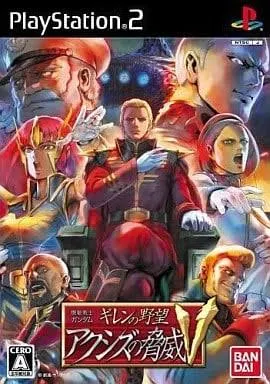
There’s a Definitive Edition Called Threat of Axis V
The upgraded version is the one to know about. Mobile Suit Gundam: Gihren’s Greed – Threat of Axis V hit PlayStation 2 and PlayStation Portable on February 12, 2009, adding a new faction, the Tem Ray Army, along with 80-plus additional units and five more characters. That pushes the totals past 550 units and 260 characters. A Gundam 30th Anniversary edition followed on December 17 that same year, and a budget version on June 3, 2010. If you have to choose one, V is the correct answer.
That 96 for challenge isn’t inflated. Managing over 400 unit types and more than 200 characters while holding a front line against four rival factions is one hard decision after another. It helps enormously that the shape of the One Year War you end up seeing changes depending on which faction you pick. When I told my skateboarding buddies there was a Gundam game that’s a full-blown strategy sim, they genuinely thought I was making it up. But that’s what this is: a game where you push the Universal Century around a board.
- A whole-Universal-Century strategy sim covering the One Year War through Char’s Rebellion from five playable factions
- More than 400 unit types and over 200 characters
- The upgraded Threat of Axis V bumps that to 550-plus units and 260-plus characters
- You need real hardware: PSP for the original, or PS2 / PSP for V. Neither has been ported to current platforms
- A single playthrough is long, and newcomers to strategy sims can easily stall out early

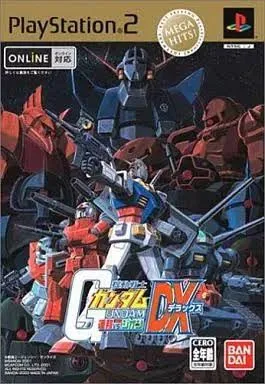
No. 3: Mobile Suit Gundam: Federation vs. Zeon DX — Straight From the Arcade, the Birthplace of the VS. Series
| Source Accuracy | Challenge | Mech & Character Volume | Replay Depth | Total Score |
|---|---|---|---|---|
| 92 | 88 | 80 | 88 | 348 |
The arcade version of Mobile Suit Gundam: Federation vs. Zeon shipped on March 26, 2001, and cabinets went live the very next day, on the 27th. It ran on Sega’s NAOMI board. The upgraded revision, “DX,” hit arcades on September 14 of that same year, and the home port, Mobile Suit Gundam: Federation vs. Zeon DX for PlayStation 2, arrived on December 6, 2001 from Bandai. Capcom handled development.
Everything we now call “Gundam VS.” starts right here. The default setup is 2-on-2 for up to four players at once, and every mobile suit carries an assigned cost. Get shot down and your team’s strength gauge drops by exactly that amount; in versus play, the first side to have its 600-point gauge reduced to zero loses. In other words, the better the machine you pick, the more it hurts when you go down. That single rule is the foundation of every mind game in the series.
The PlayStation 2 version earns its keep with what it adds. A dedicated single-player Mission Mode was folded in, and four-player matches over a network connection were supported too. This was also the first VS. game you could settle in with at home instead of feeding coins into a cabinet.
- The game that built the skeleton of the “Gundam VS.” series still running today
- The PS2 version adds a single-player Mission Mode and supports four-player matches over a network connection
- Brings the arcade DX build (live September 14, 2001) home
- You need real PlayStation 2 hardware, and online play is no longer available
- The roster centers on the One Year War, so there are fewer suits here than in later VS. games
No. 4: Zeonic Front: Mobile Suit Gundam 0079 — Thirteen Missions of Hell, Fought From Zeon’s Side
| Source Accuracy | Challenge | Mech & Character Volume | Replay Depth | Total Score |
|---|---|---|---|---|
| 90 | 96 | 74 | 78 | 338 |
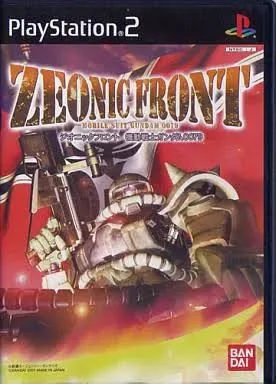
Zeonic Front: Mobile Suit Gundam 0079 launched on September 6, 2001 for PlayStation 2, published by Bandai. Bec developed it, and the genre is real-time tactical simulation. A budget reissue under the “GUNDAM THE BEST” label followed on February 17, 2005.
The stars of the show are the Principality of Zeon’s special forces unit, the Midnight Fenrir Corps. You play as a Zeon commander directing the unit, calling out advance routes and formations for your mobile suits as the battlefield shifts in real time. Squads can be organized into three teams — red, blue, and green — and issuing formation orders mid-combat lets you set up coordinated attacks. There are 13 missions in all.
And then there’s that Challenge score: 96. I’d argue this is among the hardest games in the entire Gundam catalog. You’re not the one pulling the trigger — you’re the one giving orders — so most of the outcome is decided by your loadout and formation before a shot is ever fired. Very few games, before or since, let you feel your entire unit melt away in front of a single Gundam. This is the game that makes you understand, through play, exactly why “the Federation’s white devil” was something to be terrified of.
- An outlier that fights the One Year War from the perspective of Zeon’s Midnight Fenrir Corps
- Three-team organization in red, blue, and green, plus coordinated attacks driven by formation orders
- Thirteen missions total, each one packed remarkably dense
- Brutally difficult, and absolutely unwinnable if you approach it like an action game
- Needs real PlayStation 2 hardware; a remake is included in the PS3 release Mobile Suit Gundam Side Stories
No. 5: Mobile Suit Gundam Side Story: THE BLUE DESTINY Trilogy — Chasing the EXAM-Equipped Suits in Sega Saturn 3D Shooting
| Source Accuracy | Challenge | Mech & Character Volume | Replay Depth | Total Score |
|---|---|---|---|---|
| 94 | 86 | 72 | 80 | 332 |
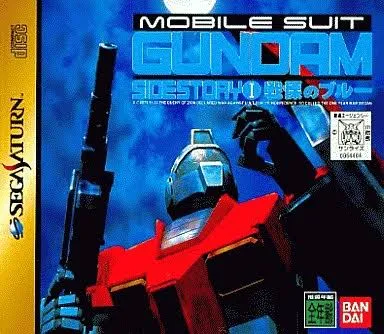
This one is my home turf. Mobile Suit Gundam Side Story: THE BLUE DESTINY is a 3D shooting game published by Bandai for the Sega Saturn, structured as a trilogy. Part one, Senritsu no Blue, arrived September 20, 1996; part two, Ao wo Uketsugu Mono, on December 6, 1996; part three, Sabakareshi Mono, on March 7, 1997. Bec developed all three.
The protagonist is Yu Kajima. At the heart of the story sits the EXAM system and the machines built around it: the RX-79BD-1 (Blue Destiny Unit 1), the RX-79BD-2 (Unit 2), and the RX-79BD-3 (Unit 3). EXAM’s premise — replicating Newtype reflexes mechanically — feeds directly into the tension of the game itself.
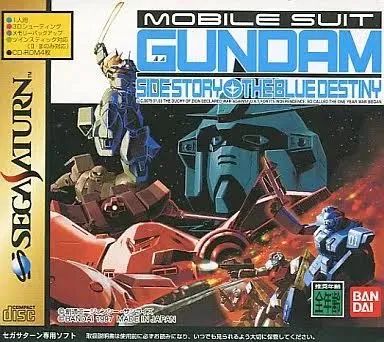
Buying these one at a time on Saturn back then felt a lot like following a seasonal streaming release now. Every three months the next chapter dropped, and every time, the EXAM mystery moved forward. As a Sega Saturn devotee, I want to give this trilogy credit for establishing “Gundam Side Story” as a genre unto itself. It was worth paying for three separate games.
For the record, the trilogy was remade and collected in Mobile Suit Gundam Side Stories, released May 29, 2014 for PlayStation 3. That package also included a brand-new entry, Mobile Suit Gundam Side Story: Missing Link.
- A dense original war story built around the EXAM system and Blue Destiny Units 1 through 3
- A trilogy released at three-month intervals, with all the fun of chasing the next chapter
- Remade and collected in the PS3 release Mobile Suit Gundam Side Stories (May 29, 2014)
- Seeing the story through means tracking down all three games, plus real Sega Saturn hardware
- This is 3D shooting from 1996 to 1997, so the visuals are very much of their era
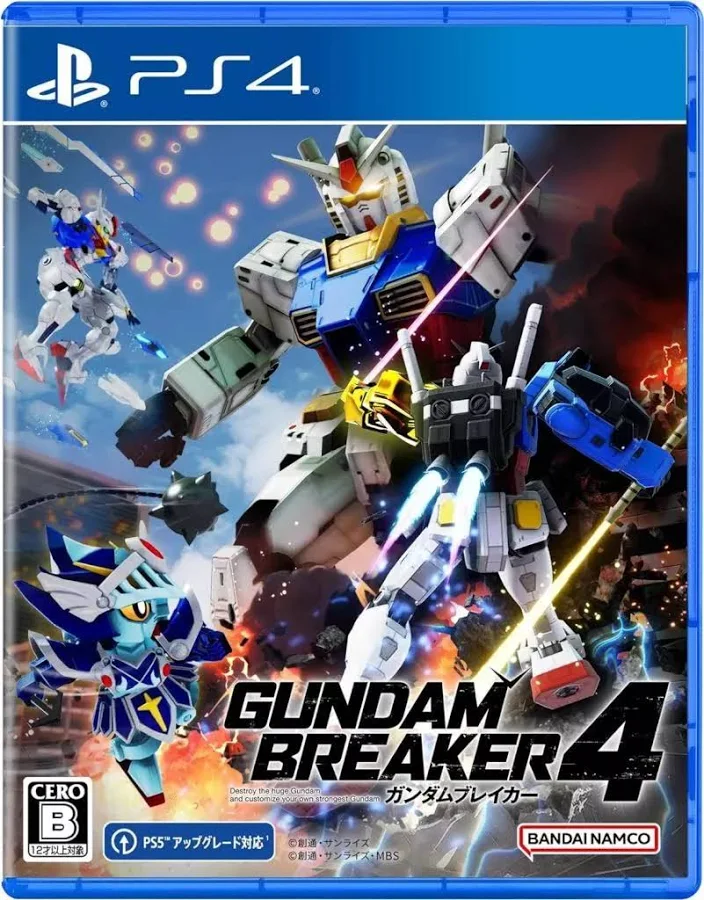
No. 6: Gundam Breaker 4 — Building Your Own Gunpla Out of 250-Plus Customizable Suits
| Source Accuracy | Challenge | Mech & Character Volume | Replay Depth | Total Score |
|---|---|---|---|---|
| 70 | 68 | 96 | 92 | 326 |
If you want something you can actually buy for a current platform, this is the pick. Gundam Breaker 4 launched August 29, 2024 for Nintendo Switch, PlayStation 5, PlayStation 4, and Steam, published by Bandai Namco Entertainment. The genre is billed as create-and-destroy co-op action. The standard physical edition carries a suggested retail price of 8,470 yen (tax included), the Collector’s Edition runs 14,850 yen (tax included), and on the digital side the Digital Deluxe Edition is 12,430 yen and the Digital Ultimate Edition is 13,970 yen (both tax included). Player counts are one offline, one to three online.
The game hands you more than 250 customizable suits, then turns swapping parts to build your own personal Gunpla into a hack-and-slash action game. On top of that, a new Diorama Mode lets you pose and photograph whatever you’ve built. I scored Source Accuracy at 70 because this isn’t a game about recreating the battlefields of the anime — it’s a game about the act of building Gunpla. That’s not a knock. It’s a difference in kind.
As a guy who paints everything and modifies nothing, I initially recoiled at how casually the game mixes and matches parts. Three hours later, I was fine with it. Humans are weak.
- Available on Switch, PS5, PS4, and Steam, so you can buy it on a current platform right now (standard edition 8,470 yen, tax included)
- More than 250 customizable suits for that build-your-own-Gunpla experience
- The newly added Diorama Mode lets you display and photograph the machines you build
- It isn’t built to recreate the battles of the anime, so it won’t satisfy anyone hunting for a Universal Century war story
- There are four editions, so you’ll want to check the price gaps and what each one includes
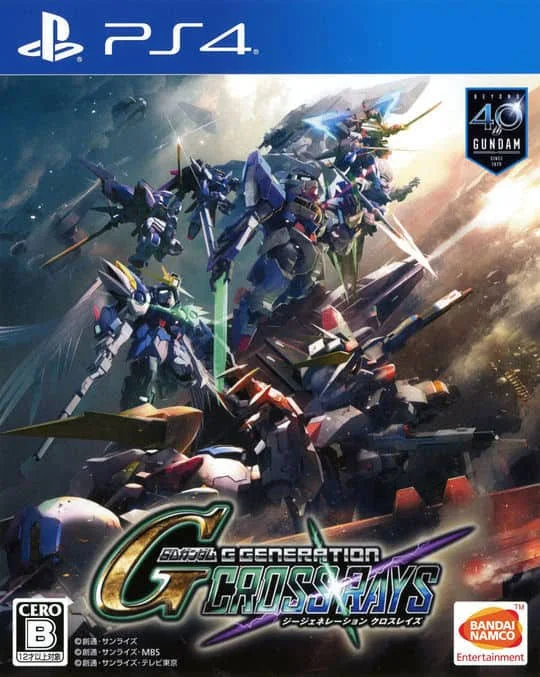
No. 7: SD Gundam G Generation Cross Rays — The Modern-Console G Generation That Goes All-In on Wing, SEED, 00 and Iron-Blooded Orphans
| Source Accuracy | Challenge | Mech & Character Volume | Replay Depth | Total Score |
|---|---|---|---|---|
| 86 | 64 | 92 | 82 | 324 |
SD Gundam G Generation Cross Rays launched on November 28, 2019 for PlayStation 4, Nintendo Switch and Steam. The standard edition ran 3,500 yen plus tax on PS4 and Switch, with the Steam version at an open price. On March 25, 2021 a definitive release followed: the Platinum Edition (5,980 yen plus tax), which bundles the season pass content and downloadable add-ons that had already shipped.
What defines this one is the shape of its roster. It is built around the Mobile Suit Gundam Wing series, the Mobile Suit Gundam SEED series, the Mobile Suit Gundam 00 series and the Mobile Suit Gundam: Iron-Blooded Orphans series. In other words, this is not a Universal Century game at all. It swings hard toward the Alternate Universe side of the franchise.
The G Generation loop of raising units and passing gear down the line is fully intact, so the moment-to-moment satisfaction is high. I still landed on 86 for source accuracy and 64 for challenge, and that comes down to two things: the lineup leans Alternate Universe, and the difficulty is gentle by series standards. If you want to fight the One Year War, this is not your first purchase. Flip it around, though, and for anyone who came in through Iron-Blooded Orphans or SEED, this is the right answer.
- Runs on PS4, Switch and Steam, and the standard edition is an easy 3,500 yen plus tax
- Roster centers on Wing, SEED, 00 and Iron-Blooded Orphans, making it ideal for Alternate Universe fans
- A definitive Platinum Edition with the DLC included is available (March 25, 2021 / 5,980 yen plus tax)
- Universal Century material is thin on the ground, so it falls short if the One Year War is your goal
- Difficulty is mild for the series, so it is not for players hunting a real fight
Special Mention: Mobile Suit Gundam: Bonds of the Battlefield — The Cabinet Experience Home Consoles Could Never Reproduce
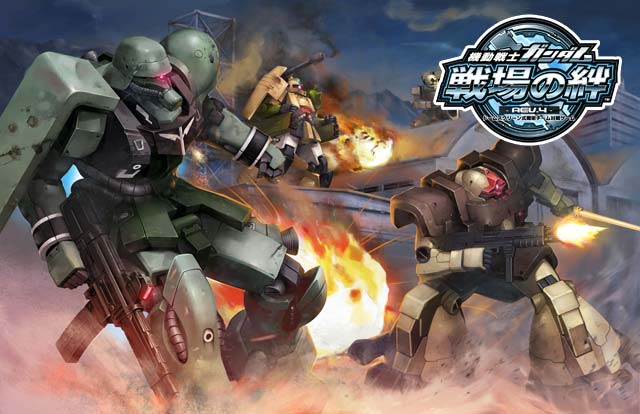
From here on we are outside the scoring. Mobile Suit Gundam: Bonds of the Battlefield is not a home console release at all; it is an arcade-exclusive, dome-screen tactical team battle game. Rating it on the same four axes as everything above would produce a meaningless number, so I carved it out as a special mention instead.
| Category | Original Bonds of the Battlefield | Bonds of the Battlefield II |
|---|---|---|
| Launched | November 2006 | July 27, 2021 |
| Cabinet | Dome-screen type | Cockpit type with large three-monitor setup |
| Status | Service ended at 2:00 a.m. on November 30, 2021 | Launched with 22 playable mobile suits |
The original went live in November 2006. You climbed into a POD ringed by a dome screen and split up the battlefield with your team, and at the time there was simply no way to reproduce that on home hardware. The original then shut its service down at 2:00 a.m. on November 30, 2021. Fifteen years. For an arcade game, that is a staggering lifespan.
Its successor, Mobile Suit Gundam: Bonds of the Battlefield II, began operation on July 27, 2021. According to Bandai Namco Amusement’s announcement, it launched with 22 playable mobile suits. The cabinet became a cockpit type with a large three-monitor display, which means the entire format changed away from the dome. It arrived as a sequel 14 years in the making.
As someone who hits Akihabara once a week, I can tell you the one thing home hardware still has not replaced, no matter how far it has come: the tension of sitting in that POD as the hatch closes. I left it off the ranking not because it loses, but because there is nothing to compare it to.
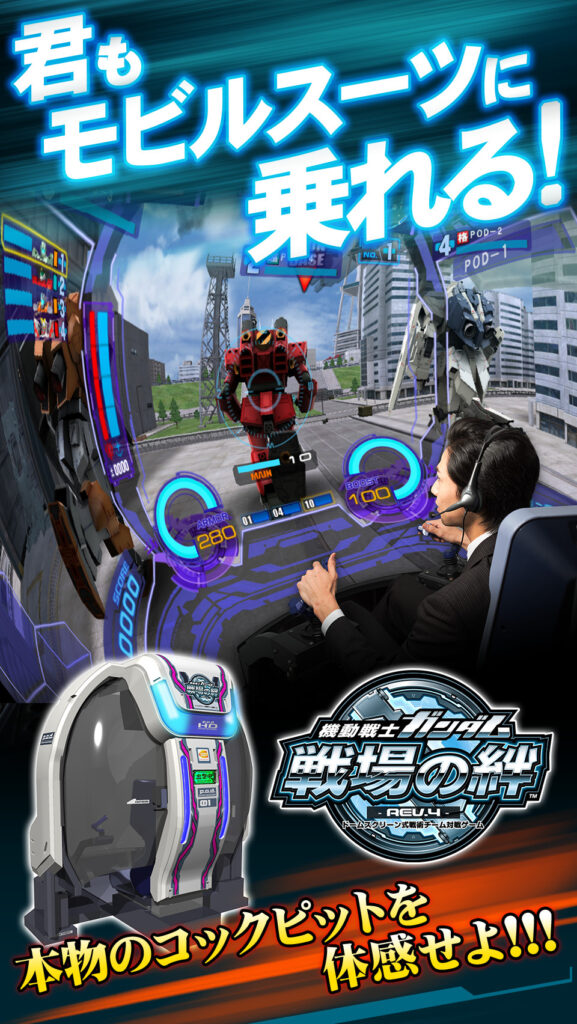
- A team-battle experience in a dedicated cabinet that home hardware cannot reproduce
- The original ran for 15 years, from November 2006 to November 30, 2021
- The successor, Bonds of the Battlefield II, launched July 27, 2021 and is still playable today
- Arcade only. You cannot play it on home hardware, so you have to track down an arcade that has a cabinet
- The original’s service has ended, and the only version playable now is Bonds of the Battlefield II
Can You Play These 7 Classic Gundam Games on Modern Systems? A Complete Platform-by-Platform Guide
Out of the seven games on this list, only two are playable on current hardware. All five of the top entries, including No. 1 pick SD Gundam G Generation F, require the original console, and even the ones that got ported stop at PlayStation 3.
① Titles Available Through Subscription Services or Free
For the seven games covered here, I could not confirm a single subscription-service listing as of the time of research (September 2026). Treat buying Gundam games individually as the default. Subscription lineups do rotate, so if you are a member, search “Gundam” inside each service and see what turns up.
| Title | Subscription availability (as of September 2026) |
|---|---|
| All 7 games in this article | None confirmed (individual purchase is the norm) |
② Titles You Can Buy Outright
These two are the ones you can pick up on current hardware right now. Take the first if you want the thrill of building Gunpla, the second if you want the G Generation raising loop.
| Title | Platforms | Price |
|---|---|---|
| Gundam Breaker 4 | Switch / PS5 / PS4 / Steam | Physical standard edition 8,470 yen (tax included) |
| G Generation Cross Rays | PS4 / Switch / Steam | Standard edition 3,500 yen plus tax / Platinum Edition 5,980 yen plus tax |
③ Titles Playable via Remaster or Remake
Two of the higher-ranked games were remade for PlayStation 3. PS3 is not current hardware, though, so the bottom line does not change: you still need the console itself.
| Original title | How to play it today | Platform |
|---|---|---|
| The Blue Destiny trilogy (Saturn) | Remade and included in Mobile Suit Gundam Side Stories (May 29, 2014) | PS3 |
| Zeonic Front (PS2) | Also remade and included in Side Stories | PS3 |
④ Titles That Are Hard to Get on Current Hardware
For the remaining five, your only option is rounding up the original console and the original disc. The fact that the No. 1 pick sits in this bucket tells you everything about how rough Gundam games can be to access. I have listed workable alternatives alongside each.
| Title | What you need | Alternative |
|---|---|---|
| SD Gundam G Generation F (No. 1) | An actual PlayStation plus the disc | For G Generation on current hardware, go with Cross Rays |
| Gihren’s Greed: Threat of Axis / Threat of Axis V | An actual PSP (base game); PS2 or PSP hardware (V) | For broad Universal Century coverage, the G Generation games |
| Federation vs. Zeon DX | An actual PlayStation 2 (online play has ended) | If you are here for versus play, the latest current-gen VS. series entry |
| Zeonic Front | An actual PS2, or Side Stories on PS3 | To fight for Zeon, the Gihren’s Greed series |
| The Blue Destiny trilogy | An actual Sega Saturn, or Side Stories on PS3 | To follow the side-story narratives, Side Stories |
The bottom line: if you are buying your first Gundam game, it comes down to Gundam Breaker 4 or G Generation Cross Rays, and either is fine. If you are the kind of person who has already been through most of the franchise, though, the top five are the real dig. Threat of Axis V and G Generation F in particular are worth locking down while you can still find them used, and I do not think you would regret pulling that trigger.
Enjoying this article? Add us as a preferred source on Google.
Best Gundam Games Ranked: Which One Should You Actually Buy?
Let me restate the conclusions one more time. No. 1 is SD Gundam G Generation F (released August 3, 2000 / PlayStation / published by Bandai, developed by Tom Create / 38 works and more than 1,000 units / the F.I.F expansion disc followed on May 2, 2001). For the pleasure of running raising-and-inheritance loops across every corner of Gundam, this is still the peak of the genre. No. 2, Mobile Suit Gundam: Gihren’s Greed – Threat of Axis (February 7, 2008 / PSP / published by Bandai Namco Games, developed by Bec / 5 factions, 400-plus unit types, 200-plus characters), is best played in its enhanced form, Threat of Axis V (February 12, 2009 / PS2 and PSP / 550-plus units, 260-plus characters, plus the new Tem Ray Army faction).
If you want competitive play, that is No. 3, Mobile Suit Gundam: Federation vs. Zeon DX (PS2 version December 6, 2001 / published by Bandai, developed by Capcom / the arcade DX board went live September 14, 2001 / adds a single-player mission mode and four-player simultaneous battles). If you want to be tested, it is No. 4, Zeonic Front: Mobile Suit Gundam 0079 (September 6, 2001 / PS2 / published by Bandai, developed by Bec / the Midnight Fenrir Corps, 13 missions total). And if you want to follow the side stories, it is No. 5, the Mobile Suit Gundam Side Story: The Blue Destiny trilogy (Senritsu no Blue on September 20, 1996 / Ao wo Uketsugu Mono on December 6, 1996 / Sabakareshi Mono on March 7, 1997 / Sega Saturn / published by Bandai, developed by Bec / EXAM and Blue Destiny Units 1 through 3).
Then there are the two you can buy on current hardware today: No. 6, Gundam Breaker 4 (August 29, 2024 / Switch, PS5, PS4, Steam / standard edition 8,470 yen tax included / 250-plus customization parts for your machines and a diorama mode) and No. 7, SD Gundam G Generation Cross Rays (November 28, 2019 / PS4, Switch, Steam / standard edition 3,500 yen plus tax / built around Wing, SEED, 00 and Iron-Blooded Orphans). As for our special mention, Mobile Suit Gundam: Bonds of the Battlefield: the original launched in November 2006 and ended service at 2:00 a.m. on November 30, 2021, while successor Bonds of the Battlefield II went live on July 27, 2021 with 22 playable mobile suits.
The SpotGeeks editorial team’s conclusion is simple. Gundam games split into distinct species: the sheer-volume type that spans every series (the G Generation line), the strategy type that lets you repaint the Universal Century on a map (the Gihren’s Greed line), the versus type descended straight from the arcade (the VS. series), the narrative type that puts you inside one squad’s view of the battlefield (The Blue Destiny, Zeonic Front), and the joy of building Gunpla (Gundam Breaker). The question is not which one is better; it is which part of Gundam you love. That said, when it comes to raw volume and long-haul depth, G Generation F from the year 2000 still functions as the benchmark everything else gets measured against.
…My apartment, which keeps a Sega Saturn, a PlayStation, a PS2 and a PSP in active rotation, is probably smaller than you are picturing. Then again, twice-divorced me is hardly in a position to lecture anybody.
Read Next
Snicker Kitamura







Leave a Reply