



Enjoying this article? Add us as a preferred source on Google.
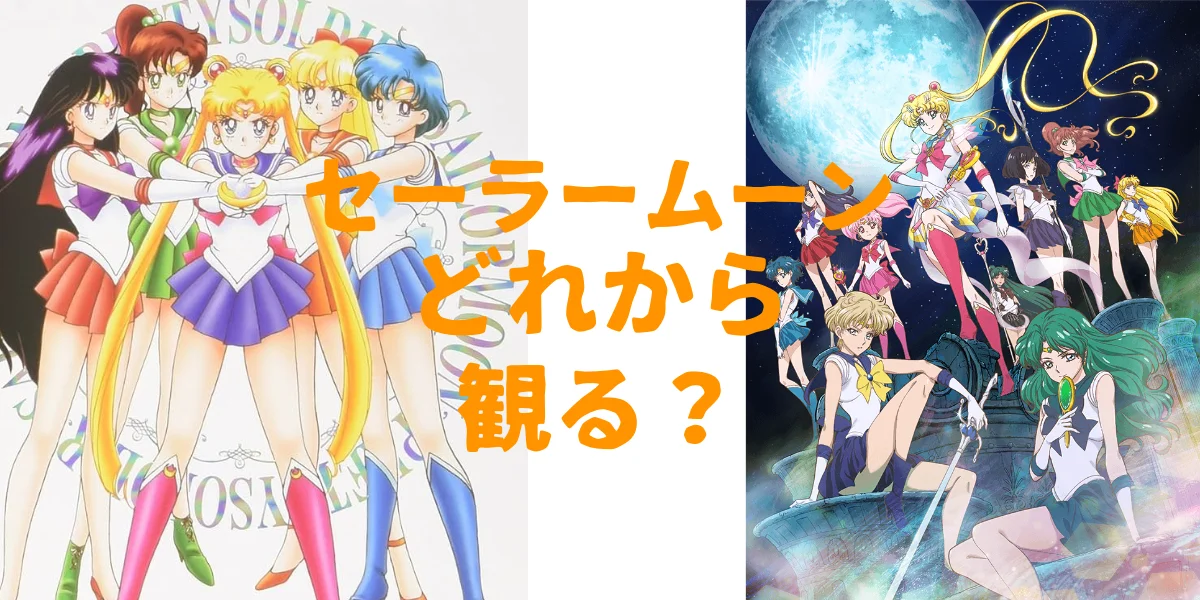
Try to start watching Sailor Moon and the first thing that stops you cold is the sheer volume. The 1992 run alone is five TV series and 200 episodes, Crystal adds three seasons and 39 episodes from 2014, and the films come to four: three from the 1990s plus 2021’s Eternal and 2023’s Cosmos, each split into two parts. Add it up and you are comfortably past 40 hours. So where do you actually put your hands on this thing?
Let me give you the answer up front. If this is your first time, start with episode 1 of the original 1992 series. If you are short on time, watch Sailor Moon S, the third season of the original run. If you want the story as the manga tells it, start with Crystal season 1. The original run swaps out its villains and its new characters every season, so you can drop in at the top of any season and the first episode will catch you up. But “easy to get into” and “actually great” are two different things, and sorting that out is what the ranking below is for.
I scored eight entries: the five seasons of the original TV run, Crystal split into two blocks (seasons 1-2 and season 3), and the Sailor Moon Eternal films. Each one gets marked out of 100 on four axes: story, animation, characters and emotional impact. Broadcast dates, episode counts, directors, series composition and character designers are all here too, so consider your homework done. Cosmos, the finale, and the three 1990s movies are not entry points, so I’ve put them in a separate section at the end.
Full disclosure: I’m one of those people for whom Haruka and Michiru in the original Sailor Moon S permanently rearranged something. I suspect the ranking shows it.
Everything is ranked by the combined score across the four axes. Ties go to whichever entry scored higher on story.

Which Sailor Moon should you watch first? All eight entries, scored and compared
The highest total belongs to Sailor Moon S, the third season of the original run, at 365 points. For a true newcomer I’d still point you at the original 1992 series (348 points), but if you are only going to watch one thing and you want the series at its best, take S.
| Title | Story | Animation | Characters | Emotional Impact | Total |
|---|---|---|---|---|---|
| No. 1 Sailor Moon S | 92 | 85 | 96 | 92 | 365 |
| No. 2 Sailor Moon (the original 1992 series) | 86 | 78 | 92 | 92 | 348 |
| No. 3 Sailor Moon Sailor Stars | 86 | 82 | 88 | 88 | 344 |
| No. 4 Sailor Moon Crystal season 3 (Death Busters arc) | 84 | 86 | 88 | 84 | 342 |
| No. 5 Sailor Moon R | 83 | 80 | 90 | 85 | 338 |
| No. 6 Sailor Moon Eternal, parts 1 and 2 | 80 | 90 | 86 | 80 | 336 |
| No. 7 Sailor Moon SuperS | 72 | 84 | 84 | 72 | 312 |
| No. 8 Sailor Moon Crystal seasons 1 and 2 | 78 | 62 | 80 | 74 | 294 |
The original run and Crystal are two separate adaptations of the same manga, and their stories do not connect. The five original seasons are one continuous stretch that aired from 1992 to 1997; Crystal season 1 through Cosmos is a second, manga-faithful stretch spanning 2014 to 2023. There is no need to interleave the two.
The top animation score goes to Eternal (90), and the top character score to S (96). The 62 I gave Crystal seasons 1 and 2 for animation reflects the wobbly art that viewers called out when it went up in 2014. Read these numbers less as a final verdict on each show and more as a tool for deciding where to jump in.
How many Sailor Moon anime are there? The original run, Crystal and the films, mapped
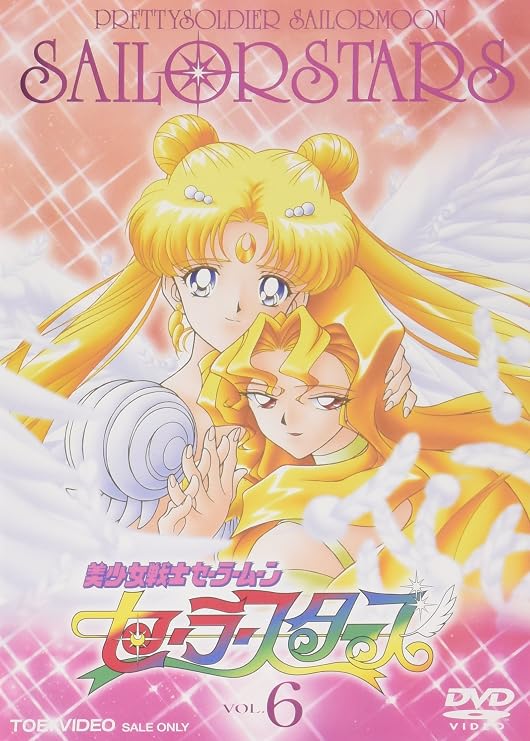
On the TV side there are eight entries: five original seasons (200 episodes) and Crystal’s three seasons (39 episodes). On the film side there are four: three from the 1990s and two two-part features from the 2020s. Twelve in total. The manga runs in five arcs, and both the original run and Crystal map onto them.
| Manga arc | Original TV run (1992-1997) | Crystal line (2014-2023) |
|---|---|---|
| Arc 1: Dark Kingdom | The original 1992 series (46 episodes, March 7, 1992 – February 27, 1993) | Crystal season 1 (14 episodes, streamed from July 5, 2014) |
| Arc 2: Black Moon | R (43 episodes, March 6, 1993 – March 12, 1994) | Crystal season 2 (12 episodes, streamed through July 18, 2015) |
| Arc 3: Death Busters | S (38 episodes, March 19, 1994 – February 25, 1995) | Crystal season 3 (13 episodes, April 4 – June 27, 2016) |
| Arc 4: Dead Moon | SuperS (39 episodes plus a special, March 4, 1995 – March 2, 1996) | Sailor Moon Eternal, part 1 on January 8, 2021 and part 2 on February 11 |
| Arc 5: Sailor Stars | Sailor Stars (34 episodes, March 9, 1996 – February 8, 1997) | Sailor Moon Cosmos, part 1 on June 9, 2023 and part 2 on June 30 |
The original run uses the manga as a base but piles on a huge amount of anime-original material, including whole stretches like the first half of R (the Doom Tree arc) that the manga never contained. Crystal sticks to the source, with each episode covering one manga chapter in its Act. format. The same scenes get staged completely differently, so there is nothing wrong with watching both. Just don’t try to start both at once.
The three 1990s films (R, S and SuperS) are side stories to the TV run and don’t correspond to any manga arc. Each runs 60 minutes and stands on its own, which makes them dessert after the TV shows rather than a starting course.
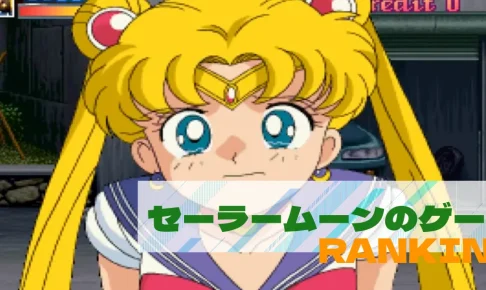
No. 1: Sailor Moon S|If you watch exactly one, don’t hesitate
| Story | Animation | Characters | Emotional Impact | Total Score |
|---|---|---|---|---|
| 92 | 85 | 96 | 92 | 365 |
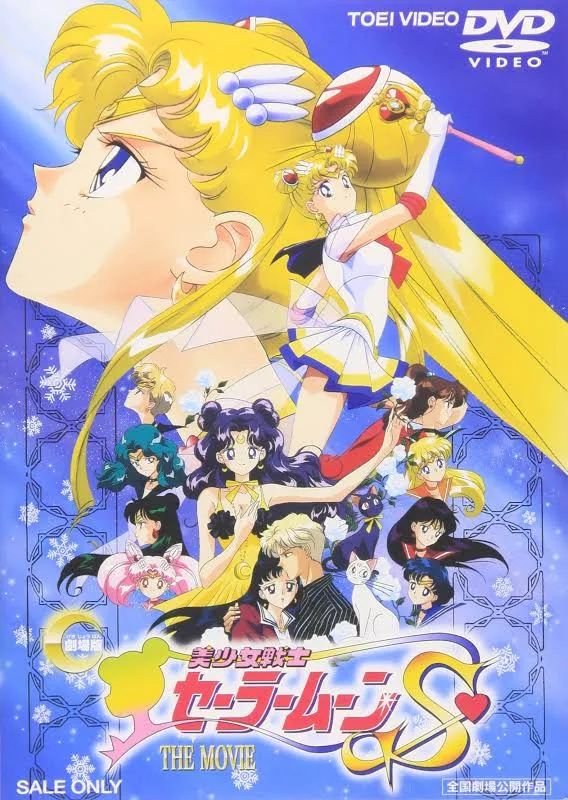
Sailor Moon S, the third season of the original run, aired all 38 of its episodes between March 19, 1994 and February 25, 1995. Kunihiko Ikuhara was series director, Yoji Enokido handled series composition and Ikuko Ito did the character designs. The enemies are the Death Busters, and Sailor Uranus, Sailor Neptune and Sailor Saturn all debut here.
What puts this season in a class of its own is the structure: against Usagi and the five Inner Senshi, the outer solar system’s Uranus and Neptune stand in the way with a completely different idea of justice, one in which saving the world justifies the sacrifices. Dropping a third faction between the heroes and the villains means beating the bad guy is no longer the end of the story. Ikuhara and Enokido would go on to make Revolutionary Girl Utena together, and you can see the seed of it right here.
The back half of the season, everything surrounding Saturn, is to my mind the emotional peak of the entire franchise. The relationship between Haruka and Michiru was bold for an early-evening 1994 anime, and it hasn’t aged a day. These two permanently rearranged something in me. I’m not joking.
The one caveat is that starting at S means the show takes Usagi and Mamoru’s relationship and Chibiusa’s true identity as given. Even so, the first episode makes everyone’s position clear, and the gut-punch of the Saturn material lands whether or not you’ve seen the earlier seasons. That 96 for characters is Uranus and Neptune’s doing.
- The best-regarded of the five original seasons, and the debut of Uranus, Neptune and Saturn
- Ikuhara’s direction and Enokido’s scripts dismantle the usual hero-versus-villain binary
- At 38 episodes it’s on the short side for the original run, and easy to take a cour at a time
- Usagi and Mamoru’s relationship and Chibiusa’s situation are treated as known quantities
- This is 1994 animation, so don’t go comparing its consistency to Eternal and later
No. 2: Sailor Moon, the original 1992 series|For a first-timer, it still comes back to this
| Story | Animation | Characters | Emotional Impact | Total Score |
|---|---|---|---|---|
| 86 | 78 | 92 | 92 | 348 |
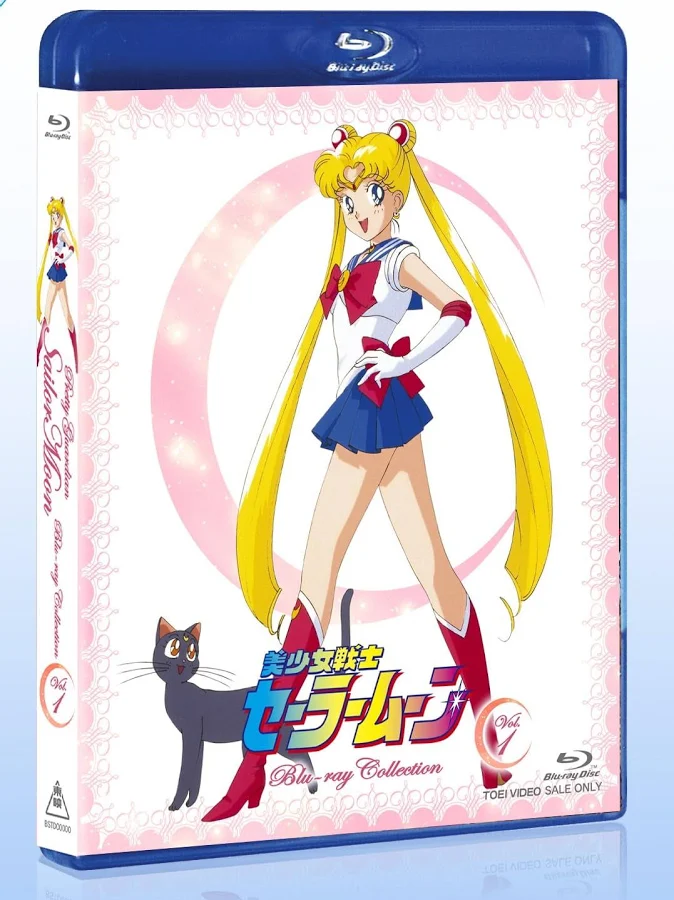
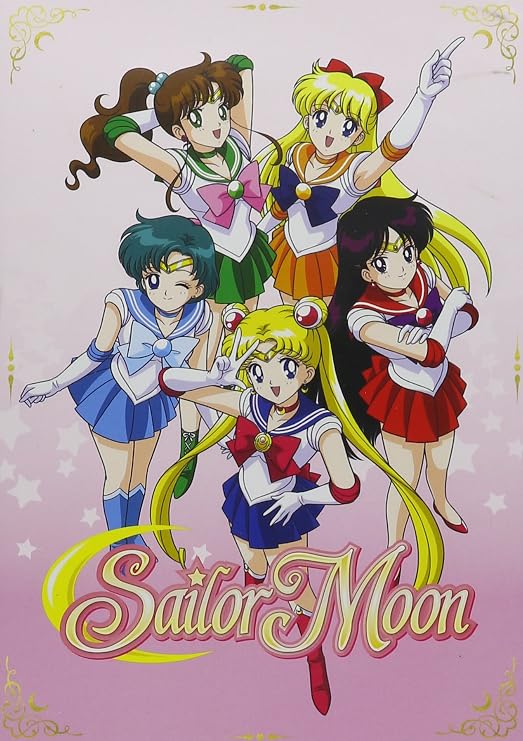
The first season, simply Sailor Moon, ran 46 episodes from March 7, 1992 to February 27, 1993, airing Saturdays at 7 p.m. on the TV Asahi network. Junichi Sato was series director, Sukehiro Tomita handled series composition and Kazuko Tadano did the character designs. The enemies are the Dark Kingdom, Usagi Tsukino becomes Sailor Moon, and Mercury, Mars, Jupiter and Venus join up one by one.
This is the show that invented the “transforming heroine fights as part of a five-girl team” template, and its monster-of-the-week structure, one youma defeated per episode, could not be easier to follow. The skeleton of Usagi as a crybaby klutz who nevertheless gets back on her feet at the end is already fully formed. Kotono Mitsuishi has voiced Usagi continuously from the original run through Crystal and Cosmos, and hearing that voice here first is the proper way in.
I held story to 86 because the first half of those 46 episodes is standalone monster-bashing and the plot only really gets moving after the midpoint. The 78 for animation is what a weekly 1992 production could manage, and the gap between its best and worst episodes is wide. Even so, the final two episodes still hit hard today. That’s what the 92 for emotional impact is paying for.
If you intend to watch everything in order, this is the correct place to begin. S is unquestionably better when you arrive there having seen the original. Time to spare, start at the beginning; no time, start at S. That two-way choice is the whole conclusion of this article.
- The origin point, where you watch all five come together from nothing
- The place to hear Kotono Mitsuishi’s Usagi Tsukino for the first time
- The final two episodes are among the strongest in the whole original run
- The first half is a run of standalone monster fights, so the story takes a while to kick in
- At 46 episodes it’s the longest of the five original seasons
No. 3: Sailor Moon Sailor Stars|Starting with the final chapter is a real option
| Story | Animation | Characters | Emotional Impact | Total Score |
|---|---|---|---|---|
| 86 | 82 | 88 | 88 | 344 |
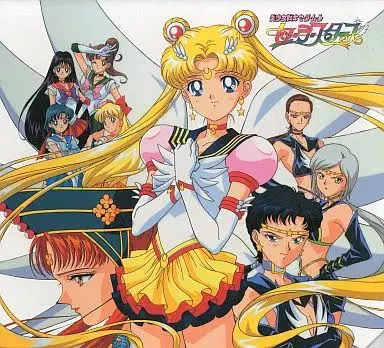
Sailor Moon Sailor Stars, the fifth and last season of the original run, aired 34 episodes from March 9, 1996 to February 8, 1997. Takuya Igarashi was series director, Ryota Yamaguchi handled series composition and Katsumi Tamegai did the character designs: a near-total changing of the guard. The enemies are Shadow Galactica, and the new characters are the Sailor Starlights, a trio made up of Sailor Star Fighter, Sailor Star Maker and Sailor Star Healer, plus Chibi Chibi. From episode 167 the opening switches to “Sailor Star Song.”
This is the original run’s final chapter, and it is packed with the business of wrapping a series up: the uneasy relationship with the Starlights, who come from beyond Earth, Mamoru’s absence, the showdown with Shadow Galactica. Of the five original seasons this one lands its ending most cleanly, and the brevity of 34 episodes works in its favor. The 88 for emotional impact is for that finale.
I only put it third as an entry point because the Starlights sit at the center of the story, which means there’s a lot of assumed knowledge about “Usagi and her friends.” The intended order is to watch it after the original series and S; go in cold and you simply won’t know why Mamoru isn’t around. That said, for anyone who bailed during SuperS, coming back for this is well worth it.
- The final chapter of the original run: a short 34 episodes with a clean landing
- The Sailor Starlights give the season a genuinely new set of relationships to build on
- From episode 167 the opening theme becomes “Sailor Star Song”
- Mamoru’s absence, Chibiusa’s history and more are all assumed from earlier seasons
- The staff turnover means the look of the show shifts away from S and SuperS
No. 4: Sailor Moon Crystal season 3, the Death Busters arc|If you come in via Crystal, watch this far
| Story | Animation | Characters | Emotional Impact | Total Score |
|---|---|---|---|---|
| 84 | 86 | 88 | 84 | 342 |
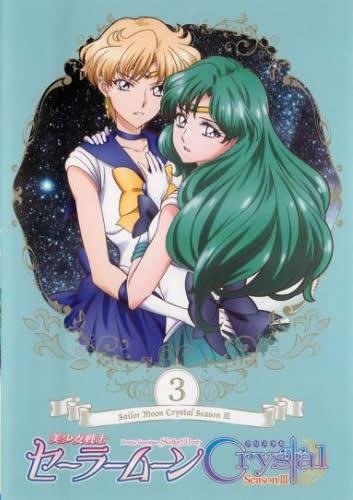
Sailor Moon Crystal Season III aired on TOKYO MX and other stations from April 4 to June 27, 2016. Because Act. 27 is split into two parts, the total comes to 13 episodes. Chiaki Kon directed, Yuji Kobayashi handled series composition and Akira Takahashi did the character designs, with both the director and the character designer changing over from seasons 1 and 2. It covers the manga’s third arc, the Death Busters.
The shaky animation people complained about in seasons 1 and 2 is fixed here, and the character designs move closer to the manga’s linework. It’s worth watching simply to see what happens when the same material as the original Sailor Moon S is handled faithfully to the source. Uranus and Neptune’s relationship plays out as the manga wrote it, which is a different presentation from the original S.
I placed it fourth because skipping Crystal seasons 1 and 2 and starting here is tough going. The Act. format advances one manga chapter at a time, so without the earlier episodes you get left behind. Coming in via Crystal means gritting your teeth through season 1 and being rewarded in season 3.
- The most visually consistent of Crystal’s three seasons
- Lets you see the same material as the original Sailor Moon S told faithfully to the manga
- Only 13 episodes long
- You can’t follow it without having watched Crystal seasons 1 and 2
- Being faithful to the manga means none of the original run’s anime-only material
No. 5: Sailor Moon R|Chibiusa arrives, and the bridge to the movies
| Story | Animation | Characters | Emotional Impact | Total Score |
|---|---|---|---|---|
| 83 | 80 | 90 | 85 | 338 |
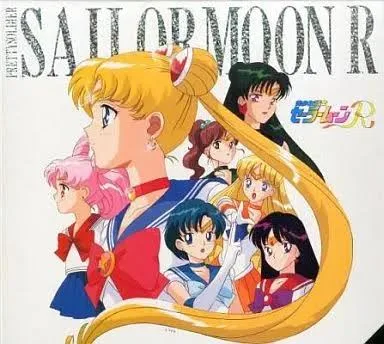
Sailor Moon R, the second series of the original run, aired from March 6, 1993 to March 12, 1994 for a total of 43 episodes. Series director Junichi Sato handed the reins to Kunihiko Ikuhara at episode 60, and character designer Kazuko Tadano handed off to Ikuko Itoh. Sukehiro Tomita handled series composition. The first half is the anime-original Doom Tree arc, the second half is the manga-faithful Black Moon Clan arc, and it is here that Chibiusa and Sailor Pluto make their debut.
Episode 74, which hit a Kanto-region high of 16.3% in the ratings, belongs to this run, so this is the stretch where the series was at the absolute peak of its popularity. From a viewer’s seat, though, the first-half Doom Tree arc plays as a low-key epilogue to the first series, and it takes a long time to reach the real story in the Black Moon arc. That is what the 83 for Story docks it for.
The value of this run is Chibiusa’s arrival. She touches every single series that follows, so if you want to know where Chibiusa came from, there is no way around R. The 90 for Characters is Chibiusa and Pluto’s doing. The R movie, released on December 5 of that same 1993, is Kunihiko Ikuhara’s film and operates on a completely different level from the TV version of R, so I cover it in the sidebar below.
- Chibiusa and Sailor Pluto debut here, and they become required background for every later series
- The second-half Black Moon arc follows the manga, and the storytelling tightens up for it
- Episode 74 posted the series’ Kanto-region ratings high of 16.3%
- The first-half Doom Tree arc is anime-original, and the wait to reach the main plot is long
- The series director and character designer change midway, and the look of the show shifts with them
No. 6: Sailor Moon Eternal Part 1 and Part 2|the one to pick if you come for the animation
| Story | Animation | Characters | Emotional Impact | Total Score |
|---|---|---|---|---|
| 80 | 90 | 86 | 80 | 336 |
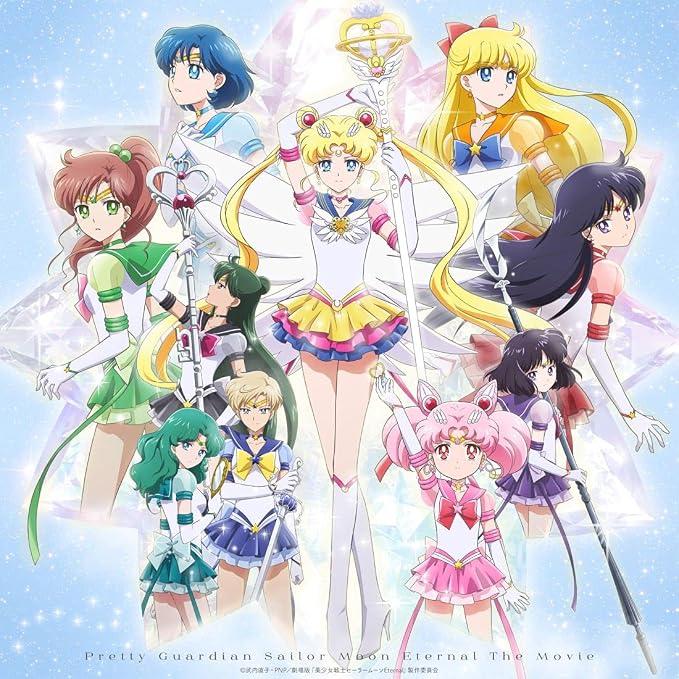
Sailor Moon Eternal opened in two parts, the first on January 8, 2021 and the second on February 11, 2021, each running 80 minutes. Chiaki Kon directed, Kazuyuki Fudeyasu wrote the script, and Kazuko Tadano handled character design, with Toei Animation and Studio Deen co-producing and Toei distributing. It picks up where Crystal Season 3 left off, adapting the manga’s fourth arc, Dead Moon. The theme song is Tsukiiro Chainon.
Kazuko Tadano is the character designer from the original 1992 series, and her linework is a clear break from Crystal Seasons 1 through 3. Being a theatrical production, the animation holds together throughout, and the 90 for Animation is the highest score of all eight entries here. Cramming a full manga arc into 160 minutes across two parts also makes for a tighter package than the TV series managed.
I put it sixth because of what it is like as an entry point. It is a direct continuation of Crystal Season 3, so Usagi and her friends’ relationships, Chibiusa and the entire Outer Guardians lineup are all assumed knowledge. This is something you watch after three seasons of Crystal; start here and there are simply too many faces to keep straight. Watching the opening stretch purely to check out how good the animation is, though, I think that is a perfectly fine use of it.
- The most consistent animation of the eight entries, and Kazuko Tadano’s character designs are gorgeous
- Covers the manga’s fourth arc in full across 160 minutes
- Was distributed internationally on Netflix
- Requires everything through Crystal Season 3; it does not work as a standalone
- There are no episode-sized stopping points like a TV series, so you have to watch it in one go
No. 7: Sailor Moon SuperS|start here if Chibiusa is your reason
| Story | Animation | Characters | Emotional Impact | Total Score |
|---|---|---|---|---|
| 72 | 84 | 84 | 72 | 312 |
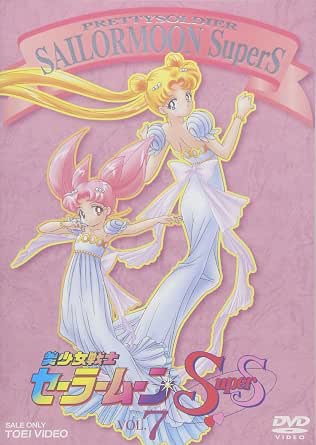
Sailor Moon SuperS, the fourth series of the original run, aired from March 4, 1995 to March 2, 1996 for 39 episodes, plus a triple-feature special broadcast on April 8, 1995. Kunihiko Ikuhara stayed on as series director, Yoji Enokido on series composition and Ikuko Itoh on character design, so the S staff carried straight over. The enemy is the Dead Moon Circus, and Chibiusa’s kitten Diana joins the cast.
This run is built around Chibiusa and Pegasus, which shifts the lead role away from Usagi and onto Chibiusa. The same staff made it immediately after S, and yet Uranus, Neptune and Saturn never show up in the TV episodes at all. People often say this is where viewers who fell for the Outer Guardians in S dropped out, and I will admit SuperS stalled me out once too. The 72 for Story and 72 for Emotional Impact are the price of that.
The 84 for Animation, though, is honestly earned. The way the villains are staged under Ikuhara’s direction, the Amazon Trio above all, is weird in the best way, and taken episode by episode this is the most playful of the five original series. It suits anyone who loves Chibiusa, or who just wants to breathe a bit more of the air that S had.
- The same Kunihiko Ikuhara, Yoji Enokido and Ikuko Itoh lineup that made S
- Episode-level directing experiments are more frequent here than in any of the five original series
- Chibiusa is effectively the lead, so Chibiusa fans cannot skip it
- Uranus, Neptune and Saturn never appear in the TV episodes
- With the focus on Chibiusa, Usagi’s own story stays largely parked
No. 8: Sailor Moon Crystal Seasons 1 and 2|the way in for manga readers
| Story | Animation | Characters | Emotional Impact | Total Score |
|---|---|---|---|---|
| 78 | 62 | 80 | 74 | 294 |
Sailor Moon Crystal Seasons 1 and 2 began streaming on July 5, 2014, on Niconico and other platforms, dropping on the first and third Saturday of each month, and wrapped on July 18, 2015 after 26 episodes. It also got a TV broadcast on TOKYO MX and other stations from April 1 to September 23, 2015. Munehisa Sakai directed, Yuji Kobayashi handled series composition and Yukie Sako the character designs. Season 1 covers the Dark Kingdom arc in 14 episodes and Season 2 the Black Moon arc in 12, using the manga-faithful Act structure. The opening is MOON PRIDE by Momoiro Clover Z. Kotono Mitsuishi reprises her original-series role as Usagi Tsukino.
If you want to follow the manga’s story in animated form, this is the only way in. There are none of the anime-original episodes the original run padded itself out with, and one manga chapter maps to one episode, which makes it fast and satisfying if you have already read the books. Usagi and Mamoru’s relationship also develops exactly as it does on the page.
It sits at eighth because of that 62 for Animation. The wobbly art was widely flagged when the series was streaming in 2014, and the fact that the director and character designer were replaced for Season 3 usually gets discussed in that context. My own read is that Seasons 1 and 2 are a waypoint you pass through on the way to Season 3 and beyond. If you have already watched the original 1992 series and R, though, their value goes up as the manga-faithful take on the same material.
- Manga-faithful Act structure. If you want the manga’s story animated, it starts here
- No anime-original filler from the original run; 26 episodes cover the manga’s first two arcs
- Kotono Mitsuishi continues as Usagi, carried over from the original series
- The shaky art drew criticism during its original streaming run; the animation settles from Season 3 on
- It is a separate thing from the original run, so watching it with those memories in mind feels off
Sidebar: is it fine to start with the finale, Cosmos, or with the three 1990s movies?
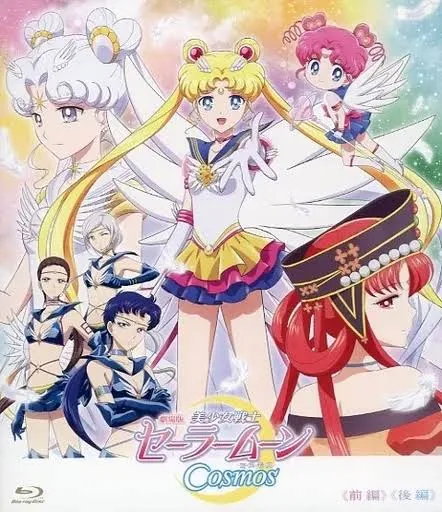
Sailor Moon Cosmos opened in two parts, the first on June 9, 2023 and the second on June 30, Usagi Tsukino’s birthday, each running 80 minutes. Tomoya Takahashi directed, Kazuyuki Fudeyasu wrote the script, Kazuko Tadano handled character design, and Toei Animation co-produced with Studio Deen. It adapts the manga’s final chapter, the fifth arc Sailor Stars, and gives Sailor Cosmos, Chibi Chibi, the Sailor Starlights and Princess Kakyuu their first theatrical appearance.
This is the film that closes out the project of animating the manga to its end, and it will not work as an entry point. It is what you watch last, after everything from Crystal Season 1 through Eternal; start here and half the cast will be strangers. That said, if you have seen the original run’s Sailor Stars and want to check how the manga version ends, you have roughly enough background to go in.
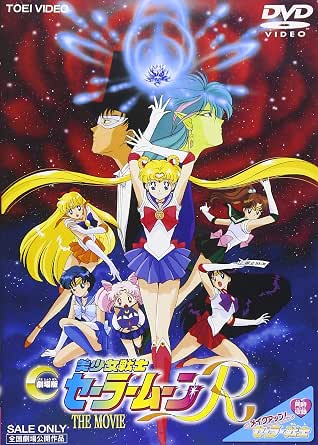
| Film | Release date | Director | Screenplay | Runtime |
|---|---|---|---|---|
| Sailor Moon R: The Movie | December 5, 1993 | Kunihiko Ikuhara | Sukehiro Tomita | 60 min. |
| Sailor Moon S: The Movie | December 4, 1994 | Hiroki Shibata | Sukehiro Tomita | 60 min. |
| Sailor Moon SuperS: The Movie – Black Dream Hole | December 23, 1995 | Hiroki Shibata | Yoji Enokido | 60 min. |
| Sailor Moon Eternal Part 1 and Part 2 | January 8 and February 11, 2021 | Chiaki Kon | Kazuyuki Fudeyasu | 80 min. each |
| Sailor Moon Cosmos Part 1 and Part 2 | June 9 and June 30, 2023 | Tomoya Takahashi | Kazuyuki Fudeyasu | 80 min. each |
The three 1990s films are all standalone 60-minute pictures, and each one carries the mood of its TV series straight onto the big screen. Sailor Moon R: The Movie is Kunihiko Ikuhara’s film, a story centered on Fiore, a friend from Mamoru’s childhood. Its distribution revenue came to 1.3 billion yen, good for seventh among Japanese films in 1994. Sailor Moon S: The Movie was directed by Hiroki Shibata, treats Luna as a lead character, and gives Uranus, Neptune, Pluto and Chibi Moon their theatrical debut; its distribution revenue was 1.05 billion yen. Sailor Moon SuperS: The Movie assembles all nine Sailor Guardians, from a script by Yoji Enokido.
Starting with these three is, honestly, a legitimate plan. Sixty minutes apiece is enough to get the faces and the relationships straight, and the R movie is one of the best things the series has ever produced. If what you want is to find out what Sailor Moon is in 60 minutes, watch the R movie, then go back to episode 1 of the original series if it clicks. That order is more efficient than it sounds.
Where is Sailor Moon streaming? What we could confirm as of October 2026
As of October 2026, the services carrying all five original TV series and all three seasons of Crystal on unlimited subscription are d Anime Store and U-NEXT. DMM TV carries the five original series on subscription, but sources disagree on how it handles Crystal. Netflix does not stream the original run in Japan, though it does carry the Cosmos films.
| Service | Original 5 TV series | Crystal, 3 seasons | Films |
|---|---|---|---|
| d Anime Store | Included with subscription | Included with subscription | Carries the 1990s films, including the SuperS movie |
| U-NEXT | Included with subscription | Included with subscription | Eternal Parts 1 and 2 on subscription |
| DMM TV | Included with subscription | Needs checking (sources disagree) | — |
| Hulu | Available (scope needs checking) | Available (scope needs checking) | — |
| Netflix | Not available | Partial | Cosmos Parts 1 and 2 |
| Amazon Prime Video | Not available on its own; viewable with an add-on Toei Anime Channel subscription | Same as at left | — |
This table was assembled by cross-checking several streaming comparison roundups published between April and October 2026; the editorial team did not verify every title on every service firsthand. Sources contradicted each other on Hulu and DMM TV’s Crystal listings and on how Prime Video handles the show, so search each service for the exact title before you sign up for anything. Streaming rights change.
If you want the original run and Crystal in one place, go with d Anime Store or U-NEXT; if you only care about the original five series, DMM TV is enough. Eternal and Cosmos are split across different services, so if you plan to follow the Crystal line all the way to the end, expect to straddle two subscriptions: U-NEXT through Eternal, Netflix for Cosmos.
Enjoying this article? Add us as a preferred source on Google.
Which Sailor Moon do you watch first? All eight entries, scored
If this is your first time, start with episode 1 of the original 1992 series. If you only have room for one, make it Sailor Moon S, the third series of the original run (March 19, 1994 to February 25, 1995, 38 episodes, series director Kunihiko Ikuhara). If you want to follow the manga, start with Crystal Season 1. The final totals run: S with 365, the original series with 348, Sailor Stars with 344, Crystal Season 3 with 342, R with 338, Eternal with 336, SuperS with 312, and Crystal Seasons 1 and 2 with 294. The five original series total 200 episodes, Crystal runs 39 episodes across three seasons, and the films are the three 1990s pictures plus two 2020s two-parters. Cosmos, the finale, is no way in, while R: The Movie from the 1990s is a 60-minute shortcut to understanding the whole series.
Sailor Moon is not a show you can drop into anywhere. The original run is one continuous line across five series, and Crystal is a second, manga-faithful line running alongside it. Which makes the answer a choice between two things. If you have the time, go in order from the original 1992 series. If you do not, just watch S. And if the Outer Guardians get their hooks into you in S, you are going to end up watching all of it anyway. A show that aired at 7 p.m. on Saturdays more than 30 years ago still pulls that hard.
When in doubt, S. Still in doubt? Give the R movie 60 minutes. After that, there is no going back.







Leave a Reply